faux leather holiday accessories
CN → US| HS Code | Tariff Rate | Origin | Destination | Doc |
|---|---|---|---|---|
| 5903102010 | 35.0% | CN | US | Official Doc |
| 5903102090 | 35.0% | CN | US | Official Doc |
| 3926903300 | 16.5% | CN | US | Official Doc |
| 4202228980 | 52.6% | CN | US | Official Doc |
| 3926903500 | 24.0% | CN | US | Official Doc |
Product Images
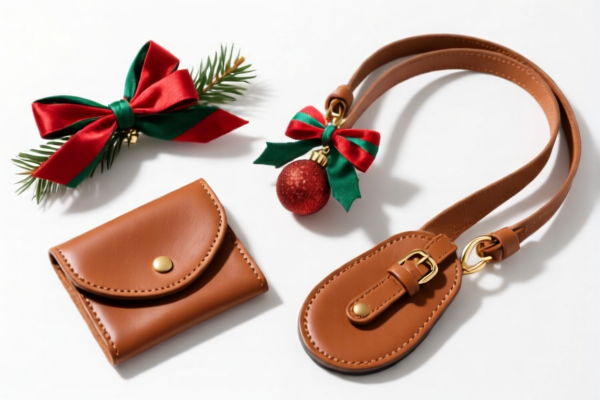
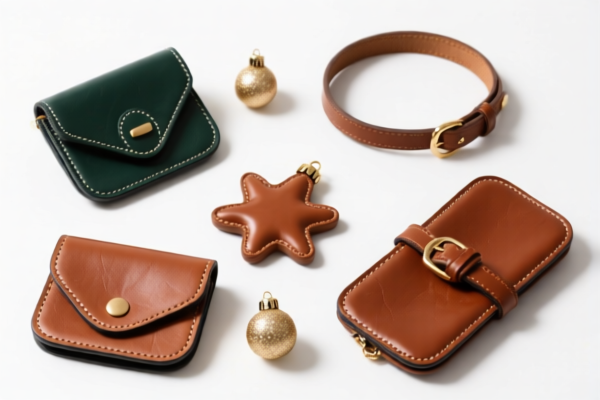
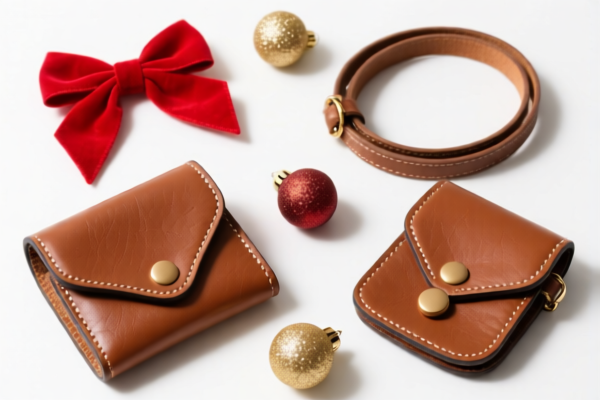
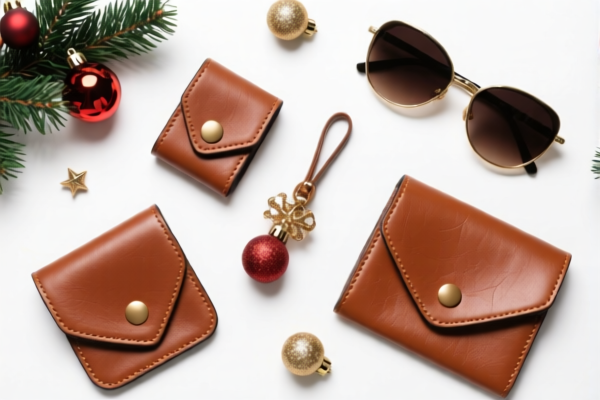
AI Analysis
👜 Faux Leather Holiday Accessories: The Ultimate Import & Customs Clearance Guide
🌐 HS Code Reference & Customs Strategy | 2026 Updated Tariff Analysis | Professional Clearance Tactics
📌 I. Product Definition & Classification: What Are "Faux Leather Holiday Accessories"?
"Faux Leather Holiday Accessories" refer to decorative or functional items made from synthetic leather (PVC, PU, or other plastic-coated fabrics) intended for festive use. Common examples include: * Faux Leather Ornaments: Tree baubles, wreath frames, gift tags. * Festive Bags/Pouches: Small gift bags, makeup pouches, jewelry holders. * Decorative Trimmings: Artificial leather ribbons, bows, or appliques.
⚠️ Key Classification Challenge:
The core dispute is whether these items are classified as: 1. Plastic Articles (Chapter 39) – If viewed as manufactured plastic parts/accessories. 2. Articles of Leather/Regenerated Leather (Chapter 42) – If viewed as finished goods or specific accessories. 3. Impregnated Textiles (Chapter 59) – If viewed as fabric-based accessories.🚨 Critical Warning:
The choice of HS Code drastically impacts duty rates, ranging from 16.5% to 52.6%. Misclassification can lead to significant customs penalties or delays.
📦 II. HS Code Classification Details (Based on Provided Data)
Below are the five most likely HS Codes derived from the data, categorized by logical inference:
| HS Code | Product Description | Logic & Summary from Data | Applicable Scenario |
|---|---|---|---|
| 5903.10.20.10 | Articles of Man-Made Textiles Impregnated with PVC | Inference: Based on the assumption of PVC-related material, classified under accessories matching other categories. | PVC-coated faux leather fabrics/trimmings. |
| 5903.10.20.90 | Other Articles of Man-Made Textiles Impregnated with PVC | Inference: Matches plastic/synthetic material in accessory form; uses a "catch-all" category inference logic. | Generic PVC faux leather accessories not fitting specific sub-categories. |
| 3926.90.33.00 | Other Articles of Plastic and Articles of Other Materials of Chapter 39 | Inference: Faux leather is considered plastic/synthetic resin; accessories fit the "other articles" definition. | Hard or semi-hard plastic-based faux leather items (e.g., rigid ornaments). |
| 4202.22.89.80 | Articles of Leather or of Composition Leather | Inference: Accessory form matches; faux leather inferred as textile/synthetic material surface. | Soft goods like pouches, small bags, or flexible accessories. |
| 3926.90.35.00 | Other Plastic Articles, Not Elsewhere Specified | Inference: Faux leather considered plastic/resin; accessories fall under "other" spare parts/categories. | Specific plastic-based accessories not covered by 3926.90.33.00. |
🔍 Key Distinction:
- Chapter 39 (Plastic): Generally lower base tariffs but subject to high total rates due to additional duties.
- Chapter 42 (Leather/Articles): Higher base tariff but may have different duty structures.
- Chapter 59 (Textiles): Treated as impregnated fabrics; often used for trimmings or soft goods.
💰 III. 2026 Latest Tariff Rate Breakdown (Including Surcharges & Policy Levies)
✅ Applicable Country: United States (US)
✅ Origin: China (CN)
✅ Effective Date: Post-November 10, 2025 (includes subsequent imports)
🎯 1. 5903.10.20.10 & 5903.10.20.90 – PVC Impregnated Textile Articles
| Item | Content |
|---|---|
| Base Tariff | 0.0% (ad valorem) |
| Section 301 Surcharge | +25.0% (USITC Footnote 9903.88.01) |
| Section 122 Tariff | +10.0% (Specific U.S. Trade Law Provision) |
| Total Rate | 35.0% |
| Tax Calculation | CIF Value × 35% |
| De Minimis Exemption | ❌ Not Eligible (deny_de_minimis) |
| Legal Path | USITC:5903.10.20.10/90 → 301 Clause: 25% → 122 Clause: 10% |
📌 Explanation:
- Although the base tariff is 0%, the combined surcharges push the rate to 35%.
- The 10% Section 122 tariff is a specific levy added on top of the standard 301 tariffs for certain Chinese imports.
- Total Cost Impact: High. Importers must factor in a 35% duty cost.
🎯 2. 3926.90.33.00 – Other Plastic Articles
| Item | Content |
|---|---|
| Base Tariff | 6.5% |
| Section 301 Surcharge | 0.0% (No additional 301 tariff applied to this sub-category in this data set) |
| Section 122 Tariff | +10.0% |
| Total Rate | 16.5% |
| Tax Calculation | CIF Value × 16.5% |
| De Minimis Exemption | ❌ Not Eligible |
| Legal Path | USITC:3926.90.33.00 → 122 Clause: 10% |
📌 Explanation:
- This is the most cost-effective option among the listed codes.
- The base 6.5% is low, and only the 10% Section 122 tariff applies, totaling 16.5%.
- Strategic Tip: If the product can be legally classified here (e.g., as a rigid plastic ornament rather than textile), this offers significant savings.
🎯 3. 3926.90.35.00 – Other Plastic Articles (Alternative Sub-category)
| Item | Content |
|---|---|
| Base Tariff | 6.5% |
| Section 301 Surcharge | +7.5% (Note: Data shows 7.5% here, differing from 3926.90.33.00) |
| Section 122 Tariff | +10.0% |
| Total Rate | 24.0% |
| Tax Calculation | CIF Value × 24.0% |
| De Minimis Exemption | ❌ Not Eligible |
| Legal Path | USITC:3926.90.35.00 → Surcharge: 7.5% → 122 Clause: 10% |
📌 Explanation:
- Slightly higher than3926.90.33.00due to a 7.5% surcharge (possibly a partial 301 or other levy).
- Total 24.0% is still competitive but higher than the 16.5% option.
🎯 4. 4202.22.89.80 – Articles of Leather/Composition Leather
| Item | Content |
|---|---|
| Base Tariff | 17.6% |
| Section 301 Surcharge | +25.0% |
| Section 122 Tariff | +10.0% |
| Total Rate | 52.6% |
| Tax Calculation | CIF Value × 52.6% |
| De Minimis Exemption | ❌ Not Eligible |
| Legal Path | USITC:4202.22.89.80 → 301 Clause: 25% → 122 Clause: 10% |
📌 Explanation:
- This is the highest cost option at 52.6%.
- The high base rate (17.6%) combined with full 301 (25%) and 122 (10%) surcharges makes this the least desirable classification for cost efficiency.
- Risk: Classifying simple faux leather accessories as "Leather Articles" may attract scrutiny if not strictly defined as such.
🛠️ IV. Customs Clearance Practical Advice (Battle-Tested Guide)
✅ 1. Preparation Checklist (All Items Mandatory)
| Document | Required | Notes |
|---|---|---|
| ✅ Product Specification Sheet | ✔️ | Must detail material composition (e.g., "PVC on polyester backing"). |
| ✅ Material Safety Data Sheet (MSDS) | ✔️ | For chemical composition of the faux leather coating. |
| ✅ Product Photos | ✔️ | Clear images showing texture, use case (e.g., "ornament," "bag"), and any brand labels. |
| ✅ Commercial Invoice | ✔️ | Clearly state "Faux Leather" not "Genuine Leather" to avoid fraud alerts. |
| ✅ Packing List | ✔️ | Itemize contents to match HS Code description. |
| ✅ Import License (if applicable) | ✔️ | Check if specific FDA/CPSC certifications are needed for holiday decor. |
✅ 2. Declaration Strategy (Key Rules of Thumb)
🔥 "Material Matters, Function Follows, Tariff Can Differ!"
| Scenario | Recommended HS Code | Duty Rate | Reason |
|---|---|---|---|
| Rigid Plastic Ornaments (e.g., PVC balls) | 3926.90.33.00 |
16.5% | Lowest total duty. Classify as plastic article. |
| Soft PVC Trimmings/Fabrics | 5903.10.20.10/90 |
35.0% | Classify as impregnated textile. Higher due to 301+122. |
| Soft Bags/Pouches (Faux Leather) | 4202.22.89.80 |
52.6% | Highest cost. Avoid if possible due to high base + surcharges. |
| Unclear Plastic Accessories | 3926.90.35.00 |
24.0% | Middle-ground option if 33.00 is not applicable. |
⚠️ Warning:
- Do NOT classify faux leather as "Genuine Leather" (41xxseries). This is fraud and leads to severe penalties.
- Ensure the description "Faux Leather" or "Synthetic Leather" is explicit to avoid confusion with Chapter 41.
✅ 3. Special Cases & Mitigation
| Situation | Action Plan |
|---|---|
| De Minimis (Section 321) Claims | ❌ Not Applicable. All listed codes exceed the de minimis exemption threshold due to Section 122/301 tariffs. |
| Product Mix (Hard + Soft Items) | ✅ Separate Line Items. Declare rigid plastic items under 3926 and soft fabric items under 5903 to optimize total duty. |
| Customs Audit Risk | ✅ Pre-Ruling Request. Submit an Advance Ruling request to CBP with product samples to confirm 3926.90.33.00 eligibility. |
| Origin Labeling | ✅ "Made in China" must be clearly visible on products and packaging to avoid anti-dumping investigations. |
🌍 V. Global Market Comparison (2026 Outlook)
| Market | Recommended HS Code (Est.) | Est. Duty | Notes |
|---|---|---|---|
| 🇺🇸 USA | 3926.90.33.00 |
16.5% | Best option. High tariffs on Chapter 59/42. |
| 🇨🇳 China | 3926.90.90.00 |
~6-10% | Lower base tariffs. No 301/122 equivalents. |
| 🇪🇺 EU | 3926.90.97 |
4-6% | No Section 122 equivalent. Lower overall cost. |
| 🇬🇧 UK | 3926.90.97 |
4-6% | Post-Brexit rules apply. Generally lower than US. |
| 🇨🇦 Canada | 3926.90.90 |
5-10% | CUSMA benefits may apply if originating in NA. |
📌 Conclusion:
- The US market is the most expensive due to the 122 and 301 surcharges.
- Diversification Strategy: Consider sourcing from or routing through non-China origins if feasible to avoid Section 122/301.
📌 VI. Common Mistakes & Pitfalls (Lessons Learned)
❌ Mistake 1: Using "Leather" in the product name without qualifying "Faux/Synthetic".
👉 Consequence: Customs may flag for misdeclaration or demand higher duties under Chapter 41/42.
❌ Mistake 2: Declaring PVC ornaments as "Textile Accessories" (5903) when they are rigid.
👉 Consequence: Duty jumps from 16.5% to 35.0%. Unnecessary cost increase.
❌ Mistake 3: Ignoring Section 122 Tariff.
👉 Consequence: Underpayment of 10% on all HS Codes listed. Leads to audits and back-taxes.
❌ Mistake 4: Combining all items under one generic HS Code.
👉 Consequence: If some items qualify for 3926.90.33.00 (16.5%) and others for 4202... (52.6%), bundling them incorrectly can trigger full-audit scrutiny.
✅ Best Practice:
"PVC Ornament, Faux Leather Finish, Model X-100, Made in China"
HS Code:3926.90.33.00
Duty: 16.5%
🎯 VII. Conclusion: Optimize Clearance, Maximize Profit!
🎯 Remember:
🔹 "Plastic First, Fabric Next, Leather Last" (for cost optimization in US).
🔹 "16.5% is the sweet spot; 52.6% is the trap."
🔹 "Always declare 'Faux' clearly to avoid fraud penalties."
📌 Pro Tip:
For high-volume shipments, request a Binding Ruling from CBP specifically for your product to lock in the 3926.90.33.00 classification at 16.5%. This provides legal certainty and prevents future disputes.
📣 Call to Action:
📞 Contact a Licensed Customs Broker today.
📤 Provide Product Photos & Material Composition.
🚀 Secure Your HS Code Pre-Ruling to Save Up to 36% in Duties!
✨ Smart Classification is the Key to Competitive Importing!
💼 Don't Let Hidden Tariffs Eat Your Margins!
Customer Reviews
About HS Code Classification
The Harmonized System (HS) is an internationally standardized nomenclature developed by the World Customs Organization (WCO) to classify traded products. Over 200 countries use the HS system as the basis for customs tariffs, trade statistics, and import/export regulations.
Each HS code follows a hierarchical structure:
- Chapter (2 digits) — Broad category of goods (e.g., Chapter 84: Machinery and Mechanical Appliances)
- Heading (4 digits) — More specific grouping within the chapter
- Subheading (6 digits) — Internationally standardized breakdown, used by all WCO member countries
- National subdivisions (8-10 digits) — Country-specific extensions for further classification, such as US HTSUS 10-digit codes
Correct HS code classification is essential for smooth customs clearance, accurate duty payment, and compliance with trade regulations. Misclassification can lead to customs delays, overpayment of duties, or penalties.
When importing from CN to US, the applicable tariff rates may include:
- Most-Favored-Nation (MFN) rate — The standard duty rate applied to WTO members
- General rate — Applied to countries without trade agreements
- Trade remedy duties — Additional tariffs such as Section 301 (anti-dumping), Section 232 (national security), or countervailing duties
The information provided on this page is for reference purposes only. For official classification, please consult with your local customs authority or a licensed customs broker.