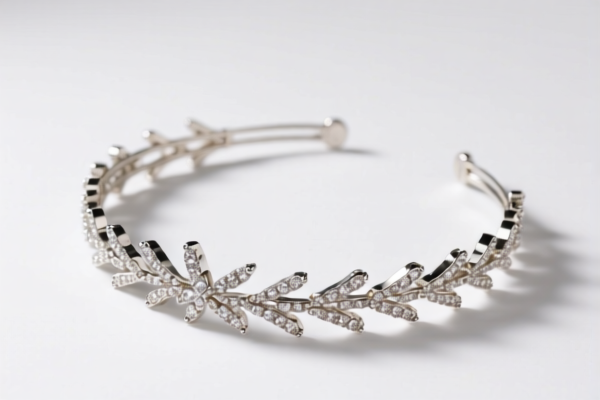
feather headpiece
CN → US| HS Code | Tariff Rate | Origin | Destination | Doc |
|---|---|---|---|---|
| 7117909000 | 28.5% | CN | US | Official Doc |
| 6701006000 | 39.7% | CN | US | Official Doc |
| 6701003000 | 39.7% | CN | US | Official Doc |
Product Images



AI Analysis
🪶 Feather Headpiece (Feather Headgear)
🌐 HS Code Reference & Clearance Guide | 2026 Latest Tariff Full Analysis | Professional Clearance Strategy
📌 I. Product Definition & Classification: Do You Really Understand "Feather Headpiece"?
A Feather Headpiece is a decorative accessory worn on the head, primarily composed of feathers, possibly supplemented by non-precious metals, plastics, or other ornamental materials. In international trade, its classification depends heavily on the primary material and function. It sits at the intersection of Articles of Plaiting Materials (Chapter 67) and Imitation Jewelry (Chapter 71).
Key Distinction Point:
- If the product is predominantly made of feathers (even if attached to a headband/base) → Classified under Chapter 67 (Prepared Feathers/Down).
- If the product is predominantly made of non-precious metals/plastics with feathers as minor decoration → Classified under Chapter 71 (Imitation Jewelry).
⚠️ Critical Warning:
- Misclassification Risk: Declaring a feather-heavy item as "Imitation Jewelry" can lead to severe penalties if customs determines the primary characteristic is the feather material.
- Tax Implications: Chapter 67 items attract significantly higher tariffs due to additional duties (Section 301/122) compared to Chapter 71 items in some scenarios, but the base rates differ.
📦 II. HS Code Classification Details (2026 Latest Tariff Authority Comparison)
Based on the provided data, here are the three possible HS Codes for Feather Headpieces, along with their logic and tax implications.
| HS Code | Product Description | Classification Logic | Primary Material Focus |
|---|---|---|---|
7117.90.90.00 |
Imitation Jewelry: Other (Non-Precious Metal/Stone) | Features feathers/decorations but classified as "Other" imitation jewelry. No material conflict. Assumed non-feather primary structure. | Non-precious metals, plastics, base ornaments |
6701.00.60.00 |
Prepared Feathers & Down: Other | Contains "feathers" as the defining material. Headpiece form is a reasonable application of feather products. | Feathers (Primary) |
6701.00.30.00 |
Prepared Feathers & Down: For Dressmaking & Millinery | Name contains "feather". Fits "feathers, feather parts, down" material definition. Intended for decorative/ornamental use. | Feathers (Primary) |
🔍 Key Reminder:
-6701.00.60.00and6701.00.30.00are both Feather-based classifications. They share the same tax structure but differ slightly in sub-heading nuances (e.g., specific use cases).
-7117.90.90.00is a Non-Feather-primary classification. If the headpiece is largely metal/plastic with a few feathers, this might apply, but it carries a lower total tax rate in this specific dataset context.
💰 III. 2026 Latest Tariff Rate Details (Including Surtaxes, Policy Add-ons)
✅ Applicable Country: United States (US)
✅ Origin: China (CN) (Inferred from 122 & Section 301 tariffs)
✅ Effective Time: Current 2026 Tariff Schedule
🎯 1. 7117.90.90.00 —— Imitation Jewelry (Non-Precious Metal/Other)
| Item | Content |
|---|---|
| Base Tariff | 11.0% |
| Section 301 Surtax | 7.5% |
| Section 122 Tariff | 10% |
| Total Tax Rate | 28.5% |
| Tax Calculation | CIF Value × 28.5% |
| De Minimis Eligibility | ❌ Not specified as exempt; typically subject to standard duties. |
| Legal Basis | Base HTSUS + Section 301 Footnotes + Section 122 (Trade Facilitation and Trade Enforcement Act) |
📌 Explanation:
- This classification assumes the item is not primarily feathers.
- Total 28.5% is significantly lower than the feather classifications in this dataset.
- Risk: If customs inspectors determine the item is >50% feathers by weight/value, they may reclassify it to Chapter 67, leading to back-taxes and penalties.
🎯 2. 6701.00.60.00 —— Prepared Feathers & Down (Other)
| Item | Content |
|---|---|
| Base Tariff | 4.7% |
| Section 301 Surtax | 25.0% |
| Section 122 Tariff | 10% |
| Total Tax Rate | 39.7% |
| Tax Calculation | CIF Value × 39.7% |
| De Minimis Eligibility | ❌ High risk of being denied de minimis due to surtaxes. |
| Legal Basis | HTSUS Chapter 67 + Section 301 (25%) + Section 122 (10%) |
📌 Explanation:
- Total 39.7%.
- Although the base tariff (4.7%) is very low, the Section 301 surtax (25%) is the highest among all three options.
- This reflects the US policy of placing higher punitive tariffs on specific Chinese imports, including certain textile/plaiting/feather goods.
🎯 3. 6701.00.30.00 —— Prepared Feathers & Down (For Dressmaking/Millinery)
| Item | Content |
|---|---|
| Base Tariff | 4.7% |
| Section 301 Surtax | 25.0% |
| Section 122 Tariff | 10% |
| Total Tax Rate | 39.7% |
| Tax Calculation | CIF Value × 39.7% |
| De Minimis Eligibility | ❌ High risk of being denied de minimis due to surtaxes. |
| Legal Basis | HTSUS Chapter 67 + Section 301 (25%) + Section 122 (10%) |
📌 Explanation:
- Identical tax structure to6701.00.60.00.
- The distinction between30and60is often administrative or based on specific product type (e.g., pre-made vs. raw/prepared for immediate use).
- For headpieces, both are acceptable if feathers are the main material, but60(Other) is often a safer "catch-all" for finished accessories.
🛠️ IV. Clearance Operational Advice (Practical Pitfall Guide)
✅ 1. Preparation Checklist (All Required)
| Document | Must Provide | Purpose |
|---|---|---|
| ✅ Product Photos | ✔️ | Show full item, highlighting material composition (feathers vs. metal base). |
| ✅ Material Breakdown | ✔️ | List % by weight of feathers vs. non-feather components. |
| ✅ Commercial Invoice | ✔️ | Clearly state "Feather Headpiece" or "Imitation Jewelry Headpiece". |
| ✅ Packing List | ✔️ | Include quantity, weight, and value. |
| ✅ Composition Statement | ✔️ | Explicitly declare: "Contains 80% feathers, 20% non-precious metal." |
✅ 2. Declaration Strategy (Key Tips)
🔥 "Material Defines Class, Surtaxes Define Cost!"
| Scenario | Recommended HS Code | Total Tax | Why? |
|---|---|---|---|
| Feathers > 50% by Weight/Value | 6701.00.60.00 or 6701.00.30.00 |
39.7% | Legally accurate. Base rate is low, but surtaxes are high. |
| Metals/Plastic > 50% (Feathers are minor) | 7117.90.90.00 |
28.5% | Lower total tax. BUT high risk of reclassification if feathers are prominent. |
| Unknown/High-Risk | Consult Customs Broker | N/A | Request Pre-Ruling before shipment. |
📌 Critical Note:
- Do NOT arbitrarily choose7117.90.90.00just because it’s cheaper. If the item is clearly feather-dominated, customs will reclassify it to Chapter 67, charge the 39.7% rate, and potentially add penalties.
- Section 122 Tariff (10%) applies to most Chinese imports under current trade policies, so factor this into all cost calculations.
✅ 3. Special Case Handling
| Situation | Handling Advice |
|---|---|
| OEM Custom Headpieces | Provide design specs and material invoices to prove primary material. |
| Mixed Materials (Feather + Rhinestones) | If rhinestones/plastics are primary, consider 7117.90.90.00. If feathers are primary, use 6701. |
| Small Quantity (De Minimis) | Even for packages under $800, if the HS Code is subject to Section 301/122, taxes may still apply depending on current CBP enforcement. Assume no de minimis exemption for these codes. |
| Brand New Designs | Get an Advance Ruling from US Customs to lock in the HS Code and avoid disputes at border. |
🌍 V. Global Market Comparison (2026 Update)
| Country/Region | Recommended HS Code | Est. Total Tax | Key Certification | Notes |
|---|---|---|---|---|
| 🇺🇸 USA | 6701.00.60.00 |
39.7% | None specific for feathers | High due to Section 301/122. |
| 🇺🇸 USA | 7117.90.90.00 |
28.5% | None specific | Lower tax, but strict material scrutiny. |
| 🇨🇳 China | 6701.00.60.00 |
~5-10% | N/A (Export) | Export duty is low. |
| 🇪🇺 EU | 6701.00.00 |
6% - 9.5% | CE (if applicable) | No Section 301 equivalent. |
| 🇬🇧 UK | 6701.00.00 |
6% - 9.5% | UKCA | Post-Brexit standards. |
📌 Conclusion:
- The USA has the highest effective tax burden for feather headpieces from China due to layered surtaxes.
- EU/UK are more favorable for these items in terms of pure tariff rates.
- Cost Optimization: Consider sourcing from non-China countries if targeting the US market to avoid Section 301 duties (though Section 122 may still apply depending on current laws).
📌 VI. Common Errors & Pitfalls (Lessons Learned)
❌ Error 1: Declaring a feather-heavy headpiece as 7117.90.90.00 to save 11.2% in tax.
👉 Consequence: Customs reclassifies to 6701.00.60.00 + Penalties + Delayed Shipment.
❌ Error 2: Ignoring Section 122 Tariff (10%).
👉 Consequence: Underpayment by 10%, leading to CBP audits and fines.
❌ Error 3: Assuming De Minimis ($800) applies.
👉 Consequence: For Section 301/122 goods, taxes are often collected even below $800 or the exemption is revoked. Always budget for taxes.
❌ Error 4: Vague Description "Accessory".
👉 Consequence: High chance of random inspection and misclassification.
✅ Correct Approach:
"Feather Headpiece, Women's Fashion, 80% Bird Feathers, 20% Non-Precious Metal Base, Model FH-2026"
🎯 VII. Conclusion: Professional Declaration, Cost Control, Risk Mitigation
🎯 Remember the Key Takeaways:
🔹 "Feather Primary = Chapter 67 (39.7% Total)"
🔹 "Metal/Plastic Primary = Chapter 71 (28.5% Total)"
🔹 "Section 301 (25%) + Section 122 (10%) are Non-Negotiable for CN Origin"
🔹 "De Minimis is NOT a Free Pass for Surtaxed Goods"
📌 Pro Tip:
If you are unsure about the material balance, request a Binding Tariff Information (BTI) or US Customs Pre-Ruling before shipping. The small fee for a ruling is worth avoiding thousands in potential back-taxes.
📣 Immediate Action:
📞 Contact a Licensed Customs Broker
📄 Provide Detailed Material Breakdown
🚀 Declare Accurately to Ensure Smooth Clearance & Predictable Costs
✨ Professional Clearance Starts with Accurate Classification!
💼 Your Profit Margin Depends on Your Tariff Code!
Customer Reviews
About HS Code Classification
The Harmonized System (HS) is an internationally standardized nomenclature developed by the World Customs Organization (WCO) to classify traded products. Over 200 countries use the HS system as the basis for customs tariffs, trade statistics, and import/export regulations.
Each HS code follows a hierarchical structure:
- Chapter (2 digits) — Broad category of goods (e.g., Chapter 84: Machinery and Mechanical Appliances)
- Heading (4 digits) — More specific grouping within the chapter
- Subheading (6 digits) — Internationally standardized breakdown, used by all WCO member countries
- National subdivisions (8-10 digits) — Country-specific extensions for further classification, such as US HTSUS 10-digit codes
Correct HS code classification is essential for smooth customs clearance, accurate duty payment, and compliance with trade regulations. Misclassification can lead to customs delays, overpayment of duties, or penalties.
When importing from CN to US, the applicable tariff rates may include:
- Most-Favored-Nation (MFN) rate — The standard duty rate applied to WTO members
- General rate — Applied to countries without trade agreements
- Trade remedy duties — Additional tariffs such as Section 301 (anti-dumping), Section 232 (national security), or countervailing duties
The information provided on this page is for reference purposes only. For official classification, please consult with your local customs authority or a licensed customs broker.