felt learning board
CN → US| HS Code | Tariff Rate | Origin | Destination | Doc |
|---|---|---|---|---|
| 6307909891 | 24.5% | CN | US | Official Doc |
| 6307908995 | 17.0% | CN | US | Official Doc |
Product Images
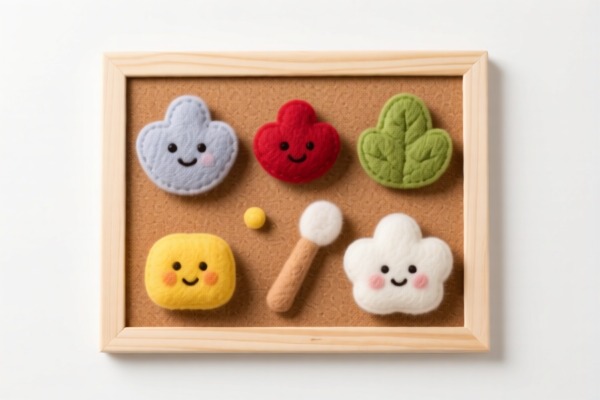
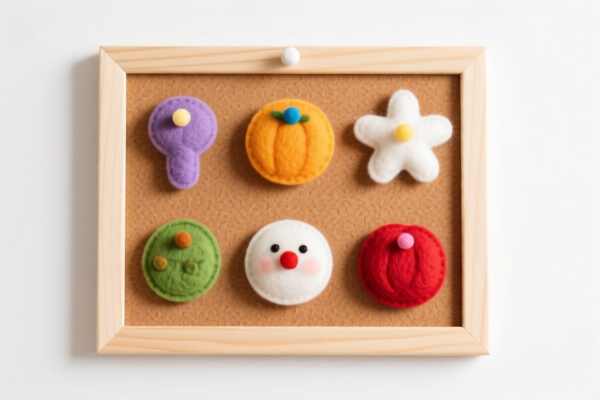
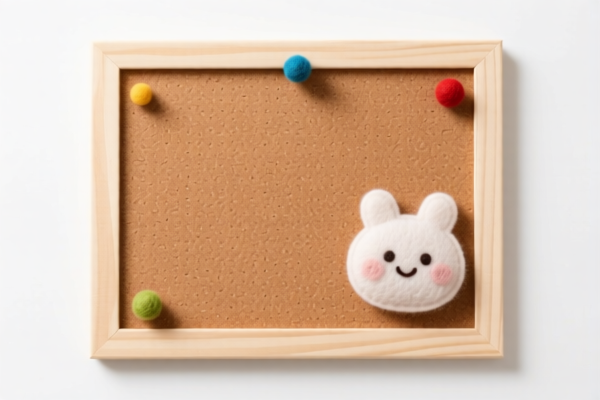
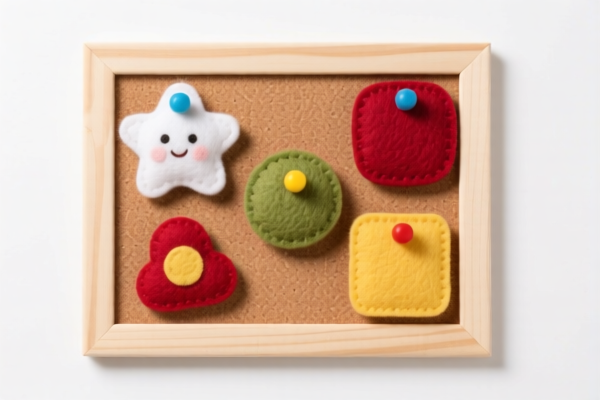
AI Analysis
🎨 Felt Learning Board (Educational Felt Products)
🌐 HS Code Reference & Customs Clearance Guide | 2026 Latest Tariff Analysis | Professional Clearance Strategy
📌 I. Product Definition & Classification: Do You Really Understand "Felt Learning Boards"?
A Felt Learning Board (also known as an educational felt board, puzzle board, or craft kit) is a pedagogical tool made primarily from compressed animal or synthetic fibers. In international trade, these items are classified not as textiles per se, but as manufactured articles of textile materials.
The classification depends heavily on the specific composition and end-use: 1. Generic Craft/Decorative Articles: If the felt board is a blank sheet or a simple puzzle board without specific functional accessories, it falls under "Other made up articles." 2. Specific Household/Textile Accessories: If the product is specifically identified as a shelf liner, pillow shell, or decorative textile item, it may fall under more specific sub-headings for "Other made up articles."
⚠️ Key Distinction:
- If the item is a general craft item (e.g., a blank felt sheet for cutting, or a generic educational board) →归入 6307.90.98.91 (Other made up articles).
- If the item is specifically a pillow shell, quilt shell, or cotton towel variant within the felt category (less common for "learning boards" but possible in broad textile definitions) →归入 6307.90.89.95 (Specific textile articles like pillow shells).
- Note: For a standard "Felt Learning Board" used in education/crafts, 6307.90.98.91 is the most likely accurate classification as a general "made up article." The data provided includes two distinct HS codes, so we must analyze both.
📦 II. HS Code Classification Details (2026 Latest Tariff Authority Comparison)
| HS Code | Product Description | Applicable Scenario | Tax Rate (Total) |
|---|---|---|---|
6307.90.98.91 |
Other made up articles, including dress patterns: Other: Other (General Category) | Blank felt sheets, generic educational boards, craft cutouts, non-specific textile accessories | 14.5% |
6307.90.89.95 |
Other made up articles: Surgical towels; cotton towels; pillow shells; shells for quilts... (Specific Textile Items) | Products specifically identified as pillow shells, quilt shells, or cotton towels made of felt/textile | 0.0% |
🔍 Critical Analysis:
-6307.90.98.91is the standard classification for most "Felt Learning Boards" if they are considered general craft/educational tools. It attracts a 14.5% tariff.
-6307.90.89.95is a specific exception for certain household textile items (like pillow shells). Unless your "Felt Learning Board" is explicitly manufactured and marketed as a pillow shell or quilt shell (which is unlikely for an educational product), this code likely does NOT apply.
- Risk: Misclassifying a general felt board as6307.90.89.95to avoid tariffs can lead to severe penalties, back taxes, and shipment delays.
💰 III. 2026 Latest Tariff Rate Details (Including Additional Taxes & Policies)
✅ Applicable Country: United States (US)
✅ Origin: China (CN) (Assumed based on typical "made up articles" supply chain; adjust if origin differs)
✅ Effective Date: Current as of 2026 tariff schedules
🎯 1. 6307.90.98.91 —— Other Made Up Articles (General)
| Item | Content |
|---|---|
| Base Tariff Rate | 7.0% (Ad Valorem) |
| Section 301 Additional Tariff | +7.5% (Specific to this sub-heading under USITC rulings) |
| Total Tariff Rate | 14.5% |
| Tax Calculation | CIF Value × 14.5% |
| De Minimis Exemption? | ❌ No (deny_de_minimis). Values under $800 do not bypass this tariff for China-origin goods. |
| Legal Basis Path | HTSUS:6307.90.98.91 → USITC Section 301 Footnote → IEEPA/Trade Act Provisions |
📌 Explanation:
- The 7.0% base rate is the standard Most Favored Nation (MFN) rate for general made-up textile articles.
- The 7.5% additional tariff is a result of specific trade actions against Chinese imports in the "6307" category.
- Total 14.5% is a moderate-to-high tariff for textile crafts, significantly impacting cost margins for bulk shipments.
🎯 2. 6307.90.89.95 —— Specific Textile Articles (Pillow Shells, etc.)
| Item | Content |
|---|---|
| Base Tariff Rate | 0.0% |
| Additional Tariff | 0.0% |
| Total Tariff Rate | 0.0% |
| Tax Calculation | $0 (Free Entry) |
| De Minimis Exemption? | N/A (Since base is 0%) |
| Legal Basis Path | HTSUS:6307.90.89.95 → Specific Exclusion List |
📌 Caution:
- This 0% rate is ONLY valid if the product is explicitly a pillow shell, quilt shell, or similar specific household textile item.
- Do NOT use this code for a "Learning Board" unless it is literally a decorative pillow shell. Using it for a generic felt board is misclassification.
🛠️ IV. Customs Clearance Practical Advice (Real-World Pitfall Guide)
✅ 1. Required Documentation Checklist (Mandatory)
| Document | Must Provide | Description |
|---|---|---|
| ✅ Product Specification Sheet | ✔️ | Material composition (100% polyester felt? Wool? Mixed?), dimensions, thickness. |
| ✅ Product Photos | ✔️ | Clear images showing the board, any attached pieces (letters, shapes), and packaging. |
| ✅ Commercial Invoice | ✔️ | Must clearly state: "Felt Educational Learning Board, HS Code 6307.90.98.91". Avoid vague terms like "Toy" or "Textile." |
| ✅ Material Declaration | ✔️ | Confirm if the felt is synthetic (polyester/nylon) or animal fiber (wool), as this affects sub-classification within 6307. |
| ✅ Packaging List | ✔️ | Details of quantity per carton, gross weight, net weight. |
✅ 2. Declaration Tips (Key Mnemonics)
🔥 "Be Specific, Don’t Generalize! 'Other' is for Crafts, 'Shells' are for Beds!"
| Scenario | Correct Declaration | Wrong Declaration |
|---|---|---|
| Generic Felt Board with Letters/Numbers | 6307.90.98.91 (Other made up articles) |
"Puzzle Board" (Too vague) |
| Blank Felt Sheet for Cutting | 6307.90.98.91 |
"Fabric" (Incorrect, it's made up) |
| Felt Pillow Case for Decor | 6307.90.89.95 (If confirmed pillow shell) |
"Felt Board" (Misleading) |
| Felt Toy/Character Cutout | 6307.90.98.91 |
"Toy" (May fall under Ch. 95, different rules) |
✅ 3. Special Cases & Handling
| Situation | Handling Advice |
|---|---|
| Set with Board + Felt Pieces | Declare as a single set under 6307.90.98.91. Do not split the board and pieces into separate line items unless they are sold separately. |
| Custom Design/Logo | Provide a photo of the logo-printed felt board. This confirms it is a "made up article" and not raw fabric. |
| Origin: Non-China (e.g., Vietnam) | If the felt is sourced from Vietnam and assembled there, verify if USMCA/FTAs or De Minimis rules apply. Tariffs may be lower or exempt. |
| High-Value Shipment | For shipments >$2,500, ensure ISF (Importer Security Filing) is filed 24 hours before loading. |
🌍 V. Global Market Comparison (2026 Latest)
| Country/Region | Recommended HS Code | Tariff Rate | Certification Requirements | Notes |
|---|---|---|---|---|
| 🇺🇸 USA | 6307.90.98.91 |
14.5% | CPSIA (if for children <12), ASTM F963 | 14.5% applies to China origin. |
| 🇨🇳 China | 6307.90.98.91 |
5-7% | CCC (if applicable) | Import duty for foreign felt boards. |
| 🇪🇺 EU | 6307.90.98 |
6.5% | CE (if toy-like), REACH | No Section 301 equivalent, but higher base rate. |
| 🇬🇧 UK | 6307.90.98 |
6.5% | UKCA | Post-Brexit rules apply. |
| 🇨🇦 Canada | 6307.90.98 |
6.5% | CAN/CGSB | CETA may offer reductions for EU goods. |
📌 Conclusion:
- The USA is the most challenging market for Chinese-made felt educational products due to the 14.5% effective tariff.
- Zero Tariff (6307.90.89.95) is NOT an option for standard learning boards. Do not attempt to exploit this for cost savings.
📌 VI. Common Errors & Pitfalls (Blood & Tears Lessons)
❌ Error 1: Declaring "Felt Board" as "Textile Fabric"
👉 Consequence: HS Code mismatch → Seizure or Red Flag Inspection. Felt boards are "made up articles," not raw fabric.
❌ Error 2: Trying to use 6307.90.89.95 (0% rate) for a generic board
👉 Consequence: Customs audit → Back taxes + 20% penalty for misdeclaration. The 0% rate is strictly for pillow/quilt shells.
❌ Error 3: Ignoring the "Made Up Article" definition
👉 Consequence: Declaring as "Plastic Toy" (if felt has plastic backing) → Wrong HS Code → Different tariff and regulatory requirements.
✅ Correct Practice:
"Felt Educational Learning Board, 100% Polyester Felt, with Printed Letters, HS Code 6307.90.98.91, Origin: China, Value: $X"
🎯 VII. Conclusion: Professional Declaration, Save Costs & Time!
🎯 Remember the Mantra:
🔹 "Felt Boards are 'Made Up', Not 'Raw'."
🔹 "0% is for Pillows, 14.5% is for Crafts."
🔹 "Always declare the correct HS Code to avoid Customs Penalties."
📌 Pro Tip:
If your Felt Learning Boards are intended for children under 12, ensure you also comply with CPSIA (Consumer Product Safety Improvement Act) and ASTM F963 standards. Even though the tariff is based on textile classification, safety compliance is mandatory for entry into the US.
📣 Immediate Action:
📞 Verify material composition (Wool vs. Polyester).
📄 Ensure your Commercial Invoice clearly states "Felt Educational Learning Board, HS 6307.90.98.91".
🚀 Prepare for 14.5% Tariff in your cost calculation to maintain profit margins!
✨ Professional Customs Clearance Starts with Accurate Classification!
💼 Your Cost Efficiency Depends on Precision!
Customer Reviews
About HS Code Classification
The Harmonized System (HS) is an internationally standardized nomenclature developed by the World Customs Organization (WCO) to classify traded products. Over 200 countries use the HS system as the basis for customs tariffs, trade statistics, and import/export regulations.
Each HS code follows a hierarchical structure:
- Chapter (2 digits) — Broad category of goods (e.g., Chapter 84: Machinery and Mechanical Appliances)
- Heading (4 digits) — More specific grouping within the chapter
- Subheading (6 digits) — Internationally standardized breakdown, used by all WCO member countries
- National subdivisions (8-10 digits) — Country-specific extensions for further classification, such as US HTSUS 10-digit codes
Correct HS code classification is essential for smooth customs clearance, accurate duty payment, and compliance with trade regulations. Misclassification can lead to customs delays, overpayment of duties, or penalties.
When importing from CN to US, the applicable tariff rates may include:
- Most-Favored-Nation (MFN) rate — The standard duty rate applied to WTO members
- General rate — Applied to countries without trade agreements
- Trade remedy duties — Additional tariffs such as Section 301 (anti-dumping), Section 232 (national security), or countervailing duties
The information provided on this page is for reference purposes only. For official classification, please consult with your local customs authority or a licensed customs broker.