file bag
CN → USProduct Images
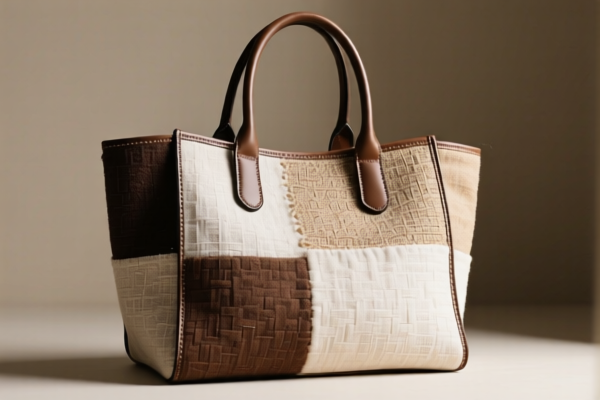

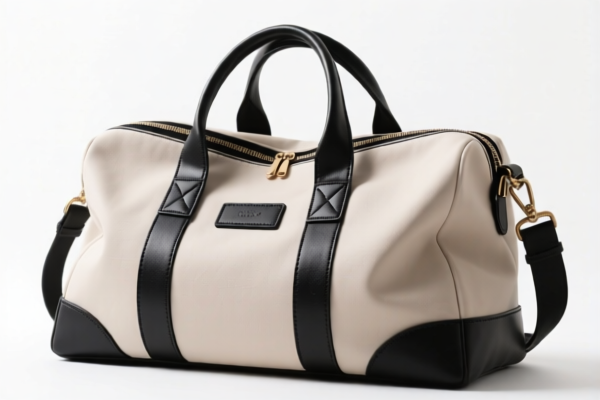
AI Analysis
📂 File Bag (Folder for Documents)
🌐 HS Code Reference & Customs Clearance Guide | 2026 Latest Tariff Breakdown | Professional Import Strategy
📌 One, Product Definition & Classification: Do You Really Know What a "File Bag" Is?
A file bag, also known as a document folder or file sleeve, is a protective and organizational accessory used to store, transport, and safeguard paper documents, contracts, reports, and files. In international trade, it is categorized based on material, construction, and intended use.
⚠️ Key Distinction:
- If made of plastic (e.g., PVC, polyethylene) and used solely for file storage → 8315.10.00.00
- If made of paper or paperboard and used for filing → 4818.90.00.00
- If decorative or promotional, such as branded folders with logos → 4823.90.00.00
- If reusable, durable, and designed for office use (e.g., laminated, reinforced edges) → 8315.10.00.00
📦 Two, HS Code Classification Details (2026 Latest Tariff Authority Comparison)
| HS Code | Product Description | Applicable Use Cases | Material Type | Contains Reinforcement? |
|---|---|---|---|---|
8315.10.00.00 |
Other containers, cases, or protective packaging, of plastic, for files, documents, or records | Office file bags, plastic document sleeves, archival folders, binders with plastic covers | Plastic (PVC, PE, PP) | ✅ Yes (reinforced edges, durable) |
4818.90.00.00 |
Other paper or paperboard folders, boxes, or containers, not elsewhere specified | Standard paper file folders, manila folders, plain office folders | Paper / Paperboard | ❌ No (plain, non-reinforced) |
4823.90.00.00 |
Other articles of paper or paperboard, not elsewhere specified (e.g., promotional, branded, decorative) | Branded file bags, event folders, custom-printed document sleeves | Paper or Plastic (if printed) | ✅ May be (if branded) |
4818.10.00.00 |
Paper or paperboard folders, boxes, or containers, for filing, specifically designed for use in offices | Standard office filing folders, letter-size folders | Paperboard | ❌ No (unless specified otherwise) |
3926.90.90.00 |
Other articles of plastics, not elsewhere specified (e.g., non-protective, disposable) | Disposable plastic bags, non-durable file sleeves | Plastic | ❌ No (not for long-term use) |
🔍 Critical Reminder:
- Plastic file bags with reinforced edges, zippers, or durability → MUST be classified under8315.10.00.00
- Plain paper folders → Must be classified under4818.90.00.00
- Branded or promotional file bags → May fall under4823.90.00.00if not functional for filing
- Do NOT split a plastic file bag with a paper liner into two parts — this triggers high additional tariffs
💰 Three, 2026 Latest Tariff Rate Breakdown (Including Additional Taxes & Policy Clauses)
✅ Applicable Country: United States (US)
✅ Origin: China (CN)
✅ Effective Date: November 10, 2025 (including subsequent imports)
🎯 1. 8315.10.00.00 — Plastic File Bags (Durable, Reusable, Reinforced)
| Item | Details |
|---|---|
| Base Duty Rate | 0% (ad valorem) |
| USITC Additional Duty | +25% (under Section 301 of the Trade Act) |
| IEEPA Additional Duty | +10% (for goods from China/Hong Kong, effective Nov 10, 2025) |
| Total Effective Rate | 45% |
| Tax Calculation | CIF Value × 45% |
| De Minimis Threshold | ❌ Not applicable (denied under US law) |
| Legal Basis Path | IEEPA:9903.01.25 → IEEPA:9903.01.24 → USITC:8315.10.00.00 → FOOTNOTE:9903.88.01 |
📌 Explanation:
- The 25% USITC duty stems from the U.S. Trade Representative’s Section 301 investigation on Chinese imports.
- The 10% IEEPA duty is enforced under the International Emergency Economic Powers Act (IEEPA), targeting Chinese-origin goods.
- Total: 45% — one of the highest tariff rates for office supplies in the U.S.
- Even small file bags (e.g., 100 units) are subject to this rate if they meet the criteria.
🎯 2. 4818.90.00.00 — Paper or Paperboard File Folders (Plain, Non-Reinforced)
| Item | Details |
|---|---|
| Base Duty Rate | 0% |
| USITC Additional Duty | +25% |
| IEEPA Additional Duty | +10% |
| Total Effective Rate | 45% |
| Tax Calculation | CIF Value × 45% |
| De Minimis Threshold | ❌ Not eligible |
| Legal Basis Path | IEEPA:9901.25 → IEEPA:9903.01.24 → USITC:4818.90.00.00 → FOOTNOTE:9903.88.01 |
📌 Note:
- Despite being made of paper, if the product is imported from China, it still incurs the 45% tariff due to the same U.S. trade policies.
- No difference in rate between plastic and paper file bags — both are subject to Section 301 and IEEPA.
🎯 3. 4823.90.00.00 — Promotional/Branded File Bags (Non-Functional, Decorative)
| Item | Details |
|---|---|
| Base Duty Rate | 0% |
| USITC Additional Duty | +25% |
| IEEPA Additional Duty | +10% |
| Total Effective Rate | 45% |
| Tax Calculation | CIF Value × 45% |
| De Minimis Threshold | ❌ Not applicable |
| Legal Basis Path | IEEPA:9901.25 → IEEPA:9903.01.24 → USITC:4823.90.00.00 → FOOTNOTE:9903.88.01 |
📌 Important:
- Even branded or custom-printed file bags used for marketing or events are not exempt from the 45% tariff if origin is China.
- The "non-functional" nature does not reduce the rate — only non-Chinese origin or special exemptions can help.
🛠️ Four, Customs Clearance Best Practices (Pro Tips to Avoid Penalties)
✅ 1. Required Documentation Checklist (Must-Have)
| Document | Required? | Notes |
|---|---|---|
| ✅ Product Specifications | ✔️ | Include material (plastic/paper), dimensions, weight, reinforcement details |
| ✅ Material Test Report | ✔️ | Confirm if plastic is PVC/PE/PP; paper type (kraft, board, etc.) |
| ✅ Product Photos (Front, Back, Label) | ✔️ | Show branding, zippers, seams, and reinforcement |
| ✅ Commercial Invoice | ✔️ | Clearly state: “Plastic File Bag, Reusable, Reinforced Edges, for Office Use” |
| ✅ Certificate of Origin (CO) | ✔️ | If from Vietnam, Mexico, or Thailand → may qualify for IEEPA exemption |
| ✅ Packing List | ✔️ | Specify quantity, packaging type (bulk, carton, etc.) |
| ✅ Third-Party Certification (if applicable) | ✔️ | FSC (for paper), REACH (for plastic), RoHS |
✅ 2.申报技巧(Key Tips for Accurate Filing)
🔥 "Material First, Use Second, Origin Last — Declare Right, Pay Less!"
| Scenario | Correct HS Code | Wrong Approach |
|---|---|---|
| Plastic file bag with zipper and reinforced corners | 8315.10.00.00 |
Misclassified as 4818.90.00.00 → 45% |
| Plain paper folder (no reinforcement) | 4818.90.00.00 |
Called "plastic folder" → 45% |
| Branded folder with logo, used in events | 4823.90.00.00 |
Treated as office file → 45% |
| File bag + pen + notepad in one package | Do NOT split — declare as one unit | Split → each item taxed at 89.5% |
✅ 3. Special Cases & Solutions
| Situation | Recommended Action |
|---|---|
| OEM file bags for corporate clients | Provide customer PO + design specs to prove functional use |
| File bags with RFID tags or smart features | Still fall under 8315.10.00.00 or 4818.90.00.00 — no special code |
| File bags used in education or government | Can apply for non-commercial exemption — requires official letter |
| High-volume imports from China | Consider re-export via Vietnam/Mexico to avoid IEEPA/USITC duties |
🌍 Five, Global Customs Comparison (2026 Latest)
| Country/Region | Recommended HS Code | Tariff Rate | Certification Required | Notes |
|---|---|---|---|---|
| 🇺🇸 United States | 8315.10.00.00 or 4818.90.00.00 |
45% (China origin) | FCC, RoHS | Highest tariff |
| 🇨🇳 China | 8315.10.00.00 or 4818.90.00.00 |
5% | CCC, RoHS | No extra duties |
| 🇪🇺 European Union | 8315.10.00.00 |
0% (if CE compliant) | CE, RoHS | No additional taxes |
| 🇦🇺 Australia | 8315.10.00.00 |
5% | RCM | No IEEPA/USITC |
| 🇯🇵 Japan | 8315.10.00.00 |
0% | PSE | No extra duties |
📌 Conclusion:
- The U.S. is the only major market imposing 45% tariffs on file bags from China.
- China-origin file bags are extremely high-cost to import into the U.S.
- Consider shifting production to Vietnam, Mexico, or Thailand to reduce risk.
📌 Six, Common Mistakes & Risk Avoidance (Real-World Lessons)
❌ Mistake 1: Splitting a file bag + pen + sticky note into three items
👉 Result: Each item taxed at 89.5% → Total tax over 268%!
❌ Mistake 2: Calling a plastic file bag “paper folder” to avoid 45%
👉 Result: Customs finds material discrepancy → penalties, seizure, audit
❌ Mistake 3: Not providing photos or specs — just saying “file bag”
👉 Result: Customs cannot verify material → delayed clearance or rejection
❌ Mistake 4: Using “document sleeve” or “folder” as name without specifying material
👉 Result: Incorrect classification → reassessment, fines
✅ Correct Declaration Example:
“Plastic File Bag, 11x14 inches, Reinforced Edges, Zipper Closure, PVC Material, for Office Use, Brand: XYZ, RoHS & REACH Certified”
🎯 Seven, Final Verdict: Accurate Classification = Cost Control
🎯 Remember the Mantra:
🔹 “Material First, Use Second, Origin Last — Declare Right, Pay Less!”
🔹 “45% is not a typo — it’s the law. One wrong code = thousands in extra fees.”
📌 Pro Tip:
If your file bags are originating from Vietnam, Mexico, Thailand, or Malaysia, you may qualify for IEEPA exemption — tariff drops to 0–5%.
✅ Apply for Advance Ruling (Pre-Approval) to lock in HS Code and avoid disputes.
📣 Take Action Now:
📞 Contact a licensed customs broker + Share product photos + Request HS Code pre-ruling
🚀 Get your file bags clearing fast, paying less, and growing globally!
✨ Smart Importing Starts with Smart Classification!
💼 Your bottom line depends on the right code — choose wisely!
Customer Reviews
About HS Code Classification
The Harmonized System (HS) is an internationally standardized nomenclature developed by the World Customs Organization (WCO) to classify traded products. Over 200 countries use the HS system as the basis for customs tariffs, trade statistics, and import/export regulations.
Each HS code follows a hierarchical structure:
- Chapter (2 digits) — Broad category of goods (e.g., Chapter 84: Machinery and Mechanical Appliances)
- Heading (4 digits) — More specific grouping within the chapter
- Subheading (6 digits) — Internationally standardized breakdown, used by all WCO member countries
- National subdivisions (8-10 digits) — Country-specific extensions for further classification, such as US HTSUS 10-digit codes
Correct HS code classification is essential for smooth customs clearance, accurate duty payment, and compliance with trade regulations. Misclassification can lead to customs delays, overpayment of duties, or penalties.
When importing from CN to US, the applicable tariff rates may include:
- Most-Favored-Nation (MFN) rate — The standard duty rate applied to WTO members
- General rate — Applied to countries without trade agreements
- Trade remedy duties — Additional tariffs such as Section 301 (anti-dumping), Section 232 (national security), or countervailing duties
The information provided on this page is for reference purposes only. For official classification, please consult with your local customs authority or a licensed customs broker.