file folder
CN → US| HS Code | Tariff Rate | Origin | Destination | Doc |
|---|---|---|---|---|
| 4820300040 | 35.0% | CN | US | Official Doc |
| 4820300020 | 35.0% | CN | US | Official Doc |
| 3926908700 | 40.3% | CN | US | Official Doc |
| 4202322000 | 55.0% | CN | US | Official Doc |
| 3926909989 | 22.8% | CN | US | Official Doc |
Product Images
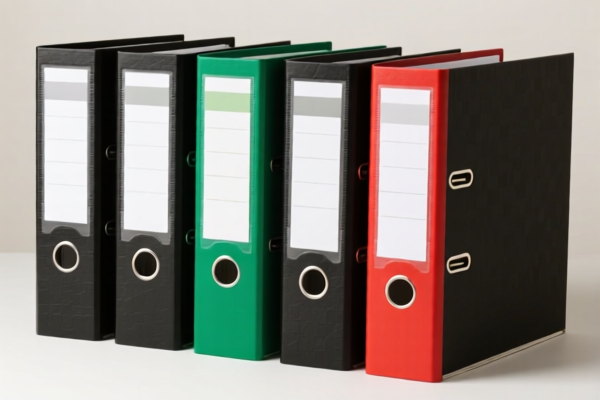
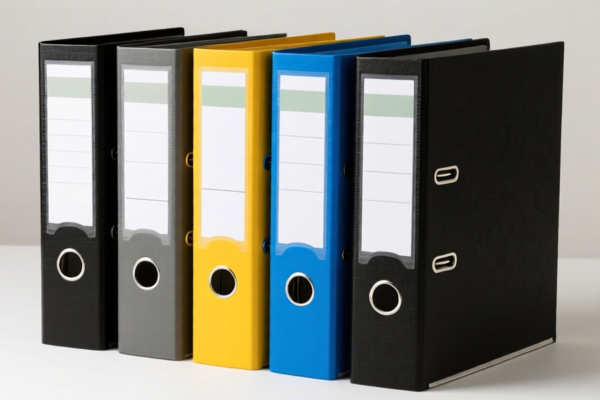
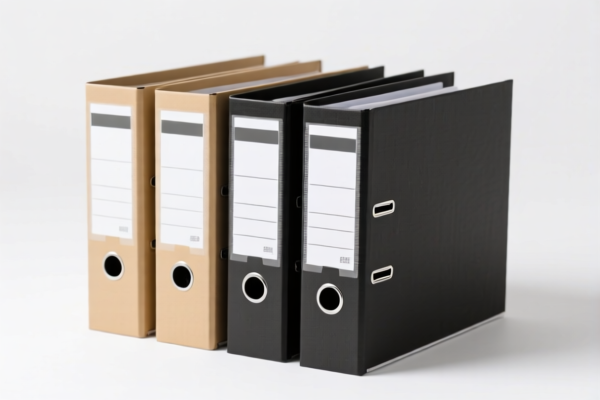

AI Analysis
📁 File Folders: The Ultimate Guide to HS Code Classification & US Tariffs (2026)
🌐 HS Code Reference & Clearance Guide | 2026 Latest Tariff Analysis | Professional Entry Strategy
📌 I. Product Definition & Classification: Do You Really Know "File Folders"?
File folders are essential office supplies used for organizing, storing, and transporting documents. In international trade, they are NOT a single uniform category. Their tariff fate depends entirely on their material composition and physical structure.
Key Distinction: 1. Paper/Cardboard Folders: Simple, lightweight, traditional office supplies. 2. Plastic/Composite Folders: Durable, often with reinforced edges or outer layers. 3. Containers/Boxes: Thick-walled or rigid structures used for bulk storage.
⚠️ Critical Classification Logic:
- Paper/Cardboard only → 4820 (Paper Office Supplies)
- Plastic exterior or "Container" style → 4202 or 3926 (Plastics/Containers)
- Unclear Material → 3926 (Plastic fallback category)
📦 II. HS Code Classification Details (2026 Official Tariff Schedule)
| HS Code | Product Description | Material Composition | Typical Use Case |
|---|---|---|---|
| 4820.30.00.40 | Paper or Paperboard File Folders | 100% Paper/Cardboard | Standard office folders, report covers |
| 4820.30.00.20 | Paper or Paperboard File Folders | 100% Paper/Cardboard | Ring binders, standard classification folders |
| 3926.90.87.00 | Plastic Flat Folders | 100% Plastic | Thin plastic sheet folders, document sleeves |
| 4202.32.20.00 | Folders with Plastic Outer Surface | Plastic Surface + Core | Rigid folders, plastic-coated containers |
| 3926.90.99.89 | Unspecified Material Folders | Plastic or Mixed (Unknown) | Generic plastic/paper mix, undefined |
🔍 Key Warning:
- 4820 items are "Paper Office Supplies."
- 3926 items are "Other Articles of Plastic."
- 4202 items are "Trunks, Suits, Cases" (Classified here due to container-like structure).
Misclassifying a plastic folder as paper can lead to severe audits!
💰 III. 2026 US Tariff Rate Breakdown (Comprehensive Analysis)
✅ Target Market: United States (US)
✅ Origin: China (CN)
✅ Effective Date: 2025/2026 (Current Trade War Measures Active)
📉 Structure: Base Rate + Section 301 (Add-on) + Section 122 (New Add-on)
🎯 1. 4820.30.00.40 & 4820.30.00.20 (Paper Folders)
The "Standard Office" Category
| Item | Details |
|---|---|
| Base Tariff | 0.0% (Duty-free under normal conditions) |
| Section 301 (Add-on) | +25.0% (Retaliatory Tariff on Chinese Goods) |
| Section 122 Tariff | +10.0% (New "122" Clause on Office Supplies) |
| Total Effective Rate | 🔴 35.0% |
| Calculation | CIF Value × 35% |
| De Minimis | ❌ NO (Not exempt from small parcel rules) |
| Legal Path | USITC: 4820.30.00 → Section 301: Footnote 3 → Section 122: 4820.30 |
📌 Interpretation:
Even though paper is "low tech," the Section 122 clause specifically targets Chinese office stationery imports, slapping an extra 10% on top of the standard 301 tariffs. Total cost increases by 35%!
🎯 2. 3926.90.87.00 (Plastic Flat Folders)
The "Pure Plastic" Category
| Item | Details |
|---|---|
| Base Tariff | 5.3% (Standard MFN Rate) |
| Section 301 (Add-on) | +25.0% |
| Section 122 Tariff | +10.0% |
| Total Effective Rate | 🔴 40.3% |
| Calculation | (CIF Value × 5.3%) + (CIF Value × 35%) |
| De Minimis | ❌ NO |
| Legal Path | USITC: 3926.90.87 → Section 301 → Section 122 |
📌 Interpretation:
Plastic folders start with a base duty. However, the 301 + 122 surcharges push the total to 40.3%. This makes plastic folders significantly more expensive to import than paper ones, unless they are reclassified under a different code.
🎯 3. 4202.32.20.00 (Folders with Plastic Surface - Container Type)
The "Heavy Duty/Container" Category (Highest Risk)
| Item | Details |
|---|---|
| Base Tariff | 20.0% (High base duty for "Containers") |
| Section 301 (Add-on) | +25.0% |
| Section 122 Tariff | +10.0% |
| Total Effective Rate | 🚨 55.0% |
| Calculation | (CIF Value × 20%) + (CIF Value × 35%) |
| De Minimis | ❌ NO |
| Legal Path | USITC: 4202.32 → Section 301 → Section 122 |
📌 Interpretation:
DANGER ZONE! If your "folder" looks like a rigid container or has a thick plastic outer shell, it may be classified under 4202. This triggers a 20% base duty before taxes are added. Total tariff hits 55%! This is the most expensive classification.
🎯 4. 3926.90.99.89 (Unspecified/Mixed Material Folders)
The "Fallback" Category
| Item | Details |
|---|---|
| Base Tariff | 5.3% (Plastic fallback rate) |
| Section 301 (Add-on) | +7.5% (Lower 301 rate for specific sub-items) |
| Section 122 Tariff | +10.0% |
| Total Effective Rate | 🟠 22.8% |
| Calculation | (CIF Value × 5.3%) + (CIF Value × 17.5%) |
| De Minimis | ❌ NO |
| Legal Path | USITC: 3926.90.99 → Section 301 → Section 122 |
📌 Interpretation:
This is a "catch-all" for unclear plastic/paper mixes. Interestingly, the Section 301 rate is lower (7.5%) for this specific sub-category compared to standard plastics. Total: 22.8% (The lowest tax rate among the options, but risky if the product doesn't strictly fit).
🛠️ IV. Customs Clearance Practical Advice (Avoid the Pitfalls)
✅ 1. Documentation Checklist (Non-Negotiable)
| Document | Requirement | Why It Matters |
|---|---|---|
| Product Specification Sheet | ✔️ Must list material % (Paper vs. Plastic) | Determines 4820 vs. 3926/4202 |
| Cross-Section Photo | ✔️ Show layers (Core + Surface) | Proves if it's "Paper" or "Plastic Container" |
| Material Certificate | ✔️ ISO/RoHS test report | Confirms "Plastic" vs. "Paper" origin |
| Commercial Invoice | ✔️ Clear description: "Paper Folder" vs. "Plastic Folder" | Prevents "Unknown Material" classification (3926.99) |
| Origin Declaration | ✔️ "Made in China" | Triggers 301 + 122 tariffs |
✅ 2. Declaration Strategy (The "Golden Rules")
🔥 Rule: "Material Dictates Tax; Structure Dictates Code."
| Scenario | Recommended HS Code | Strategy |
|---|---|---|
| Pure Paper Folder | 4820.30.00.40 |
Best Value. Lowest base tax (0%), but still 35% total. |
| Thin Plastic Sleeve | 3926.90.87.00 |
High Risk. 40.3% total. Check if it fits 4820 (no). |
| Rigid/Box-like Folder | 4202.32.20.00 |
Avoid! 55% tax is punitive. Try to redesign as "folder" not "container". |
| Mixed/Recycled Material | 3926.90.99.89 |
Moderate Risk. 22.8% is lower, but requires strict material proof. |
✅ 3. Special Circumstances
| Situation | Recommendation |
|---|---|
| "Unspecified Material" | If you ship mixed paper/plastic without clear labeling, Customs will assign 3926.99.89 (22.8%). Avoid this ambiguity; be specific! |
| Re-shipping (Transshipment) | If routed through Vietnam/Malaysia, ensure Substantial Transformation occurs. Otherwise, Country of Origin remains China → Still 301/122 taxes! |
| Small Parcel (De Minimis) | ❌ Not Applicable. File folders > $800 (US) are subject to full duties. Do not attempt to split shipments to evade $800 threshold; it triggers audits. |
🌍 V. Global Market Comparison (2026 Tariff Snapshot)
| Destination | Recommended HS Code | Total Tax (CN Origin) | Key Constraint |
|---|---|---|---|
| 🇺🇸 USA | 4820.30.00.40 |
35.0% | Heavy Section 301 + 122 taxes |
| 🇪🇺 EU | 4820.20 |
5.0% (Approx) | Standard tariff, no 301/122 |
| 🇨🇳 China | 4820.30.00 |
0.0% | Domestic production, no import tax |
| 🇯🇵 Japan | 4820.20 |
6.0% | Standard tariff, no extra clauses |
📌 Conclusion: The US market is unique due to the 35% - 55% tax burden on file folders. This is significantly higher than other major markets.
📌 VI. Common Errors & "Blood Tears" Lessons
❌ Mistake 1: Calling a rigid plastic container a "Folder" to get 4820 rate.
👉 Result: Customs reclassifies as 4202.32.20.00 → 55% Tax + Fine!
❌ Mistake 2: Shipping "Mixed Material" folders as "Paper."
👉 Result: Rejected at border, forced to re-classify to 3926.99.89 (22.8%) + Delays.
❌ Mistake 3: Ignoring the "122 Clause".
👉 Result: Underestimating costs by 10%. The 122 clause is new and mandatory for office supplies.
✅ Correct Approach:
"Describe exactly what it is. If it's paper, say 'Paper Folder'. If it's plastic, say 'Plastic Folder'. If it's a container, expect 55% tax."
🎯 VII. Final Verdict: Strategic Sourcing & Cost Saving
🎯 Key Takeaway:
"Paper wins on tax, Plastic is risky, Containers are expensive."
- Optimize Product Design: Use 100% Paper/Cardboard (
4820) to avoid high base rates. - Avoid "Container" Shapes: Do not make folders too rigid or box-like; stick to flat, flexible structures to stay in
4820or3926.87. - Material Transparency: Always declare the exact material ratio. Ambiguity leads to the worst-case scenario (
4202). - Cost Calculation:
- Paper Folder: Budget 35% of value for tax.
- Plastic Folder: Budget 40.3% of value.
- Container Folder: Budget 55% (High Risk!).
📌 Pro Tip:
If you are importing into the US, consider pre-classification rulings from US Customs (CBP) if your product has mixed materials. This avoids surprise 55% taxes at the port!
📣 Take Action Now:
🔹 Verify Material: Is it truly paper?
🔹 Check Structure: Is it a "folder" or a "container"?
🔹 Calculate Total Duty: Add 35% to 55% to your cost basis immediately.
Don't let tariff shocks eat your profit margins!
🚀 Clear Customs, Save Money, Ship with Confidence!
✨ Professional Classification Starts with Precision!
💼 Your Folder, Your Tariff, Your Strategy.
Customer Reviews
About HS Code Classification
The Harmonized System (HS) is an internationally standardized nomenclature developed by the World Customs Organization (WCO) to classify traded products. Over 200 countries use the HS system as the basis for customs tariffs, trade statistics, and import/export regulations.
Each HS code follows a hierarchical structure:
- Chapter (2 digits) — Broad category of goods (e.g., Chapter 84: Machinery and Mechanical Appliances)
- Heading (4 digits) — More specific grouping within the chapter
- Subheading (6 digits) — Internationally standardized breakdown, used by all WCO member countries
- National subdivisions (8-10 digits) — Country-specific extensions for further classification, such as US HTSUS 10-digit codes
Correct HS code classification is essential for smooth customs clearance, accurate duty payment, and compliance with trade regulations. Misclassification can lead to customs delays, overpayment of duties, or penalties.
When importing from CN to US, the applicable tariff rates may include:
- Most-Favored-Nation (MFN) rate — The standard duty rate applied to WTO members
- General rate — Applied to countries without trade agreements
- Trade remedy duties — Additional tariffs such as Section 301 (anti-dumping), Section 232 (national security), or countervailing duties
The information provided on this page is for reference purposes only. For official classification, please consult with your local customs authority or a licensed customs broker.