filling equipment
CN → US| HS Code | Tariff Rate | Origin | Destination | Doc |
|---|---|---|---|---|
| 8479820040 | 35.0% | CN | US | Official Doc |
| 8479820080 | 35.0% | CN | US | Official Doc |
| 8422309140 | 35.0% | CN | US | Official Doc |
| 8422309130 | 35.0% | CN | US | Official Doc |
Product Images
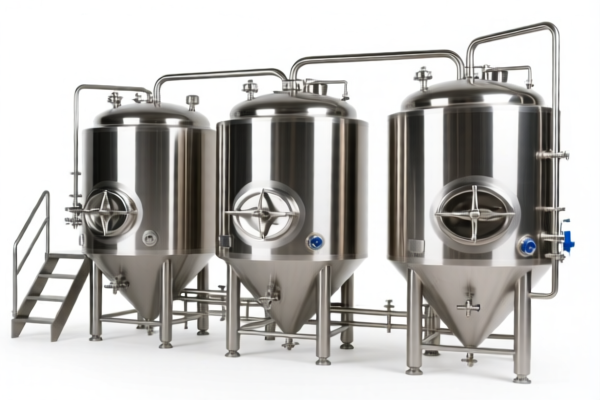
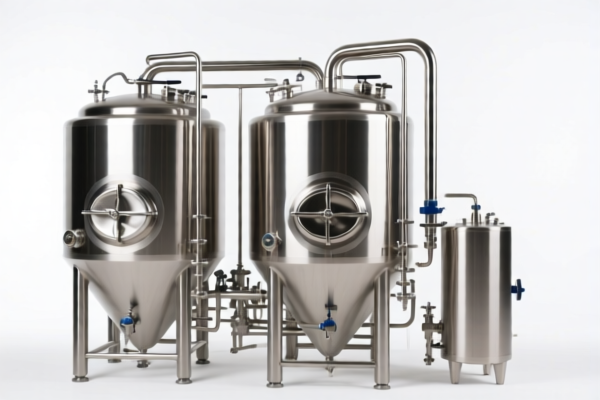
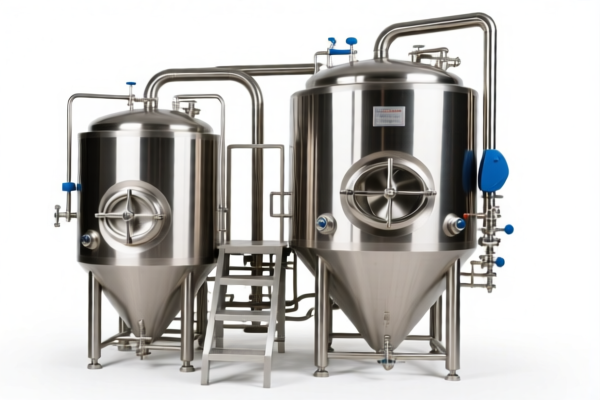
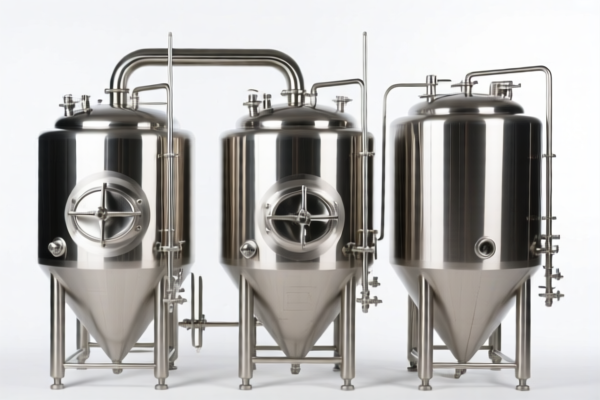
AI Analysis
🏭 Filling Equipment (Machinery for Bottles/Cans)
🌐 HS Code Reference & Customs Clearance Guide | 2026 Latest Tariff Analysis | Professional Clearance Strategy
📌 I. Product Definition & Classification: Do You Really Understand "Filling Equipment"?
Filling machinery is the heart of the packaging line, essential for food & beverage, pharmaceuticals, cosmetics, and chemicals. In international trade, these machines are not a monolith; their classification depends heavily on whether they perform other operations (like capping or labeling) and the method of filling (e.g., vacuum vs. gravity).
Two Main Categories:
- General Filling Machines: Machines designed primarily to fill bottles, cans, or similar containers, whether or not they can perform minor auxiliary operations (like turning caps slightly).
- Key Feature: The primary function is filling.
- Specialized Packaging Systems: Machines that combine filling with other major processes like closing, sealing, capsuling, or labeling.
- Key Feature: If the machine is predominantly a "closing" or "labeling" machine with a filling attachment, it may fall under different headings. However, if filling is the dominant function, it stays in 8422.30.
⚠️ Critical Distinction Point: - If the machine is primarily a filler (even if it has a simple capping head attached), it generally falls under 8422.30. - If the machine is primarily a capper/sealer with a filling hopper, it might be classified under 8422.30 (if the filling is ancillary) or potentially 8422.30 (depending on the specific design intent as per HTSUS notes). Note: In the provided data, all filling-related items fall under 8422.30.91.xx. - Vacuum Packaging vs. Filling: Be careful not to confuse "Filling Machines" with "Vacuum Packaging Machines." A machine that removes air from a bag is different from a machine that fills a bottle with liquid. However, some lines combine these.
📦 II. HS Code Classification Details (2026 Latest Tariff Authority Comparison)
Based on the provided <DATA>, all relevant filling machinery falls under Heading 8422.30 (Machinery for filling, closing, sealing, capsuling or labeling bottles, cans or similar containers). The specific 8-digit codes differentiate the type of filling or additional capabilities.
| HS Code | Product Description | Applicable Scenario | Key Characteristics |
|---|---|---|---|
8422.30.91.40 |
Machines for filling, whether or not capable of performing other operations: Other | General-purpose liquid/gas fillers (non-vacuum, non-specific other categories). | Standard rotary fillers, piston fillers, gravity fillers not specified as vacuum. |
8422.30.91.30 |
Machines for filling, whether or not capable of performing other operations: Vacuum or gas packaging | Vacuum Filling/Packaging machines. | Machines that fill containers under vacuum conditions or package products using vacuum principles. |
🔍 Important Reminder: - The description "Machinery for filling, closing, sealing, capsuling or labeling bottles, cans or similar containers" is the umbrella term for both codes. - The distinction lies in the sub-category: Is it a Vacuum/Gas system (
...91.30) or a general "Other" filling system (...91.40)? - If your machine performs filling and capping, but the primary function is defined as "filling" under 8422.30, it still falls here. Do not mistakenly classify as "Packaging Machinery" generally if it specifically handles bottles/cans filling.
💰 III. 2026 Latest Tariff Rate Details (Including Surtaxes)
✅ Applicable Country: United States (US)
✅ Origin: China (CN) (Assumed based on the surtax structure in the data)
✅ Effective Time: Current rates apply as per the provided data.
🎯 1. 8422.30.91.40 —— General Filling Machines ("Other")
| Item | Content |
|---|---|
| Base Tariff | 0.0% (Ad Valorem) |
| Section 301 Surcharge (USITC) | +25.0% |
| Total Tariff Rate | 25.0% |
| Tax Calculation | CIF Value × 25.0% |
| De Minimis Eligibility | ❌ No (Machine parts/equipment typically excluded or not applicable for de minimis in this context) |
| Legal Basis | HTSUS 8422.30.91.40 + Section 301 Footnotes |
📌 Explanation: - The base duty is 0%, which is favorable for the base rate. - However, due to Section 301 Trade Relations with China, a 25% surcharge is applied. - Total Effective Rate: 25%. This is a significant cost factor for importing filling machinery from China.
🎯 2. 8422.30.91.30 —— Vacuum or Gas Packaging/Filling Machines
| Item | Content |
|---|---|
| Base Tariff | 0.0% (Ad Valorem) |
| Section 301 Surcharge (USITC) | +25.0% |
| Total Tariff Rate | 25.0% |
| Tax Calculation | CIF Value × 25.0% |
| De Minimis Eligibility | ❌ No |
| Legal Basis | HTSUS 8422.30.91.30 + Section 301 Footnotes |
📌 Explanation: - Similar to the general filler, the base duty is 0%. - The 25% Section 301 surcharge applies equally to vacuum/gas packaging machinery. - Total Effective Rate: 25%.
🛠️ IV. Customs Clearance Practical Advice (Battle-Tested Pitfall Guide)
✅ 1. Required Documentation Checklist (Do Not Miss Any)
| Document | Required | Description |
|---|---|---|
| ✅ Commercial Invoice | ✔️ | Must clearly state: "Filling Machine for [Product Type, e.g., Beverages/Cosmetics", Model, Year of Manufacture. |
| ✅ Packing List | ✔️ | Detail all parts, spare parts, and software. Ensure no "hidden" high-value items are omitted. |
| ✅ Product Specifications | ✔️ | Include: Fill head count, container types supported, fill volume range, speed (bottles/hour), power requirements (V/Hz/HP). |
| ✅ Photos (Clear & Detailed) | ✔️ | Show: Overall view, control panel, filling heads, and any unique features (e.g., vacuum chambers). Label the image with the Model Number. |
| ✅ Certificate of Origin (CO) | ✔️ | Required to prove origin. If from China, be prepared for the 25% surcharge. If from Vietnam/Mexico, check for FTZ benefits. |
| ✅ Operating Manual / Schematics | ✔️ | Helps CBP verify the machine's function. If it has multiple functions, the manual should clarify the primary function. |
| ✅ FCC Declaration (if applicable) | ✔️ | If the machine has electronic controls emitting radio frequencies, an FCC ID may be required. |
✅ 2. Declaration Tips (Key Mantras)
🔥 "Primary Function is King, Don't Split the Machine, Be Specific About 'Vacuum'!"
| Scenario | Correct Declaration | Incorrect Practice |
|---|---|---|
| Standard Liquid Filler | HS: 8422.30.91.40Name: "Automatic Liquid Filling Machine" |
Calling it "Packaging Machine" → Risk of misclassification. |
| Vacuum Filling Machine | HS: 8422.30.91.30Name: "Vacuum Filling and Packaging Machine" |
Calling it "Other Filler" (...91.40) → Potential audit if vacuum feature is obvious. |
| Filling + Capping Combo | HS: 8422.30.91.40 (if filling is primary)Name: "Filler-Capper Combination Machine" |
Splitting into "Filler" and "Capper" separate shipments → Complicated clearance, higher risk of error. |
| Parts Only | HS: 8422.90.00.xx (Not in provided data, but generally parts)Name: "Spare Parts for Filling Machine" |
Declaring parts as a whole machine → Severe penalty for false declaration. |
✅ 3. Special Situations Handling
| Situation | Handling Advice |
|---|---|
| OEM Custom Machine | Provide client PO and design specs. Confirm if "Other" (...91.40) is appropriate. If it has unique vacuum tech, ensure ...91.30 is used. |
| Used Equipment | Provide proof of age, maintenance records. Some ports scrutinize used machinery for safety/environmental compliance. |
| Software Included | If the machine value is high due to proprietary software, ensure software is bundled or declared separately if required. Usually bundled with the machine for HS purposes. |
| Origin Shifting | If assembled in a third country (e.g., Vietnam), check if Substantial Transformation occurred. If yes, you might avoid the 25% surcharge (but base duty may apply). |
🌍 V. Global Market Comparison (2026 Latest)
| Country/Region | Recommended HS Code | Tariff (China Origin) | Certification Requirements | Remarks |
|---|---|---|---|---|
| 🇺🇸 USA | 8422.30.91.40 or 8422.30.91.30 |
25.0% (Total) | FCC, UL (for electrical safety) | 25% surcharge is critical. |
| 🇨🇳 China | 8422.30.91.40 |
0% - 10% (Varies) | CCC (if applicable) | Lower duty than US. |
| 🇪🇺 EU | 8422.30.91 |
0% - 4.5% | CE, Machinery Directive | Generally lower tariffs. |
| 🇲🇽 Mexico | 8422.30.91 |
0% (under USMCA if eligible) | NOM Certifications | Check USMCA rules of origin. |
📌 Conclusion: - The US market imposes a 25% surcharge on these machines from China, significantly impacting cost. - EU and China offer much more competitive tariff structures. - Mexico can be a strategic hub if the machine meets USMCA rules of origin.
📌 VI. Common Mistakes & Pitfall Guide (Lessons Learned the Hard Way)
❌ Mistake 1: Declaring a "Filler-Capper" machine as just "Packaging Equipment" (8422.90). 👉 Consequence: Misclassification leads to audits, back taxes, and potential penalties. Always use 8422.30 for specific bottle/can filling.
❌ Mistake 2: Ignoring the "Vacuum" feature.
👉 Consequence: If the machine uses vacuum for filling, declaring it as 8422.30.91.40 (Other) instead of 8422.30.91.30 (Vacuum) is technically incorrect. While the rate is the same (25%), it creates inconsistency in trade data and potential compliance risks.
❌ Mistake 3: Under-declaring value by splitting the machine into "Machine" + "Software". 👉 Consequence: CBP may assess duty on the combined value anyway, plus interest. Always declare the complete machine system.
❌ Mistake 4: Not providing photos of the filling heads. 👉 Consequence: CBP may delay clearance to determine the specific type of filler, leading to demurrage charges.
✅ Correct Practice:
"Automatic Rotary Liquid Filling Machine, Stainless Steel, 8 Heads, for Bottles, Model XYZ, 2024 Manufacture, with PLC Control, FCC Certified"
🎯 VII. Conclusion: Precise Classification Saves Money!
🎯 Remember the Mantra:
🔹 "Filling is 8422.30, Vacuum is .30, Other is .40, 25% Surcharge applies to both!"
🔹 "Don't split the machine, declare the primary function, photos speak louder than words!"
📌 Pro Tip: If your filling equipment is assembled in Vietnam, Mexico, or Thailand, check if it qualifies for preferential tariffs under FTAs (e.g., USMCA, ASEAN-AUS, etc.). This could eliminate the 25% surcharge, saving significant capital.
🚀 Recommendation: Consider Advance Rulings from CBP if you have a high-volume import of specialized filling machinery to secure your classification before shipment.
📣 Immediate Action:
📞 Contact a licensed customs broker + Provide Detailed Specs + Verify Origin 💼 Ensure your filling equipment clears customs smoothly and cost-effectively!
✨ Professional clearance starts with accurate classification! 💼 Every dollar of tariff saved is pure profit!
Customer Reviews
About HS Code Classification
The Harmonized System (HS) is an internationally standardized nomenclature developed by the World Customs Organization (WCO) to classify traded products. Over 200 countries use the HS system as the basis for customs tariffs, trade statistics, and import/export regulations.
Each HS code follows a hierarchical structure:
- Chapter (2 digits) — Broad category of goods (e.g., Chapter 84: Machinery and Mechanical Appliances)
- Heading (4 digits) — More specific grouping within the chapter
- Subheading (6 digits) — Internationally standardized breakdown, used by all WCO member countries
- National subdivisions (8-10 digits) — Country-specific extensions for further classification, such as US HTSUS 10-digit codes
Correct HS code classification is essential for smooth customs clearance, accurate duty payment, and compliance with trade regulations. Misclassification can lead to customs delays, overpayment of duties, or penalties.
When importing from CN to US, the applicable tariff rates may include:
- Most-Favored-Nation (MFN) rate — The standard duty rate applied to WTO members
- General rate — Applied to countries without trade agreements
- Trade remedy duties — Additional tariffs such as Section 301 (anti-dumping), Section 232 (national security), or countervailing duties
The information provided on this page is for reference purposes only. For official classification, please consult with your local customs authority or a licensed customs broker.