film roll high iso
CN → US| HS Code | Tariff Rate | Origin | Destination | Doc |
|---|---|---|---|---|
| 3704000000 | 35.0% | CN | US | Official Doc |
| 3701996060 | 35.0% | CN | US | Official Doc |
| 3701910060 | 38.7% | CN | US | Official Doc |
| 3702310100 | 38.7% | CN | US | Official Doc |
| 3702320160 | 38.7% | CN | US | Official Doc |
Product Images
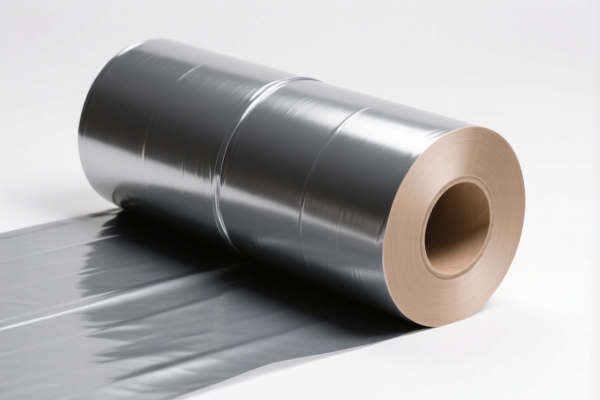
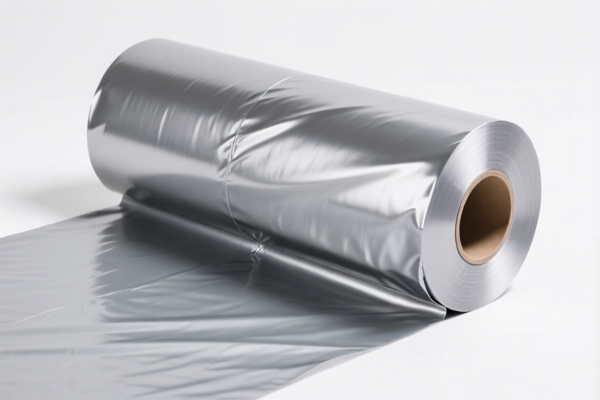
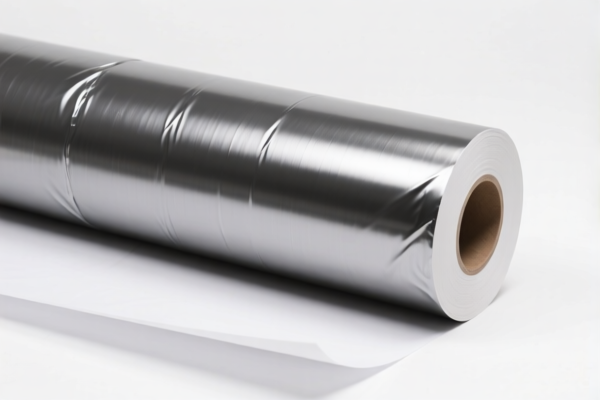
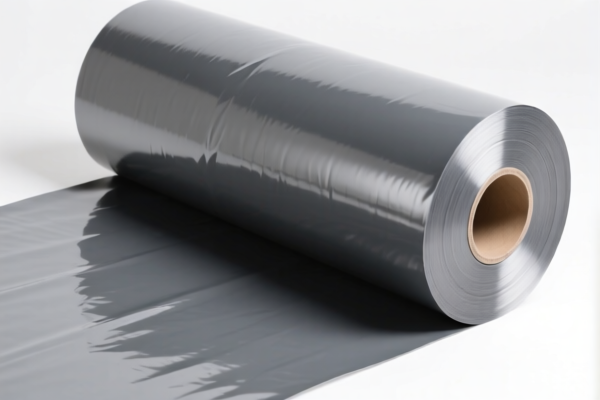
AI Analysis
🎞️ High ISO Film Rolls: The Ultimate Guide to HS Codes, Tariffs & Clearance
🌐 HS Code Reference & Clearance Guide | 2026 Updated Tariff Analysis | Professional Logistics Strategy
📌 I. Product Definition & Classification: Do You Really Know "High ISO Film"?
High ISO film is a critical component of analog photography, valued for its sensitivity to light in low-light conditions. In international trade, it is strictly categorized based on its state of development and chemical sensitivity. Misclassification here leads to significant tariff discrepancies.
Key Distinctions: 1. Unexposed & Undeveloped (Sensitive): The "raw" material. Has been sensitized (coated with silver halides) but not yet exposed to light or developed. * Note: Further split into "Flat sheets/rolls" vs. "Perforated rolls" and specific photographic uses. 2. Exposed but Undeveloped: The "ghost" material. Has been exposed to light by the user but not yet chemically processed. * Crucial: Once exposed, it loses its chemical sensitivity status for tariff purposes in many jurisdictions, shifting it to a different HS category.
⚠️ Key Classification Point:
- If the film is NOT exposed and NOT developed → It is a Sensitive Photographic Medium (HS Chapters 3701-3702).
- If the film is EXPOSED but NOT developed → It is a Processed/Sensitive Medium (HS 3704.00.00.00).
- High ISO simply refers to the speed (sensitivity), which determines the specific sub-code within the unexposed categories, but the state (exposed vs. unexposed) determines the Tariff Rate.
📦 II. HS Code Classification Details (2026 Authoritative Mapping)
| HS Code | Product Description | State | Applicable Scenario |
|---|---|---|---|
3704.00.00.00 |
Exposed Photographic Film, Undeveloped | Exposed | Film that has been shot but not yet developed. |
3701.99.60.60 |
Other Plates, Film, & Sensitized Media (Unexposed, Non-paper/Textile) | Unexposed | General high-sensitivity film rolls/sheets not specifically for color printing or perforated. |
3701.91.00.60 |
Sensitized Plates/Film, Flat, for Color Photography | Unexposed | Flat sheets or specific rolls for color photographic processes. |
3702.31.01.00 |
Other Photo Film, Sensitized, Unexposed (Non-paper/textile) | Unexposed | High-speed rolls for general photography. |
3702.32.01.60 |
Perforated Photo Film, Sensitized, Unexposed (Halogen Silver Emulsion) | Unexposed | Perforated rolls (e.g., 135, 120 format) containing halogen silver latex. |
🔍 Critical Reminder:
-3704.00.00.00applies ONLY to film that has been exposed (shot) but not developed.
- All other codes (3701,3702) apply to UNEXPOSED film.
- High ISO films typically fall under3702.31or3702.32(unexposed) or3704(if exposed).
💰 III. 2026 Latest Tariff Rate Breakdown (Including Surtaxes & Policy Add-ons)
✅ Applicable Country: United States (US)
✅ Origin: China (CN)
✅ Effective Date: November 10, 2025 (and subsequent imports)
🎯 1. 3704.00.00.00 – Exposed Photographic Film, Undeveloped
| Item | Content |
|---|---|
| Base Tariff | 0.0% (ad valorem) |
| USITC Surtax | +25.0% (Section 301 Duties) |
| Section 122 Surtax | +10.0% (Specific provision for certain photographic materials) |
| Total Rate | 35.0% |
| Tax Calculation | CIF Value × 35% |
| De Minimis Eligible? | ❌ No (deny_de_minimis) |
| Legal Path | Section 301: Footnote 9903.88.01 → Section 122 → HS: 3704.00.00.00 |
📌 Explanation:
- Although the base tariff is 0%, the 301 Surtax (25%) and Section 122 Duty (10%) apply heavily.
- This code is often used for consumer film rolls that have been shot and are being returned or shipped for development.
- Total 35% is a significant cost barrier for small packages.
🎯 2. 3701.99.60.60 – Other Sensitized Film (Unexposed, Non-Paper/Textile)
| Item | Content |
|---|---|
| Base Tariff | 0.0% |
| USITC Surtax | +25.0% (Section 301) |
| Section 122 Surtax | +10.0% |
| Total Rate | 35.0% |
| Tax Calculation | CIF Value × 35% |
| De Minimis Eligible? | ❌ No |
| Legal Path | IEEPA:9903.01.25 → Section 301 → HS: 3701.99.60.60 |
📌 Explanation:
- Applies to unexposed high-sensitivity film that does not fit other specific sub-categories (e.g., non-perforated, non-color-specific).
- High ISO film often falls here if it’s a general-purpose unexposed roll.
🎯 3. 3701.91.00.60 – Flat Sensitized Film for Color Photography
| Item | Content |
|---|---|
| Base Tariff | 3.7% |
| USITC Surtax | +25.0% (Section 301) |
| Section 122 Surtax | +10.0% |
| Total Rate | 38.7% |
| Tax Calculation | CIF Value × 38.7% |
| De Minimis Eligible? | ❌ No |
| Legal Path | IEEPA:9901.25 → Section 301 → HS: 3701.91.00.60 |
📌 Note:
- The base tariff of 3.7% is added on top of the surtaxes.
- If your high ISO film is flat sheets (not rolls) for color photography, this code applies.
🎯 4. 3702.31.01.00 – Other Sensitized Film (Unexposed, Non-Paper/Textile)
| Item | Content |
|---|---|
| Base Tariff | 3.7% |
| USITC Surtax | +25.0% (Section 301) |
| Section 122 Surtax | +10.0% |
| Total Rate | 38.7% |
| Tax Calculation | CIF Value × 38.7% |
| De Minimis Eligible? | ❌ No |
| Legal Path | IEEPA:9903.01.24 → Section 301 → HS: 3702.31.01.00 |
📌 Explanation:
- Applies to unexposed film rolls/sheets for photography that are not perforated (or general category).
- High ISO film rolls often fall here.
🎯 5. 3702.32.01.60 – Perforated Sensitized Film (Unexposed)
| Item | Content |
|---|---|
| Base Tariff | 3.7% |
| USITC Surtax | +25.0% (Section 301) |
| Section 122 Surtax | +10.0% |
| Total Rate | 38.7% |
| Tax Calculation | CIF Value × 38.7% |
| De Minimis Eligible? | ❌ No |
| Legal Path | IEEPA:9903.01.24 → Section 301 → HS: 3702.32.01.60 |
📌 Note:
- Specifically for perforated film rolls (e.g., 135mm, 120mm) containing halogen silver emulsion.
- This is the most common code for consumer high ISO film rolls (like Kodak Portra, Fuji Pro 400H) shipped unexposed.
🛠️ IV. Clearance Operational Advice (Practical Pitfall Avoidance)
✅ 1. Documentation Checklist (Mandatory)
| Document | Required | Description |
|---|---|---|
| ✅ Product Specification Sheet | ✔️ | Must state: "High ISO," "Silver Halide Emulsion," "Perforated/Non-perforated," "Unexposed." |
| ✅ Photo of Product & Label | ✔️ | Clear view of ISO speed (e.g., ISO 800, ISO 1600) and brand. |
| ✅ Commercial Invoice | ✔️ | Must explicitly state: "Photographic Film, High Sensitivity, Unexposed, Made in [Country]." |
| ✅ Certificate of Origin (CO) | ✔️ | Critical for determining Section 301 applicability. |
| ✅ Packing List | ✔️ | Detail number of rolls, format (135, 120), and ISO speed. |
✅ 2. Declaration Tips (Key Mantra)
🔥 “Expose State Decides Rate, Perforation Defines Sub-Code, Origin Dictates Surtax!”
| Scenario | Correct Declaration | Incorrect Practice |
|---|---|---|
| Unexposed Perforated Roll | 3702.32.01.60 |
Misclassifying as 3704 → Underpayment risk |
| Exposed Film (Shot) | 3704.00.00.00 |
Claiming it’s unexposed → Fraud/Seizure |
| General Unexposed Roll | 3702.31.01.00 or 3701.99.60.60 |
Vague description "Photographic Paper" → Delay |
| High ISO Film | Specify ISO Speed (e.g., ISO 1600) | Omitting ISO Speed → Ambiguity |
✅ 3. Special Case Handling
| Situation | Handling Advice |
|---|---|
| OEM Private Label Film | Provide client order + design proof to avoid "brand infringement" issues. |
| Mixed Shipments (Film + Darkroom Supplies) | Declare separately. Film goes to HS 37xx, chemicals to HS 38xx. Do not bundle. |
| Small Package (De Minimis) | ❌ Not Eligible. Even small quantities of high ISO film from China are subject to full tariffs due to deny_de_minimis status for these HS codes. |
| Film with Plastic Housing | Still classified under HS 37xx if the film is the essential character. Do not classify as plastic articles. |
🌍 V. Global Market Clearance Comparison (2026 Latest)
| Country/Region | Recommended HS Code | Tariff (China Origin) | Certification Requirements | Notes |
|---|---|---|---|---|
| 🇺🇸 USA | 3702.32.01.60 / 3704.00.00.00 |
35% - 38.7% | None specific for film, but FCC not required. | High tariffs due to Section 301 & 122. |
| 🇨🇳 China | 3702.32.01.60 |
0% - 3.7% | CCC not required for film. | Lower base tariffs. |
| 🇪🇺 EU | 3702.32.01.60 |
0% - 4.5% | CE marking not required for film itself. | No Section 301 equivalent. |
| 🇬🇧 UK | 3702.32.01.60 |
0% - 4.5% | UKCA not required for film. | Post-Brexit rules apply. |
| 🇦🇺 Australia | 3702.32.01.60 |
5% | None specific. | No surtaxes. |
📌 Conclusion:
- The USA is the highest-cost market for high ISO film due to叠加 tariffs (Section 301 + Section 122).
- European and Asian markets offer significantly lower tariff burdens.
- Strategy: For US-bound film, consider pricing adjustments or supply chain diversification to mitigate the 35-38.7% tariff impact.
📌 VI. Common Errors & Pitfall Guide (Lessons Learned)
❌ Error 1: Declaring Unexposed film as Exposed (3704)
👉 Consequence: Lower tax (35% vs 38.7%) but higher scrutiny for undeclared chemicals. If caught, penalties apply.
(Note: 35% is lower than 38.7%, but the risk is high.)
❌ Error 2: Declaring Perforated film as Non-Perforated (3702.31 vs 3702.32)
👉 Consequence: Both are 38.7%, but misdeclaration can lead to inspection delays and documentation requests.
❌ Error 3: Ignoring Section 122
👉 Consequence: Failing to account for the 10% Section 122 duty leads to underpayment and CBP audits.
❌ Error 4: Assuming De Minimis applies
👉 Consequence: Seizure of packages under $800 because these HS codes are explicitly excluded from de minimis treatment for Chinese origin goods.
✅ Correct Practice:
"High ISO Photographic Film, Unexposed, Perforated, Halogen Silver Emulsion, ISO 1600, 135 Format, Made in China"
🎯 VII. Conclusion: Precision Declaration for Cost Efficiency
🎯 Remember the Mantra:
🔹 “Unexposed Perforated = 3702.32.01.60 (38.7%)”
🔹 “Exposed Film = 3704.00.00.00 (35.0%)”
🔹 “Section 301 + 122 = No De Minimis!”
🔹 “HS Code Determines Fate, Rate Differs by 3.7%!”
📌 Pro Tip:
If your film is originating from Vietnam, Mexico, Thailand, or Malaysia, you may be eligible for IEEPA Exemptions or Section 301 exclusions, reducing tariffs to 0%~5%.
Recommend Advance Ruling (Pre-Ruling) from CBP to confirm classification and tariff liability before shipment.
📣 Immediate Action:
📞 Contact a Professional Customs Broker + Provide Product Images + Apply for HS Code Pre-Ruling
🚀 Let your film clear smoothly, avoid seizures, and maximize profit margins!
✨ Professional Clearance Starts with Accurate Classification!
💼 Every cent of cost is worth calculating precisely!
Customer Reviews
About HS Code Classification
The Harmonized System (HS) is an internationally standardized nomenclature developed by the World Customs Organization (WCO) to classify traded products. Over 200 countries use the HS system as the basis for customs tariffs, trade statistics, and import/export regulations.
Each HS code follows a hierarchical structure:
- Chapter (2 digits) — Broad category of goods (e.g., Chapter 84: Machinery and Mechanical Appliances)
- Heading (4 digits) — More specific grouping within the chapter
- Subheading (6 digits) — Internationally standardized breakdown, used by all WCO member countries
- National subdivisions (8-10 digits) — Country-specific extensions for further classification, such as US HTSUS 10-digit codes
Correct HS code classification is essential for smooth customs clearance, accurate duty payment, and compliance with trade regulations. Misclassification can lead to customs delays, overpayment of duties, or penalties.
When importing from CN to US, the applicable tariff rates may include:
- Most-Favored-Nation (MFN) rate — The standard duty rate applied to WTO members
- General rate — Applied to countries without trade agreements
- Trade remedy duties — Additional tariffs such as Section 301 (anti-dumping), Section 232 (national security), or countervailing duties
The information provided on this page is for reference purposes only. For official classification, please consult with your local customs authority or a licensed customs broker.