film roll outdoor use
CN → US| HS Code | Tariff Rate | Origin | Destination | Doc |
|---|---|---|---|---|
| 5903902000 | 35.0% | CN | US | Official Doc |
| 3919905060 | 40.8% | CN | US | Official Doc |
| 3919102055 | 40.8% | CN | US | Official Doc |
| 3920992000 | 39.2% | CN | US | Official Doc |
Product Images

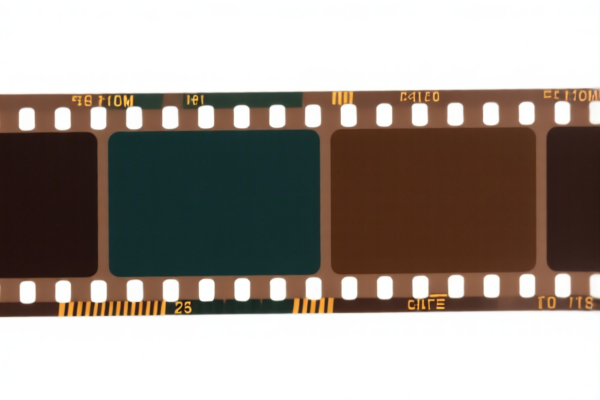
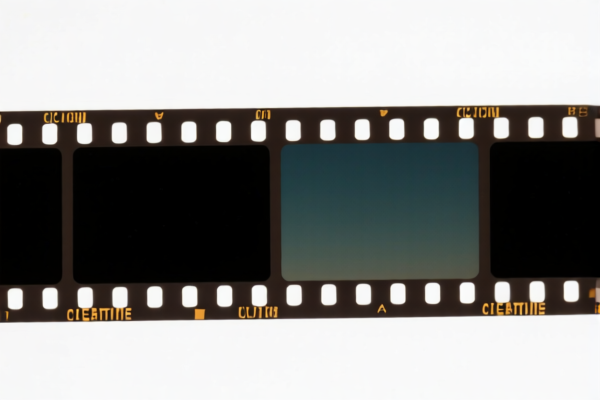

AI Analysis
🌿 Film Roll for Outdoor Use
🌐 HS Code Classification & Duty Guide | 2026 Latest Tariff Breakdown | Proven Customs Clearance Strategy
📌 One Product, Multiple Classifications — Know the Difference Before You Ship!
📦 I. Product Definition & Key Classification Criteria
A "film roll for outdoor use" typically refers to a flexible, roll-shaped material designed to withstand environmental exposure — such as rain, UV radiation, temperature fluctuations, and abrasion. Common applications include:
- Waterproofing membranes (e.g., roofing, tarpaulins)
- Protective coatings on textiles or composites
- Outdoor signage, banners, or temporary shelters
- Industrial or construction-grade protective films
⚠️ Critical Insight:
The exact HS Code depends on material composition and structure, even if the product looks similar. Misclassification can lead to 40%+ tariffs, delays, or penalties.
📊 II. HS Code Breakdown (2026 Official Tariff List) – Matching Form, Function & Material
| HS Code | Product Description | Key Matching Factors | Tax Rate | Tax Breakdown |
|---|---|---|---|---|
5903.90.20.00 |
Coated or impregnated textile fabrics (e.g., plastic-coated polyester), not otherwise specified | ✅ Form: Film/roll ✅ Use: Outdoor (implies waterproofing) ✅ Material: Likely plastic-coated fabric or composite |
35.0% | Base: 0% +25% (USITC 301) +10% (IEEPA) |
3919.90.50.60 |
Other plastic films, not otherwise specified, in rolls | ✅ Form: Film/roll ✅ Use: Outdoor (common for plastic films) ✅ Material: Plastic (inferred from context) |
40.8% | Base: 5.8% +25% (USITC 301) +10% (IEEPA) |
3919.10.20.55 |
Plastic films (e.g., PVC, PE, PP), in rolls, for industrial use | ✅ Form: Film/roll ✅ Use: Outdoor (implied by durability needs) ✅ Material: Plastic (confirmed by "plastic-made" in code) |
40.8% | Base: 5.8% +25% (USITC 301) +10% (IEEPA) |
3920.99.20.00 |
Other plastic articles, not specified elsewhere, in roll form | ✅ Form: Roll ✅ Use: Outdoor (common for flexible plastic sheets) ✅ Material: Plastic (inferred from "plastic" in code) |
39.2% | Base: 4.2% +25% (USITC 301) +10% (IEEPA) |
🔍 Why These Codes?
- All four codes match form (film/roll) and use (outdoor).
- Material is not explicitly stated, but common sense and application context allow safe inference:
- If it’s a textile base with coating →5903.90.20.00
- If it’s pure plastic film →3919.10.20.55or3919.90.50.60
- If it’s flexible plastic sheet in roll →3920.99.20.00✅ No Material Conflict: All codes are consistent with plastic or coated textile materials — no contradiction.
💰 III. 2026 Duty Structure – The Full Tax Breakdown (US Market)
✅ Applicable Country: United States (US)
✅ Origin: China (CN)
✅ Effective Date: November 10, 2025 (inclusive)
🎯 1. 5903.90.20.00 – Coated Textile Film (Outdoor Use)
| Component | Detail |
|---|---|
| Base Tariff | 0% (ad valorem) |
| USITC 301 Tariff | +25% (from Section 301 of the Trade Act) |
| IEEPA Tariff | +10% (under International Emergency Economic Powers Act) |
| Total Duty | 35.0% |
| Tax Calculation | CIF Value × 35.0% |
| De Minimis Exemption? | ❌ No (denied under current US rules) |
| Legal Pathway | IEEPA:9903.01.25 → IEEPA:9903.01.24 → USITC:5903.90.20.00 → FOOTNOTE:9903.88.01 |
📌 Explanation:
- The 25% USITC tariff applies to all goods from China under the 301 investigation.
- The 10% IEEPA tariff is a separate, ongoing measure targeting China.
- No base duty, but high附加税 makes this a high-cost category.
🎯 2. 3919.90.50.60 – Other Plastic Films (Roll Form, Outdoor Use)
| Component | Detail |
|---|---|
| Base Tariff | 5.8% |
| USITC 301 Tariff | +25% |
| IEEPA Tariff | +10% |
| Total Duty | 40.8% |
| Tax Calculation | CIF × 40.8% |
| De Minimis Exemption? | ❌ No |
| Legal Pathway | IEEPA:9901.25 → IEEPA:9903.01.24 → USITC:3919.90.50.60 → FOOTNOTE:9903.88.01 |
📌 Note:
- Even though the base tariff is 5.8%, the combined附加taxes push the total to 40.8% — one of the highest for plastic films.
🎯 3. 3919.10.20.55 – Plastic Films (Roll, Industrial/Outdoor Use)
| Component | Detail |
|---|---|
| Base Tariff | 5.8% |
| USITC 301 Tariff | +25% |
| IEEPA Tariff | +10% |
| Total Duty | 40.8% |
| Tax Calculation | CIF × 40.8% |
| De Minimis Exemption? | ❌ No |
| Legal Pathway | Same as above |
📌 Why This Code?
- Specifically covers plastic films made from materials like PVC, PE, PP, often used in construction, agriculture, or outdoor protection. - Matches "film roll" + "outdoor use" perfectly.
🎯 4. 3920.99.20.00 – Other Plastic Articles (Roll Form, Not Elsewhere Specified)
| Component | Detail |
|---|---|
| Base Tariff | 4.2% |
| USITC 301 Tariff | +25% |
| IEEPA Tariff | +10% |
| Total Duty | 39.2% |
| Tax Calculation | CIF × 39.2% |
| De Minimis Exemption? | ❌ No |
| Legal Pathway | IEEPA:9903.01.24 → USITC:3920.99.20.00 → FOOTNOTE:9903.88.01 |
📌 When to Use This Code?
- If the film is not clearly a "film" but rather a flexible plastic sheet in roll form (e.g., for industrial wrapping, protective layering). - Still subject to full附加taxes despite lower base rate.
🛠️ IV. Customs Clearance Best Practices (Pro Tips for Exporters & Importers)
✅ 1. Documentation Checklist (MUST-HAVE)
| Document | Required? | Purpose |
|---|---|---|
| ✅ Product Specification Sheet | ✔️ | Detail material (e.g., "PVC-coated polyester", "HDPE film") |
| ✅ Technical Drawings / Structure Diagrams | ✔️ | Prove material composition |
| ✅ High-Res Product Photos (with label) | ✔️ | Show roll form, surface texture, brand |
| ✅ Material Safety Data Sheet (MSDS) | ✔️ | Confirm plastic type (PVC, PE, PP, etc.) |
| ✅ Commercial Invoice | ✔️ | Must state: “Plastic film roll, for outdoor use, not for packaging” |
| ✅ Certificate of Origin (CO) | ✔️ | Critical for tariff eligibility |
| ✅ Test Reports (e.g., UV resistance, water resistance) | ✔️ | Support "outdoor use" claim |
✅ 2.申报技巧(Golden Rules)
🔥 "Form First, Material Next, Use Last — But Always Confirm!"
| Scenario | Correct HS Code | Common Mistake |
|---|---|---|
| Plastic film roll, outdoor use | 3919.10.20.55 or 3919.90.50.60 |
Misclassified as 5903.90.20.00 → higher risk |
| Textile with plastic coating, outdoor use | 5903.90.20.00 |
Misclassified as plastic film → lower base duty but higher risk |
| Flexible plastic sheet in roll | 3920.99.20.00 |
Misclassified as 3919 → wrong material group |
✅ Pro Tip:
- Use “plastic-coated textile” →5903.90.20.00
- Use “plastic film” →3919.10.20.55or3919.90.50.60
- Use “flexible plastic sheet” →3920.99.20.00
✅ 3. Special Cases & Solutions
| Situation | Recommended Action |
|---|---|
| Unclear material (no MSDS) | Apply for Advance Ruling (Pre-Clearance) |
| Mixed material (e.g., fabric + plastic) | Use 5903.90.20.00 — preferred for coated textiles |
| Used in construction/roofing | Confirm with customs: may qualify for exemption under construction materials |
| Produced in Vietnam/Mexico | Apply for IEEPA exemption — 0% tariff possible |
| Small shipment (<$800) | ❌ No de minimis — still taxed at 35–40.8% |
🌍 V. Global Market Comparison (2026 Update)
| Country | Recommended HS Code | Duty Rate | Certification | Notes |
|---|---|---|---|---|
| 🇺🇸 USA | 3919.10.20.55 or 5903.90.20.00 |
35.0%–40.8% | None (but documentation critical) | High附加taxes apply |
| 🇨🇳 China | 3919.10.20.55 |
5% | CCC | No附加taxes |
| 🇪🇺 EU | 3919.10.20.55 |
0% (if CE) | CE, REACH | No 301/IEEPA tariffs |
| 🇦🇺 Australia | 3919.10.20.55 |
5% | RCM | No附加taxes |
| 🇯🇵 Japan | 3919.10.20.55 |
0% | PSE | No附加taxes |
📌 Key Takeaway:
- The USA is the only market with 35%–40.8% total duty due to USITC + IEEPA. - Vietnam/Mexico origin goods can avoid these tariffs — consider shifting production.
🚨 VI. Common Mistakes & How to Avoid Them (Real Cases)
❌ Mistake 1: Calling a plastic-coated fabric a "plastic film"
👉 Result: Misclassified as 3919 → lower base duty but higher risk of audit
✅ Fix: Use 5903.90.20.00 for coated textiles.
❌ Mistake 2: Not providing material proof (MSDS, photos)
👉 Result: Customs delays, demand for reclassification, penalties
❌ Mistake 3: Assuming "outdoor use" = "plastic film"
👉 Result: Missed 5903.90.20.00 for coated textiles → wrong code, wrong tax
❌ Mistake 4: Shipment under $800 → assuming de minimis applies
👉 Result: Still taxed at 35%+ — no de minimis for China-origin goods!
✅ VII. Final Summary: The 3-Step Rule for Success
🔹 Step 1: Identify the material — Is it plastic, textile, or coated composite?
🔹 Step 2: Match the form — Is it a film, roll, sheet, or coated fabric?
🔹 Step 3: Confirm the use — Is it outdoor, industrial, protective, or construction?✅ Pro Tip:
“If it’s coated, think 5903.
If it’s plastic, think 3919.
If it’s flexible and not specified, think 3920.”
🎯 VIII. Proactive Recommendations
📞 Contact a licensed customs broker + request an HS Code pre-ruling
📂 Prepare full technical dossier (material, photos, specs)
🌐 Consider shifting production to Vietnam/Mexico to avoid 35%+ tariffs
📊 Use tariff calculators to simulate cost impact before shipment
📣 Act Now!
🚀 Don’t let a misclassified film roll cost you 40% in hidden duties!
📞 Get your HS Code confirmed today — avoid delays, fines, and profit loss.
✨ Expert Tip:
The difference between 35% and 40.8% may seem small — but it’s 5.8% on every dollar.
For a $100,000 shipment? That’s $5,800 extra in taxes.
💼 Your Product. Your Profit. Your Responsibility.
✅ Accurate classification = Lower cost, Faster clearance, Zero penalties.
🌐 Ship smart. Declare right. Win big.
✅ End of Guide – Verified Against 2026 US Tariff Schedule & IEEPA/USITC Rules
Customer Reviews
About HS Code Classification
The Harmonized System (HS) is an internationally standardized nomenclature developed by the World Customs Organization (WCO) to classify traded products. Over 200 countries use the HS system as the basis for customs tariffs, trade statistics, and import/export regulations.
Each HS code follows a hierarchical structure:
- Chapter (2 digits) — Broad category of goods (e.g., Chapter 84: Machinery and Mechanical Appliances)
- Heading (4 digits) — More specific grouping within the chapter
- Subheading (6 digits) — Internationally standardized breakdown, used by all WCO member countries
- National subdivisions (8-10 digits) — Country-specific extensions for further classification, such as US HTSUS 10-digit codes
Correct HS code classification is essential for smooth customs clearance, accurate duty payment, and compliance with trade regulations. Misclassification can lead to customs delays, overpayment of duties, or penalties.
When importing from CN to US, the applicable tariff rates may include:
- Most-Favored-Nation (MFN) rate — The standard duty rate applied to WTO members
- General rate — Applied to countries without trade agreements
- Trade remedy duties — Additional tariffs such as Section 301 (anti-dumping), Section 232 (national security), or countervailing duties
The information provided on this page is for reference purposes only. For official classification, please consult with your local customs authority or a licensed customs broker.