filter paper
CN → US| HS Code | Tariff Rate | Origin | Destination | Doc |
|---|---|---|---|---|
| 4823209000 | 35.0% | CN | US | Official Doc |
| 4823201000 | 35.0% | CN | US | Official Doc |
| 4805919000 | 35.0% | CN | US | Official Doc |
| 8421290065 | 35.0% | CN | US | Official Doc |
| 4805400000 | 35.0% | CN | US | Official Doc |
Product Images
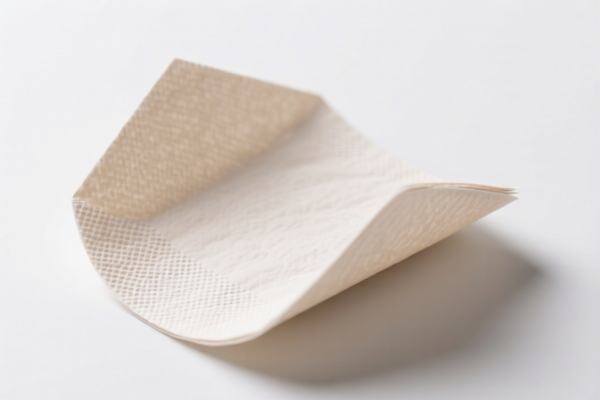
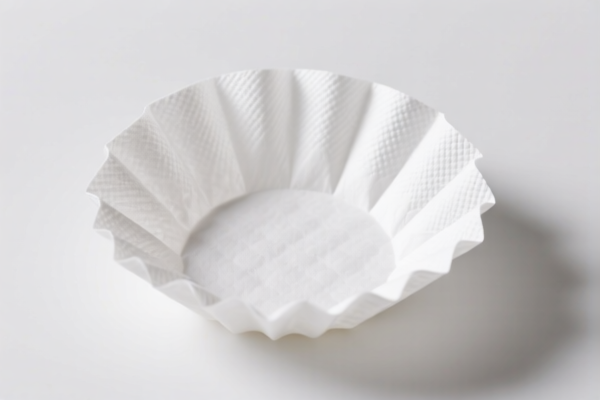

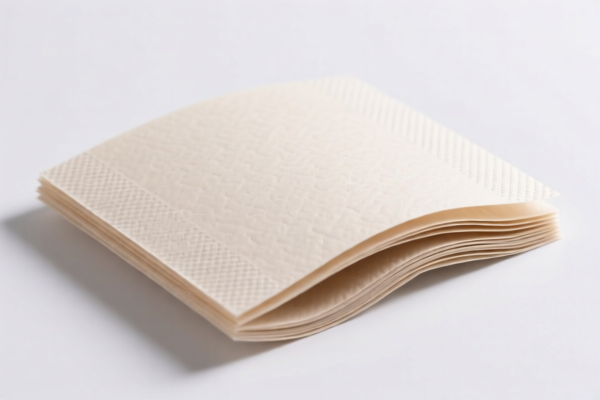
AI Analysis
☕ Coffee Filter Paper: HS Code Classification & U.S. Customs Clearance Guide (2026)
🌐 HS Code Reference & Customs Strategy | 2026 Latest Tariff Analysis | Professional Clearance Protocol
📌 1. Product Definition & Classification: Do You Really Understand "Coffee Filter Paper"?
Coffee filter paper, a specialized cellulose-based product designed for liquid filtration in domestic and commercial coffee brewing systems. In international trade, its classification hinges on material structure, processing level, and intended use.
Key Distinctions: * Standard Filter Paper (Cellulose): Uncoated or lightly treated, used for simple straining. Classified under Chapter 48 (Paper Products). * Precision/Industrial Filter Paper: High-density, often pre-formed or part of a filtering apparatus. May fall under Chapter 84 (Machinery) if deemed a "part of a filtering device." * Critical Warning: Misclassification between "Paper Product" and "Machinery Part" can lead to severe duty discrepancies and customs delays.
⚠️ Key Classification Logic:
- If it is a flat sheet, roll, or pre-folded paper with no mechanical integration → Chapter 48 (Paper).
- If it is integrated into a functional unit or considered a precision component of a filtering machine → Chapter 84 (Machinery).
📦 2. HS Code Classification Matrix (2026 Latest Tariff Schedule)
| HS Code | Product Description | Application Scenario | Classification Rationale |
|---|---|---|---|
4823.20.90.00 |
Coffee Filter Paper: Paper-based filtering paper/board | General household/commercial use | Summary: "Coffee filter paper, material is paper, belongs to filtering paper and board category." |
4823.20.10.00 |
Coffee Filter Paper: Paper product matching filtering paper characteristics | Standard coffee brewing | Summary: "Paper products, form and use conform to filtering paper classification features." |
4805.91.90.00 |
Coffee Filter Paper: Sheet/filtration paper, uncoated | Basic filtration needs | Summary: "Material is paper, sheet/filtration paper, within uncoated processing scope." |
8421.29.00.65 |
Coffee/Precision Filter Paper: Liquid filtration device | Integrated filtering systems | Summary: "Purpose is liquid filtration, belongs to liquid filtering apparatus category." |
4805.40.00.00 |
Coffee Filter Paper: Name and classification fully consistent with filtering paper | High-volume commercial use | Summary: "Name and classification fully consistent with filtering paper in use and material." |
🔍 Critical Reminder:
- HS Codes 4823 & 4805 treat the product as a paper good.
- HS Code 8421 treats the product as a mechanical component (liquid filter).
- All listed HS Codes currently face a 35% Total Duty Rate due to U.S. trade policies.
💰 3. 2026 Latest Tariff Rate Breakdown (Including Additional Taxes)
✅ Applicable Country: United States (US)
✅ Origin: China (CN)
✅ Effective Date: Ongoing (Including imports after Nov 10, 2025)
🎯 1. Paper-Based Filter Papers (4823.20.90.00, 4823.20.10.00, 4805.91.90.00, 4805.40.00.00)
| Item | Content |
|---|---|
| Base Tariff | 0.0% (Ad Valorem) |
| Section 301 Tariff | +25.0% (Additional Duty for Chinese Goods) |
| Section 122 Duty | +10.0% (Specific Duty for Certain Goods) |
| Total Tariff Rate | 35.0% |
| Tax Calculation | CIF Value × 35% |
| De Minimis Eligibility | ❌ Not Eligible (Denied under current Section 301/122 rules for paper products) |
| Legal Basis Path | Section 301 → Section 122 → USITC:4823/4805 |
📌 Explanation:
- The 25% is the standard retaliatory tariff under Section 301 against China.
- The 10% is a specific additional duty (Section 122) often applied to certain consumer goods.
- Total 35% is a high barrier, requiring precise cost structuring and potential supply chain adjustments.
🎯 2. Liquid Filtering Apparatus Component (8421.29.00.65)
| Item | Content |
|---|---|
| Base Tariff | 0.0% (Ad Valorem) |
| Section 301 Tariff | +25.0% (Additional Duty for Chinese Goods) |
| Section 122 Duty | +10.0% (Specific Duty for Certain Goods) |
| Total Tariff Rate | 35.0% |
| Tax Calculation | CIF Value × 35% |
| De Minimis Eligibility | ❌ Not Eligible |
| Legal Basis Path | Section 301 → Section 122 → USITC:8421.29.00.65 |
📌 Note:
- Even though classified as a machine part (8421), it still incurs the same 35% total rate.
- Misclassification Risk: Declaring a simple paper sheet as8421to "look" like a machine part may trigger customs audits if the product lacks mechanical integration. Stick to the physical reality of the product.
🛠️ 4. Customs Clearance Practical Advice (Pitfall Avoidance Guide)
✅ 1. Required Documentation Checklist (Non-Negotiable)
| Document | Required | Description |
|---|---|---|
| ✅ Product Specification Sheet | ✔️ | Material composition (e.g., 100% Cellulose), dimensions, ply count, coating status. |
| ✅ Product Photos | ✔️ | Clear images showing the product in its packaging, highlighting "Coffee Filter" usage. |
| ✅ Commercial Invoice | ✔️ | Must clearly state "Coffee Filter Paper" and not vague terms like "Paper Goods." |
| ✅ Packing List | ✔️ | Weight, dimensions, and quantity per carton. |
| ✅ Certificate of Origin (CO) | ✔️ | Essential for proving Chinese origin to apply the correct Section 301/122 duties. |
| ✅ Material Safety Data Sheet (MSDS) | ✔️ | If any chemical coatings are used, even if minimal. |
✅ 2. Declaration Tips (Key Mantra)
🔥 "Material Defines Code, Use Defines Context, Transparency Saves Money!"
| Scenario | Correct Declaration | Wrong Approach |
|---|---|---|
| Standard Cone/Flat Filters | 4823.20.90.00 or 4823.20.10.00 |
Vague "Paper Stuff" |
| Uncoated Bulk Sheets | 4805.91.90.00 |
Declaring as "Finished Filter" if not |
| Integrated with Machine | 8421.29.00.65 |
Declaring as paper if it's a functional unit |
| Bulk Commercial Rolls | 4805.40.00.00 |
Under-declaring value |
✅ 3. Special Case Handling
| Situation | Recommendation |
|---|---|
| OEM/Private Label | Provide brand authorization and design specs to prevent "Intellectual Property" flags. |
| Mixed Containers | Clearly segregate filter paper from other goods (e.g., coffee beans, machines) to avoid cross-contamination of duties. |
| Low-Value Shipments | ❌ No De Minimis Exemption: Do not attempt to split shipments to avoid the 35% duty; CBP tracks patterns. |
| Pre-Coated Filters | Ensure coating is not classified as "chemical processing" that might shift HS code to 4823.40 or 4823.90. |
🌍 5. Global Market Clearance Comparison (2026)
| Country/Region | Recommended HS Code | Tariff Rate | Certification Requirements | Notes |
|---|---|---|---|---|
| 🇺🇸 United States | 4823.20.90.00 |
35% (CN Origin) | FDA Contact (Food Contact Material) | High duty; ensure food-grade certification. |
| 🇨🇳 China | 4823.20.90.00 |
5% | None | Low duty for import into China. |
| 🇪🇺 European Union | 4823.20.00 |
6.5% | CE (if applicable), Food Contact | No Section 301/122 equivalent. |
| 🇬🇧 United Kingdom | 4823.20.00 |
6.5% | UKCA (if applicable) | Post-Brexit rules apply. |
| 🇯🇵 Japan | 4823.20.00 |
3.2% | Food Sanitation Act | Low duty, strict food safety checks. |
📌 Conclusion:
- The U.S. is the most expensive market for Chinese-made filter paper due to the 35% cumulative duty.
- European and Asian markets offer significantly lower tariff barriers (3-7%).
- Supply Chain Strategy: Consider sourcing from non-China origins (e.g., Vietnam, Brazil) if targeting the U.S. market to mitigate Section 301/122 duties.
📌 6. Common Errors & Pitfalls (Lessons Learned)
❌ Error 1: Declaring "Coffee Filters" as general "Paper Towels" (4823.90)
👉 Consequence: Customs reclassification → Back taxes + Penalties. Filter paper has specific HS codes under 4823.20.
❌ Error 2: Ignoring Section 122 Duty
👉 Consequence: Underpayment of the additional 10%. Total duty is not just 25% but 35%.
❌ Error 3: Vague Description: "Paper for Coffee"
👉 Consequence: Customs delays for further inquiry. Use precise terms: "Cellulose Coffee Filter Paper, Uncoated, Cone Shape."
❌ Error 4: Attempting De Minimis (Under $800) Splitting
👉 Consequence: CBP's "de minimis abuse" enforcement is strict. Multiple small shipments from China are flagged and audited.
✅ Correct Practice:
"Coffee Filter Paper, 100% Virgin Wood Pulp, Uncoated, Cone Shape, 1-2 Ply, Food Grade Contact, Model XYZ, Origin China"
🎯 7. Conclusion: Precise Classification, Cost Control, Efficient Clearance
🎯 Remember the Mantra:
🔹 "Paper or Part? Check the Code. 25% + 10% = 35% Total Load."
🔹 "HS Code4823is your friend,8421is for machines, don't mix them."
📌 Pro Tip:
If your filter paper is originating from Brazil, Canada, or Vietnam, you avoid the 25% Section 301 duty.
Brazil: May qualify for GSP or lower duties.
Canada: USMCA may apply 0% duty.
Vietnam: Subject to anti-dumping duties in some cases, but often avoids Section 301.
Recommendation: Apply for an Advance Ruling (CBP Form 593)* before shipping to confirm the exact HS Code and duty liability.
📣 Immediate Action:
📞 Contact a Licensed Customs Broker + Provide Product Specs + Verify Origin Certificate
🚀 Ensure Your Coffee Filters Clear U.S. Ports Smoothly, Efficiently, and Profitably!
✨ Professional Clearance Starts with Accurate Classification!
💼 Every Percent of Duty Saved is Pure Profit!
Customer Reviews
About HS Code Classification
The Harmonized System (HS) is an internationally standardized nomenclature developed by the World Customs Organization (WCO) to classify traded products. Over 200 countries use the HS system as the basis for customs tariffs, trade statistics, and import/export regulations.
Each HS code follows a hierarchical structure:
- Chapter (2 digits) — Broad category of goods (e.g., Chapter 84: Machinery and Mechanical Appliances)
- Heading (4 digits) — More specific grouping within the chapter
- Subheading (6 digits) — Internationally standardized breakdown, used by all WCO member countries
- National subdivisions (8-10 digits) — Country-specific extensions for further classification, such as US HTSUS 10-digit codes
Correct HS code classification is essential for smooth customs clearance, accurate duty payment, and compliance with trade regulations. Misclassification can lead to customs delays, overpayment of duties, or penalties.
When importing from CN to US, the applicable tariff rates may include:
- Most-Favored-Nation (MFN) rate — The standard duty rate applied to WTO members
- General rate — Applied to countries without trade agreements
- Trade remedy duties — Additional tariffs such as Section 301 (anti-dumping), Section 232 (national security), or countervailing duties
The information provided on this page is for reference purposes only. For official classification, please consult with your local customs authority or a licensed customs broker.