filter sponge
CN → US| HS Code | Tariff Rate | Origin | Destination | Doc |
|---|---|---|---|---|
| 8421990180 | 35.0% | CN | US | Official Doc |
| 8421390190 | 35.0% | CN | US | Official Doc |
| 3926909989 | 22.8% | CN | US | Official Doc |
| 3926903500 | 16.5% | CN | US | Official Doc |
Product Images
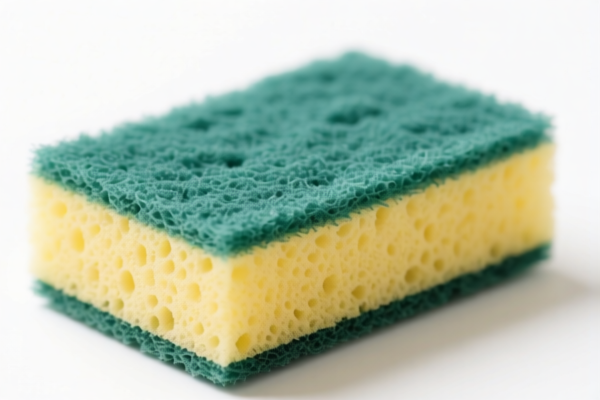
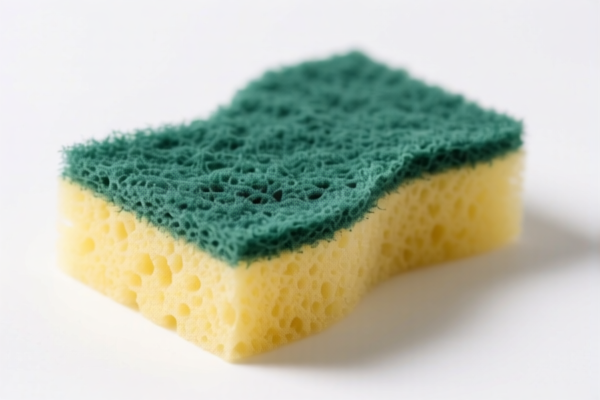
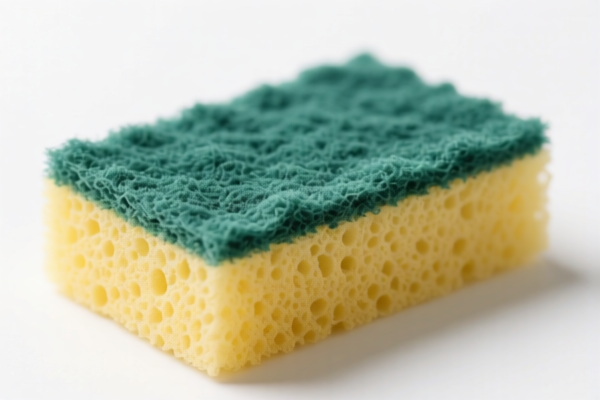
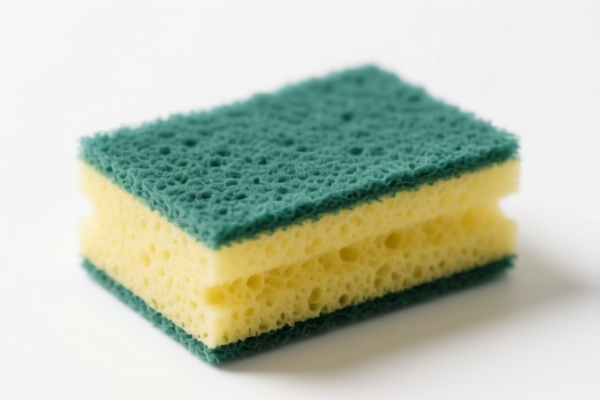
AI Analysis
🌊 Filter Sponges (Filtering Machinery Parts / Plastic Articles)
🌐 HS Code Reference & Customs Clearance Guide | 2026 Latest Tariff Analysis | Professional Entry Strategy
📌 I. Product Definition & Classification: What is a "Filter Sponge"?
A "Filter Sponge" is a porous material used to remove impurities from liquids or gases. In international trade, its classification depends heavily on material composition and function. It is generally categorized into two distinct groups:
- Mechanical/Air Filter Components: If the sponge is a replacement part for a centrifugal cleaner or gas purifier, it falls under Chapter 84 (Machinery Parts).
- General Plastic Articles: If the sponge is sold as a standalone consumer good, packaging material, or general-purpose cleaning tool (not specifically designed as a machine part), it falls under Chapter 39 (Plastics).
⚠️ Key Distinction:
- If the sponge is specifically identifiable as a part of a centrifuge or filter unit (e.g., sold in boxes labeled "For Filter Model X") → Chapter 84 applies.
- If the sponge is a generic plastic foam used for cleaning, polishing, or general filtration without specific machine integration → Chapter 39 applies.
📦 II. HS Code Classification Details (2026 Latest Tariff Authority Comparison)
Based on the provided data, here are the exact HS Codes and their corresponding tax rates for filter-related products:
| HS Code | Product Description | Application Scenario | Tariff Rate (Total) |
|---|---|---|---|
8421.99.01.80 |
Parts of Centrifuges / Filtering Machinery | Replacement sponges for industrial centrifugal dryers or liquid/gas filters | 25.0% |
8421.39.01.90 |
Filtering/Purifying Machinery for Gases (Parts) | Sponges specifically for gas purification apparatus | 25.0% |
3926.90.99.89 |
Other Articles of Plastics (General) | Generic plastic filter sponges, cleaning pads, or general-purpose porous plastic items | 12.8% |
3926.90.35.00 |
Beads, Bugles, Spangles (Plastic) | ⛔ NOT APPLICABLE for filter sponges (This code is for decorative items like beads) | 0.0% |
🔍 Important Note:
- Do NOT use3926.90.35.00for filter sponges. This code is for decorative plastic beads/spangles. Using it for functional sponges will result in misclassification penalties.
- The choice between8421and3926determines your tax burden: 25% vs. 12.8%.
- Rule of Thumb: If the sponge is essential for the operation of a specific machine (centrifuge/filter) and marketed as a spare part, use 8421. If it is a general-purpose plastic foam product, use 3926.
💰 III. 2026 Latest Tariff Rate Breakdown (Including Additional Taxes)
✅ Applicable Country: United States (US)
✅ Origin: China (CN)
✅ Effective Date: Post-November 10, 2025 (Includes subsequent imports)
🎯 1. 8421.99.01.80 & 8421.39.01.90 — Parts of Filtering Machinery
| Item | Details |
|---|---|
| Base Tariff | 0.0% |
| Additional Tariff (Section 301 / IEEPA) | +25.0% |
| Total Tariff | 25.0% |
| De Minimis Exemption | ❌ Not Available |
| Legal Basis | USITC:8421.99.01.80 / 8421.39.01.90 + Footnote: 9903.88.01 |
📌 Explanation:
- Although the base tariff is 0%, the 25% additional tariff applies to "Parts of filtering machinery" from China.
- This is a high-cost classification. If your product is a general plastic sponge, you might save 12.2% by reclassifying it under Chapter 39 (if legally justifiable).
🎯 2. 3926.90.99.89 — Other Plastic Articles
| Item | Details |
|---|---|
| Base Tariff | 5.3% |
| Additional Tariff | +7.5% |
| Total Tariff | 12.8% |
| De Minimis Exemption | ❌ Not Available |
| Legal Basis | USITC:3926.90.99.89 |
📌 Explanation:
- This is the preferred classification if the sponge is considered a general-purpose plastic article rather than a specific machine part.
- Savings: 12.2% lower than the machinery parts classification.
- Condition: Must clearly demonstrate that the sponge is not exclusively designed for a specific centrifuge or gas filter unit, or is sold as a general consumer good.
🛠️ IV. Customs Clearance Practical Advice (Avoid Pitfalls)
✅ 1. Documentation Checklist (Critical)
| Document | Required | Description |
|---|---|---|
| ✅ Product Specification | ✔️ | Detailed material composition (e.g., polyurethane foam, polyethylene). |
| ✅ Function Statement | ✔️ | Explicitly state: "General purpose cleaning sponge" OR "Replacement part for Model X Filter". |
| ✅ Photos | ✔️ | Show the sponge in use (if machine part) or general appearance (if plastic article). |
| ✅ Commercial Invoice | ✔️ | Clear description. Avoid vague terms like "Filter Material". Use "Polyurethane Filter Sponge" or "Plastic Cleaning Pad". |
| ✅ Packing List | ✔️ | Ensure units match invoice. |
✅ 2. Declaration Tips (Key Formulas)
🔥 "If it's a part, declare 'Parts'; if it's general, declare 'Plastic Article'. Precision saves money!"
| Scenario | Correct HS Code | Tax Rate | Why? |
|---|---|---|---|
| Sponge sold as spare part for a centrifuge | 8421.99.01.80 |
25.0% | Classified as machinery part. |
| Sponge sold as replacement for gas filter | 8421.39.01.90 |
25.0% | Classified as gas filter part. |
| Generic plastic sponge for household/industrial cleaning | 3926.90.99.89 |
12.8% | Classified as general plastic article. |
| Decorative plastic beads (NOT sponges) | 3926.90.35.00 |
0.0% | ❌ Do not use for sponges. |
📌 Warning:
- Misclassifying a general sponge as8421leads to overpaying 12.2%.
- Misclassifying a specific machine part as3926leads to underpayment penalties + interest.
- Always provide a function statement to justify the classification.
✅ 3. Special Case Handling
| Situation | Recommendation |
|---|---|
| OEM Parts | If you are supplying sponges directly to a centrifuge manufacturer, use 8421. Provide the end-product model number. |
| General Market | If selling to Amazon/eBay as "Filter Replacement Foam", argue for 3926 by emphasizing generic use. |
| Mixed Shipments | If shipping both specific parts and general sponges, declare separately. Do not lump them together. |
🌍 V. Global Market Comparison (2026 Latest)
| Country/Region | Recommended HS Code | Tariff (China Origin) | Remarks |
|---|---|---|---|
| 🇺🇸 USA | 3926.90.99.89 (Preferred) |
12.8% | Lower than 25% if justified as general plastic. |
| 🇺🇸 USA | 8421.99.01.80 (Machine Part) |
25.0% | High tariff for machinery parts. |
| 🇨🇳 China | 3926.90.99.89 |
5.3% | Import duty only. |
| 🇪🇺 EU | 3926.90 |
4.5% | Generally lower tariffs for plastic articles. |
📌 Conclusion:
- For the US market, the 12.2% tariff difference is significant.
- If the sponge is not exclusively designed for a specific machine, strive to classify under 3926.90.99.89 to reduce costs.
- Ensure your product description and function statement support this classification.
📌 VI. Common Mistakes & Pitfalls (Blood Lessons)
❌ Mistake 1: Using 3926.90.35.00 for filter sponges.
👉 Consequence: Customs will reject the declaration because this code is for beads/spangles, not sponges. Result: Delay + Fine.
❌ Mistake 2: Declaring a specific centrifuge part as a "general plastic item" without proof.
👉 Consequence: Customs may reclassify it to 8421 and charge 25% + penalties for tax evasion.
❌ Mistake 3: Vague description "Filter Foam" on the invoice.
👉 Consequence: Customs cannot determine if it's a machine part (Ch 84) or plastic article (Ch 39). Result: Random Inspection + Delay.
✅ Correct Practice:
"Polyurethane Foam Filter Sponge, General Purpose Cleaning Material, Model XYZ, Not Specific to Any Machinery"
OR
"Replacement Sponge Part for [Brand] Centrifuge Model ABC, Specific Machine Part"
🎯 VII. Conclusion: Professional Declaration, Cost Saving!
🎯 Remember the Mantra:
🔹 "Machine Part = 25%, General Plastic = 12.8%. Know your product!"
🔹 "Beads Code (35.00) is for Decorations, Not Sponges. Don't Mix Them!"
📌 Pro Tip:
If your filter sponge is a generic polyurethane foam used in multiple applications (household, aquarium, industrial), declare it under 3926.90.99.89.
Provide a function statement stating it is for "general filtration and cleaning" to justify the lower tax rate.
📣 Immediate Action:
📞 Contact your customs broker with the product photos and a clear function statement.
🚀 Optimize your HS Code to save 12.2% on US imports.
✨ Professional Clearance, Starting from Accurate Classification!
💼 Every penny counts in international trade!
Customer Reviews
About HS Code Classification
The Harmonized System (HS) is an internationally standardized nomenclature developed by the World Customs Organization (WCO) to classify traded products. Over 200 countries use the HS system as the basis for customs tariffs, trade statistics, and import/export regulations.
Each HS code follows a hierarchical structure:
- Chapter (2 digits) — Broad category of goods (e.g., Chapter 84: Machinery and Mechanical Appliances)
- Heading (4 digits) — More specific grouping within the chapter
- Subheading (6 digits) — Internationally standardized breakdown, used by all WCO member countries
- National subdivisions (8-10 digits) — Country-specific extensions for further classification, such as US HTSUS 10-digit codes
Correct HS code classification is essential for smooth customs clearance, accurate duty payment, and compliance with trade regulations. Misclassification can lead to customs delays, overpayment of duties, or penalties.
When importing from CN to US, the applicable tariff rates may include:
- Most-Favored-Nation (MFN) rate — The standard duty rate applied to WTO members
- General rate — Applied to countries without trade agreements
- Trade remedy duties — Additional tariffs such as Section 301 (anti-dumping), Section 232 (national security), or countervailing duties
The information provided on this page is for reference purposes only. For official classification, please consult with your local customs authority or a licensed customs broker.