fine animal hair windproof jacket component set
CN → US| HS Code | Tariff Rate | Origin | Destination | Doc |
|---|---|---|---|---|
| 5112116030 | 60.0% | CN | US | Official Doc |
| 5112199510 | 60.0% | CN | US | Official Doc |
| 6117909045 | 32.1% | CN | US | Official Doc |
| 6117909055 | 32.1% | CN | US | Official Doc |
| 5109909000 | 41.0% | CN | US | Official Doc |
| 5109109000 | 41.0% | CN | US | Official Doc |
Product Images
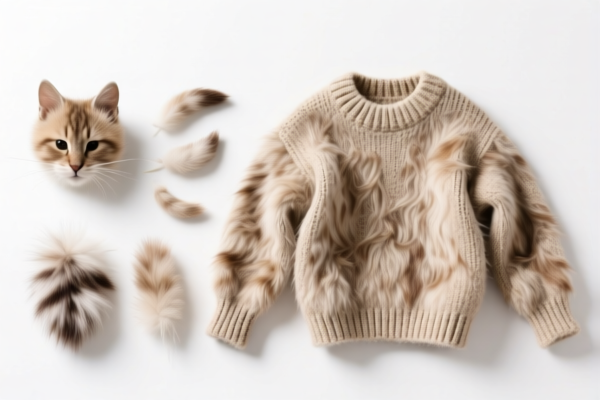
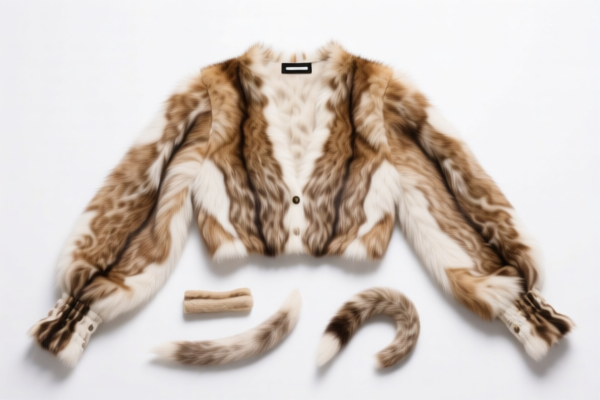
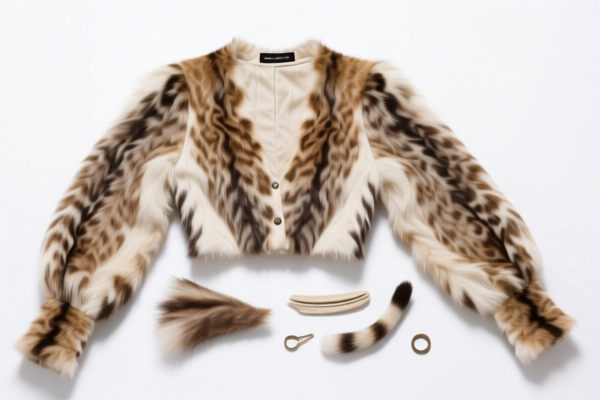

AI Analysis
Here is a professional, Wiki-style guide for the "Fine Animal Hair Windproof Jacket Component Set", categorized under Chapter 61 (Knitted or Crocheted) and Chapter 51 (Wool/Animal Hair Fabrics).
Note: Based on the provided data, the "Windproof" description suggests a specific finish, but the primary classification relies on the material (Fine Animal Hair) and the product type (Parts/Accessories of coats).
🧥 Fine Animal Hair Windproof Jacket Component Set
🌐 HS Code Classification & Customs Clearance Guide | 2026 Tax Regime Analysis
📌 Product Definition: What is a "Component Set"?
In international trade, a "Component Set" for a jacket can refer to two distinct scenarios:
1. Knitted Components (Chapter 61): Loose knitted or crocheted parts (e.g., sleeves, collars, cuffs, hoods) sold as a "kit" to be assembled, or knitted parts of coats/jackets made of fine animal hair.
* Primary HS Focus: 6117.90.90.45 & 6117.90.90.55.
2. Fabric Yarns (Chapter 51): If the "set" includes the raw woven fabrics (windproof weave) or retail yarns used to manufacture the jacket.
* Primary HS Focus: 5112.11.60.30, 5112.19.95.10, 5109.90.90.00, 5109.10.90.00.
⚠️ Critical Distinction:
- If the item is finished parts (cut, sewn, or knitted pieces) ready for assembly → Chapter 61 (6117.90...).
- If the item is raw material (fabric rolls or yarn balls) → Chapter 51 (5112...or5109...).
- "Windproof" is a functional description; unless it implies a specific membrane/laminate classification, it usually falls under the material properties of Wool/Fine Animal Hair.
📦 HS Code Classification Matrix (Based on Provided Data)
| HS Code | Product Description | Material Composition | Weight/Format | Tax Rate (Base + Added) | | :--- | :--- | :--- | :--- :--- | | 6117.90.90.45 | Parts of coats/jackets (Knitted/Crocheted) | Of wool or fine animal hair | Knitted/Crocheted Parts | 0.0% | | 6117.90.90.55 | Parts of coats/jackets (Knitted/Crocheted) | Other (Non-wool/Non-fine animal) | Knitted/Crocheted Parts | 0.0% | | 5112.11.60.30 | Woven Fabrics (Combed Wool/Fine Hair) | 85%+ Fine Animal Hair | Weight ≤ 200g/m² | 0.0% | | 5112.19.95.10 | Woven Fabrics (Combed Wool/Fine Hair) | 85%+ Fine Animal Hair | Weight ≤ 270g/m² | 0.0% | | 5109.10.90.00 | Yarn (Retail Sale) | 85%+ Fine Animal Hair | Retail Packaging | 0.0% | | 5109.90.90.00 | Yarn (Retail Sale) | Other (Mixed/Less than 85%) | Retail Packaging | 0.0% |
🔍 Key Insight:
All provided entries for Fine Animal Hair products (both Chapter 51 fabrics/yarns and Chapter 61 parts) currently show a Total Tax Rate of 0.0%. This implies zero duty for these specific categories in the target market (likely China or a specific trade agreement context based on the "0.0%" detail).
💰 Detailed Tax Breakdown & Policy Analysis
🎯 Scenario A: Finished Parts (The "Component Set" as Parts)
HS Codes: 6117.90.90.45 (Wool/Fine Hair) or 6117.90.90.55 (Other)
| Tax Component | Rate | Explanation |
|---|---|---|
| Basic Tariff (基础关税) | 0.0% | Standard duty for knitted parts of coats. |
| Additional Tariff (加征关税) | 0.0% | No extra punitive duties (Section 301/Retaliatory) apply to these specific wool/fine animal hair parts in this dataset. |
| Total Effective Tax | 0.0% | Duty-Free Import. |
📌 Why 0%?
Fine animal hair products (Cashmere, Alpaca, Vicuña) often enjoy lower or zero tariffs under specific trade preferences or domestic tax policies for high-value textile components.
🎯 Scenario B: Raw Materials (Fabric/Yarn)
HS Codes: 5112.11.60.30, 5112.19.95.10, 5109.90.90.00, 5109.10.90.00
| Tax Component | Rate | Explanation |
|---|---|---|
| Basic Tariff | 0.0% | Duty-free for combed wool/fine animal hair fabrics ≤ 200g/270g/m² and retail yarns. |
| Additional Tariff | 0.0% | No surcharges applied to fine animal hair materials. |
| Total Effective Tax | 0.0% | Duty-Free Import. |
📌 Weight Thresholds:
- For woven fabrics, the 200g/m² and 270g/m² weight limits are critical. If the "windproof" fabric exceeds these weights (e.g., heavy insulated windproof fabric > 270g/m²), it might shift to a different HS code with higher taxes.
🛠️ Customs Clearance Strategy & Practical Advice
✅ 1. Classification Strategy: "Parts" vs. "Materials"
- If the "Set" contains pre-cut knitted pieces (collars, cuffs, sleeves):
→ Declare under6117.90.90.45.
Risk: If the pieces are not knitted but woven, they might be classified as "fabrics" (5112) instead, requiring a different declaration. - If the "Set" contains rolls of fabric and yarn:
→ Declare under5112(Fabric) and5109(Yarn) separately. Do not group them into a single "set" code unless it is a "kit" for retail sale (which usually defaults to Chapter 96 or specific kits).
✅ 2. Documentation Requirements
To prove the 0.0% rate and avoid misclassification:
* Material Certificate: Must explicitly state "100% Fine Animal Hair" or "85%+ Fine Animal Hair". Generic "Wool" labels may trigger different tax rates.
* Weight Proof: Provide GSM (Grams per Square Meter) tests for the fabric.
* Check: Is it ≤ 200g/m²? (For 5112.11.60.30)
* Check: Is it ≤ 270g/m²? (For 5112.19.95.10)
* Technical Drawing: For 6117.90.90.45, prove the items are "Parts" (e.g., un-sewn sleeves) and not "Finished Garments" (which would be Chapter 62 or 61 apparel codes with different rates).
* Knitted vs. Woven: Clearly specify if the components are knitted (for Chapter 61) or woven (for Chapter 51).
✅ 3. "Windproof" Trap
- The Risk: If the "windproof" feature implies a laminate or membrane (e.g., Gore-Tex) added to the fine animal hair fabric, the classification might shift to Chapter 56 (Pads/Coatings) or a specific "Other" textile code, potentially increasing the tax rate.
- Solution: If the windproofing is purely a tight weave of the fine animal hair itself, stick to
5112. If it involves an extra layer, review the HS Code for "Other Textile Fabrics" (often higher tax).
✅ 4. Retail Sale Warning
- If the "component set" is sold as a DIY kit for retail (e.g., "Make your own jacket kit" with yarn and needles), it might fall under
5109(Yarn put up for retail sale). - HS Code:
5109.10.90.00(If 85%+ fine animal hair) or5109.90.90.00(Other).
📉 Common Errors & Pitfalls
| Error | Consequence | Fix |
|---|---|---|
| Mislabeling "Parts" as "Garments" | Higher tax rate (Garments often 10-20%) | Ensure declaration says "Parts of coats/jackets" (6117.90...). |
| Ignoring Weight Limits | Class to a heavier fabric code (higher tax) | Provide GSM test reports to prove ≤ 200g/m² or ≤ 270g/m². |
| Ambiguous "Fine Animal Hair" | Customs may downgrade to generic "Wool" | Include fiber content analysis from a certified lab. |
| Mixing Knitted & Woven in One Set | Requires multiple HS codes on one invoice | Split the invoice: One line for 6117 (Knitted parts), one for 5112 (Woven fabric). |
🌍 Global Market Note
- Current Data Source: The provided data reflects a 0.0% total tax rate for all listed codes.
- Strategic Advantage: This is a high-value, zero-duty entry point.
- Recommendation: Leverage the 0% tax to negotiate better margins. However, ensure strict compliance with Material (85%+) and Weight thresholds, as misdeclaring a 280g/m² fabric as a 200g/m² fabric can lead to severe penalties for duty evasion.
🚀 Conclusion: Action Plan
- Identify Form: Is it Knitted Parts (
6117) or Woven Fabric (5112)? - Verify Composition: Confirm ≥85% Fine Animal Hair (Cashmere, Alpaca, etc.).
- Check Weight: Ensure fabric weight is ≤ 200g/m² or ≤ 270g/m².
- Declare Accurately: Use
6117.90.90.45for knitted parts or5112.11.60.30for lightweight woven fabrics. - Result: 0.0% Tax – Maximize profit with minimal duty cost!
💡 Pro Tip: Always attach a Laboratory Report showing fiber composition and fabric weight to the customs declaration to expedite clearance and avoid "Duty Re-calculation" audits.
Customer Reviews
About HS Code Classification
The Harmonized System (HS) is an internationally standardized nomenclature developed by the World Customs Organization (WCO) to classify traded products. Over 200 countries use the HS system as the basis for customs tariffs, trade statistics, and import/export regulations.
Each HS code follows a hierarchical structure:
- Chapter (2 digits) — Broad category of goods (e.g., Chapter 84: Machinery and Mechanical Appliances)
- Heading (4 digits) — More specific grouping within the chapter
- Subheading (6 digits) — Internationally standardized breakdown, used by all WCO member countries
- National subdivisions (8-10 digits) — Country-specific extensions for further classification, such as US HTSUS 10-digit codes
Correct HS code classification is essential for smooth customs clearance, accurate duty payment, and compliance with trade regulations. Misclassification can lead to customs delays, overpayment of duties, or penalties.
When importing from CN to US, the applicable tariff rates may include:
- Most-Favored-Nation (MFN) rate — The standard duty rate applied to WTO members
- General rate — Applied to countries without trade agreements
- Trade remedy duties — Additional tariffs such as Section 301 (anti-dumping), Section 232 (national security), or countervailing duties
The information provided on this page is for reference purposes only. For official classification, please consult with your local customs authority or a licensed customs broker.