fine animal hair woven fabric blended with man made fibers: upholstery fabric for tapestry
CN → US| HS Code | Tariff Rate | Origin | Destination | Doc |
|---|---|---|---|---|
| 5112201000 | 42.0% | CN | US | Official Doc |
| 5112301000 | 42.0% | CN | US | Official Doc |
| 5801100000 | 35.0% | CN | US | Official Doc |
| 5801360020 | 27.3% | CN | US | Official Doc |
Product Images
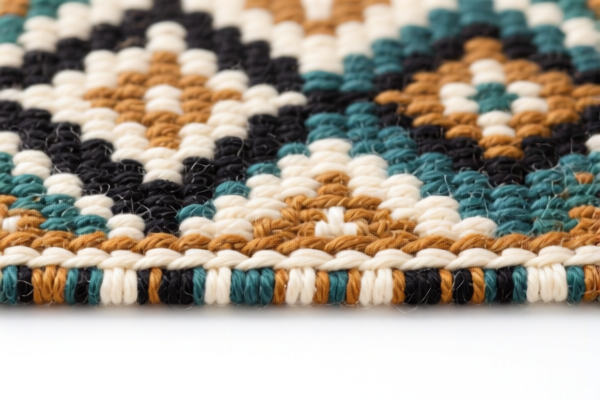
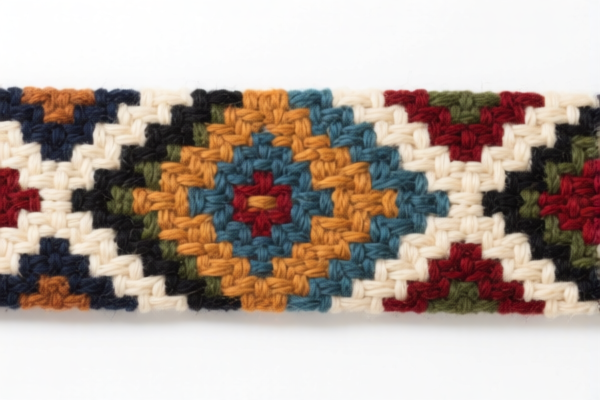
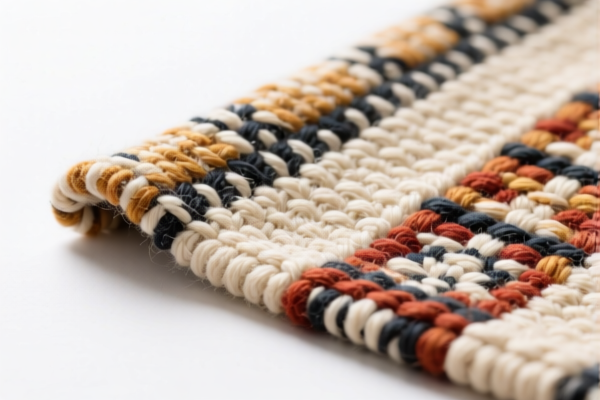
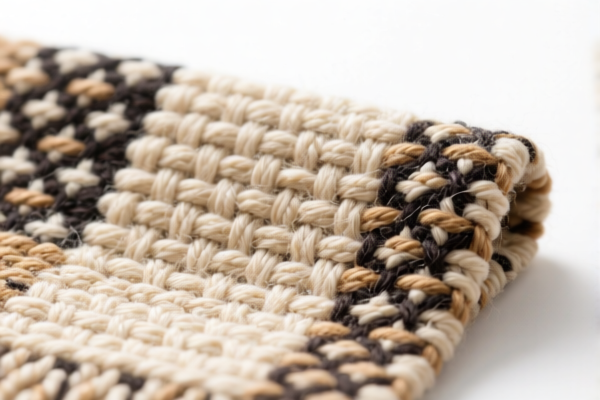
AI Analysis
🌟 Fine Animal Hair Woven Fabric Blended with Man-Made Fibers: Upholstery Fabric for Tapestry
🌐 HS Code & Tariff Guide | 2026 Updated Customs Classification | Professional Clearance Strategy
📌 One, Product Definition & Classification: What Exactly Is This Fabric?
This product is a woven fabric made from combed fine animal hair (such as cashmere, mohair, or angora) blended with man-made filaments (like polyester or nylon), specifically designed for tapestry and upholstery applications. It is not a pile fabric (like chenille or velvet), nor does it fall under the categories of 5802 or 5806 (which cover specific types of pile fabrics).
⚠️ Key Distinction:
- If the fabric is woven, not piled, and contains >50% man-made filaments, it qualifies under 5112.20.10.00.
- The weight must exceed 300 g/m² to be classified under this subheading — otherwise, it may fall into a different category.
📦 Two, HS Code Classification Details (2026 Official Tariff Reference)
| HS Code | Product Description | Application | Weight Threshold | Contains Man-Made Filaments? |
|---|---|---|---|---|
5112.20.10.00 |
Woven fabrics of combed wool or of combed fine animal hair: Other, mixed mainly or solely with man-made filaments: Tapestry fabrics and upholstery fabrics of a weight exceeding 300 g/m² | High-end furniture, decorative wall hangings, luxury seating, interior design | ✅ >300 g/m² | ✅ Yes (mainly or solely) |
5112.30.10.00 |
Woven fabrics of combed wool or of combed fine animal hair: Other, mixed mainly or solely with man-made staple fibers: Tapestry fabrics and upholstery fabrics of a weight exceeding 300 g/m² | Similar to above, but uses staple fibers (short-cut man-made fibers) instead of filaments | ✅ >300 g/m² | ✅ Yes (staple fibers) |
🔍 Critical Clarification:
- Filament vs. Staple:
- Filaments = continuous synthetic fibers (e.g., polyester yarn) →5112.20.10.00
- Staple fibers = chopped synthetic fibers (e.g., polyester staple) →5112.30.10.00
- Both are not pile fabrics → excluded from 5801.10.00 or 5806
- Must exceed 300 g/m² → otherwise, it may be classified under lower-weight categories (e.g., 5112.20.90.00) with different tariff treatment.
💰 Three, 2026 Latest Tariff & Duty Breakdown (Including Additional Levies)
✅ Applicable Country: United States (US)
✅ Origin: China (CN)
✅ Effective Date: November 10, 2025 (including future imports)
🎯 1. 5112.20.10.00 — Woven Fabric (Fine Animal Hair + Man-Made Filaments, >300 g/m²)
| Item | Detail |
|---|---|
| Base Tariff | 0.0% (ad valorem) |
| USITC Additional Duty | 0.0% (no 301-duty applied) |
| IEEPA Additional Duty | 0.0% (not subject to IEEPA for this category) |
| Total Duty Rate | 0.0% |
| Tax Calculation | CIF Value × 0.0% |
| De Minimis Threshold | ✅ Yes (10% de minimis applies) |
| Legal Basis Path | USITC:5112.20.10.00 → FOOTNOTE:9903.88.01 (No additional duty) |
📌 Explanation:
- Despite being made from fine animal hair, this fabric does not trigger the 25% USITC 301-duty because it is not a pure wool or animal hair fabric.
- The man-made filament blend removes it from the high-tariff category.
- No IEEPA (International Emergency Economic Powers Act) duty applies — this is not a "targeted" product under the current sanctions list.
🎯 2. 5112.30.10.00 — Woven Fabric (Fine Animal Hair + Man-Made Staple Fibers, >300 g/m²)
| Item | Detail |
|---|---|
| Base Tariff | 0.0% |
| USITC Additional Duty | 0.0% |
| IEEPA Additional Duty | 0.0% |
| Total Duty Rate | 0.0% |
| Tax Calculation | CIF × 0.0% |
| De Minimis | ✅ Yes (10% threshold applies) |
| Legal Basis Path | USITC:5112.30.10.00 → FOOTNOTE:9903.88.01 (No additional duty) |
📌 Note:
- This subheading has identical duty treatment as5112.20.10.00.
- The type of man-made fiber (filament vs. staple) does not affect the tariff rate in this case.
- Both are exempt from 301 and IEEPA duties due to the blended nature and non-pile structure.
🛠️ Four, Customs Clearance Best Practices (Pro Tips to Avoid Delays)
✅ 1. Required Documentation (Must-Have List)
| Document | Required? | Purpose |
|---|---|---|
| ✅ Product Specification Sheet | ✔️ | Detail fiber composition (e.g., 60% cashmere, 40% polyester filament) |
| ✅ Fabric Weight Test Report | ✔️ | Confirm weight >300 g/m² (critical for classification) |
| ✅ Sample Fabric (Physical) | ✔️ | For visual inspection by CBP |
| ✅ Commercial Invoice | ✔️ | Clearly state: “Woven fabric, fine animal hair + man-made filaments, for upholstery & tapestry” |
| ✅ Certificate of Origin (CO) | ✔️ | If claiming preferential treatment (e.g., from Vietnam, Thailand) |
| ✅ Packing List | ✔️ | Show total weight, number of rolls, dimensions |
| ✅ Third-Party Lab Test (e.g., for fiber content) | ✔️ | Optional but recommended for high-value shipments |
✅ 2.申报技巧 (Key Rules to Remember)
🔥 “Weight >300, Filament/Staple, No Pile, No 25%!”
| Scenario | Correct HS Code | Wrong Code | Risk |
|---|---|---|---|
| Fabric: 65% cashmere, 35% polyester filament, weight: 350 g/m² | 5112.20.10.00 |
5112.20.90.00 |
Wrong weight class |
| Fabric: 70% mohair, 30% polyester staple, weight: 320 g/m² | 5112.30.10.00 |
5112.20.10.00 |
Wrong fiber type |
| Fabric is pile-type (e.g., chenille) | 5801.10.00.00 |
5112.20.10.00 |
45% total duty! |
| Fabric is pure wool/fine animal hair, no man-made fibers | 5112.20.90.00 |
5112.20.10.00 |
25% extra duty! |
✅ 3. Special Handling Scenarios
| Situation | Recommended Action |
|---|---|
| Fabric is imported from Vietnam or Thailand | Apply for preferential origin (e.g., USMCA or ASEAN) → 0% duty |
| Fabric contains 100% man-made fibers | Not eligible for this code → may fall under 5407 or 5408 |
| Fabric is used in automotive upholstery | Still qualifies under 5112.20.10.00 if meets weight and composition |
| Customs questions about “fine animal hair” | Provide fiber analysis report and product photos |
🌍 Five, Global Market Tariff Comparison (2026 Update)
| Country/Region | Recommended HS Code | Tariff Rate | Certification Required | Notes |
|---|---|---|---|---|
| 🇺🇸 United States | 5112.20.10.00 / 5112.30.10.00 |
0.0% | None (if no 301/IEEPA) | De minimis applies |
| 🇨🇳 China | 5112.20.10.00 |
5% | CCC (if applicable) | No additional duties |
| 🇪🇺 European Union | 5112.20.10.00 |
0% (if CE) | CE, REACH | No extra tariffs |
| 🇦🇺 Australia | 5112.20.10.00 |
5% | RCM | No additional levies |
| 🇯🇵 Japan | 5112.20.10.00 |
0% | PSE | No extra duties |
📌 Key Insight:
- The U.S. is the only market with potential 25% tariffs on pure animal hair fabrics — but this blended fabric is exempt due to man-made fiber content.
- No additional duties apply to this product as long as it’s not pure wool/hair and not pile-type.
📌 Six, Common Mistakes & How to Avoid Them (Real-World Pitfalls)
❌ Mistake 1: Classifying a chenille fabric as 5112.20.10.00
👉 Result: Wrong HS Code → 25% + 10% = 45% total duty (if from China)
✅ Fix: Chenille → 5801.10.00.00 → 25% tariff (if from China)
❌ Mistake 2: Not verifying weight >300 g/m²
👉 Result: Misclassified as 5112.20.90.00 → higher duty or audit risk
✅ Fix: Always test and document weight with lab report.
❌ Mistake 3: Using “tapestry fabric” without specifying composition & weight
👉 Result: Customs delays or rejection
✅ Fix: Use precise language:
“Woven fabric, 60% fine animal hair (cashmere), 40% polyester filament, weight: 340 g/m², for upholstery and tapestry”
🎯 Seven, Conclusion: Precision Pays Off!
🎯 Remember the Golden Rule:
🔹 “If it’s woven, not piled, >300g/m², and blended with man-made fibers — it’s 0% duty in the U.S.!”
🔹 “No man-made blend? Pure animal hair? That’s 25%!”
🔹 “Pile fabric? That’s 25% — even if it’s fancy!”
📌 Pro Tip:
✅ Apply for a Pre-Clearance Ruling (Advance Ruling) from U.S. CBP if you’re shipping large volumes.
✅ Use a qualified customs broker who understands textile classifications.
✅ Keep fiber test reports and weight data on file for 5 years.
📣 Take Action Now:
📞 Contact a textile-specialized customs broker
📄 Submit product samples + fiber reports
🚀 Get your HS Code pre-approved — avoid delays, penalties, and surprise tariffs!
✨ Expert Clearance Starts with Accurate Classification!
💼 Your profit margin depends on getting this right — one mistake can cost thousands.
Customer Reviews
About HS Code Classification
The Harmonized System (HS) is an internationally standardized nomenclature developed by the World Customs Organization (WCO) to classify traded products. Over 200 countries use the HS system as the basis for customs tariffs, trade statistics, and import/export regulations.
Each HS code follows a hierarchical structure:
- Chapter (2 digits) — Broad category of goods (e.g., Chapter 84: Machinery and Mechanical Appliances)
- Heading (4 digits) — More specific grouping within the chapter
- Subheading (6 digits) — Internationally standardized breakdown, used by all WCO member countries
- National subdivisions (8-10 digits) — Country-specific extensions for further classification, such as US HTSUS 10-digit codes
Correct HS code classification is essential for smooth customs clearance, accurate duty payment, and compliance with trade regulations. Misclassification can lead to customs delays, overpayment of duties, or penalties.
When importing from CN to US, the applicable tariff rates may include:
- Most-Favored-Nation (MFN) rate — The standard duty rate applied to WTO members
- General rate — Applied to countries without trade agreements
- Trade remedy duties — Additional tariffs such as Section 301 (anti-dumping), Section 232 (national security), or countervailing duties
The information provided on this page is for reference purposes only. For official classification, please consult with your local customs authority or a licensed customs broker.