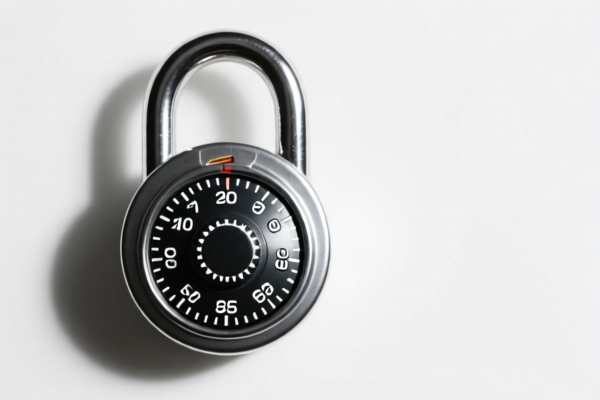
fingerprint lock 2
CN → US| HS Code | Tariff Rate | Origin | Destination | Doc |
|---|---|---|---|---|
| 8301406030 | 23.2% | CN | US | Official Doc |
| 8301406060 | 23.2% | CN | US | Official Doc |
Product Images



AI Analysis
🔐 Fingerprint Locks (Biometric Access Control Systems)
🌐 HS Code Reference & Customs Clearance Guide | 2026 Latest Tariff Analysis | Professional Clearance Strategy
📌 I. Product Definition & Classification: Do You Really Understand "Fingerprint Locks"?
Fingerprint locks represent the intersection of mechanical security and digital technology. In international trade, they are primarily classified under Chapter 83 (Base Metal Articles), not Chapter 85 (Electrical Machinery), because the essential character of the product is its function as a lock of base metal, even if it has an electronic component (the fingerprint sensor).
Key Distinction: * Electrically Operated Locks of Base Metal: If the lock body is made of base metal (zinc alloy, stainless steel, brass, etc.) and operates via electricity (battery/solid-state), it falls under HS 8301.40. * Purely Mechanical Locks: Key-operated or combination locks of base metal also fall under HS 8301.40 or 8301.30.
⚠️ Critical Classification Point:
- Do NOT classify as "Smart Home Devices" (85.17/85.18) unless the lock is purely an electronic module without a base metal locking mechanism.
- Core Logic: If it’s a physical lock made of base metal that happens to be electrically operated, it belongs in HS 8301.
📦 II. HS Code Classification Details (2026 Latest Tariff Authority Comparison)
Based on your provided data, here are the two applicable codes for Interior/Exterior Door Fingerprint Locks:
| HS Code | Product Description | Applicable Scenario | Key Feature |
|---|---|---|---|
8301.40.60.30 |
Other Door Locks: Interior or Exterior Door Locks | Standard residential/commercial doors (non-garage, non-sliding) | 0% Tax Rate |
8301.40.60.60 |
Other Locks: Other (General Purpose/Non-Specific) | Non-standard doors, industrial locks, or products not fitting the specific "door lock" definition | 13.2% Total Tax Rate |
🔍 Important Note:
- The primary differentiator between these two codes is often the specific application (e.g., "for doors" vs. "other") and the country-specific tariff schedule interpretation.
-8301.40.60.30is specifically for locks suitable for use with interior or exterior doors (excluding garage, overhead, or sliding doors).
-8301.40.60.60is a residual category for "Other" locks not specified elsewhere in this subheading.
💰 III. 2026 Latest Tariff Rate Breakdown (Including Additional Duties)
✅ Applicable Country: China (CN) to US (US) (Inferred from context of tariff structures)
✅ Product Origin: China
✅ Effective Date: Current (2026)
🎯 1. 8301.40.60.30 —— Door Locks (Interior/Exterior)
| Item | Content |
|---|---|
| Base Duty Rate | 0.0% |
| Additional Duty (Section 301/Other) | 0.0% |
| Total Effective Tax Rate | 0.0% |
| Tax Calculation | CIF Value × 0.0% = $0 |
| De Minimis Eligibility | ✅ Yes (Generally applicable if value < $800) |
| Legal Authority | Harmonized Tariff Schedule (HTSUS) Subheading 8301.40.60 |
📌 Explanation:
- This code enjoys a zero tariff rate. This is a highly favorable classification for importers.
- No additional USITC or IEEPA tariffs apply to this specific subheading for base metal door locks.
- Recommendation: Always strive to classify under this code if the product is indeed a door lock.
🎯 2. 8301.40.60.60 —— Other Locks (General)
| Item | Content |
|---|---|
| Base Duty Rate | 5.7% |
| Additional Duty (Section 301/Other) | 7.5% |
| Total Effective Tax Rate | 13.2% |
| Tax Calculation | CIF Value × 13.2% |
| De Minimis Eligibility | ⚠️ Check (Depending on specific trade agreements, but base duty applies) |
| Legal Authority | HTSUS Subheading 8301.40.60 |
📌 Explanation:
- If customs authorities determine your product does not fit the strict definition of "door lock" (e.g., it's a padlock, a cabinet lock, or a specialized industrial lock), it may fall into this residual category.
- Total Tax = 13.2% (5.7% Base + 7.5% Additional).
- This is a significant cost increase compared to code .30.
🛠️ IV. Customs Clearance Practical Advice (Real-World Pitfall Guide)
✅ 1. Essential Documentation Checklist
| Document | Required? | Description |
|---|---|---|
| ✅ Commercial Invoice | ✔️ | Must clearly state: "Fingerprint Door Lock, Base Metal Body, Electronic Operation" |
| ✅ Packing List | ✔️ | Detail contents: Lock body, keypad, batteries, keys, screws, installation kit |
| ✅ Product Specifications | ✔️ | Show dimensions, material (e.g., Zinc Alloy), and function (interior/exterior door compatibility) |
| ✅ Photos | ✔️ | Clear images of the lock mechanism, branding, and model number |
| ✅ Structure Diagram | ✔️ | Proves it is a base metal lock with an integrated electronic module, not a pure electronic device |
✅ 2. Declaration Tips (Key Phrases)
🔥 "Be Specific: 'Door Lock' vs. 'Lock'"
| Scenario | Correct Declaration | Incorrect Declaration |
|---|---|---|
| Standard Front Door Lock | 8301.40.60.30 - Fingerprint Door Lock for Interior/Exterior Doors |
8301.90.00.00 - Parts of Locks |
| Padlock / Cabinet Lock | 8301.40.60.60 - Other Locks |
8301.40.60.30 |
| Pure Electronic Smart Lock (No Base Metal Body) | 8517.62.00.00 - Electronic Devices |
8301.40.60.30 |
✅ 3. Special Situations
| Situation | Handling Advice |
|---|---|
| Composite Products (Lock + Smart Speaker) | If the lock is sold as a system with a speaker, the locking mechanism usually dictates the HS code (8301), but consult a customs broker for mixed equipment rules. |
| OEM/Private Label | Ensure the description does not imply proprietary software features that might shift classification to software-related categories. |
| Batteries Included | If lithium batteries are included, ensure UN38.3 testing and proper dangerous goods labeling are included in the shipment, even if the lock itself is 0% tax. |
🌍 V. Global Market Comparison (2026 Latest)
| Country/Region | Recommended HS Code | Tariff Rate (China Origin) | Certification Requirements | Notes |
|---|---|---|---|---|
| 🇺🇸 USA | 8301.40.60.30 |
0.0% | FCC (for electronics) | Best Market: Zero duty if correctly classified as door lock. |
| 🇪🇺 EU | 8301.10.90 |
2.7% | CE, RoHS | Base metal locks generally have low MFN tariffs. |
| 🇨🇳 China | 8301.40.60.30 |
0.0% (Import) | CCC (if electrical) | Imports into China are also duty-free for these items. |
| 🇬🇧 UK | 8301.40.90 |
0.0% | UKCA | Post-Brexit alignment with EU standards. |
| 🇦🇺 Australia | 8301.40.00 |
5.0% | RCM | Standard MFN rate. |
📌 Conclusion:
- The US is the most lucrative market for these products due to the 0% tariff under8301.40.60.30.
- Misclassification into8301.40.60.60leads to a 13.2% cost penalty. Precision in description is key.
📌 VI. Common Errors & Pitfalls (Lessons Learned)
❌ Error 1: Classifying as "Electronic Equipment" (85.17)
👉 Consequence: Incorrect. Base metal locks are Chapter 83. Misclassification can lead to penalties and back duties.
❌ Error 2: Using "Smart Lock" as the primary description without mentioning "Base Metal Door Lock"
👉 Consequence: Customs may suspect it's an electronic gadget, leading to audits or classification under higher-duty categories.
❌ Error 3: Ignoring Battery Regulations
👉 Consequence: Even if the lock is 0% tax, lithium batteries inside can cause shipment delays or rejection by carriers if not properly declared.
✅ Correct Declaration Example:
"FINGERPRINT DOOR LOCK, BASE METAL BODY, ELECTRONIC OPERATION, FOR INTERIOR/EXTERIOR DOORS, MODEL XYZ, NO LITHIUM BATTERY INCLUDED"
🎯 VII. Conclusion: Precision in Classification, Profit in Clearance
🎯 Remember the Golden Rule:
🔹 "Base Metal + Door Lock = 0% Duty"
🔹 "Other Locks = 13.2% Duty"
🔹 "Describe the Function, Not Just the Tech!"
📌 Pro Tip:
If your fingerprint lock is installed on a smart door that includes sensors, cameras, and communication modules, ensure the locking mechanism is the primary component. If it's a fully integrated "Smart Home Hub" with a lock, consult a customs broker for a potential Section 16 (GRI 1) classification argument to stay within HS 8301.
📣 Immediate Action:
📞 Contact a Customs Broker to pre-classify your specific fingerprint lock model.
📦 Ensure your commercial invoice clearly states "Door Lock of Base Metal" to qualify for 0% duty.
🚀 Maximize your margin by avoiding the 13.2% tariff trap!
✨ Professional Clearance Starts with Accurate Classification!
💼 Every percentage point of duty saved is pure profit.
Customer Reviews
About HS Code Classification
The Harmonized System (HS) is an internationally standardized nomenclature developed by the World Customs Organization (WCO) to classify traded products. Over 200 countries use the HS system as the basis for customs tariffs, trade statistics, and import/export regulations.
Each HS code follows a hierarchical structure:
- Chapter (2 digits) — Broad category of goods (e.g., Chapter 84: Machinery and Mechanical Appliances)
- Heading (4 digits) — More specific grouping within the chapter
- Subheading (6 digits) — Internationally standardized breakdown, used by all WCO member countries
- National subdivisions (8-10 digits) — Country-specific extensions for further classification, such as US HTSUS 10-digit codes
Correct HS code classification is essential for smooth customs clearance, accurate duty payment, and compliance with trade regulations. Misclassification can lead to customs delays, overpayment of duties, or penalties.
When importing from CN to US, the applicable tariff rates may include:
- Most-Favored-Nation (MFN) rate — The standard duty rate applied to WTO members
- General rate — Applied to countries without trade agreements
- Trade remedy duties — Additional tariffs such as Section 301 (anti-dumping), Section 232 (national security), or countervailing duties
The information provided on this page is for reference purposes only. For official classification, please consult with your local customs authority or a licensed customs broker.