fir logs cross section 15cm and above
CN → US| HS Code | Tariff Rate | Origin | Destination | Doc |
|---|---|---|---|---|
| 4403230142 | 35.0% | CN | US | Official Doc |
| 4407120058 | 35.0% | CN | US | Official Doc |
| 4407120059 | 35.0% | CN | US | Official Doc |
| 4409109040 | 35.0% | CN | US | Official Doc |
| 4401110000 | 35.0% | CN | US | Official Doc |
Product Images
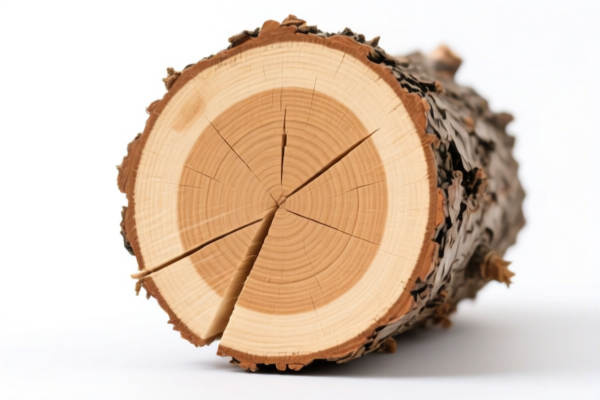
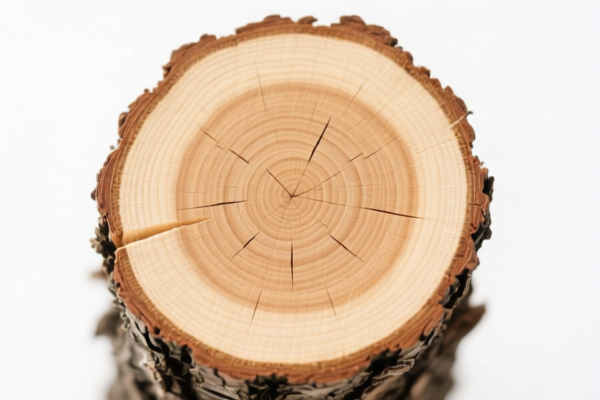
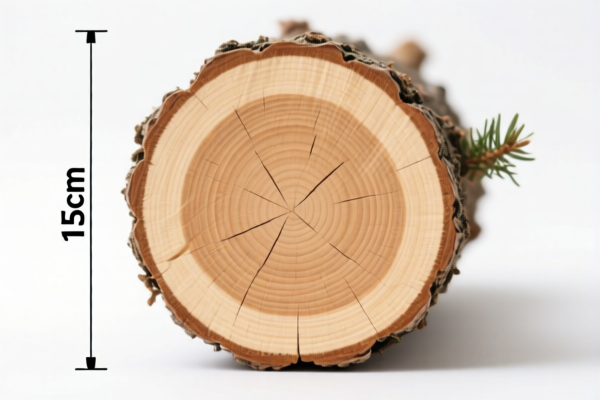
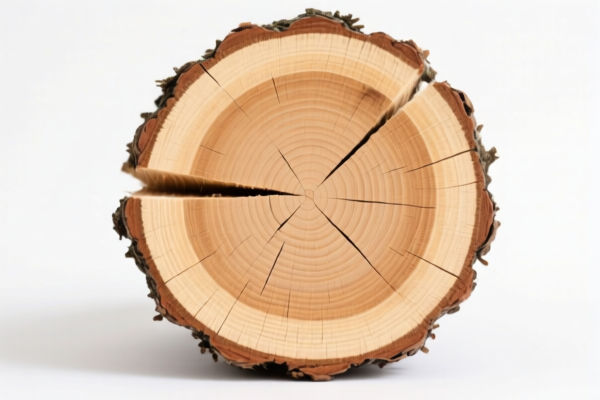
AI Analysis
🌲 Fir Logs & Timber (Fir Logs, Cross-Section ≥ 15cm)
🌐 HS Code Reference & Customs Clearance Guide | 2026 Latest Tariff Analysis | Professional通关 Strategy
📌 I. Product Definition and Classification: Do You Really Understand "Fir Timber"?
Fir Logs and Sawn Timber represent the raw material base of the construction and woodworking industries. In international trade, these products are strictly categorized based on their processing stage (raw log vs. sawn wood) and physical dimensions (specifically cross-sectional area).
Raw Logs (Fir Logs): Unprocessed tree trunks, stripped of branches and bark, retaining their natural cylindrical shape. Sawn Wood (Fir Sawntimber/Plank): Wood that has been cut longitudinally into specific shapes (planks, beams, joists), processed for construction or furniture use.
⚠️ Key Distinction Point:
- If the product is a natural, unprocessed tree trunk with a cross-section ≥ 15cm → Classified under Chapter 4403 (Logs).
- If the product is cut into shapes (sawn) with a cross-section ≥ 15cm → Classified under Chapter 4407 (Sawn Timber) or 4409 (Continuously Processed Wood).
📦 II. HS Code Classification Details (2026 Latest Tariff Authority Cross-Reference)
| HS Code | Product Description | Application Scenario | Processing Status |
|---|---|---|---|
4403.23.01.42 |
Fir Logs, cross-section ≥ 15cm | Raw material for milling, paper pulp, or landscaping; untreated wood | ✅ Raw Log |
4407.12.00.58 |
Fir Sawntimber, cross-section ≥ 15cm | Construction beams, structural framing, heavy timber buildings | ✅ Sawn/Processed |
4407.12.00.59 |
Fir Sawntimber, cross-section ≥ 15cm | Alternative classification for specific sawn fir timber profiles | ✅ Sawn/Processed |
4409.10.90.40 |
Fir Wood (Continuously Shaped), cross-section ≥ 15cm | Wood with tongue-and-groove, molded edges, or other continuous shaping | ✅ Continuously Shaped |
4401.11.00.00 |
Pine Logs, cross-section ≥ 15cm | Note: Often confused with Fir, but Pine is a different genus | ✅ Raw Log (Pine) |
🔍 Critical Reminder:
- "Fir" (Abies genus) is distinct from "Pine" (Pinus genus). Mislabeling Fir as Pine (4401.11.00.00) can lead to classification errors, although both face similar high tariffs in the US market. - The threshold "Cross-section ≥ 15cm" is crucial. Wood with a cross-section < 15cm falls under different subheadings (e.g.,4403.23.01.40or4407.12.00.50), which may have different duty rates or regulatory requirements. - "Sawntimber" (4407) implies cutting along the grain. If the wood is further shaped (e.g., tongue-and-groove), it moves to 4409.
💰 III. 2026 Latest Tariff Rate Breakdown (Including Additional Taxes & Policy Add-ons)
✅ Applicable Country: United States (US)
✅ Origin: China (CN)
✅ Effective Date: 2025 November 10 onwards (including subsequent imports)
All listed HS codes for Fir products from China currently face a total tariff rate of 35.0%. This is composed of three distinct layers of taxation.
🎯 1. 4403.23.01.42 —— Fir Logs (Raw)
| Item | Content |
|---|---|
| Base Tariff | 0.0% (Ad valorem, MFN rate) |
| Section 301 Tariff (Added) | +25.0% |
| Section 122 Tariff (Added) | +10.0% |
| Total Tariff Rate | 35.0% |
| Tax Calculation | CIF Value × 35% |
| De Minimis Eligibility | ❌ No (Denied under Section 321 for commercial shipments) |
| Legal Basis Path | HTSUS:4403.23.01.42 → Section 301 Footnote → Section 122 Authority |
📌 Explanation:
- "Base Tariff 0%": Under normal Most Favored Nation (MFN) rules, raw logs often have low or zero duties. However, this is overridden by trade policies. - "Section 301 Tariff 25%": This is the standard retaliatory tariff imposed on Chinese goods under the Trump-era trade war, largely maintained by the Biden administration for strategic goods including wood products. - "Section 122 Tariff 10%": Added under the International Emergency Economic Powers Act (IEEPA) or specific trade enforcement actions targeting Chinese imports. - Total 35%: This is a high barrier, significantly impacting the cost competitiveness of Chinese raw timber in the US market.
🎯 2. 4407.12.00.58 & 4407.12.00.59 —— Fir Sawntimber (Processed)
| Item | Content |
|---|---|
| Base Tariff | 0.0% |
| Section 301 Tariff (Added) | +25.0% |
| Section 122 Tariff (Added) | +10.0% |
| Total Tariff Rate | 35.0% |
| Tax Calculation | CIF Value × 35% |
| De Minimis Eligibility | ❌ No |
| Legal Basis Path | HTSUS:4407.12.00.58/59 → Section 301 Footnote → Section 122 Authority |
📌 Note:
- Although processed, sawn timber does not benefit from lower base rates that might apply to finished furniture. The raw material nature keeps the base at 0%, but the additional tariffs remain identical to logs. - Whether it’s a beam or a plank, if it’s Fir from China, the 35% total rate applies.
🎯 3. 4409.10.90.40 —— Continuously Shaped Fir Wood
| Item | Content |
|---|---|
| Base Tariff | 0.0% |
| Section 301 Tariff (Added) | +25.0% |
| Section 122 Tariff (Added) | +10.0% |
| Total Tariff Rate | 35.0% |
| Tax Calculation | CIF Value × 35% |
| De Minimis Eligibility | ❌ No |
| Legal Basis Path | HTSUS:4409.10.90.40 → Section 301 Footnote → Section 122 Authority |
📌 Important:
- Even though 4409 represents more processed wood (e.g., tongue-and-groove flooring), it still falls under the same heavy tariff structure for Chinese-origin fir. - There is no tariff benefit for adding basic shaping (like grooves) when importing from China to the US.
🎯 4. 4401.11.00.00 —— Pine Logs (For Comparison/Warning)
| Item | Content |
|---|---|
| Base Tariff | 0.0% |
| Section 301 Tariff (Added) | +25.0% |
| Section 122 Tariff (Added) | +10.0% |
| Total Tariff Rate | 35.0% |
| Tax Calculation | CIF Value × 35% |
| De Minimis Eligibility | ❌ No |
📌 Warning:
- If you mistakenly label Fir as Pine, the tariff rate is the same (35%). - However, misclassification can lead to customs audits, penalties, and delays for providing incorrect botanical documentation (e.g., Phytosanitary Certificates).
🛠️ IV. Customs Clearance Practical Advice (Battle-Tested Pitfall Avoidance)
✅ 1. Required Documentation Checklist (Non-Negotiable)
| Document | Must Provide | Description |
|---|---|---|
| ✅ Phytosanitary Certificate | ✔️ | Issued by the exporting country’s plant protection agency. Mandatory to prove freedom from pests (e.g., bark beetles, nematodes). |
| ✅ Commercial Invoice | ✔️ | Must clearly state: "Fir Logs," "Cross-Section ≥ 15cm," Species (e.g., Abies alba), Origin (China), and HS Code. |
| ✅ Packing List | ✔️ | Detailed list of bundles, total volume (cubic meters or board feet), and weight. |
| ✅ Bill of Lading/Air Waybill | ✔️ | Standard transport document. |
| ✅ Wood Packaging Material Declaration | ✔️ | If pallets/crates are used, they must comply with ISPM 15 standards (heat-treated, marked with IPPC logo). |
| ✅ Certificate of Origin | ✔️ | To confirm Chinese origin (though no preferential tariff applies under USMCA for China). |
✅ 2. Declaration Tips (Key Mnemonic)
🔥 "Species Specific, Section Clear, Pest-Free, Docs Perfect!"
| Scenario | Correct Declaration | Wrong Practice |
|---|---|---|
| Fir vs. Pine | Specify "Fir (Abies)" | Generic "Softwood Logs" → Risk of audit |
| Cross-Section | Explicitly state "≥ 15cm" | Omitting dimensions → Incorrect HS code assignment |
| Processing Level | Use "Sawn Timber" for cut wood, "Logs" for raw | Calling sawn planks "logs" → Classification error |
| Origin | Declare "China" accurately | Hiding origin → Fraud penalties, seizure |
✅ 3. Special Situation Handling
| Situation | Handling Advice |
|---|---|
| Bark On vs. Off | Logs with bark are more prone to pest interception. Ensure Phytosanitary Certificate explicitly mentions bark status and treatment if required. |
| Mixed Species | If a shipment contains both Fir and Pine, segregate and declare separately. Mixed shipments complicate valuation and pest control. |
| OEM Custom Sizes | Even if cut to specific lengths, if the cross-section is ≥15cm and it’s sawn, use 4407. Do not try to classify as "furniture parts." |
| Value Fluctuation | Tariffs are ad valorem (based on CIF value). Ensure insurance and freight costs are accurately calculated in the CIF price to avoid under-valuation penalties. |
🌍 V. Global Main Market Customs Comparison (2026 Latest)
| Country/Region | Recommended HS Code | Tariff (China Origin) | Certification Requirements | Notes |
|---|---|---|---|---|
| 🇺🇸 USA | 4403.23.01.42 / 4407.12.00.58 |
35% (0% Base + 25% Sec301 + 10% Sec122) | Phytosanitary, ISPM 15 | High Tariff. No de minimis. |
| 🇨🇳 China (Export) | Same | Export Duty: 0% | Phytosanitary | Export is free, but import cost is high. |
| 🇪🇺 EU | 4403.23 / 4407.12 |
~1.7% - 2.4% | FLEGT License (if applicable), Phytosanitary | Low Tariff. Easier market access. |
| 🇯🇵 Japan | 4403.23 / 4407.12 |
~1.9% | Phytosanitary | Low barrier, strict quality standards. |
| 🇲🇽 Mexico | 4403.23 / 4407.12 |
0% (Under USMCA rules, if processed in NAFTA region) | Phytosanitary | If raw logs from China, may still face tariffs. |
📌 Conclusion:
- The US market is the most challenging for Chinese Fir timber due to the 35% total tariff.
- EU and Japan offer significantly lower tariff barriers (~2%), making them more attractive destinations for Chinese wood exports.
- Consider supply chain diversification or tariff engineering (e.g., exporting semi-processed goods if rates differ, though currently similar) to mitigate costs.
📌 VI. Common Errors & Pitfall Guide (Lessons from Blood and Tears)
❌ Error 1: Misclassifying Sawn Timber as Raw Logs
👉 Consequence: Incorrect HS Code (4403 vs 4407), even if tariffs are similar, leads to documentation mismatch and potential delays.
❌ Error 2: Ignoring Cross-Section Dimensions
👉 Consequence: Declaring "Fir Logs" without specifying "≥15cm" may lead customs to classify under different subheadings, potentially triggering additional inspections or incorrect duty assessments.
❌ Error 3: Missing Phytosanitary Certificate
👉 Consequence: Shipment held at port, subjected to fumigation at importer’s expense, or rejected/returned. Wood is a high-risk category for pests.
❌ Error 4: Using Generic Descriptions ("Wood Planks")
👉 Consequence: Customs cannot determine species or tariff treatment. Results in maximum default duty or audit.
✅ Correct Practice:
"Fir Logs (Abies spp.), Cross-Section ≥ 15cm, Unprocessed, Origin: China, Phytosanitary Cert. No. XXXXX, ISPM 15 Pallets"
🎯 VII. Conclusion: Professional Declaration, Cost Control, Efficiency!
🎯 Remember the Mnemonic:
🔹 "Fir is Fir, Pine is Pine, Section ≥15, Tariff 35%."
🔹 "Logs vs. Sawn, Check the Cut, Docs must match, Avoid the rut!"
🔹 "Phytosanitary is King, Without it, You Can’t Bring It In!"
📌 Pro Tip:
If your timber is sourced from Vietnam, Thailand, or Malaysia, check for preferential tariffs under local trade agreements. However, for China-origin Fir, the 35% tariff is non-negotiable under current US trade policy.
Consider applying for a Binding Ruling from CBP if your product sits on the boundary between "Log" and "Sawn Timber" to ensure predictability.
📣 Immediate Action:
📞 Contact a licensed customs broker + Provide Species Details + Obtain Phytosanitary Certificate + Pre-classify HS Code
🚀 Ensure your Fir timber clears customs smoothly, avoids hidden costs, and maximizes profit margins!
✨ Professional clearance starts with precise classification!
💼 Every percentage point of tariff matters!
Customer Reviews
About HS Code Classification
The Harmonized System (HS) is an internationally standardized nomenclature developed by the World Customs Organization (WCO) to classify traded products. Over 200 countries use the HS system as the basis for customs tariffs, trade statistics, and import/export regulations.
Each HS code follows a hierarchical structure:
- Chapter (2 digits) — Broad category of goods (e.g., Chapter 84: Machinery and Mechanical Appliances)
- Heading (4 digits) — More specific grouping within the chapter
- Subheading (6 digits) — Internationally standardized breakdown, used by all WCO member countries
- National subdivisions (8-10 digits) — Country-specific extensions for further classification, such as US HTSUS 10-digit codes
Correct HS code classification is essential for smooth customs clearance, accurate duty payment, and compliance with trade regulations. Misclassification can lead to customs delays, overpayment of duties, or penalties.
When importing from CN to US, the applicable tariff rates may include:
- Most-Favored-Nation (MFN) rate — The standard duty rate applied to WTO members
- General rate — Applied to countries without trade agreements
- Trade remedy duties — Additional tariffs such as Section 301 (anti-dumping), Section 232 (national security), or countervailing duties
The information provided on this page is for reference purposes only. For official classification, please consult with your local customs authority or a licensed customs broker.