fir logs cross section 15cm or more
CN → US| HS Code | Tariff Rate | Origin | Destination | Doc |
|---|---|---|---|---|
| 4403230142 | 35.0% | CN | US | Official Doc |
| 4409109040 | 35.0% | CN | US | Official Doc |
| 4407120059 | 35.0% | CN | US | Official Doc |
| 4407120058 | 35.0% | CN | US | Official Doc |
| 4403210125 | 35.0% | CN | US | Official Doc |
Product Images
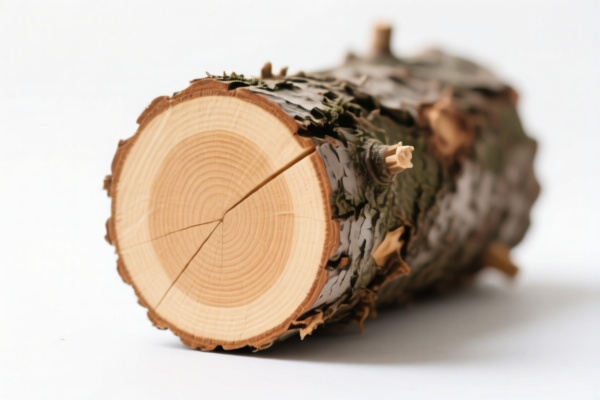
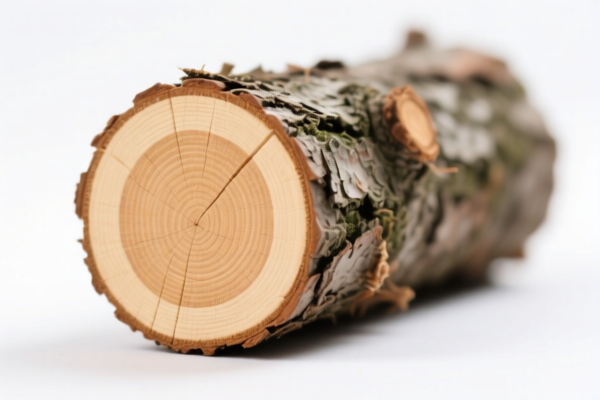
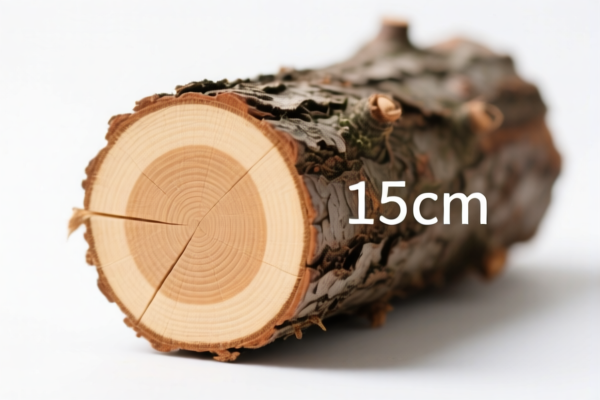
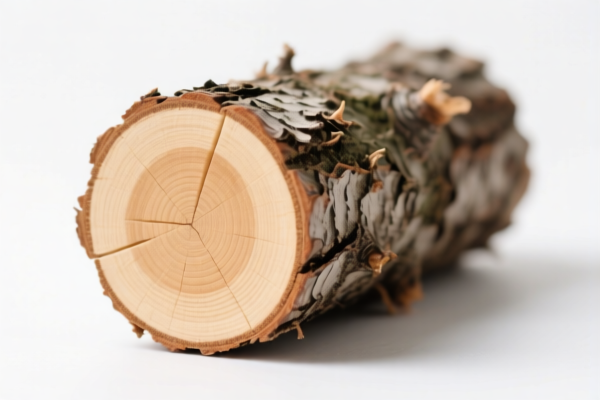
AI Analysis
🌲 Fir Logs: Cross-Section ≥ 15cm | 2026 Harmonized System (HS) Classification & Customs Clearance Guide
🌐 HS Code Reference & Customs Strategy | 2026 Latest Tariff Analysis | Professional Clearance Protocol
📌 I. Product Definition & Classification: Are You Clear on "Fir Logs"?
Fir Logs are unprocessed timber extracted from Abies species trees. In international trade, the classification depends heavily on the state of processing (raw vs. sawn) and the cross-sectional dimensions.
For this guide, we focus specifically on logs with a cross-section of 15 cm or more. This threshold is critical because logs below 15cm may be classified differently (e.g., as pulpwood or smaller timber), while those ≥ 15cm fall under specific forestry raw material categories.
⚠️ Key Distinction:
- If the wood is unworked (raw logs) → Classify under Heading 4403.
- If the wood is sawn/veneer chips (processed) → Classify under Heading 4407 or 4409.
- Note: The term "Fir" in common trade often groups Fir (Abies) and Spruce/Pine due to similar uses, but precise biological classification matters for HS codes. The data below reflects specific Chinese-origin fir/spruce/pine classifications often grouped in export contexts.
📦 II. HS Code Classification Details (2026 Latest Tariff Authority Mapping)
Based on the provided <DATA>, here are the precise HS Codes for Fir/Spruce/Pine logs and sawn timber with a cross-section ≥ 15cm.
| HS Code | Product Description | Cross-Section Requirement | Processing State |
|---|---|---|---|
4403.23.01.42 |
Fir Logs (Cedar/Fir type raw) | ≥ 15 cm | Raw, Unprocessed |
4407.12.00.59 |
Fir Timber, Longitudinally Sawed | ≥ 15 cm | Sawn/Chipped, Veneer Sheets |
4409.10.90.40 |
Fir Timber, Profiled/Continuously Shaped | ≥ 15 cm | Profiled (e.g., tongue & groove) |
4407.12.00.58 |
Spruce Timber, Longitudinally Sawed | ≥ 15 cm | Sawn/Chipped, Veneer Sheets |
4403.21.01.25 |
Pine Logs | ≥ 15 cm | Raw, Unprocessed |
🔍 Critical Clarification:
-4403Series: Refers to Logs, which are the raw, unprocessed stems of the tree, typically with bark intact or stripped.
-4407Series: Refers to Sawn Timber, which has been cut longitudinally into planks, beams, etc.
-4409Series: Refers to Profiled Timber, which has been shaped (e.g., grooves, moldings) along its length.
- Why Multiple Codes? Even if the user asks for "Fir Logs," the export context might include sawn timber. The data provided includes both raw logs (4403) and processed timber (4407,4409). Ensure the product state matches the HS Code.
💰 III. 2026 Latest Tariff Rate Breakdown (Including Surcharges & Policy Add-ons)
✅ Applicable Market: United States (US)
✅ Country of Origin: China (CN)
✅ Effective Date: 2025-11-10 onwards (including subsequent imports)
🎯 1. Raw Logs: 4403.23.01.42 (Fir Logs, ≥15cm) & 4403.21.01.25 (Pine Logs, ≥15cm)
| Item | Content |
|---|---|
| Base Tariff | 0.0% (Ad Valorem) |
| Section 301 Surcharge | +25.0% |
| Section 122 Tariff | +10.0% |
| Total Effective Tariff | 35.0% |
| Tax Calculation | CIF Value × 35% |
| De Minimis Exemption | ❌ Not Eligible (Denied due to high duty rate) |
| Legal Basis Path | USITC:4403.23.01.42 → SECTION301:Footnote → SECTION122:Authority |
📌 Explanation:
- Base Tariff (0%): Wood products generally have low base tariffs under the HTSUS.
- Section 301 (25%): Applied due to trade tensions and specific listing of Chinese wood products.
- Section 122 (10%): Additional tariff under Section 122 of the Trade Expansion Act of 1962 (often applied to national security or urgent import relief cases).
- Total 35%: This is a high-duty category. Importers must factor this into landed cost calculations.
🎯 2. Sawn/Profiled Timber: 4407.12.00.59 (Fir Sawn), 4409.10.90.40 (Fir Profiled), 4407.12.00.58 (Spruce Sawn)
| Item | Content |
|---|---|
| Base Tariff | 0.0% |
| Section 301 Surcharge | +25.0% |
| Section 122 Tariff | +10.0% |
| Total Effective Tariff | 35.0% |
| Tax Calculation | CIF Value × 35% |
| De Minimis Exemption | ❌ Not Eligible |
| Legal Basis Path | USITC:4407/4409 → SECTION301 → SECTION122 |
📌 Note:
- All processed fir/spruce/pine timber in the provided dataset carries the same 35% total tariff.
- The distinction between4407(Sawn) and4409(Profiled) is functional, not tariff-differentiating in this specific dataset context.
- Spruce (4407.12.00.58) is often traded alongside Fir (4407.12.00.59) due to similar mechanical properties and end-uses.
🛠️ IV. Customs Clearance Practical Advice (Battle-Tested Pitfall Avoidance)
✅ 1. Required Documentation Checklist (Non-Negotiable)
| Document | Required | Purpose |
|---|---|---|
| ✅ Commercial Invoice | ✔️ | Must clearly state "Fir Logs" or "Fir Sawn Timber," HS Code, CIF Value, and Country of Origin (China). |
| ✅ Packing List | ✔️ | Detail dimensions, weight, and packaging method. Confirm cross-section ≥ 15cm if challenged. |
| ✅ Phytosanitary Certificate | ✔️ | CRITICAL: Issued by the exporting country's plant protection agency. Must confirm freedom from pests/diseases. |
| ✅ ISPM 15 Marking | ✔️ | If packaged in wood pallets/crates, they must be heat-treated/fumigated and marked with ISPM 15 logo. |
| ✅ Bill of Lading/Air Waybill | ✔️ | Standard shipping document. |
| ✅ Importer Security Filing (ISF) | ✔️ | Filed 24 hours before loading for ocean freight. |
📌 Warning:
- Wood Products are High-Risk for Phytopathogens. Failure to provide a valid Phytosanitary Certificate will result in quarantine, fumigation at importer’s cost, or rejection/return.
✅ 2. Declaration Tips (Key Mnemonics)
🔥 "Logs vs. Sawn: State Matters. Cross-Section ≥15cm: Declare Clearly."
| Scenario | Correct Declaration | Wrong Practice |
|---|---|---|
| Raw Logs | "Fir Logs, Unprocessed, Cross-Section ≥15cm" → 4403.23.01.42 |
Calling raw logs "Sawn Timber" → Misclassification → Penalties |
| Sawn Planks | "Fir Sawn Timber, Longitudinally Cut, ≥15cm Cross-Section" → 4407.12.00.59 |
Calling sawn timber "Logs" → Potential audit flag |
| Profiled Timber | "Fir Timber, Tongue & Groove, ≥15cm" → 4409.10.90.40 |
Omitting "Profiled" → Risk of reclassification |
| Spruce vs. Fir | Clearly identify species if possible; if mixed, declare dominant species or use broader code if applicable | Vague "Coniferous Timber" → High risk of customs delay |
✅ 3. Special Handling Cases
| Case | Handling Advice |
|---|---|
| Mixed Species Load | If a container contains both Fir and Pine, declare separately with distinct HS Codes (4403.23.01.42 vs. 4403.21.01.25). Do not lump under one code. |
| Cross-Section Dispute | If customs questions the ≥15cm claim, provide dimensional certificates or photos with measurement tools. Logs <15cm may have different regulations. |
| Wood Packaging Material | Ensure all pallets, crates, and dunnage are ISPM 15 compliant. Non-compliant wood can lead to container rejection. |
| Valuation | Ensure CIF value includes freight and insurance. Undervaluation leads to severe penalties and increased scrutiny. |
🌍 V. Global Market Comparison (2026 Latest)
| Country/Region | Recommended HS Code | Tariff (China Origin) | Key Requirements | Notes |
|---|---|---|---|---|
| 🇺🇸 USA | 4403.23.01.42 / 4407.12.00.59 etc. |
35% (0% Base + 25% Sec 301 + 10% Sec 122) | Phytosanitary Cert, ISPM 15 | High Duty. Must declare accurately. |
| 🇨🇳 China | 4403.23.01.42 |
0-5% (Varies) | None | Low duty for import into China. |
| 🇪🇺 EU | 4403.23.00 |
0% | EUDR (Deforestation Regulation) | New EUDR Compliance Required (Due Diligence Statement). |
| 🇬🇧 UK | 4403.23.00 |
0% | GB Plant Health Cert | Post-Brexit rules apply. |
| 🇯🇵 Japan | 4403.23.00 |
0% | Phytosanitary Cert | Strict quarantine on wood products. |
📌 Conclusion:
- USA imposes the highest duty burden (35%) due to Section 301 and Section 122 tariffs.
- EU has 0% base tariff but requires EUDR Due Diligence, adding significant administrative cost.
- Other Markets: Generally low or zero base tariffs, but strict Phytosanitary and ISPM 15 requirements.
📌 VI. Common Mistakes & Pitfall Avoidance (Blood Lessons)
❌ Mistake 1: Declaring Sawn Timber as Logs (or vice versa)
👉 Consequence: Misclassification → Customs Seizure → Fines → Delay
👉 Fix: Clearly distinguish between raw logs (4403) and processed timber (4407/4409).
❌ Mistake 2: Ignoring Cross-Section Requirement
👉 Consequence: If actual cross-section is <15cm, the HS Code is incorrect → Penalty
👉 Fix: Verify dimensions before shipping. Declare "≥15cm" only if true.
❌ Mistake 3: Missing Phytosanitary Certificate
👉 Consequence: Container rejected at port → Demurrage Costs → Return/Destroy
👉 Fix: Obtain cert from exporting country’s NPPO (National Plant Protection Organization) before shipment.
❌ Mistake 4: Non-ISPM 15 Wood Packaging
👉 Consequence: Entire shipment halted for fumigation or disposal
👉 Fix: Ensure all wood packaging is marked and compliant.
✅ Correct Declaration Example:
"Fir Logs, Unprocessed, Cross-Section ≥15cm, HS Code: 4403.23.01.42, Origin: China, Phytosanitary Cert: CN12345, ISPM 15 Pallets"
🎯 VII. Conclusion: Precision in Classification, Cost Efficiency in Clearance
🎯 Remember the Mnemonic:
🔹 "Logs Raw: 4403, Sawn: 4407, Profiled: 4409. Cross-Section ≥15cm: Check Dimensions. 35% Duty: USA, No De Minimis. Phyto Cert: Mandatory!"
🔹 "HS Code Determines Duty. 35% in USA. Clear Declaration Saves Time."
📌 Pro Tip:
If your timber is sourced from Vietnam, Thailand, or Malaysia, check for FTA Benefits (e.g., ASEAN-US, RCEP). However, note that the provided
<DATA>assumes China Origin with 35% Total Duty. For non-Chinese origin, duties may be lower. Always verify origin rules.
📣 Immediate Action:
📞 Consult a Licensed Customs Broker
📄 Prepare Phytosanitary Certificate & ISPM 15 Proof
🚀 Ensure Accurate HS Code Declaration to Avoid 35% Surprise Duties!
✨ Professional Clearance Starts with Precise Classification!
💼 Your Cost, Precisely Calculated.
Customer Reviews
About HS Code Classification
The Harmonized System (HS) is an internationally standardized nomenclature developed by the World Customs Organization (WCO) to classify traded products. Over 200 countries use the HS system as the basis for customs tariffs, trade statistics, and import/export regulations.
Each HS code follows a hierarchical structure:
- Chapter (2 digits) — Broad category of goods (e.g., Chapter 84: Machinery and Mechanical Appliances)
- Heading (4 digits) — More specific grouping within the chapter
- Subheading (6 digits) — Internationally standardized breakdown, used by all WCO member countries
- National subdivisions (8-10 digits) — Country-specific extensions for further classification, such as US HTSUS 10-digit codes
Correct HS code classification is essential for smooth customs clearance, accurate duty payment, and compliance with trade regulations. Misclassification can lead to customs delays, overpayment of duties, or penalties.
When importing from CN to US, the applicable tariff rates may include:
- Most-Favored-Nation (MFN) rate — The standard duty rate applied to WTO members
- General rate — Applied to countries without trade agreements
- Trade remedy duties — Additional tariffs such as Section 301 (anti-dumping), Section 232 (national security), or countervailing duties
The information provided on this page is for reference purposes only. For official classification, please consult with your local customs authority or a licensed customs broker.