fire extinguishing agent
CN → US| HS Code | Tariff Rate | Origin | Destination | Doc |
|---|---|---|---|---|
| 3813001000 | 35.0% | CN | US | Official Doc |
| 3813005000 | 38.7% | CN | US | Official Doc |
| 8531100045 | 11.3% | CN | US | Official Doc |
| 2811210000 | 38.7% | CN | US | Official Doc |
| 3813001000 | 35.0% | CN | US | Official Doc |
Product Images
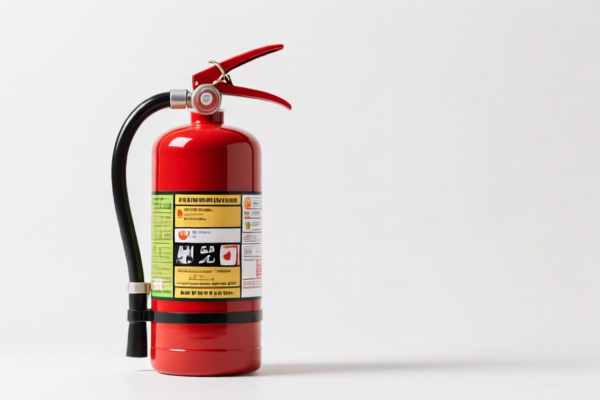
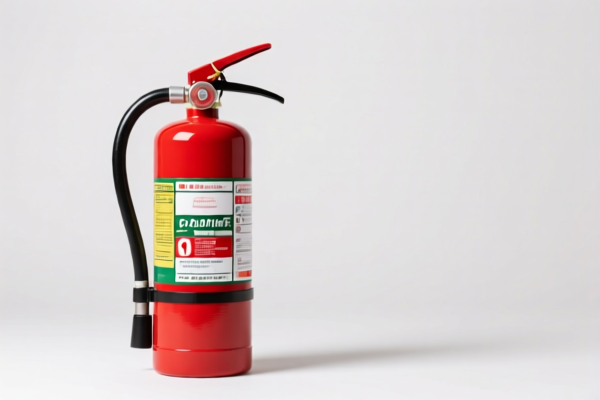
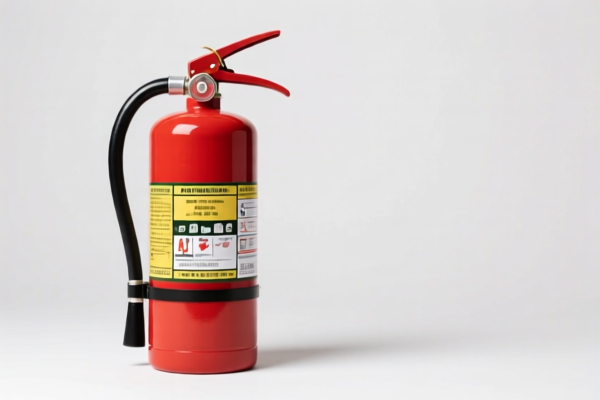
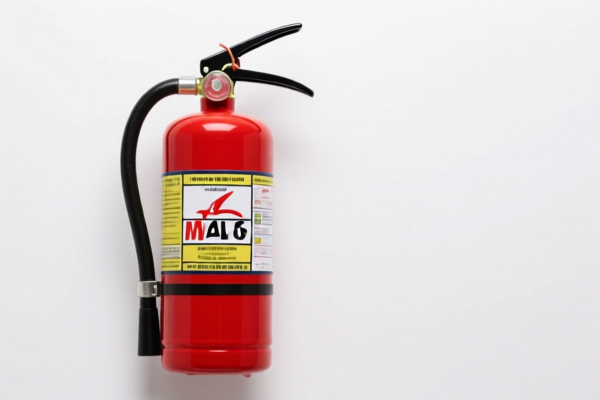
AI Analysis
🧯 Fire Extinguishing Agents & Equipment (灭火剂及相关设备)
🌐 HS Code Reference & Customs Clearance Guide | 2026 Latest Tariff Analysis | Professional Level Clearance Strategy
📌 I. Product Definition & Classification: Do You Understand "Fire Extinguishing Agents"?
Fire extinguishing agents are critical substances used in fire suppression systems to extinguish fires. In international trade, they are broadly categorized based on their chemical composition and function. However, the classification depends heavily on whether the item is a pure chemical, a formulated additive, or part of an electronic control system.
Chemical Agents (e.g., CO2, Halons): Pure inorganic or organic compounds used directly for extinguishing.
Formulated Agents/Additives: Mixtures, extinguishing agent additives, or control agents designed to enhance specific extinguishing powders or gases.
Control Equipment: Electronic devices (like fire alarm controllers) that trigger or manage the discharge of extinguishing agents.
⚠️ Key Distinction Points:
- If it is a pure inorganic oxide (like Carbon Dioxide) → It may fall under Chapter 28 (Inorganic Chemicals).
- If it is a mixture, powder, or additive for extinguishing → It falls under Chapter 38 (Miscellaneous Chemical Products).
- If it is an electronic control box for a fire alarm system → It falls under Chapter 85 (Electrical Machinery).
📦 II. HS Code Classification Details (2026 Latest Tariff Authority Comparison)
| HS Code | Product Description | Application Scenario | Tax Rate (US Import from CN) |
|---|---|---|---|
2811.21.00.00 |
Carbon Dioxide (CO2) Inorganic Non-Metal Oxide | Pure CO2 gas/liquid for fire suppression systems | 38.7% |
3813.00.10.00 |
Fire Extinguishing Agent Additives/Control Agents | Additives for extinguishing agents, control agents for powder/gas | 35.0% |
3813.00.50.00 |
Fire Extinguishing Preparations | Formulated preparations matching extinguishing agent filling attributes | 38.7% |
8531.10.00.45 |
Fire Extinguishing Control Equipment | Electronic controls for fire alarms, matching detector/indicator use | 11.3% |
3813.00.10.00 |
Fire Extinguishing Control (Fallback Category) | General control based on core extinguishing agent use (fallback) | 35.0% |
🔍 Key Reminder:
- Pure CO2 is classified differently from mixed extinguishing agents. Do not mix2811.21.00.00with3813codes.
- Electronic controllers for fire systems (8531.10.00.45) have significantly lower tariffs than the chemical agents themselves.
- Additives (3813.00.10.00) and Preparations (3813.00.50.00) have similar high tariff rates but different technical definitions.
💰 III. 2026 Latest Tariff Rate Details (Including Surcharges & Policy Additions)
✅ Applicable Country: United States (US)
✅ Origin: China (CN)
✅ Effective Date: From November 10, 2025 (including subsequent imports)
🎯 1. 2811.21.00.00 — Carbon Dioxide (Inorganic Non-Metal Oxide)
| Item | Content |
|---|---|
| Basic Tariff | 3.7% (ad valorem) |
| USITC Surcharge | +25.0% (Section 301 Duties) |
| IEEPA Surcharge | +10.0% (China/HK specific, from Nov 10, 2025) |
| Total Tariff | 38.7% |
| Tax Calculation | CIF Value × 38.7% |
| De Minimis Exemption | ❌ Not Eligible (deny_de_minimis) |
| Legal Basis Path | IEEPA:9903.01.25 → IEEPA:9903.01.24 → USITC:2811.21.00.00 → FOOTNOTE:9903.88.01 |
📌 Explanation:
- Although CO2 is a common industrial gas, its classification as a "chemical product" for fire extinguishing triggers the full suite of surcharges.
- 38.7% is a very high cost, impacting margin significantly for pure CO2 imports.
🎯 2. 3813.00.10.00 — Fire Extinguishing Agent Additives/Control Agents
| Item | Content |
|---|---|
| Basic Tariff | 0.0% (ad valorem) |
| USITC Surcharge | +25.0% (Section 301 Duties) |
| IEEPA Surcharge | +10.0% (China/HK specific, from Nov 10, 2025) |
| Total Tariff | 35.0% |
| Tax Calculation | CIF Value × 35.0% |
| De Minimis Exemption | ❌ Not Eligible (deny_de_minimis) |
| Legal Basis Path | IEEPA:9903.01.25 → IEEPA:9903.01.24 → USITC:3813.00.10.00 → FOOTNOTE:9903.88.01 |
📌 Note:
- The base tariff is 0%, but the 35% total is still substantial due to the combined 35% surcharges.
- This code applies to additives or control agents used in conjunction with extinguishing powders or gases.
🎯 3. 3813.00.50.00 — Fire Extinguishing Preparations
| Item | Content |
|---|---|
| Basic Tariff | 3.7% (ad valorem) |
| USITC Surcharge | +25.0% (Section 301 Duties) |
| IEEPA Surcharge | +10.0% (China/HK specific, from Nov 10, 2025) |
| Total Tariff | 38.7% |
| Tax Calculation | CIF Value × 38.7% |
| De Minimis Exemption | ❌ Not Eligible (deny_de_minimis) |
| Legal Basis Path | IEEPA:9903.01.25 → IEEPA:9903.01.24 → USITC:3813.00.50.00 → FOOTNOTE:9903.88.01 |
📌 Note:
- This code covers formulated preparations (mixtures) specifically for extinguishing.
- Tax rate is identical to pure CO2 (38.7%).
- Ensure your product description matches "preparation" rather than "additive" to avoid misclassification penalties.
🎯 4. 8531.10.00.45 — Fire Extinguishing Control Equipment
| Item | Content |
|---|---|
| Basic Tariff | 1.3% (ad valorem) |
| USITC Surcharge | 0.0% (Section 301 Not Applied) |
| IEEPA Surcharge | +10.0% (China/HK specific, from Nov 10, 2025) |
| Total Tariff | 11.3% |
| Tax Calculation | CIF Value × 11.3% |
| De Minimis Exemption | ❌ Not Eligible (deny_de_minimis) |
| Legal Basis Path | IEEPA:9903.01.25 → USITC:8531.10.00.45 |
📌 Critical Advantage:
- 11.3% is significantly lower than chemical agents (35-38.7%).
- This code applies to electronic control devices, such as fire alarm controllers, panels, or interfaces that manage fire suppression systems.
- Strategy: If your product is an electronic control unit, ensure it is not misclassified as a chemical agent.
🛠️ IV. Customs Clearance Practical Advice (Pitfall Avoidance Guide)
✅ 1. Documentation Checklist (Mandatory)
| Document | Must Provide | Description |
|---|---|---|
| ✅ Product Specification Sheet | ✔️ | Include chemical composition, concentration, MSDS (Material Safety Data Sheet). |
| ✅ Technical Data Sheet | ✔️ | For 8531.10.00.45, include circuit diagrams, control logic, and voltage specs. |
| ✅ Product Photos | ✔️ | Clear images of label, model number, and warning symbols. |
| ✅ Commercial Invoice | ✔️ | Must clearly state: "Fire Extinguishing Agent" or "Fire Control Equipment". Avoid vague terms like "Chemical". |
| ✅ Origin Certificate (CO) | ✔️ | If not China-origin, apply for preferential rates. |
| ✅ Packing List | ✔️ | Detail net/gross weight, especially for hazardous chemicals. |
✅ 2. Declaration Tips (Key Mantras)
🔥 "Chemicals vs. Electronics, Clear Labeling Saves Money!"
| Scenario | Correct Declaration | Wrong Practice |
|---|---|---|
| Pure CO2 Gas | 2811.21.00.00 "Carbon Dioxide" |
Mislabel as "Extinguishing Agent" (3813) → 38.7% vs 38.7% (same, but risk of inspection delay). |
| Extinguishing Powder/Mist | 3813.00.50.00 "Extinguishing Preparation" |
Mislabel as "Chemical Mixture" → Potential classification error. |
| Additive for Powder | 3813.00.10.00 "Extinguishing Agent Additive" |
Mislabel as "Preparation" → 35% vs 38.7% (saves 3.7%, but must be accurate). |
| Fire Alarm Controller | 8531.10.00.45 "Fire Control Equipment" |
Mislabel as "Part of Fire Extinguisher" → Could trigger chemical inspection if ambiguous. |
✅ 3. Special Case Handling
| Scenario | Handling Advice |
|---|---|
| OEM Extinguishing Agents | Provide client order + technical formula sheet. Avoid generic names. |
| Mixed Systems (Agent + Control Box) | Separate Declaration! Do not bundle chemical agents and electronic controls in one HS code. Declare separately to optimize tax. |
| Non-China Origin | If sourced from Vietnam/Malaysia, check for IEEPA Exemptions. Tax could drop to 0-5%. |
| Small Samples (De Minimis) | ❌ Not Eligible. Fire extinguishing agents and controls from China are excluded from the $800 de minimis exemption. |
🌍 V. Global Market Comparison (2026 Latest)
| Country/Region | Recommended HS Code | Tariff (China Origin) | Certification | Notes |
|---|---|---|---|---|
| 🇺🇸 USA | 3813.00.10.00 / 2811.21.00.00 |
35.0% - 38.7% | No specific CE/FCC for chemicals, but UL/FM recommended | High Surcharge Market. Avoid direct shipments if possible. |
| 🇺🇸 USA | 8531.10.00.45 (Control) |
11.3% | FCC / UL | Lower tariff for electronics. |
| 🇨🇳 China | 3813.00.10.00 |
0-5% (VAT/Consumption Tax varies) | CCC (if applicable) | Domestic market has lower barriers. |
| 🇪🇺 EU | 3824.71.00 (Similar) |
0-4% (Duty) + 19% VAT | CE / EN3 | No Section 301 surcharges. Favorable for EU market. |
| 🇯🇵 Japan | 3824.71.00 |
0-5% | JIS / PSE (for electronics) | Stable trade relations. |
📌 Conclusion:
- USA is the most expensive market for fire extinguishing agents from China due to 35-38.7% effective tariffs.
- Electronics (8531.10.00.45) are cheaper (11.3%) but still subject to IEEPA.
- Consider alternative markets (EU, Japan) or transshipment (if legal and compliant) to reduce costs.
📌 VI. Common Errors & Pitfall Guide (Lessons Learned)
❌ Error 1: Bundling Chemical Agents and Electronic Controls in One Shipment under One HS Code
👉 Consequence: Customs may reject the mixed classification, leading to delays, additional inspections, or reclassification penalties.
✅ Fix: Declare separately: 3813.00.10.00 for chemicals, 8531.10.00.45 for controls.
❌ Error 2: Mislabeling "Extinguishing Preparation" as "General Chemical"
👉 Consequence: Underreporting value or incorrect tariff application (e.g., using a lower duty rate).
✅ Fix: Use precise HS Code definitions. "Extinguishing Preparation" is specific to Chapter 38.
❌ Error 3: Ignoring the IEEPA 10% Surcharge for All Items from China
👉 Consequence: Unexpected tax bill at customs, cash flow disruption.
✅ Fix: Always calculate Base Tariff + 25% (Section 301) + 10% (IEEPA) for chemical agents.
❌ Error 4: Claiming De Minimis Exemption for Fire Extinguishing Agents
👉 Consequence: Package seized, fines, and blacklist risk.
✅ Fix: No De Minimis for these goods from China. Use formal entry procedures.
🎯 VII. Conclusion: Professional Declaration, Cost Optimization!
🎯 Remember the Mantra:
🔹 "Chemicals 38%, Electronics 11%, No De Minimis, Separated Declaration!"
🔹 "HS Code Determines Tax, Declaration Difference Saves Thousands!"
📌 Tips:
- If your fire extinguishing equipment is originated from Vietnam, Malaysia, or Thailand, apply for IEEPA Exemption. Tax could drop to 0-5%.
- Suggest Advance Ruling for complex mixed shipments to avoid clearance risks.
📣 Immediate Action:
📞 Contact Professional Customs Broker + Provide Product Photos + Apply for HS Code Advance Ruling
🚀 Let your fire safety products clear smoothly, escape high tariffs, and maximize profits!
✨ Professional Customs Clearance Starts with Accurate Classification!
💼 Every Cent of Cost Deserves Precise Calculation!
Customer Reviews
About HS Code Classification
The Harmonized System (HS) is an internationally standardized nomenclature developed by the World Customs Organization (WCO) to classify traded products. Over 200 countries use the HS system as the basis for customs tariffs, trade statistics, and import/export regulations.
Each HS code follows a hierarchical structure:
- Chapter (2 digits) — Broad category of goods (e.g., Chapter 84: Machinery and Mechanical Appliances)
- Heading (4 digits) — More specific grouping within the chapter
- Subheading (6 digits) — Internationally standardized breakdown, used by all WCO member countries
- National subdivisions (8-10 digits) — Country-specific extensions for further classification, such as US HTSUS 10-digit codes
Correct HS code classification is essential for smooth customs clearance, accurate duty payment, and compliance with trade regulations. Misclassification can lead to customs delays, overpayment of duties, or penalties.
When importing from CN to US, the applicable tariff rates may include:
- Most-Favored-Nation (MFN) rate — The standard duty rate applied to WTO members
- General rate — Applied to countries without trade agreements
- Trade remedy duties — Additional tariffs such as Section 301 (anti-dumping), Section 232 (national security), or countervailing duties
The information provided on this page is for reference purposes only. For official classification, please consult with your local customs authority or a licensed customs broker.