fire shutoff switch
CN → US| HS Code | Tariff Rate | Origin | Destination | Doc |
|---|---|---|---|---|
| 8535290020 | 37.0% | CN | US | Official Doc |
| 8535210000 | 37.7% | CN | US | Official Doc |
| 8536200020 | 37.7% | CN | US | Official Doc |
| 8536200040 | 37.7% | CN | US | Official Doc |
Product Images
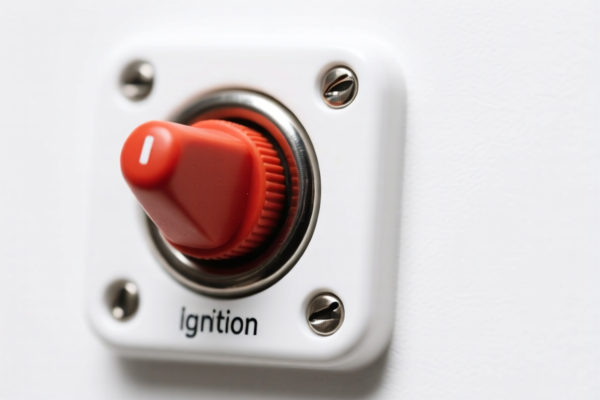
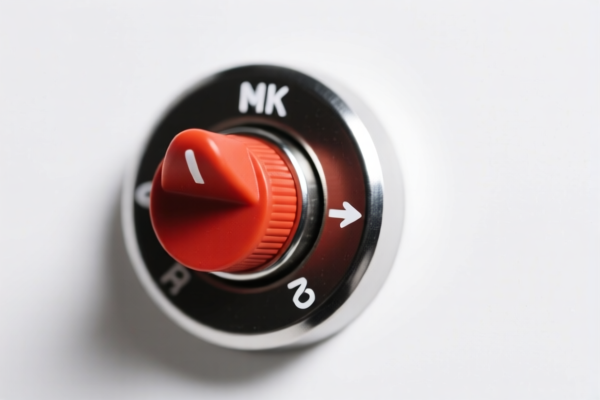
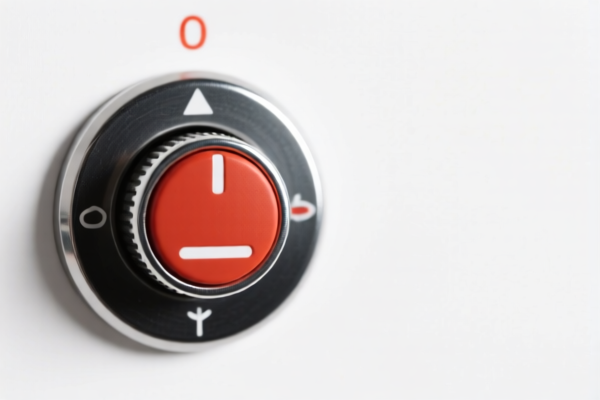
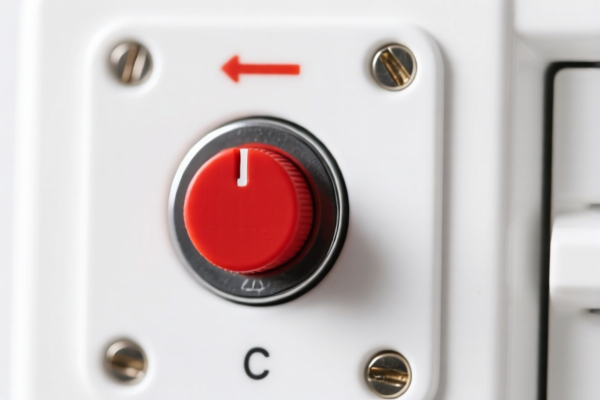
AI Analysis
🔥 Fire Shutoff Switch (Automatic Circuit Breakers for Fire Safety)
🌐 HS Code Reference & Customs Clearance Guide | 2026 Latest Tariff Analysis | Professional Compliance Strategy
📌 I. Product Definition & Classification: Do You Understand "Fire Shutoff Switches"?
A Fire Shutoff Switch is a critical safety component in industrial and building fire suppression systems. Its primary function is to automatically cut off power to electrical circuits (such as pumps, fans, or hazardous equipment) upon detection of fire or smoke, preventing electrical arcs that could exacerbate the fire.
In international trade, these devices are technically classified under Automatic Circuit Breakers (ACBs) within Chapter 85. They are not "switches" in the general sense (like light switches) but protective devices designed to interrupt current automatically during abnormal conditions.
⚠️ Key Classification Distinction:
- If the device is a complete automatic circuit breaker (with internal mechanism, housing, and terminals) used for protection → It falls under 8535 or 8536.
- If it is a simple mechanical switch manually operated or part of a larger control panel without independent overcurrent protection → It may fall elsewhere, but Fire Shutoff implies automatic protection, hence 8535/8536.
- Material/Conflict Check: No material conflicts exist; these are primarily electrical components made of insulating plastics and conductive metals.
📦 II. HS Code Classification Details (2026 Latest Tariff Authority Mapping)
| HS Code | Product Description | Application Scenario | Tax Rate (Total) | Tax Detail |
|---|---|---|---|---|
8535.29.00.20 |
Other automatic circuit breakers (excluding voltage > 1000V) | High-capacity fire suppression systems, industrial main lines | 37.0% | Base: 2.0%, Section 301: 25%, Section 122: 10% |
8535.21.00.00 |
Automatic circuit breakers for voltage ≤ 1000V | Standard building fire safety panels, low-voltage circuit protection | 37.7% | Base: 2.7%, Section 301: 25%, Section 122: 10% |
8536.20.00.20 |
Other circuit breakers (not specified in 8535) | Compact fire shutoff units, specific control modules | 37.7% | Base: 2.7%, Section 301: 25%, Section 122: 10% |
8536.20.00.40 |
Other switches and protectors (not specified in 8535) | Generic protective switches for fire safety circuits | 37.7% | Base: 2.7%, Section 301: 25%, Section 122: 10% |
🔍 Important Note:
- All four HS codes fall under Chapter 85: Electrical Machinery and Equipment.
- The distinction between 8535 (apparatus for switching ≥ 1000V or high-capacity) and 8536 (apparatus for switching < 1000V or general purpose) depends on the rated voltage and current capacity of the fire shutoff switch.
- No material conflicts are identified; these are standard electrical components.
💰 III. 2026 Latest Tariff Rate Breakdown (Including Additional Taxes & Policy Add-ons)
✅ Applicable Country: United States (US)
✅ Origin: China (CN)
✅ Effective Date: Post-2025 (including subsequent imports)
🎯 1. 8535.29.00.20 —— Other Automatic Circuit Breakers
| Item | Content |
|---|---|
| Base Tariff | 2.0% |
| Section 301 Tariff | +25.0% |
| Section 122 Tariff | +10.0% |
| Total Tariff | 37.0% |
| Tax Calculation | CIF Value × 37.0% |
| De Minimis Exemption | ❌ Not Eligible |
| Legal Basis Path | USITC:8535.29.00.20 → SECTION_301:9903.01.25 → SECTION_122:9903.01.24 |
📌 Explanation:
- Section 301 (25%): Applies to Chinese-origin electrical machinery and equipment.
- Section 122 (10%): Additional duty on certain Chinese goods under specific trade actions.
- Base (2.0%): Standard Most Favored Nation (MFN) rate for circuit breakers.
- Total: 37.0%. This is a high-duty item. Cost calculation must include all three components.
🎯 2. 8535.21.00.00 —— Automatic Circuit Breakers for Voltage ≤ 1000V
| Item | Content |
|---|---|
| Base Tariff | 2.7% |
| Section 301 Tariff | +25.0% |
| Section 122 Tariff | +10.0% |
| Total Tariff | 37.7% |
| Tax Calculation | CIF Value × 37.7% |
| De Minimis Exemption | ❌ Not Eligible |
| Legal Basis Path | USITC:8535.21.00.00 → SECTION_301:9903.01.25 → SECTION_122:9903.01.24 |
📌 Note:
- Slightly higher base rate (2.7% vs 2.0%) due to more specific subheading.
- Same additional duties apply. Total: 37.7%.
🎯 3. 8536.20.00.20 & 8536.20.00.40 —— Other Circuit Breakers/Protectors
| Item | Content |
|---|---|
| Base Tariff | 2.7% |
| Section 301 Tariff | +25.0% |
| Section 122 Tariff | +10.0% |
| Total Tariff | 37.7% |
| Tax Calculation | CIF Value × 37.7% |
| De Minimis Exemption | ❌ Not Eligible |
| Legal Basis Path | USITC:8536.20.00.20/40 → SECTION_301:9903.01.25 → SECTION_122:9903.01.24 |
📌 Note:
- These HS codes are used if the device does not fit neatly into 8535 (e.g., lower voltage, compact design).
- Total: 37.7%. Identical tax burden to8535.21.00.00.
🛠️ IV. Customs Clearance Practical Advice (Real-World Pitfall Guide)
✅ 1. Documentation Checklist (Mandatory)
| Document | Required | Description |
|---|---|---|
| ✅ Product Spec Sheet | ✔️ | Must include Rated Voltage, Rated Current, Breaking Capacity, Certification (UL/CSA/IEC) |
| ✅ Technical Drawing | ✔️ | Show internal mechanism to prove it’s an automatic circuit breaker, not a simple switch |
| ✅ Photos (with Nameplate) | ✔️ | Clear view of model number, voltage rating, and safety marks |
| ✅ Third-Party Test Report | ✔️ | UL, CE, or RoHS certification (mandatory for electrical safety in US) |
| ✅ Commercial Invoice | ✔️ | Clearly state “Automatic Circuit Breaker for Fire Safety” |
| ✅ Certificate of Origin | ✔️ | If non-Chinese origin, possible tariff benefits may apply (rare for these HS codes) |
| ✅ Packing List | ✔️ | List all components to avoid “missing parts” queries |
✅ 2. Declaration Tips (Key Mnemonic)
🔥 “Specify Voltage, Prove Auto, Avoid Misclass”
| Scenario | Correct Declaration | Incorrect Practice |
|---|---|---|
| High-voltage fire shutoff (≥1000V) | 8535.29.00.20 |
Misdeclared as 8536 → 37.7% (still high, but potential penalty) |
| Low-voltage fire shutoff (<1000V) | 8535.21.00.00 |
Misdeclared as 8536 → Same rate, but risk of audit |
| Compact control module | 8536.20.00.20 |
Misdeclared as “Switch” (8536) without proof → 37.7% |
| Simple manual switch | Not Fire Shutoff | Misdeclared as automatic → Penalty + Back Tax |
✅ 3. Special Case Handling
| Scenario | Handling Advice |
|---|---|
| OEM Custom Fire Switches | Provide customer order + design specs. Prove it’s an automatic protective device, not a consumer switch. |
| Included in Fire Panel | If shipped as part of a larger fire alarm/control panel, consider declaring the panel as a whole (may have different HS code). If shipped separately, declare as 8535/8536. |
| Mixed Voltage Ratings | If a batch contains both >1000V and <1000V devices, declare separately. Do not average. |
| Used/Refurbished | May be subject to additional scrutiny. Provide proof of functionality and safety certifications. |
🌍 V. Global Market Customs Comparison (2026 Latest)
| Country/Region | Recommended HS Code | Tariff | Certification Requirements | Remarks |
|---|---|---|---|---|
| 🇺🇸 USA | 8535.29.00.20 / 8535.21.00.00 |
37.0% - 37.7% | UL/CSA, FCC (if electronic) | Highest duty due to Section 301 & 122 |
| 🇨🇳 China | 8535.29.00.20 / 8535.21.00.00 |
Varies | CCC, GB Standards | No additional duties for domestic trade |
| 🇪🇺 EU | 8535.29 / 8536.20 |
0% - 2.7% | CE, RoHS, IEC | No Section 301/122 equivalents |
| 🇦🇺 Australia | 8535.29 / 8536.20 |
5% | RCM, AS/NZS Standards | Moderate duty |
| 🇯🇵 Japan | 8535.29 / 8536.20 |
0% - 4% | PSE, JIS Standards | Low duty |
📌 Conclusion:
- USA is the most expensive market for fire shutoff switches due to Section 301 (25%) and Section 122 (10%) duties.
- EU, Australia, and Japan offer significantly lower duty rates.
- For US imports, cost planning must include 37%+ in tariffs.
📌 VI. Common Mistakes & Pitfall Guide (Lessons from Real Cases)
❌ Mistake 1: Declaring as “Switch” (8536) without proving automatic protection function
👉 Consequence: Customs may reclassify to 8535 (if voltage > 1000V) or penalize for incorrect classification.
Result: Delay, additional duty, or fine.
❌ Mistake 2: Not specifying Rated Voltage on the invoice
👉 Consequence: Customs cannot determine if it’s 8535 or 8536.
Result: Manual inspection, clearance delay, potential misclassification.
❌ Mistake 3: Claiming “De Minimis” exemption for small shipments
👉 Consequence: Not eligible for Section 301/122 exemptions.
Result: Full duty assessed even for small samples.
❌ Mistake 4: Using generic terms like “Fire Control Switch”
👉 Consequence: Ambiguous classification.
Result: Customs requests additional documentation, delaying release.
✅ Correct Practice:
“Automatic Circuit Breaker, Fire Safety System, Rated Voltage: 480V, Rated Current: 100A, UL Listed, Model: FSC-100, For Electrical Fire Protection”
🎯 VII. Conclusion: Professional Declaration, Time-Saving, Cost-Effective
🎯 Remember the Mnemonic:
🔹 “Voltage Determines Chapter, Auto Protection is Key, US Duty is High, Declare Precisely!”
🔹 “HS Code 8535/8536, 37% Duty, No De Minimis, Be Ready!”
📌 Pro Tip:
- If your fire shutoff switches are originating from Vietnam, Mexico, or Thailand, you may exempt from Section 301/122 duties, reducing the total tariff to ~2.7% (Base only).
- Apply for Advance Ruling with US Customs (CBP) to pre-approve your HS code and duty rate.
- Cost-Benefit Analysis: Consider sourcing from non-China origins if shipping to the US to save 35% in duties.
📣 Immediate Action:
📞 Contact a professional customs broker + Provide Product Specs + Apply for HS Code Advance Ruling
🚀 Ensure your fire shutoff switches clear customs smoothly, efficiently, and cost-effectively!
✨ Professional Customs Clearance Starts with Accurate Classification!
💼 Every Percent of Duty Matters in Your Profit Margin!
Customer Reviews
About HS Code Classification
The Harmonized System (HS) is an internationally standardized nomenclature developed by the World Customs Organization (WCO) to classify traded products. Over 200 countries use the HS system as the basis for customs tariffs, trade statistics, and import/export regulations.
Each HS code follows a hierarchical structure:
- Chapter (2 digits) — Broad category of goods (e.g., Chapter 84: Machinery and Mechanical Appliances)
- Heading (4 digits) — More specific grouping within the chapter
- Subheading (6 digits) — Internationally standardized breakdown, used by all WCO member countries
- National subdivisions (8-10 digits) — Country-specific extensions for further classification, such as US HTSUS 10-digit codes
Correct HS code classification is essential for smooth customs clearance, accurate duty payment, and compliance with trade regulations. Misclassification can lead to customs delays, overpayment of duties, or penalties.
When importing from CN to US, the applicable tariff rates may include:
- Most-Favored-Nation (MFN) rate — The standard duty rate applied to WTO members
- General rate — Applied to countries without trade agreements
- Trade remedy duties — Additional tariffs such as Section 301 (anti-dumping), Section 232 (national security), or countervailing duties
The information provided on this page is for reference purposes only. For official classification, please consult with your local customs authority or a licensed customs broker.