fish line elastic thread
CN → US| HS Code | Tariff Rate | Origin | Destination | Doc |
|---|---|---|---|---|
| 9507902000 | 21.2% | CN | US | Official Doc |
| 5402459030 | 43.0% | CN | US | Official Doc |
| 5402459010 | 43.0% | CN | US | Official Doc |
| 9507908000 | 19.0% | CN | US | Official Doc |
| 5402113010 | 43.8% | CN | US | Official Doc |
| 3916902000 | 38.1% | CN | US | Official Doc |
Product Images
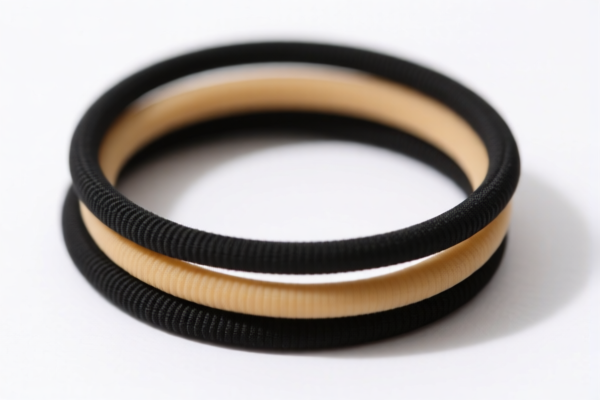
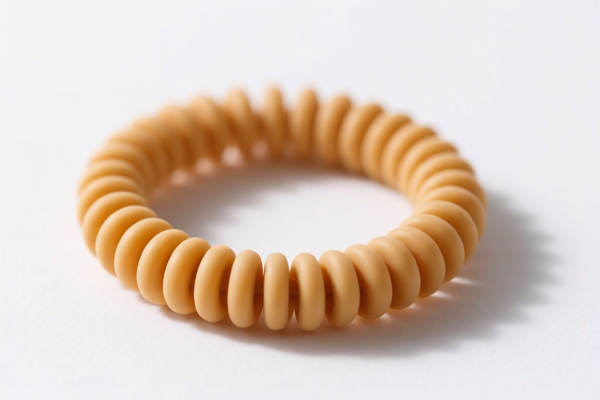
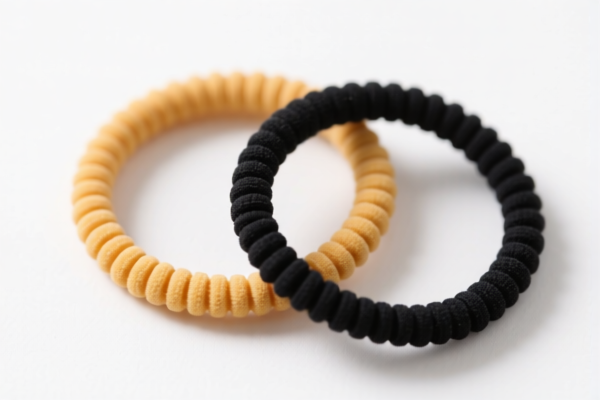
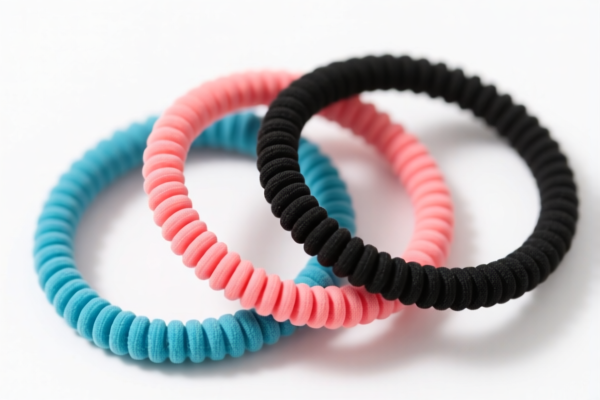
AI Analysis
🎣 Fish Line Elastic Thread (Fishing Line)
🌐 HS Code Reference & Customs Clearance Guide | 2026 Latest Tariff Analysis | Professional Clearance Strategy
📌 I. Product Definition & Classification: Do You Truly Understand "Fishing Line"?
Fishing line, whether elastic or synthetic, is a critical accessory in the sport of angling. In international trade, it is primarily classified based on its material composition (Nylon/Polyamide vs. Plastic) and its functional end-use (Sporting Goods Accessory vs. Raw Material).
Synthetic Fiber Monofilament (Nylon):
High-strength, transparent single filaments made from polyamide (nylon), widely used for durability and abrasion resistance.
Plastic Monofilament:
Lines classified under plastic chapter if they do not meet the specific textile fiber definitions, often used for less demanding applications.
Sporting Goods Accessory:
Finished fishing line packaged for retail sale, explicitly intended for fishing.
⚠️ Key Distinction Point:
- If the product is packaged for retail sale as a fishing accessory and matches the use, it falls under Chapter 95 (Sporting Goods).
- If it is considered a raw material or industrial fiber (unspecified use or bulk), it falls under Chapter 54 (Synthetic Fibers).
- Crucial Note: The material "Nylon" (Polyamide) triggers high additional tariffs under Section 301 if classified as a textile/fiber, but may have lower rates if classified as a sporting good accessory (depending on specific HTSUS interpretations).
📦 II. HS Code Classification Details (2026 Latest Tariff Authority Comparison)
| HS Code | Product Description | Applicability Scenario | Material/Format Logic |
|---|---|---|---|
9507.90.20.00 |
Fishing lines and leaders | Retail-packaged fishing line, matched use and material (Nylon) | ✅ Matches retail packaging definition for fishing gear |
5402.45.90.30 |
Synthetic filament yarn, other, monofilament | Nylon material, shape fits synthetic filament (monofilament) characteristics | ✅ Textile/Fiber classification |
5402.45.90.10 |
Synthetic filament yarn, partially oriented | Nylon material, fishing line fits mono/lofted multi-filament logic | ✅ Textile/Fiber classification |
9507.90.80.00 |
Other fishing tackle | Nylon material, use is fishing, classified as fishing tackle accessory | ✅ Sporting Good Accessory |
5402.11.30.10 |
Synthetic filament yarn, high tenacity, nylon | Nylon (Polyamide) material, shape is monofilament/filament | ✅ High-grade Textile/Fiber |
3916.90.20.00 |
Plastics, monofilament | Nylon considered plastic material, line shape is monofilament/strip | ✅ Plastic/Raw Material classification |
🔍 Key Reminder:
- Textile Classification (5402): High risk of high tariffs (43%) because Nylon is a synthetic fiber.
- Plastic Classification (3916): Moderate risk (38.1%).
- Sporting Good Classification (9507): Generally lower total tax burden (19%-21%) because it is viewed as a finished consumer good, not a raw industrial fiber.
💰 III. 2026 Latest Tariff Rate Details (Including Surtaxes, Policy Add-ons)
✅ Applicable Country: United States (US)
✅ Origin: China (CN)
✅ Effective Time: 2025年11月10日起 (Including subsequent imports)
🎯 1. 9507.90.20.00 —— Fishing Lines (Matched Use & Material)
| Item | Content |
|---|---|
| Base Tariff | 3.7% (ad valorem) |
| Surtax 301 | +7.5% (Additional tariff under Section 301) |
| Section 122 Tariff | +10% (Specific tariff clause) |
| Total Tariff | 21.2% |
| Tax Calculation | CIF Value × 21.2% |
| De Minimis Eligible? | ❌ No (deny_de_minimis) |
| Legal Basis Path | USITC:9507.90.20.00 → 301:7.5% → 122:10% |
📌 Explanation:
- This classification is highly recommended if the product is clearly marketed and packaged for fishing.
- The base rate is low (3.7%), and the additional tariffs are moderate compared to textile classifications.
- Why it wins: It avoids the heavy 25% Section 301 tax applied to textiles.
🎯 2. 5402.45.90.30 & 5402.45.90.10 —— Synthetic Filament Yarns (Nylon Monofilament)
| Item | Content |
|---|---|
| Base Tariff | 8.0% (ad valorem) |
| Surtax 301 | +25.0% (Heavy Section 301 surtax on textiles) |
| Section 122 Tariff | +10% |
| Total Tariff | 43.0% |
| Tax Calculation | CIF Value × 43.0% |
| De Minimis Eligible? | ❌ No |
| Legal Basis Path | USITC:5402.45.90.30 → 301:25% → 122:10% |
📌 Note:
- Extremely High Tax Cost: Classified as a textile/fiber, this triggers the maximum 25% additional tariff.
- Risk: Even if it's "fishing line," customs may reclassify it as a raw material if packaging doesn't clearly indicate "retail fishing use."
🎯 3. 9507.90.80.00 —— Other Fishing Tackle (Nylon Accessory)
| Item | Content |
|---|---|
| Base Tariff | 9.0% (ad valorem) |
| Surtax 301 | +0.0% (No Section 301 surtax on this specific subheading) |
| Section 122 Tariff | +10% |
| Total Tariff | 19.0% |
| Tax Calculation | CIF Value × 19.0% |
| De Minimis Eligible? | ❌ No |
| Legal Basis Path | USITC:9507.90.80.00 → 301:0% → 122:10% |
📌 Note:
- This is the lowest tariff option (19%) for nylon fishing lines.
- It assumes the item is a fishing tackle accessory but may not fit the precise definition of9507.90.20(which requires specific material/use matching).
- Strategy: If9507.90.20is contested, this is the strongest backup.
🎯 4. 5402.11.30.10 —— High Tenacity Nylon Filament
| Item | Content |
|---|---|
| Base Tariff | 8.8% (ad valorem) |
| Surtax 301 | +25.0% |
| Section 122 Tariff | +10% |
| Total Tariff | 43.8% |
| Tax Calculation | CIF Value × 43.8% |
| De Minimis Eligible? | ❌ No |
📌 Note:
- High-tenacity nylon is strictly regulated as an industrial fiber.
- Avoid this classification for consumer fishing lines unless explicitly sold as raw industrial thread.
🎯 5. 3916.90.20.00 —— Plastic Monofilament
| Item | Content |
|---|---|
| Base Tariff | 3.1% (ad valorem) |
| Surtax 301 | +25.0% |
| Section 122 Tariff | +10% |
| Total Tariff | 38.1% |
| Tax Calculation | CIF Value × 38.1% |
| De Minimis Eligible? | ❌ No |
📌 Note:
- If customs rejects the "Textile" argument but also rejects the "Sporting Good" argument, they may fall back to Plastic.
- Still very expensive due to 25% surtax.
🛠️ IV. Customs Clearance Practical Advice (Battle-Tested Pitfall Avoidance)
✅ 1. Preparation Checklist (Non-negotiable)
| Material | Must Provide | Explanation |
|---|---|---|
| ✅ Product Specifications | ✔️ | Include material (Nylon/Polyamide), diameter, length, tensile strength, packaging type. |
| ✅ Product Photos (with Packaging) | ✔️ | Must clearly show retail packaging, labels indicating "Fishing Line," brand, and model. |
| ✅ Commercial Invoice | ✔️ | Description must be precise: "Retail-packaged Nylon Fishing Line, for recreational angling, not for industrial textile use." |
| ✅ Bill of Lading | ✔️ | Consistency with invoice is critical. |
| ✅ Label/Tag Photos | ✔️ | Show any care instructions, warnings, or fishing-related graphics. |
✅ 2. Declaration Tips (Key Mantra)
🔥 “Retail Packaged, Fishing Use, Avoid Textile Chapter!”
| Scenario | Correct Declaration | Wrong Practice |
|---|---|---|
| Retail Fishing Line | 9507.90.20.00 (21.2%) or 9507.90.80.00 (19.0%) |
Misdeclare as 5402 (43%+) → Double Tax! |
| Bulk Industrial Nylon Thread | 5402.45.90.30 |
Declare as fishing line without proof → Penalty |
| Fishing Line + Rod Set | Declare separately if not a kit | Mixed declaration → Complexity |
| Unbranded/Generic Line | 9507.90.80.00 |
Claim 9507.90.20 without material match → Rejection |
✅ 3. Special Case Handling
| Situation | Handling Suggestion |
|---|---|
| OEM/Private Label | Provide customer order + design specs. If packaging shows fishing imagery, use 9507. |
| "Elastic" Thread | Clarify if it's truly elastic (spandex blend) or just nylon stretch. If spandex, textile rules may apply differently. |
| Sample Shipments | Still subject to tariffs. Do not mislabel as "Gift" or "Sample" to evade tax. |
| Dispute with Customs | If deemed textile, provide Use Statement proving it is finished for fishing, not raw material. |
🌍 V. Global Market Customs Comparison (2026 Latest)
| Country/Region | Recommended HS Code | Tariff | Certification Requirements | Remarks |
|---|---|---|---|---|
| 🇺🇸 USA | 9507.90.80.00 |
19.0% (Lowest) | None specific | 5402 rates are prohibitive (43%+) |
| 🇨🇳 China | 5402.45.90.30 |
5-8% | CCC (if applicable) | Lower base rates, no surtaxes |
| 🇪🇺 EU | 3916.90.90 |
6.5% | REACH | Nylon fishing lines often classified as plastics |
| 🇬🇧 UK | 9507.20.00 |
0-4.5% | UKCA | Post-Brexit rules vary; check latest UK TARIC |
| 🇯🇵 Japan | 3916.90.20 |
0% | PSE (if electrical) | Often 0% for plastics, check textile rules |
📌 Conclusion:
- USA is the most challenging market due to Section 301 surtaxes on textiles.
- Strategy: Always aim for Chapter 95 (Sporting Goods) if the product is clearly for fishing.
- Avoid Chapter 54 (Textiles) unless you cannot prove retail fishing use.
📌 VI. Common Mistakes & Pitfall Guide (Blood & Tears Lessons)
❌ Mistake 1: Declaring fishing line as "Nylon Filament" or "Polyamide Yarn"
👉 Consequence: Customs applies HS 5402 → 43% Tax instead of 19-21%.
👉 Fix: Use "Fishing Line" in description.
❌ Mistake 2: Bulk rolls of fishing line without retail packaging
👉 Consequence: May be classified as raw material → Higher Risk of 301 Surtax.
👉 Fix: Ensure packaging indicates end-use (fishing).
❌ Mistake 3: Ignoring Section 122 Tariff
👉 Consequence: Underpayment by 10% → Penalties + Interest.
👉 Fix: Include 122 surtax in all calculations.
❌ Mistake 4: Confusing "Elastic" with "Spandex"
👉 Consequence: If it contains >5% elastane, it may be textile → 43% Tax.
👉 Fix: Check material composition certificate.
✅ Correct Practice:
"Retail-packaged Nylon Fishing Line, 0.5mm diameter, 200m length, for recreational angling, Model XYZ, Not for industrial textile use."
🎯 VII. Conclusion: Professional Declaration, Save Money, Efficient Clearance!
🎯 Remember the Mantra:
🔹 "Retail Fishing Use = Chapter 95 (19-21%)"
🔹 "Raw Nylon Thread = Chapter 54 (43%+)"
🔹 "Difference is 22% Tax = Profit Destroyer!"
🔹 "HS Code Determines Destiny, Declare Accurately, Avoid Penalties!"
📌 Tips:
- If your fishing line is originally from Vietnam, Thailand, or Malaysia, you may be eligible for IEEPA Exemptions (0-5% tariff).
- Request a Pre-Ruling (Advance Ruling) from US Customs (CBP) if you are unsure. It provides legal certainty.
📣 Immediate Action:
📞 Contact a Professional Customs Broker + Provide Product Photos + Apply for HS Code Pre-Ruling
🚀 Let your fishing line clear customs smoothly, maximize profits, and dominate the market!
✨ Professional Clearance Starts with Accurate Classification!
💼 Every Cent of Cost is Worth Being Precisely Calculated!
Customer Reviews
About HS Code Classification
The Harmonized System (HS) is an internationally standardized nomenclature developed by the World Customs Organization (WCO) to classify traded products. Over 200 countries use the HS system as the basis for customs tariffs, trade statistics, and import/export regulations.
Each HS code follows a hierarchical structure:
- Chapter (2 digits) — Broad category of goods (e.g., Chapter 84: Machinery and Mechanical Appliances)
- Heading (4 digits) — More specific grouping within the chapter
- Subheading (6 digits) — Internationally standardized breakdown, used by all WCO member countries
- National subdivisions (8-10 digits) — Country-specific extensions for further classification, such as US HTSUS 10-digit codes
Correct HS code classification is essential for smooth customs clearance, accurate duty payment, and compliance with trade regulations. Misclassification can lead to customs delays, overpayment of duties, or penalties.
When importing from CN to US, the applicable tariff rates may include:
- Most-Favored-Nation (MFN) rate — The standard duty rate applied to WTO members
- General rate — Applied to countries without trade agreements
- Trade remedy duties — Additional tariffs such as Section 301 (anti-dumping), Section 232 (national security), or countervailing duties
The information provided on this page is for reference purposes only. For official classification, please consult with your local customs authority or a licensed customs broker.