five claw button installation tool
CN → US| HS Code | Tariff Rate | Origin | Destination | Doc |
|---|---|---|---|---|
| 8204110060 | 44.0% | CN | US | Official Doc |
| 8205598000 | 38.7% | CN | US | Official Doc |
| 8204120000 | 44.0% | CN | US | Official Doc |
| 8205595560 | 40.3% | CN | US | Official Doc |
Product Images
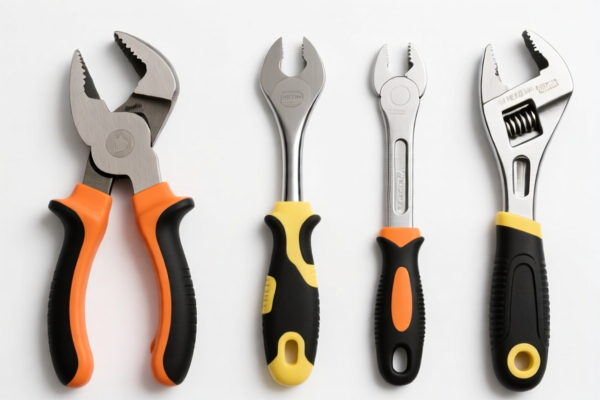
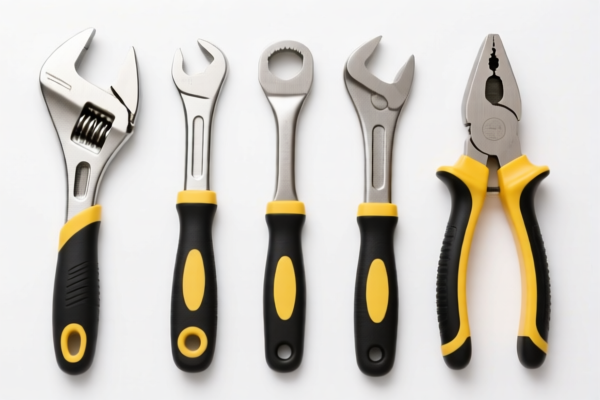
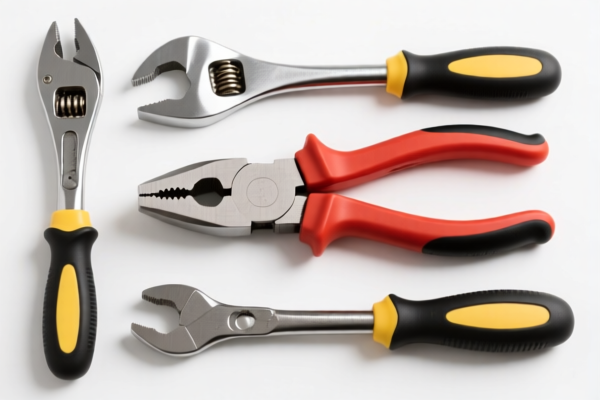

AI Analysis
🔧 Five Claw Button Installation Tool (Snap Fastener Setter)
🌐 HS Code Reference & Customs Clearance Guide | 2024 Latest Tariff Analysis | Professional Entry Strategy
📌 I. Product Definition & Classification: Do You Really Understand the "Five Claw Button Tool"?
The Five Claw Button Installation Tool (also known as a Snap Fastener Setter, Rivet Setter, or Press Tool) is a specialized manual instrument used to install metal snap fasteners, five-prong buttons, or similar decorative hardware into fabrics. In international trade, it is classified as a hand tool. Its core function is mechanical deformation/pressing, not cutting or abrasion.
⚠️ Key Distinction Points:
- If the tool is adjustable (like an adjustable wrench mechanism) → It often falls under 8204.12 (Adjustable wrenches & spanners).
- If the tool is non-adjustable (fixed shape, specific for five-claw buttons) → It is classified as a general manual tool under 8204.11 or 8205 depending on material and specific design.
- Material Conflict Check: Ensure it is not primarily made of base metals like steel without specific tool annotations, though most are.
📦 II. HS Code Classification Details (2024 Tariff Authority Mapping)
Based on the provided data, here are the four most likely HS Codes and their corresponding tax breakdowns. Note that slight variations in design (adjustability vs. fixed) or minor material interpretations lead to different sub-headings.
| HS Code | Product Description & Logic | Total Tax Rate | Tax Breakdown Details |
|---|---|---|---|
| 8204.11.00.60 | Non-adjustable manual tool (Fallback principle for non-specific tools). Fits the category of "Other hand tools." | 44.0% | Base Duty: 9.0% Section 301 (Add'l): 25.0% Section 122 (China-specific): 10% |
| 8205.59.80.00 | Other hand tools (General category). No material conflict found. Suitable for general installation tools. | 38.7% | Base Duty: 3.7% Section 301 (Add'l): 25.0% Section 122 (China-specific): 10% |
| 8204.12.00.00 | Adjustable wrenches & spanners (By analogy). If the tool has an adjustable mechanism, it fits here. Logic: No conflict with adjustable wrench categories. | 44.0% | Base Duty: 9.0% Section 301 (Add'l): 25.0% Section 122 (China-specific): 10% |
| 8205.59.55.60 | Other hand tools (Inferred metal material). General hand tool category. | 40.3% | Base Duty: 5.3% Section 301 (Add'l): 25.0% Section 122 (China-specific): 10% |
🔍 Key Observation:
- All listed codes incur significant additional tariffs (Section 301 + Section 122).
- The Base Duty varies from 3.7% to 9.0%, while the Additional Duties are fixed at 35% (25% + 10%).
- 8205.59.80.00 offers the lowest total rate (38.7%), while 8204.11.00.60 and 8204.12.00.00 are the highest at 44.0%.
💰 III. 2024 Latest Tariff Rate Detailed Explanation
✅ Applicable Market: United States (US)
✅ Origin: China (CN) (Implied by Section 122 and 301 tariffs)
✅ Effective Time: Current tariffs as of 2024/2025
🎯 1. 8204.11.00.60 & 8204.12.00.00 — Manual Tools / Adjustable Wrenches
| Item | Content |
|---|---|
| Base Duty | 9.0% (Ad valorem) |
| Section 301 Duty | +25.0% (USITC Footnote 9903.88.01) |
| Section 122 Duty | +10.0% (Specific to China-origin goods under certain conditions) |
| Total Duty | 44.0% |
| Calculation | CIF Value × 44.0% |
| De Minimis Exemption? | ❌ No (High tariffs usually negate de minimis benefits or require specific entry types) |
| Legal Basis | USITC:8204.11.00.60 → FOOTNOTE:9903.88.01 + IEEPA:9903.01.25 |
📌 Explanation:
- Section 301 (25%): Standard US tariff on Chinese steel/hand tools.
- Section 122 (10%): Often applies to specific categories of Chinese goods to protect domestic manufacturing.
- Total 44%: This is a high-cost entry category. Accuracy in classification is critical to avoid overpayment or penalties.
🎯 2. 8205.59.80.00 — Other Hand Tools (Lowest Tax Option)
| Item | Content |
|---|---|
| Base Duty | 3.7% (Ad valorem) |
| Section 301 Duty | +25.0% |
| Section 122 Duty | +10.0% |
| Total Duty | 38.7% |
| Calculation | CIF Value × 38.7% |
| De Minimis Exemption? | ❌ No |
| Legal Basis | USITC:8205.59.80.00 → FOOTNOTE:9903.88.01 |
📌 Note:
- This code has a lower base duty (3.7%) compared to 8204 codes (9.0%).
- Savings: ~5.3% of the CIF value compared to 8204.11/8204.12.
- Condition: The tool must clearly be classified as a "general hand tool" and not an "adjustable wrench" or "specific tool under 8204.11" if 8204.11.00.60 is the only non-adjustable option. However, since 8205.59.80.00 is listed as an option, it suggests a broader "other hand tool" interpretation is acceptable for non-specific installation tools.
🎯 3. 8205.59.55.60 — Other Hand Tools (Metal)
| Item | Content |
|---|---|
| Base Duty | 5.3% |
| Section 301 Duty | +25.0% |
| Section 122 Duty | +10.0% |
| Total Duty | 40.3% |
| Calculation | CIF Value × 40.3% |
📌 Note:
- Intermediate tax rate. Likely applies if material composition (e.g., specific alloy) or specific manufacturing process triggers this subheading.
🛠️ IV. Customs Clearance Practical Advice (Avoid Pitfalls)
✅ 1. Documentation Checklist (Must-Haves)
| Document | Required? | Notes |
|---|---|---|
| ✅ Product Specification Sheet | ✔️ | Include dimensions, weight, material (e.g., "Carbon Steel", "Chrome Vanadium"), and mechanism type (fixed vs. adjustable). |
| ✅ Product Photos | ✔️ | Show the tool clearly. Highlight if it is adjustable. If non-adjustable, show the fixed jaw/head. |
| ✅ Commercial Invoice | ✔️ | Use precise description: "Manual Five-Claw Snap Button Installation Tool, Non-Adjustable, Steel" or "Adjustable Snap Setter Tool". Avoid vague terms like "Hardware" or "Accessory". |
| ✅ Packing List | ✔️ | Confirm net/gross weight. |
| ✅ Origin Certificate | ✔️ | Essential for proving China origin (to apply correct additional tariffs). |
✅ 2. Classification Strategy (Key Mnemonics)
🔥 "Check Adjustability, Then Check Base Rate!"
| Scenario | Recommended HS Code | Tax Rate | Why? |
|---|---|---|---|
| Tool is Adjustable | 8204.12.00.00 |
44.0% | Fits "Adjustable Wrenches" category. Higher base duty. |
| Tool is Non-Adjustable (Fixed) | 8204.11.00.60 |
44.0% | "Other hand tools, non-adjustable". High base duty. |
| Tool is General Hand Tool (Broad) | 8205.59.80.00 |
38.7% | BEST OPTION if customs accepts "other hand tool" classification. Lower base duty. |
| Tool is Specific Metal Hand Tool | 8205.59.55.60 |
40.3% | If specific material classification applies. |
💡 Pro Tip:
- If your tool is not adjustable (most five-claw tools are fixed-head), try to argue for8205.59.80.00to save 5.3% in base duties.
- If customs insists on 8204 (Hand Tools of Chapter 82), then8204.11.00.60is the standard fallback for non-adjustable tools.
- Never misclassify as "Plastic Tool" or "Accessory" to avoid penalties.
✅ 3. Special Cases
| Case | Handling Advice |
|---|---|
| Kit with Buttons | If sold with five-claw buttons, declare the tool as the primary item. Buttons may have a different HS Code (e.g., 6307 or 9606). Do not mix duties. |
| Electric Tool? | If it’s a pneumatic/electric press, it does NOT belong in Chapter 82 (Hand Tools). It would likely be 8467 or 8508. This data only applies to manual tools. |
| Material | Ensure the tool is metal. If plastic, it may fall under 3926 (Articles of Plastic), which has different tariffs. |
🌍 V. Global Market Comparison (2024)
| Market | Recommended HS Code | Base Duty | Additional Tariffs | Total Est. Rate | Notes |
|---|---|---|---|---|---|
| 🇺🇸 USA | 8205.59.80.00 |
3.7% | +35% (301+122) | 38.7% | Lowest in US. High compliance needed. |
| 🇺🇸 USA | 8204.11.00.60 |
9.0% | +35% (301+122) | 44.0% | Standard for hand tools. |
| 🇨🇳 China | 8205.59.80.00 | 5.0% - 9.0% | None | ~5-9% | No Section 301/122. |
| 🇪🇺 EU | 8205.59.80.00 | 6.5% | None (GSP may apply) | ~6.5% | No Section 301. |
| 🇯🇵 Japan | 8205.59.80.00 | 5.0% | None | ~5.0% | No additional tariffs. |
📌 Conclusion:
- The USA is the only market with high additional tariffs (35%).
- Cost Optimization: In the US, choosing8205.59.80.00over8204.11.00.60saves 5.3% on the CIF value.
- Non-US Markets: Tariffs are significantly lower, making export more cost-effective.
📌 VI. Common Mistakes & Pitfalls (Lessons Learned)
❌ Mistake 1: Calling it "Snap Button Accessory"
👉 Consequence: Customs may reclassify it as a tool, or worse, as a textile accessory (wrong chapter).
👉 Fix: Always use "Installation Tool" or "Setter" in the description.
❌ Mistake 2: Ignoring Adjustability
👉 Consequence: If adjustable, classifying as non-adjustable (8204.11) is incorrect. If non-adjustable, classifying as adjustable (8204.12) leads to unnecessary confusion.
👉 Fix: Clearly state "Non-Adjustable" or "Fixed Head" in the invoice.
❌ Mistake 3: Assuming De Minimis Applies
👉 Consequence: With 35-44% duties, many shipments exceeding $800 may still be subject to duties depending on current CBP enforcement on Section 301 goods.
👉 Fix: Check current CBP enforcement trends. For high-value shipments, always declare properly.
❌ Mistake 4: Wrong Material Declaration
👉 Consequence: If declared as "Stainless Steel" but is "Carbon Steel," it may affect duty rates.
👉 Fix: Provide accurate material composition.
✅ Correct Declaration Example:
"Manual Five-Claw Snap Button Installation Tool, Non-Adjustable, Carbon Steel, Model XYZ, For Use in Garment Manufacturing"
🎯 VII. Conclusion: Precision Classification Saves Money!
🎯 Key Takeaways:
🔹 "Adjustable? Go 8204.12. Non-Adjustable? Check 8205.59 for lower base duty!"
🔹 "US Tariffs are High (35-39%). Get your HS Code right to avoid overpayment."
🔹 "Manual Tools Only. Electric/Pneumatic tools are in a different chapter!"
📌 Tips:
- If you are exporting to the US, consider pre-classifying your product with a customs broker to confirm if 8205.59.80.00 is acceptable for your specific tool design.
- For China/USA/Other trade, always include photos and technical specs to prove the tool's manual nature and non-adjustability (if applicable).
📣 Act Now:
📞 Contact a Customs Broker + Provide Photos + Verify HS Code
🚀 Ensure Smooth Clearance, Avoid Delays, and Optimize Costs!
✨ Professional Classification, Smart Trade!
💼 Every Percentage Point Counts!
Customer Reviews
About HS Code Classification
The Harmonized System (HS) is an internationally standardized nomenclature developed by the World Customs Organization (WCO) to classify traded products. Over 200 countries use the HS system as the basis for customs tariffs, trade statistics, and import/export regulations.
Each HS code follows a hierarchical structure:
- Chapter (2 digits) — Broad category of goods (e.g., Chapter 84: Machinery and Mechanical Appliances)
- Heading (4 digits) — More specific grouping within the chapter
- Subheading (6 digits) — Internationally standardized breakdown, used by all WCO member countries
- National subdivisions (8-10 digits) — Country-specific extensions for further classification, such as US HTSUS 10-digit codes
Correct HS code classification is essential for smooth customs clearance, accurate duty payment, and compliance with trade regulations. Misclassification can lead to customs delays, overpayment of duties, or penalties.
When importing from CN to US, the applicable tariff rates may include:
- Most-Favored-Nation (MFN) rate — The standard duty rate applied to WTO members
- General rate — Applied to countries without trade agreements
- Trade remedy duties — Additional tariffs such as Section 301 (anti-dumping), Section 232 (national security), or countervailing duties
The information provided on this page is for reference purposes only. For official classification, please consult with your local customs authority or a licensed customs broker.