fixed capacitor
CN → US| HS Code | Tariff Rate | Origin | Destination | Doc |
|---|---|---|---|---|
| 8532210020 | 35.0% | CN | US | Official Doc |
| 8548000000 | 35.0% | CN | US | Official Doc |
| 8532220020 | 35.0% | CN | US | Official Doc |
Product Images
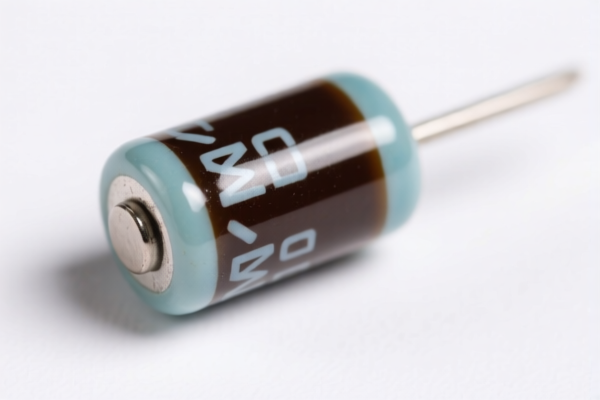
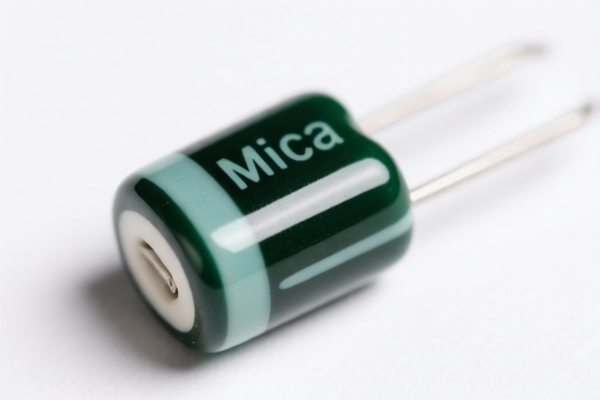
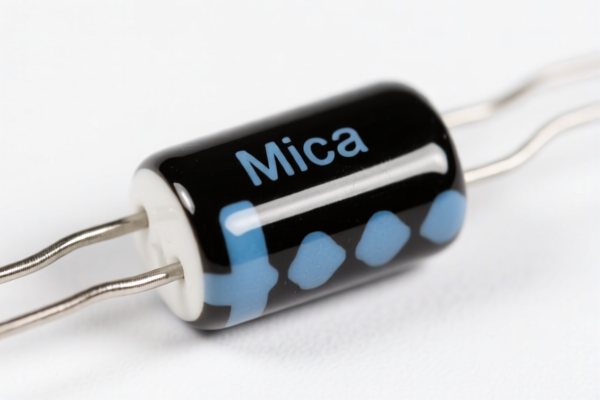
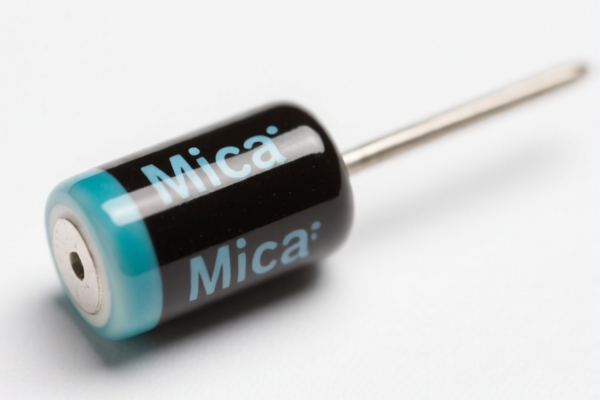
AI Analysis
🔋 Fixed Capacitor (Capacitors, Fixed)
🌐 HS Code Reference & Customs Clearance Guide | 2026 Latest Tariff Analysis | Professional Compliance Strategy
📌 I. Product Definition & Classification: Do You Really Understand "Fixed Capacitors"?
Fixed capacitors are fundamental electronic components used to store electrical energy in an electric field. In international trade, they are broadly categorized under Heading 8532. However, precise classification depends on the dielectric material (e.g., ceramic, electrolytic, film) and application (e.g., for automatic data processing machines vs. general use).
Based on the provided data, three specific HS Codes have been identified as potential classifications. Understanding the nuance between them is critical for accurate tariff calculation.
⚠️ Key Distinction Points:
- 8532.21.00.20 / 8532.22.00.20: These fall under the specific subheading for capacitors with a dielectric of ceramic or plastic (film). The distinction often lies in specific technical parameters or market availability when the exact type isn't fully specified in the description. - 8548.00.00.00: This is a "catch-all" or residual category for electrical waste, scraps, and parts not elsewhere specified. It is used when the capacitor is considered an "electrical component/parts" without a more specific subheading, or in cases of material conflicts/misclassification risks.
📦 II. HS Code Classification Details (Based on Provided Data)
| HS Code | Product Description | Classification Logic (Based on <DATA>) |
Typical Application/Dielectric |
|---|---|---|---|
8532.21.00.20 |
Fixed Capacitor (Ceramic/Plastic) | Primary Match: Based on description missing specific parameters, defaults to "Other/Catch-all" within the ceramic/plastic category. | Ceramic disc capacitors, plastic film capacitors. |
8532.22.00.20 |
Fixed Capacitor (Other Dielectrics) | Default Preference: Since the name does not specify exact technical parameters, it defaults to this subheading as a likely candidate. | Potentially tantalum, aluminum electrolytic, or other specialized fixed capacitors. |
8548.00.00.00 |
Electrical Parts/Capacitors | Functional Match: Fits the definition of "electrical parts/components." No material conflict exists. Used as a fallback for generic electrical components. | General electrical components, scraps, or parts not fitting specific capacitor subheadings. |
🔍 Critical Note:
- The provided data indicates that 8532.21 and 8532.22 are the primary candidates for "Fixed Capacitors," with the choice depending on whether the capacitor is ceramic/plastic (8532.21) or another type/defaulted (8532.22).
- 8548.00 is a broader category for electrical parts, used if the specific capacitor type cannot be definitively placed under 8532 or if it is considered a general "part."
💰 III. 2026 Latest Tariff Rate Breakdown (Including Surcharges)
✅ Applicable Country: United States (US)
✅ Origin: China (CN)
✅ Effective Date: 2025/2026 (Post-Trade War Rates)
All three HS Codes in the provided data carry the same total tax rate. This is a crucial insight: despite different classification logic, the duty impact is identical.
🎯 1. General Tariff Structure for All Listed HS Codes
| HS Code | Product Description | Total Tax Rate | Breakdown |
|---|---|---|---|
8532.21.00.20 |
Fixed Capacitor (Ceramic/Plastic) | 35.0% | Base: 0.0% Additional: 25.0% (Section 301) IEEPA Surcharge: 10.0% |
8532.22.00.20 |
Fixed Capacitor (Other/Default) | 35.0% | Base: 0.0% Additional: 25.0% (Section 301) IEEPA Surcharge: 10.0% |
8548.00.00.00 |
Electrical Parts/Capacitors | 35.0% | Base: 0.0% Additional: 25.0% (Section 301) IEEPA Surcharge: 10.0% |
📌 Detailed Tax Explanation:
- Base Tariff (0.0%): The standard Most Favored Nation (MFN) duty rate for these electrical components is often 0% or very low.
- Section 301 Additional Duty (25.0%): Imposed on Chinese goods under U.S. Trade Representative actions. Applies to almost all electronics from China.
- IEEPA Surcharge (10%): Under the International Emergency Economic Powers Act, an additional 10% is levied on specific Chinese imports.
- Total Effective Rate: 35%. This is a high tariff category. Profit margins must be carefully calculated to absorb this cost.
🛠️ IV. Customs Clearance Practical Advice (Pitfall Avoidance Guide)
✅ 1. Preparation Checklist (Non-Negotiable)
| Document | Required | Reason |
|---|---|---|
| ✅ Product Datasheet | ✔️ | Must specify dielectric material (e.g., Ceramic, Electrolytic, Film) to justify 8532.21 vs. 8532.22. |
| ✅ Technical Specifications | ✔️ | Include capacitance range, voltage rating, and tolerance. |
| ✅ Certificate of Origin (CO) | ✔️ | Essential for proving Chinese origin to apply the correct 35% tariff (and ensure no exemptions apply). |
| ✅ Commercial Invoice | ✔️ | Clearly state "Fixed Capacitor" and model numbers. Avoid vague terms like "Electrical Part" unless using 8548. |
| ✅ Packing List | ✔️ | Detailed itemization to match invoice. |
✅ 2. Declaration Strategy (Key Tips)
🔥 “Specify Material, Avoid Generic Terms, Prepare for 35%!”
| Scenario | Recommended Action | Risk if Incorrect |
|---|---|---|
| Clear Dielectric (e.g., Ceramic) | Declare as 8532.21.00.20 |
Misclassification as 8548 may lead to questions about "parts" vs. "components." |
| Unclear/General Fixed Capacitor | Declare as 8532.22.00.20 |
Using 8548 is riskier for finished components; 8532 is more precise for capacitors. |
| Electrical Components/Parts (Non-Capacitor specific) | Declare as 8548.00.00.00 |
If you claim 8532 but lack spec sheets, Customs may downgrade to 8548 or demand more info. |
| Mislabeling as "Capacitor" for Non-Standard Parts | Avoid | If it's not a standard capacitor, 8548 is safer, but must justify "electrical part" status. |
📌 Key Insight:
- The tax rate is identical (35%) for all three codes in the provided data. Therefore, the choice of HS Code should be driven by accuracy rather than cost-saving in this specific dataset.
- Accuracy is paramount: Incorrect classification can lead to audits, delays, or penalties, even if the rate is the same.
✅ 3. Special Considerations
| Situation | Advice |
|---|---|
| Bulk Wholesale | Ensure the HS Code matches the exact type (e.g., MLCCs vs. Tantalum). If mixed, declare the predominant type or split shipments. |
| OEM/Contract Manufacturing | Provide client specifications to prove the intended use and technical parameters. |
| Small Samples | Even for samples, declare the correct HS Code. The 35% tax may apply, but de minimis exemptions (if any) should be checked carefully (usually not applicable for Section 301 goods). |
🌍 V. Global Market Comparison (2026)
| Country/Region | Recommended HS Code | Estimated Duty (China Origin) | Certification Requirements | Notes |
|---|---|---|---|---|
| 🇺🇸 USA | 8532.21/22 or 8548 |
35% (as per data) | None typically, but FCC/UL may be needed for final products | High tariff burden; careful declaration essential. |
| 🇨🇳 China | 8532.21/22 |
~0-5% | CCC (if applicable) | No Section 301 or IEEPA surcharges. |
| 🇪🇺 EU | 8532.21/22 |
~0-2.7% | CE Marking | Generally low tariffs for electronic components. |
| 🇬🇧 UK | 8532.21/22 |
~0-4% | UKCA Marking | Post-Brexit rules apply; check UK Global Tariff. |
| 🇯🇵 Japan | 8532.21/22 |
~0-6% | PSE Marking | Variable rates depending on specific capacitor type. |
📌 Conclusion:
- The 35% total tax rate is specific to the US market for Chinese-origin fixed capacitors as per the provided data.
- For other markets, duties are significantly lower (often 0-5%).
- Always verify the latest tariff schedule, as trade policies can change.
📌 VI. Common Mistakes & Pitfalls (Lessons Learned)
❌ Mistake 1: Declaring "Capacitor" without specifying dielectric material.
👉 Consequence: Customs may select the most general or restrictive code, leading to delays or reclassification.
✅ Fix: Always include "Ceramic," "Electrolytic," or "Film" in the description.
❌ Mistake 2: Assuming all capacitors have the same tax rate.
👉 Consequence: While this dataset shows 35% for all, other capacitor types (e.g., variable capacitors in 8532.10) may have different rates.
✅ Fix: Verify the specific HS Code for your product type.
❌ Mistake 3: Using "Electrical Part" (8548) to avoid higher tariffs.
👉 Consequence: If the product is clearly a capacitor, Customs may reject 8548 and assess penalties for misclassification.
✅ Fix: Use 8532 codes for actual capacitors, even if the tax rate is the same in this specific case.
✅ Best Practice:
"Fixed Ceramic Capacitor, 100pF, 50V, MLCC, Model XYZ, Bulk Pack"
🎯 VII. Conclusion: Precision in Classification, Clarity in Costs
🎯 Remember:
🔹 "Specify Material, Avoid Guesswork."
🔹 "35% Tax is the Baseline for US-China Electronics."
🔹 "Accurate HS Code Ensures Smooth Clearance, Even if Tax is High."
📌 Pro Tip:
If your fixed capacitors are destined for the US, budget for the 35% total duty. Consider supply chain diversification (e.g., sourcing from Vietnam or Thailand) if tariffs become prohibitive, as these regions may have different tariff treatments under US trade agreements.
📣 Immediate Action:
📞 Consult a Customs Broker: Confirm the exact dielectric type for your fixed capacitors.
📄 Prepare Detailed Spec Sheets: Highlight material, voltage, and capacitance.
📈 Calculate Landed Cost: Include the 35% duty in your pricing model.
✨ Professional Clearance Starts with Accurate Classification!
💼 Your Bottom Line Depends on It!
Customer Reviews
About HS Code Classification
The Harmonized System (HS) is an internationally standardized nomenclature developed by the World Customs Organization (WCO) to classify traded products. Over 200 countries use the HS system as the basis for customs tariffs, trade statistics, and import/export regulations.
Each HS code follows a hierarchical structure:
- Chapter (2 digits) — Broad category of goods (e.g., Chapter 84: Machinery and Mechanical Appliances)
- Heading (4 digits) — More specific grouping within the chapter
- Subheading (6 digits) — Internationally standardized breakdown, used by all WCO member countries
- National subdivisions (8-10 digits) — Country-specific extensions for further classification, such as US HTSUS 10-digit codes
Correct HS code classification is essential for smooth customs clearance, accurate duty payment, and compliance with trade regulations. Misclassification can lead to customs delays, overpayment of duties, or penalties.
When importing from CN to US, the applicable tariff rates may include:
- Most-Favored-Nation (MFN) rate — The standard duty rate applied to WTO members
- General rate — Applied to countries without trade agreements
- Trade remedy duties — Additional tariffs such as Section 301 (anti-dumping), Section 232 (national security), or countervailing duties
The information provided on this page is for reference purposes only. For official classification, please consult with your local customs authority or a licensed customs broker.