fixing solution
CN → US| HS Code | Tariff Rate | Origin | Destination | Doc |
|---|---|---|---|---|
| 3403112000 | 35.2% | CN | US | Official Doc |
| 3214100020 | 38.7% | CN | US | Official Doc |
| 3214100010 | 38.7% | CN | US | Official Doc |
| 3403115000 | 36.4% | CN | US | Official Doc |
| 3506101000 | 41.5% | CN | US | Official Doc |
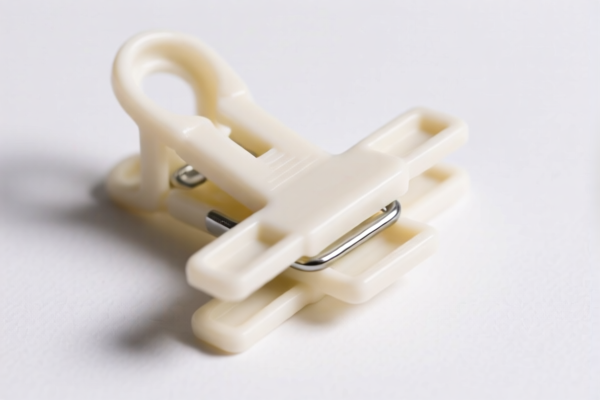
Product Images



AI Analysis
🧪 Fixing Solution (Repair Agents / Sealants)
🌐 HS Code Reference & Customs Clearance Guide | 2026 Latest Tariff Analysis | Professional Strategy
📌 I. Product Definition & Classification: Do You Really Understand "Fixing Solutions"?
In international trade, "Fixing Solution" is a broad term that typically refers to chemical preparations used for repairing, sealing, or treating materials. Depending on the specific chemical composition and primary function, it can fall into several Harmonized System (HS) codes.
1. Material Treatment Agents (Chemical Preparations): Products primarily used for treating surfaces or materials (e.g., preservatives, impregnating agents).
2. Sealants & Putties: Products used for filling gaps, sealing joints, or surface repair (e.g., caulking compounds, epoxy fillers).
3. Adhesives (Animal Glue Category): Chemical preparations with adhesive properties that do not fit other specific adhesive categories (catch-all category).
⚠️ Key Distinction Points:
- If the product is primarily a surface treatment or material protection agent → Look at Chapter 34 (Preparations for Cleaning, Polishing, etc.).
- If the product is primarily a gap filler or sealant → Look at Chapter 32 (Tanning/Leather Preparations) or 3214 (Ready-Made Putties & Sealants).
- If the product acts as a glue/adhesive without a specific subheading → Look at Chapter 35 (Albuminoidal Substances; Glues).
📦 II. HS Code Classification Details (2026 Latest Tariff Authority Comparison)
Based on the provided data, here are the five potential HS Code classifications for "Fixing Solution":
| HS Code | Product Description | Functional Interpretation | Primary Tax Rate (Total) |
|---|---|---|---|
3403.11.20.00 |
Chemical Preparations for Treating Materials: Based on the use of repair agents, inferred as chemical preparations for material treatment, consistent with the form of treatment preparations. | Surface treatment / Material protection | 35.2% |
3214.10.00.20 |
Sealants / Putties: Based on material inference, the repair agent belongs to chemical fillers or sealing products, consistent in function with sealants/pastes. | Gap filling / Sealing | 38.7% |
3214.10.00.10 |
Sealants / Putties: Repair agents are often used to fill gaps or repair surfaces, consistent with the filling/repair function of sealants and putties. | Gap filling / Surface repair | 38.7% |
3403.11.50.00 |
Chemical Preparations for Material Processing: Repair agents are chemical preparations containing chemical components for material treatment or protection, fitting the definition of material treatment preparations. | Material processing / Protection | 36.4% |
3506.10.10.00 |
Animal Glue / General Glues: Inferred as a chemical preparation containing adhesive components. No conflict with the material attributes of animal glue category; fits the catch-all category matching. | Adhesive / Binding | 41.5% |
🔍 Key Reminder:
-3403.11.xxxxxx: Best for liquids/pastes used to treat materials (e.g., water repellents, preservatives).
-3214.10.xxxxxx: Best for viscous pastes used to fill holes or seal joints (e.g., epoxy putty, silicone sealant).
-3506.10.10.00: Best for adhesive-based repair agents that act as a glue.
💰 III. 2026 Latest Tariff Rate Details (Including Additional Taxes & Policy Surcharge)
✅ Applicable Country: United States (US)
✅ Country of Origin: China (CN)
✅ Effective Date: From November 10, 2025 (including subsequent imports)
The total tax rate is composed of three parts:
1. Base Duty (MFN Rate): Standard WTO rate.
2. Section 301 Duty (USITC): +25% (Additional tariff imposed on Chinese goods).
3. Section 122 / IEEPA Duty: +10% (Additional tariff under International Emergency Economic Powers Act).
🎯 1. 3403.11.20.00 —— Chemical Preparations for Treating Materials
| Item | Details |
|---|---|
| Base Duty | 0.2% |
| USITC Additional Duty (Sec. 301) | +25.0% |
| 122 Clause / IEEPA Duty | +10.0% |
| Total Effective Rate | 35.2% |
| Tax Calculation | CIF Value × 35.2% |
| De Minimis Exemption | ❌ Not Applicable (High tariff rate usually disqualifies from Section 321 de minimis benefits in many contexts, or simply high cost makes it irrelevant). |
| Legal Basis Path | USITC:3403.11.20.00 → FOOTNOTE:301 → IEEPA:122 |
📌 Explanation:
- The low base duty (0.2%) is offset by the heavy surcharges.
- This category is suitable if the product is a liquid treatment rather than a solid filler.
🎯 2. 3214.10.00.20 & 3214.10.00.10 —— Sealants & Putties
| Item | Details |
|---|---|
| Base Duty | 3.7% |
| USITC Additional Duty (Sec. 301) | +25.0% |
| 122 Clause / IEEPA Duty | +10.0% |
| Total Effective Rate | 38.7% |
| Tax Calculation | CIF Value × 38.7% |
| De Minimis Exemption | ❌ Not Applicable |
| Legal Basis Path | USITC:3214.10.00.xx → FOOTNOTE:301 → IEEPA:122 |
📌 Note:
- Both sub-headings (...10and...20) have the same total rate (38.7%).
- The difference between...10and...20usually lies in the specific type of sealant (e.g., silicone vs. polyurethane), but the tax burden is identical.
- This is the most common classification for epoxy fillers and construction sealants.
🎯 3. 3403.11.50.00 —— Other Material Treatment Preparations
| Item | Details |
|---|---|
| Base Duty | 1.4% |
| USITC Additional Duty (Sec. 301) | +25.0% |
| 122 Clause / IEEPA Duty | +10.0% |
| Total Effective Rate | 36.4% |
| Tax Calculation | CIF Value × 36.4% |
| De Minimis Exemption | ❌ Not Applicable |
| Legal Basis Path | USITC:3403.11.50.00 → FOOTNOTE:301 → IEEPA:122 |
📌 Explanation:
- Slightly higher base duty than3403.11.20.00, resulting in a total of 36.4%.
- Use this if the product is a general material treatment agent not specifically covered by the 0.2% base duty category.
🎯 4. 3506.10.10.00 —— Animal Glue / General Adhesives
| Item | Details |
|---|---|
| Base Duty | 6.5% |
| USITC Additional Duty (Sec. 301) | +25.0% |
| 122 Clause / IEEPA Duty | +10.0% |
| Total Effective Rate | 41.5% |
| Tax Calculation | CIF Value × 41.5% |
| De Minimis Exemption | ❌ Not Applicable |
| Legal Basis Path | USITC:3506.10.10.00 → FOOTNOTE:301 → IEEPA:122 |
📌 Note:
- This has the highest total tax rate (41.5%).
- Only use this if the product is clearly an adhesive (glue) and cannot be classified as a sealant (3214) or material treatment (3403).
- "Catch-all" category often carries higher base duties.
🛠️ IV. Customs Clearance Practical Advice (Combat Pitfall Guide)
✅ 1. Essential Documentation Checklist (None Can Be Missing)
| Document | Required? | Explanation |
|---|---|---|
| ✅ Product Specification Sheet | ✔️ | Must detail chemical composition, viscosity, curing time, and primary use (sealing vs. treating). |
| ✅ Safety Data Sheet (SDS) | ✔️ | Crucial for determining if the product is hazardous (HAZMAT). |
| ✅ Product Photos | ✔️ | Clear images of the container, label, and product consistency (liquid vs. paste). |
| ✅ Commercial Invoice | ✔️ | Must clearly state the HS Code and describe the product as "Chemical Repair Agent" or "Sealant." |
| ✅ Certificate of Origin | ✔️ | To confirm Chinese origin and apply correct Section 301/122 duties. |
| ✅ Usage Statement | ✔️ | Explain how it is used (e.g., "applied to wood gaps" vs. "sprayed on metal surface"). |
✅ 2. Declaration Tips (Key Mantra)
🔥 "Function Determines Code, Paste is Sealant, Liquid is Treat, Glue is Last Resort!"
| Scenario | Correct HS Code | Risk of Misclassification |
|---|---|---|
| Epoxy Filler / Silicone Caulk | 3214.10.00.xx (38.7%) |
Do NOT declare as 3403 (treatment) if it fills gaps. |
| Water Repellent Spray | 3403.11.20.00 (35.2%) |
Do NOT declare as 3506 (glue) if it doesn't adhere. |
| Adhesive Repair Paste | 3506.10.10.00 (41.5%) |
Highest tax; only use if no other category fits. |
| Metal Preservative Liquid | 3403.11.50.00 (36.4%) |
If not specific treatment, use this catch-all. |
✅ 3. Special Situation Handling
| Situation | Handling Advice |
|---|---|
| Mixed Packaging (Kit) | If sold as a "Repair Kit" with two components (e.g., resin + hardener), declare as the final mixed product if it’s a ready-to-use sealant (3214). If separate, may require split declaration. |
| Liquid vs. Paste | Pastes/Gels are almost always 3214. Liquids are 3403. This is the biggest classification risk. |
| Hazardous Goods | If the SDS indicates flammability or toxicity, ensure DG (Dangerous Goods) documentation is provided to avoid port rejection. |
| OEM Private Label | Ensure the commercial invoice matches the product description exactly. Avoid vague terms like "Fixing Solution" without chemical context. |
🌍 V. Global Main Market Clearance Comparison (2026 Latest)
| Country/Region | Recommended HS Code | Base Duty (Approx.) | Total Rate (CN Origin) | Notes |
|---|---|---|---|---|
| 🇺🇸 USA | 3214.10.00.xx |
3.7% | 38.7% | High surcharges (301+122) make costs very high. |
| 🇺🇸 USA | 3403.11.20.00 |
0.2% | 35.2% | Lowest total rate among options. |
| 🇨🇳 China | 3214.10.00.xx |
0% - 5% | Low | No Section 301/122. |
| 🇪🇺 EU | 3214.10.00.xx |
4.5% | ~4.5% | No additional punitive tariffs. |
| 🇦🇺 Australia | 3214.10.00.xx |
5% | ~5% | No additional punitive tariffs. |
📌 Conclusion:
- USA is the most challenging market due to 35.2%–41.5% total tariffs.
-3403.11.20.00offers the lowest tax burden (35.2%) if the product can be legally classified as a "material treatment" rather than a "sealant."
- Consider supply chain diversification (e.g., manufacturing in Vietnam or Mexico) to mitigate US tariffs if volume is high.
📌 VI. Common Errors & Pitfall Guide (Lessons Learned)
❌ Error 1: Declaring a Solid Epoxy Putty as 3403 (Treatment).
👉 Consequence: Customs may reclassify to 3214 (Sealant) or 3506 (Glue), leading to back taxes and penalties.
❌ Error 2: Using the term "Fixing Solution" without specifying chemical nature.
👉 Consequence: Customs request for additional information (RFI), causing delays and demurrage fees.
❌ Error 3: Ignoring Section 122/10% IEEPA.
👉 Consequence: Underpaying duties by 10%. The total rate is Base + 25% + 10%.
❌ Error 4: Classifying a Liquid Adhesive as 3214 (Sealant).
👉 Consequence: If it doesn't seal gaps but binds, it might be 3506 (41.5%). Ensure the primary function matches the code.
✅ Correct Practice:
"Epoxy Resin Sealant, Two-Component, Grey Paste, for Metal Gap Filling, Non-Hazardous, Model XYZ"
🎯 VII. Conclusion: Professional Declaration, Cost Optimization!
🎯 Remember the Mantra:
🔹 "Sealant 38.7%, Treatment 35.2%, Glue 41.5%!"
🔹 "Function is King! Paste fills gaps (3214), Liquid treats surface (3403)!"
🔹 "Don't ignore the 10% IEEPA! Total cost = Base + 25% + 10%!"
📌 Pro Tip:
If your product is a hybrid (e.g., a sealant that also treats surfaces), argue for 3403.11.20.00 (35.2%) if the primary use is treatment, as it has the lowest base duty (0.2%). Provide a detailed technical data sheet to support this.
📣 Immediate Action:
📞 Consult a licensed customs broker + Provide SDS + Submit for Advance Ruling
🚀 Minimize duty liability, ensure smooth clearance, and maximize profit margins!
✨ Professional Customs Clearance Starts with Accurate Classification!
💼 Every percentage point of tax is money in your pocket!
Customer Reviews
About HS Code Classification
The Harmonized System (HS) is an internationally standardized nomenclature developed by the World Customs Organization (WCO) to classify traded products. Over 200 countries use the HS system as the basis for customs tariffs, trade statistics, and import/export regulations.
Each HS code follows a hierarchical structure:
- Chapter (2 digits) — Broad category of goods (e.g., Chapter 84: Machinery and Mechanical Appliances)
- Heading (4 digits) — More specific grouping within the chapter
- Subheading (6 digits) — Internationally standardized breakdown, used by all WCO member countries
- National subdivisions (8-10 digits) — Country-specific extensions for further classification, such as US HTSUS 10-digit codes
Correct HS code classification is essential for smooth customs clearance, accurate duty payment, and compliance with trade regulations. Misclassification can lead to customs delays, overpayment of duties, or penalties.
When importing from CN to US, the applicable tariff rates may include:
- Most-Favored-Nation (MFN) rate — The standard duty rate applied to WTO members
- General rate — Applied to countries without trade agreements
- Trade remedy duties — Additional tariffs such as Section 301 (anti-dumping), Section 232 (national security), or countervailing duties
The information provided on this page is for reference purposes only. For official classification, please consult with your local customs authority or a licensed customs broker.