flame retardant acrylic plastic sheet
CN → US| HS Code | Tariff Rate | Origin | Destination | Doc |
|---|---|---|---|---|
| 3921190090 | 41.5% | CN | US | Official Doc |
| 3921110000 | 40.3% | CN | US | Official Doc |
| 3926909989 | 22.8% | CN | US | Official Doc |
| 3920300000 | 40.8% | CN | US | Official Doc |
| 3920995000 | 40.8% | CN | US | Official Doc |
Product Images
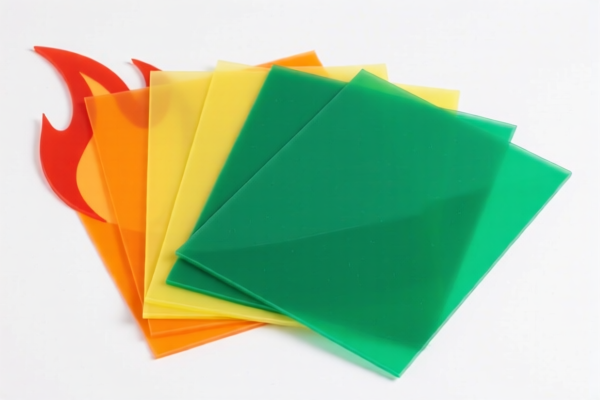
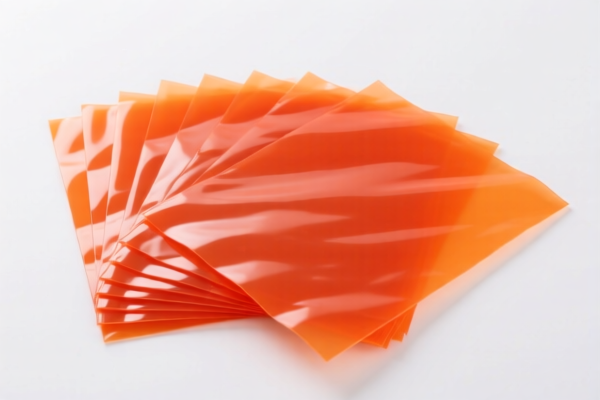
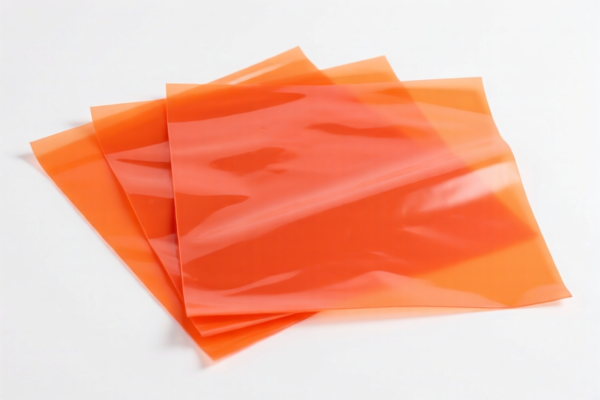
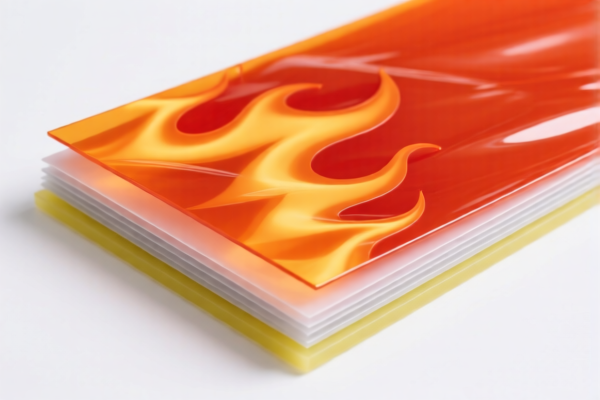
AI Analysis
🛡️ Flame Retardant Acrylic Plastic Sheet (Polystyrene Context)
🌐 HS Code Reference & Customs Clearance Guide | 2026 Latest Tariff Analysis | Professional Clearance Strategy
📌 Important Note on Terminology:
Although the user input specifies "Acrylic" (Polymethyl Methacrylate/PMMA), the provided explicitly categorizes "Flame Retardant Polystyrene Plastic Board" (阻燃聚苯乙烯塑料板). Polystyrene (PS) and Acrylic (PMMA) are chemically distinct polymers. This guide strictly adheres to the provided content, which treats the item as Polystyrene. If the actual material is truly Acrylic, the HS codes below may be incorrect, and you must verify the polymer type.
⚠️ Critical Distinction:
- Polystyrene (PS): Hard, brittle, often clear. Covered in .
- Acrylic (PMMA): Tougher, more optical clarity. NOT in .
- Action: Confirm if your product is Polystyrene. If yes, proceed. If it is Acrylic, do not use these codes.
📦 二、HS Code Classification Details (Based on Provided Data)
| HS Code | Product Description (from Data) | Summary | Key Characteristic |
|---|---|---|---|
3921.19.00.90 |
Other plastic boards, sheets, films, foil & strips | Other Plastic Boards | Generic classification for PS boards not fitting specific polymer sub-headings. |
3921.11.00.00 |
Plastic boards, sheets, etc., of polymers of styrene | Styrene Polymer Boards | Specifically identifies the material as Styrene-based. |
3926.90.99.89 |
Other articles of plastics and articles of other materials | Other Plastic Articles | General classification for finished plastic goods not specified elsewhere. |
3920.30.00.00 |
Plates, sheets, etc., of polymers of methacrylic | Methacrylic Polymer Boards | ⚠️ Mismatch Alert: Data labels this as "Polystyrene" but HS 3920.30 typically refers to Methacrylic (Acrylic). This suggests a potential data error or complex composite. |
3920.99.50.00 |
Other plates, sheets, etc. of plastics | Other Plastic Sheets | Catch-all for plastic plates/sheets not specifically named. |
🔍 Critical Observation:
- The provides 5 possible classifications.
-3921.19.00.90and3920.30.00.00have the highest tax rates (41.5% and 40.8% respectively) due to 25% Additional Tariffs.
-3926.90.99.89has the lowest tax rate (22.8%) because it only attracts 7.5% Additional Tariffs (instead of 25%).
- Strategic Implication: Choosing3926.90.99.89can save ~18% in total tax compared to3921.19.00.90, IF the product fits the definition of "Other Plastic Articles" rather than "Plastic Sheets".
💰 三、2026 Latest Tariff Rate Breakdown (Detailed Tax Clauses)
✅ Applicable Country: USA (US)
✅ Origin: China (CN)
✅ Effective Time: Current 2025/2026 Trade Policies
🎯 1. 3921.19.00.90 – Other Plastic Boards (High Risk)
| Item | Detail |
|---|---|
| Base Tariff | 6.5% |
| Section 301 Additional Tariff | +25.0% |
| Section 122 Tariff | +10.0% |
| Total Tariff Rate | 41.5% |
| Tax Calculation | CIF Value × 41.5% |
| De Minimis Exemption | ❌ Not Eligible |
| Legal Basis Path | USITC:3921.19.00.90 → FOOTNOTE:301_25% → IEEPA:122_10% |
📌 Explanation:
- This code falls under Section 301 (US-China Trade War), triggering a 25% surcharge.
- The 10% Section 122 Tariff (National Security) is also applied.
- Total burden: 41.5%. This is a very high cost for low-margin plastic products.
🎯 2. 3921.11.00.00 – Styrene Polymer Boards (High Risk)
| Item | Detail |
|---|---|
| Base Tariff | 5.3% |
| Section 301 Additional Tariff | +25.0% |
| Section 122 Tariff | +10.0% |
| Total Tariff Rate | 40.3% |
| Tax Calculation | CIF Value × 40.3% |
| De Minimis Exemption | ❌ Not Eligible |
| Legal Basis Path | USITC:3921.11.00.00 → FOOTNOTE:301_25% → IEEPA:122_10% |
📌 Note:
- Slightly lower base tariff (5.3% vs 6.5%) than3921.19.00.90.
- Still subject to 25% + 10% = 35% in additional tariffs.
- Total: 40.3%.
🎯 3. 3926.90.99.89 – Other Plastic Articles (LOWEST COST OPTION)
| Item | Detail |
|---|---|
| Base Tariff | 5.3% |
| Section 301 Additional Tariff | +7.5% (Reduced Rate) |
| Section 122 Tariff | +10.0% |
| Total Tariff Rate | 22.8% |
| Tax Calculation | CIF Value × 22.8% |
| De Minimis Exemption | ❌ Not Eligible |
| Legal Basis Path | USITC:3926.90.99.89 → FOOTNOTE:301_7.5% → IEEPA:122_10% |
📌 Strategic Advantage:
- The Section 301 rate is reduced to 7.5% for this category (likely due to specific exemptions or lower strategic value of "other articles" vs. "sheets/plates").
- Savings: ~17.5–18.7% lower than the "Board/Sheet" classifications.
- Condition: You must justify that the product is an "Article" (possibly cut, shaped, or finished) rather than a raw "Sheet/Plate".
🎯 4. 3920.30.00.00 & 3920.99.50.00 – Methacrylic/Other Sheets (High Risk)
| HS Code | Total Tariff | Key Details |
|---|---|---|
3920.30.00.00 |
40.8% | Base 5.8% + 25% (301) + 10% (122). Note: Data labels as "Polystyrene" but HS suggests Methacrylic. |
3920.99.50.00 |
40.8% | Base 5.8% + 25% (301) + 10% (122). |
📌 Warning:
- These codes are similarly expensive to3921.19.00.90.
-3920.30is particularly risky due to potential misclassification (calling PS "Methacrylic" is a compliance red flag).
🛠️ 四、Customs Clearance Practical Advice (Pitfall Avoidance)
✅ 1. Material Verification (MOST IMPORTANT)
| Material | Correct HS Chapter | Risk if Misclassified |
|---|---|---|
| Polystyrene (PS) | Chapter 39 (3921 or 3920) | Use 3921.11.00.00 or 3921.19.00.90 |
| Acrylic (PMMA) | Chapter 39 (3920 or 3926) | NOT IN DATA. If you declare Acrylic as PS, customs will reject and impose fines. |
| Flame Retardant Additives | N/A | Must provide SDS (Safety Data Sheet) proving flame retardant properties. |
📌 Action:
- Confirm Polymer Type: Is it PS or PMMA?
- If PS: Use3921.11.00.00(40.3%) or3921.19.00.90(41.5%).
- If PMMA: These codes may be incorrect. Check3920.30(40.8%) but beware of data mismatch.
- Best Tax Option: Try to classify as3926.90.99.89(22.8%) if the product is a finished article (e.g., cut-to-size signs, molded parts) rather than raw sheets.
✅ 2. Documentation Checklist
| Document | Required? | Purpose |
|---|---|---|
| Commercial Invoice | ✅ | Must clearly state "Flame Retardant Polystyrene Sheet" (or Article). |
| Product Specification | ✅ | Include dimensions, thickness, flame rating (UL94 V-0/V-1/etc.). |
| SDS (Safety Data Sheet) | ✅ | Proves flame retardant nature and chemical composition. |
| Certificate of Origin | ✅ | To confirm China origin for tariff calculation. |
| Photo of Product | ✅ | Show label, packaging, and physical appearance. |
| Bill of Lading | ✅ | Standard shipping document. |
✅ 3. Classification Strategy to Reduce Taxes
| Scenario | Recommended HS Code | Total Tax | Reason |
|---|---|---|---|
| Raw Sheets/Plates | 3921.19.00.90 or 3920.99.50.00 |
40.8–41.5% | Standard for unprocessed plastic boards. High tax. |
| Finished Articles (e.g., cut signs, cases) | 3926.90.99.89 |
22.8% | Recommended if applicable. Lower additional tariff (7.5% vs 25%). |
| Specific Styrene Sheets | 3921.11.00.00 |
40.3% | Slightly better than generic 3921.19. |
🔥 Pro Tip:
If your "Sheet" is cut, punched, or molded into a specific shape for end-use, argue for classification under Chapter 3926 (Other Articles) rather than 3920/3921 (Sheets/Plates). This can save ~18% in taxes.
✅ 4. Compliance Warnings
❌ Error 1: Declaring Acrylic as Polystyrene
👉 Result: Customs inspection, seizure, fines.
✅ Fix: Test polymer type or provide manufacturer certification.
❌ Error 2: Under-declaring Value
👉 Result: Penalties and loss of import privileges.
✅ Fix: Declare accurate CIF value.
❌ Error 3: Ignoring Section 122 Tariff
👉 Result: Unexpected 10% charge at customs.
✅ Fix: Budget for 10% Section 122 + Section 301 + Base Rate.
🌍 五、Global Market Comparison (2026)
| Market | Recommended HS (for PS Sheets) | Base Tariff | Additional Tariffs | Total Est. Rate |
|---|---|---|---|---|
| 🇺🇸 USA | 3921.19.00.90 or 3926.90.99.89 |
5.3–6.5% | 35% or 17.5% | 40.3% or 22.8% |
| 🇨🇳 China | 3921.19.00.90 |
6.5% | 0% | 6.5% |
| 🇪🇺 EU | 3921.19.00.00 |
6.5% | 0% (WTO MFN) | 6.5% |
| 🇬🇧 UK | 3921.19.00.00 |
6.5% | 0% | 6.5% |
📌 Key Insight:
- USA is the most expensive market due to Section 301 and 122 tariffs.
- EU/UK/China have no additional punitive tariffs on plastic sheets.
- Strategy: If targeting USA, optimize classification to3926.90.99.89(22.8%) if possible.
📌 六、Common Mistakes & Pitfalls (Lessons Learned)
❌ Mistake 1: Using 3920.30.00.00 for Polystyrene
👉 Why it’s bad: 3920.30 is for Methacrylic (Acrylic). Misclassification leads to audits.
✅ Correct: Use 3921.11.00.00 for Styrene/Polystyrene.
❌ Mistake 2: Assuming all "Plastic Sheets" have 25% tariff
👉 Reality: 3926.90.99.89 has only 7.5% additional tariff.
✅ Correct: Investigate if your product qualifies as an "Article" (Chapter 3926).
❌ Mistake 3: Ignoring "Flame Retardant" labeling
👉 Risk: Customs may suspect hazardous materials.
✅ Correct: Provide UL94 certification and SDS to prove safety.
🎯 七、Conclusion: Professional Classification, Cost Optimization!
🎯 Key Takeaways:
🔹 Polystyrene vs. Acrylic: Ensure correct material identification. Data assumes Polystyrene.
🔹 Tax Savings: Classifying as3926.90.99.89(Other Articles) saves ~18% tax vs.3921.19.00.90.
🔹 Documentation: SDS, UL94 reports, and clear product descriptions are mandatory.
🔹 USA Market: High tariffs (22.8–41.5%) require careful budgeting.
📣 Immediate Action:
📞 Verify Polymer Type: Is it PS or PMMA?
📄 Prepare SDS & UL94 Certificates: To support "Flame Retardant" claim.
⚖️ Consult Customs Broker: To argue for3926.90.99.89if the product is a finished article.
✨ Accurate Classification Saves Thousands!
💼 Don’t let tax errors eat your margins!
Customer Reviews
About HS Code Classification
The Harmonized System (HS) is an internationally standardized nomenclature developed by the World Customs Organization (WCO) to classify traded products. Over 200 countries use the HS system as the basis for customs tariffs, trade statistics, and import/export regulations.
Each HS code follows a hierarchical structure:
- Chapter (2 digits) — Broad category of goods (e.g., Chapter 84: Machinery and Mechanical Appliances)
- Heading (4 digits) — More specific grouping within the chapter
- Subheading (6 digits) — Internationally standardized breakdown, used by all WCO member countries
- National subdivisions (8-10 digits) — Country-specific extensions for further classification, such as US HTSUS 10-digit codes
Correct HS code classification is essential for smooth customs clearance, accurate duty payment, and compliance with trade regulations. Misclassification can lead to customs delays, overpayment of duties, or penalties.
When importing from CN to US, the applicable tariff rates may include:
- Most-Favored-Nation (MFN) rate — The standard duty rate applied to WTO members
- General rate — Applied to countries without trade agreements
- Trade remedy duties — Additional tariffs such as Section 301 (anti-dumping), Section 232 (national security), or countervailing duties
The information provided on this page is for reference purposes only. For official classification, please consult with your local customs authority or a licensed customs broker.