flame retardant acrylic sheet
CN → US| HS Code | Tariff Rate | Origin | Destination | Doc |
|---|---|---|---|---|
| 3919905060 | 40.8% | CN | US | Official Doc |
| 3921190090 | 41.5% | CN | US | Official Doc |
| 3921905050 | 39.8% | CN | US | Official Doc |
| 3919905040 | 40.8% | CN | US | Official Doc |
| 3920515050 | 41.5% | CN | US | Official Doc |
Product Images
AI Analysis
🔥 Flame Retardant Acrylic Sheet (Polymethyl Methacrylate / PMMA)
🌐 HS Code Reference & Customs Clearance Guide | 2026 Latest Tariff Analysis | Professional Clearance Strategy
📌 I. Product Definition & Classification: What is "Flame Retardant Acrylic"?
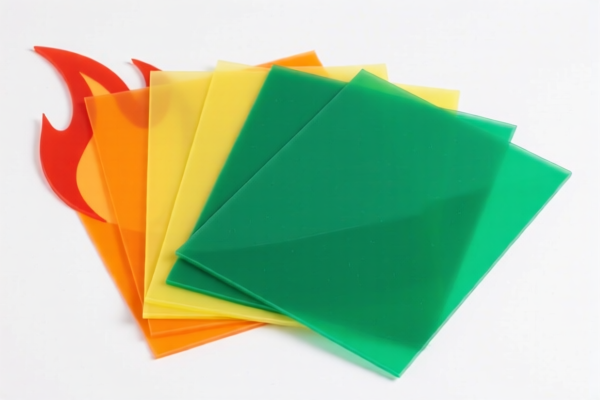
Flame Retardant Acrylic Sheets are high-performance optical plastics made from Polymethyl Methacrylate (PMMA). Unlike standard acrylic, these sheets are treated or formulated to resist ignition and self-extinguish, making them critical for safety-critical applications.
In international trade, they are primarily classified under Chapter 39 (Plastics and Articles Thereof). The specific HS Code depends heavily on the form of the product (film vs. rigid sheet) and the manufacturing process (self-adhesive vs. free-standing).
⚠️ Key Distinction Point:
- If the product is a thin film or self-adhesive roll (like tape or protective film) → It falls under Heading 3919.
- If the product is a free-standing sheet/plate (rigid, non-adhesive) → It falls under Heading 3920 or 3921.
- "Flame Retardant" is a chemical property, not a primary structural characteristic, so it does not create a separate HS Code category but influences customs inspection and safety documentation.
📦 II. HS Code Classification Matrix (Based on Provided Data)
The following table details the five possible HS Codes derived from the provided data, explaining the logic for each classification.
| HS Code | Product Form | Classification Logic | Tax Rate (Total) |
|---|---|---|---|
3919.90.50.60 |
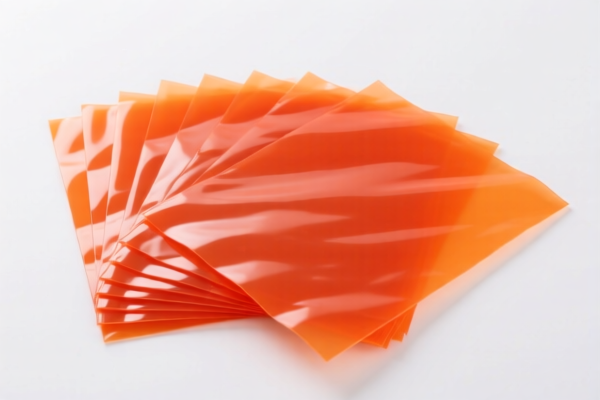
Acrylic Flame Retardant Film (Self-Adhesive) | Classified as "Self-adhesive plates, sheets, film, foil, tape, strip, and other flat shapes" of plastics. The key here is the adhesive nature. | 40.8% |
3921.19.00.90 |
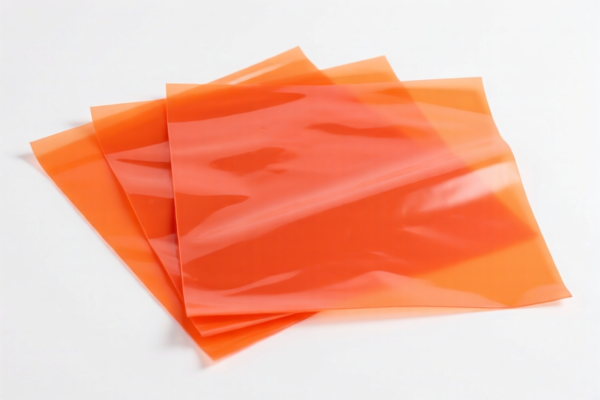
Acrylic Flame Retardant Film (Laminated/Composite) | Classified as "Plates, sheets, film, foil, and strip" of plastics, specifically under other plastics not elsewhere specified. This often applies if it's a laminated structure or a specific polymer type not covered by 3920. | 41.5% |
3921.90.50.50 |
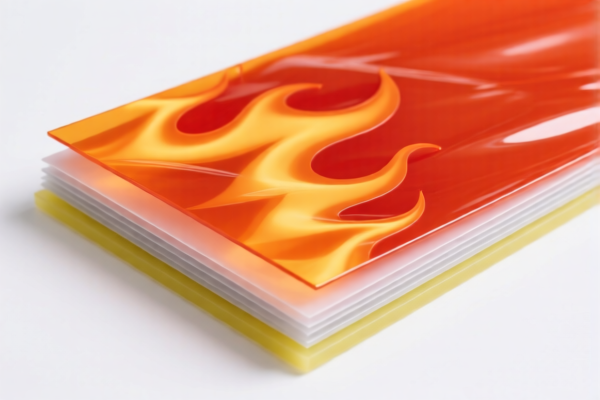
Other Acrylic Flame Retardant Plates/Sheets | Classified as "Other plates, sheets, film, foil, and strip" of plastics. This is a catch-all for rigid or flexible sheets that do not fit the "self-adhesive" (3919) or specific polymer (3920) categories strictly. | 39.8% |
3919.90.50.40 |
Acrylic Flame Retardant Film (Transparent Tape-like) | Classified similarly to 3919.90.50.60 but potentially under a sub-category for transparent self-adhesive plastic flat products. The distinction is often subtle and based on exact thickness/adhesive backing type. |
40.8% |
3920.51.50.50 |
Acrylic Flame Retardant Film (Acrylic Polymer Specific) | Classified under "Other plates, sheets, film, foil, and strip, of polymers of methyl methacrylate". This is the most precise fit for pure Acrylic (PMMA) in film form. | 41.5% |
🔍 Critical Analysis:
- HS Code3920.51.50.50is likely the most accurate for pure Acrylic (PMMA) films/sheets, as it specifies the polymer type.
- HS Codes3919...are for self-adhesive products. If your acrylic sheet is just a rigid panel without glue, do not use these.
- HS Code3921.90.50.50has the lowest total tax (39.8%) but requires the product to not fit neatly into the specific "Methyl Methacrylate" (3920) or "Self-Adhesive" (3919) definitions.
💰 III. 2026 Tariff Rate Breakdown (Detailed Tax Clauses)
✅ Applicable Country: United States (US)
✅ Origin: China (CN)
✅ Effective Time: Current 2026 Tariff Schedule
All products above are subject to Section 301 Tariffs and Section 122 Tariffs due to being plastic products from China.
🎯 1. 3920.51.50.50 – Polymers of Methyl Methacrylate (Acrylic)
- Base Tariff: 6.5%
- Section 301 Tariff: +25.0%
- Section 122 Tariff: +10.0%
- Total Effective Rate: 41.5%
- Calculation:
CIF Value × 41.5% - Legal Basis:
- Base:
HTSUS 3920.51.50.50 - Section 301:
USITC Footnote 9903.88.01(301 Tariff) - Section 122:
19 U.S.C. § 2433(122 Tariff)
- Base:
📌 Explanation:
- This is the specific code for Acrylic (PMMA).
- The 25% Section 301 tariff is the dominant cost driver.
- The 10% Section 122 tariff is a special provision often applied to certain Chinese imports.
🎯 2. 3921.19.00.90 – Other Plastic Sheets/Films
- Base Tariff: 6.5%
- Section 301 Tariff: +25.0%
- Section 122 Tariff: +10.0%
- Total Effective Rate: 41.5%
- Legal Basis:
HTSUS 3921.19.00.90+USITC Footnote 9903.88.01+122 Tariff
🎯 3. 3919.90.50.60 & 3919.90.50.40 – Self-Adhesive Plastic Products
- Base Tariff: 5.8%
- Section 301 Tariff: +25.0%
- Section 122 Tariff: +10.0%
- Total Effective Rate: 40.8%
- Legal Basis:
HTSUS 3919.90.50.60+USITC Footnote 9903.88.01+122 Tariff
📌 Why Lower Base Rate?
- Self-adhesive products (3919) have a slightly lower base tariff (5.8%) compared to non-adhesive sheets (6.5%), resulting in a 0.7% total savings.
- Warning: Misclassifying a rigid sheet as self-adhesive to save 0.7% is high-risk and can lead to penalties.
🎯 4. 3921.90.50.50 – Other Plastic Sheets
- Base Tariff: 4.8%
- Section 301 Tariff: +25.0%
- Section 122 Tariff: +10.0%
- Total Effective Rate: 39.8%
- Legal Basis:
HTSUS 3921.90.50.50+USITC Footnote 9903.88.01+122 Tariff
📌 Lowest Tax Strategy?
- This code has the lowest total tax (39.8%).
- It applies if the product is an "Other" plastic sheet that doesn't fit 3920 (PMMA specific) or 3919 (Adhesive).
- Risk: Customs may argue that Acrylic is Methyl Methacrylate, forcing it into 3920. Use this code only if the product is a composite or non-PMMA acrylic blend.
🛠️ IV. Customs Clearance Operational Advice
✅ 1. Required Documentation Checklist
| Document | Required | Purpose |
|---|---|---|
| Product Specification Sheet | ✔️ | Must state: Material: PMMA/Acrylic, Thickness, Color, Flame Retardant Rating (e.g., UL94 V-0) |
| Commercial Invoice | ✔️ | Clearly describe as "Flame Retardant Acrylic Sheet/Film". Do not use vague terms like "Plastic Sheet". |
| Packing List | ✔️ | Detail dimensions, weight, and packaging type. |
| Certificate of Origin (CO) | ✔️ | Required to verify Chinese origin (triggers Section 301/122 tariffs). |
| Safety Data Sheet (SDS) | ✔️ | Proves flame retardant properties and chemical composition. |
| UL94 Flame Rating Report | ✔️ | Critical for "Flame Retardant" claims. Customs may check if it actually meets the rating. |
| Bill of Lading/Air Waybill | ✔️ | Standard shipping document. |
✅ 2. Classification Strategy & Pitfalls
| Scenario | Recommended HS Code | Risk |
|---|---|---|
| Rigid PMMA Sheet (No Adhesive) | 3920.51.50.50 |
Low Risk. Most accurate for pure Acrylic. |
| Acrylic Film with Adhesive Backing | 3919.90.50.60 or 3919.90.50.40 |
Medium Risk. Must prove adhesive nature. |
| Composite/Blended Plastic Sheet | 3921.90.50.50 |
High Risk. Customs may reclassify as PMMA (3920) if Acrylic is the primary component. |
| Laminated Acrylic Film | 3921.19.00.90 |
Medium Risk. Dependent on lamination structure. |
🔥 Critical Warning:
- Do NOT claim "Exempt from Section 301 Tariffs" for Acrylic sheets. There is no general exemption for plastic sheets from China.
- Do NOT misclassify as "Non-Chinese Origin" unless you have proof of substantial transformation in a third country.
✅ 3. Pro-Tips for Cost Optimization
- Pre-Ruling (Advance Ruling): Apply for a binding ruling from US CBP if you are unsure between
3920.51.50.50and3921.90.50.50. This provides legal certainty. - Value Declaration: Ensure the CIF value (Cost + Insurance + Freight) is accurately declared. Tariffs are ad valorem (% of value). Under-declaring value leads to severe penalties.
- Flame Retardant Certification: Provide UL94 or similar test reports. While this doesn’t change the HS Code, it prevents delays due to "suspicious chemical products" inspections.
🌍 V. Global Market Comparison (2026)
| Country | HS Code (Likely) | Total Tariff | Notes |
|---|---|---|---|
| 🇺🇸 USA | 3920.51.50.50 |
41.5% | High tariffs due to 301 & 122 clauses. |
| 🇨🇳 China | 3920.51.50.50 |
~6.5% | Base import tariff (if importing into China). |
| 🇪🇺 EU | 3920.51.00 |
~6.5% | No Section 301 equivalent. CE marking required. |
| 🇬🇧 UK | 3920.51.00 |
~6.5% | Post-Brexit tariff schedule applies. |
📌 Conclusion:
The US market is the most expensive for Acrylic sheets due to political tariffs. Buyers in the US must factor in ~40%+ total duty costs.
📌 VI. Common Mistakes & How to Avoid Them
❌ Mistake 1: Using "Plastic Sheet" in the description.
👉 Result: Customs delays for classification review.
✅ Fix: Use "Flame Retardant PMMA Acrylic Sheet".
❌ Mistake 2: Ignoring the "Self-Adhesive" vs. "Non-Adhesive" distinction.
👉 Result: Wrong HS Code (3919 vs 3920), leading to overpayment or underpayment penalties.
✅ Fix: Check product specs. If it has glue, use 3919. If not, use 3920.
❌ Mistake 3: Assuming "Flame Retardant" reduces tariffs.
👉 Result: False expectation. Safety features do not lower duty rates for plastics.
✅ Fix: Budget for the full 41.5% tariff.
🎯 VII. Final Recommendation
For Flame Retardant Acrylic Sheets:
- If it’s a rigid sheet: Use
3920.51.50.50(41.5% tax). It is the most precise and defensible code. - If it’s a self-adhesive film: Use
3919.90.50.60(40.8% tax). It offers a slight tax advantage but requires proof of adhesiveness. - Always: Provide UL94 test reports and clear material composition statements to avoid customs holds.
🚀 Action Item:
Contact your customs broker with the product specification sheet before shipment. Request a Pre-Decision Letter for the final HS Code to ensure no surprises at US ports.
✨ Professional Clearance, Cost Control, and Risk Mitigation!
💼 Accurate HS Codes save more than just money—they save time!
Customer Reviews
About HS Code Classification
The Harmonized System (HS) is an internationally standardized nomenclature developed by the World Customs Organization (WCO) to classify traded products. Over 200 countries use the HS system as the basis for customs tariffs, trade statistics, and import/export regulations.
Each HS code follows a hierarchical structure:
- Chapter (2 digits) — Broad category of goods (e.g., Chapter 84: Machinery and Mechanical Appliances)
- Heading (4 digits) — More specific grouping within the chapter
- Subheading (6 digits) — Internationally standardized breakdown, used by all WCO member countries
- National subdivisions (8-10 digits) — Country-specific extensions for further classification, such as US HTSUS 10-digit codes
Correct HS code classification is essential for smooth customs clearance, accurate duty payment, and compliance with trade regulations. Misclassification can lead to customs delays, overpayment of duties, or penalties.
When importing from CN to US, the applicable tariff rates may include:
- Most-Favored-Nation (MFN) rate — The standard duty rate applied to WTO members
- General rate — Applied to countries without trade agreements
- Trade remedy duties — Additional tariffs such as Section 301 (anti-dumping), Section 232 (national security), or countervailing duties
The information provided on this page is for reference purposes only. For official classification, please consult with your local customs authority or a licensed customs broker.