flame retardant fluoroelastomer
CN → US| HS Code | Tariff Rate | Origin | Destination | Doc |
|---|---|---|---|---|
| 4002990000 | 35.0% | CN | US | Official Doc |
| 3901901000 | 35.0% | CN | US | Official Doc |
| 3901909000 | 41.5% | CN | US | Official Doc |
| 4002910000 | 35.0% | CN | US | Official Doc |
| 3506915000 | 37.1% | CN | US | Official Doc |
Product Images


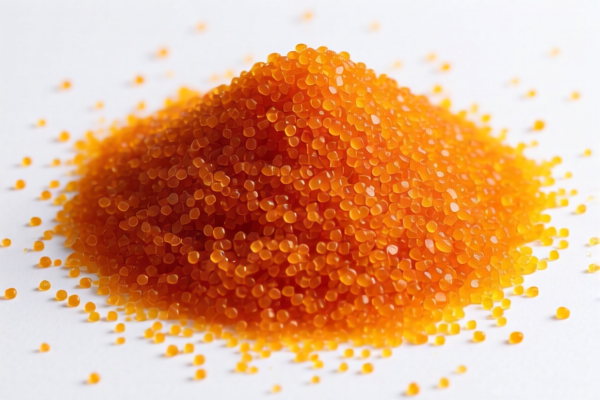
AI Analysis
🔥 Flame Retardant Fluoroelastomer (FR-FKM)
🌐 HS Code Classification & Customs Clearance Guide | 2026 Latest Tariff Analysis | Professional Strategy for US Imports
📌 I. Product Definition: What is "Flame Retardant Fluoroelastomer"?
Flame Retardant Fluoroelastomer (often referred to as FR-FKM) is a high-performance synthetic rubber known for its exceptional resistance to heat, chemicals, and ozone. In international trade, it is classified based on its chemical composition (Fluoropolymer/Synthetic Rubber) and physical form (Elastomer/Primary Shape).
The key to accurate classification lies in determining whether it is considered: 1. A Rubber Product (Chapter 40): Specifically designed as an elastomer with rubber-like properties. 2. A Plastic/Polymer (Chapter 39): Treated primarily as a chemical polymer precursor. 3. An Adhesive/Preparation (Chapter 35): Mixed with other agents for specific binding or coating purposes.
⚠️ Critical Distinction:
- If it exhibits classic rubber elasticity (can be stretched and returns to shape) and is marketed as an "elastomer" or "rubber," it typically falls under Chapter 40.
- If it is a rigid polymer pellet or powder primarily used as a plastic additive or base resin, it may fall under Chapter 39.
- If it is a mixed preparation specifically for adhesion, it might fall under Chapter 35.
📦 II. HS Code Classification Matrix (2026 Latest Tariff Data)
Based on the provided source, here are the five possible classifications and their corresponding tax implications for imports into the United States (from China).
| HS Code | Product Description (from Data) | Classification Logic | Total Tax Rate |
|---|---|---|---|
| 4002.99.00.00 | Other synthetic rubber; material: Fluoroelastomer; form: Elastomer. | Best fit if sold as finished rubber compound/elastomer. | 35.0% |
| 4002.91.00.00 | Synthetic rubber; material: Fluoroelastomer; form: Elastomer (Primary Shape). | Fits if it is a primary shape (pellets/powder) but clearly identified as rubber. | 35.0% |
| 3901.90.10.00 | Other elastomers; material: Polymer; form: Elastomer. | Broad polymer classification. Less specific than Chapter 40. | 35.0% |
| 3901.90.90.00 | Other polymers; material: Fluoroelastomer; form: Primary Shape. | Fits if classified strictly as a fluoropolymer resin in primary form. | 41.5% |
| 3506.91.50.00 | Preparations based on polymers (39.01-39.13); material: Synthetic Rubber. | Fits if it is a mixed preparation (e.g., adhesive) based on polymers. | 37.1% |
🔍 Key Insight:
- Lowest Tax Option: 4002.99.00.00, 4002.91.00.00, or 3901.90.10.00 (All at 35.0%).
- Highest Tax Option: 3901.90.90.00 (41.5%).
- Recommendation: Aim for Chapter 40 (4002.xx) if the product is genuinely a rubber compound, as it is the most technically accurate for "Fluoroelastomer."
💰 III. 2026 Tariff Rate Breakdown (Detailed)
✅ Applicable Country: United States (US)
✅ Country of Origin: China (CN)
✅ Effective Date: Tariffs apply to imports subject to Section 301 and IEEPA.
🎯 1. Scenario A: Chapter 40 & 3901.90.10 (Tax Rate: 35.0%)
Applies to HS Codes: 4002.99.00.00, 4002.91.00.00, 3901.90.10.00
| Item | Detail |
|---|---|
| Base Tariff | 0.0% (Most synthetic rubbers/polymers in these subheadings have 0% MFN rate) |
| Section 301 Add-on | +25.0% (USITC Footnote 9903.88.01 / Section 301 List 4B) |
| IEEPA Add-on | +10.0% (Section 122 Tariffs / IEEPA Proclamation 11048 or similar) |
| Total Effective Rate | 35.0% |
| Tax Calculation | CIF Value × 35% |
| De Minimis Exemption? | ❌ NO (deny_de_minimis) |
| Legal Basis Path | Section 301: 9903.88.01 → IEEPA: 10% → USITC: 4002/3901 codes |
📌 Explanation:
- The 25% is the standard "China Tariff" under Section 301.
- The 10% is an additional surcharge under IEEPA (Executive Order provisions) applicable to Chinese goods.
- Even though the base duty is 0%, the 35% total is significant and impacts cost structures heavily.
🎯 2. Scenario B: Chapter 3901.90.90 (Tax Rate: 41.5%)
Applies to HS Code: 3901.90.90.00
| Item | Detail |
|---|---|
| Base Tariff | 6.5% (Ad valorem) |
| Section 301 Add-on | +25.0% |
| IEEPA Add-on | +10.0% |
| Total Effective Rate | 41.5% |
| Tax Calculation | CIF Value × 41.5% |
| De Minimis Exemption? | ❌ NO |
| Legal Basis Path | Base: 6.5% → Section 301: 9903.88.01 → IEEPA: 10% |
📌 Warning:
- This classification is more expensive by 6.5% compared to the Chapter 40 options.
- Avoid this code unless the product cannot be proven to be a "rubber" or "elastomer" in the traditional sense.
🎯 3. Scenario C: Chapter 3506 (Tax Rate: 37.1%)
Applies to HS Code: 3506.91.50.00
| Item | Detail |
|---|---|
| Base Tariff | 2.1% |
| Section 301 Add-on | +25.0% |
| IEEPA Add-on | +10.0% |
| Total Effective Rate | 37.1% |
| Tax Calculation | CIF Value × 37.1% |
| De Minimis Exemption? | ❌ NO |
| Legal Basis Path | Base: 2.1% → Section 301 → IEEPA |
📌 Analysis:
- Slightly higher than the 35% group but lower than the 41.5% group.
- Only use if the product is a preparation (mixed with other agents) rather than a pure polymer/rubber.
🛠️ IV. Customs Clearance Practical Advice (Avoid Pitfalls)
✅ 1. Documentation Checklist (Must-Haves)
| Document | Required? | Purpose |
|---|---|---|
| Product Technical Data Sheet (TDS) | ✔️ | Proves it is a "Fluoroelastomer" and defines its physical form (pellet, powder, sheet). |
| Material Safety Data Sheet (MSDS/SDS) | ✔️ | Confirms chemical composition and safety handling (essential for Chapter 39/40). |
| Commercial Invoice | ✔️ | Must explicitly state: "Flame Retardant Fluoroelastomer," "Synthetic Rubber," and HS Code. |
| Packing List | ✔️ | Details net/gross weight. |
| Certificate of Origin (CO) | ✔️ | Critical to prove China Origin for accurate 301/IEEPA calculation. |
| Formulation/Ingredient List | ✔️ | If claiming Chapter 35, you must prove it is a "preparation" based on polymers. |
✅ 2. Classification Strategy (Best Practice)
| Situation | Recommended HS Code | Reason |
|---|---|---|
| Sold as Rubber Compound/Pellets | 4002.99.00.00 or 4002.91.00.00 |
Most accurate for "Fluoroelastomer." Lowest tax (35%). |
| Sold as Generic Polymer Resin | 3901.90.10.00 |
Acceptable if not clearly marketed as rubber, but same tax (35%). |
| Sold as Adhesive/Preparation | 3506.91.50.00 |
Only if mixed with solvents/adhesives. Tax is 37.1%. |
| Pure Fluoropolymer (Non-Rubber) | 3901.90.90.00 |
Avoid if possible. Highest tax (41.5%). |
🔥 Pro Tip:
- Do NOT split shipments to avoid Section 301 tariffs; customs will consolidate and assess penalties.
- Do NOT misdeclare "Fluoroelastomer" as "Plastic" if it is actually rubber; this leads to audits and back-tariffs.
- Use Precise Naming: "Fluororubber (FKM) Compound" is better than vague terms like "Chemical Material."
✅ 3. Special Notes for 2026
- No De Minimis: Small packages (<$800) from China do not get tax-exempt entry for these goods. All shipments are subject to the 35-41.5% tariff.
- Audit Risk: HS Code
4002(Rubber) vs3901(Plastics) is a common audit area. Ensure your Technical Data Sheet aligns with the chosen HS Code. - Section 122 (IEEPA): The 10% tariff is mandatory for Chinese origin goods in this category. No loopholes.
🌍 V. Global Market Comparison (Context)
| Market | Typical HS Code | Base Duty | US-Specific Surcharges | Total Est. Cost Impact |
|---|---|---|---|---|
| 🇺🇸 USA | 4002.99.00.00 |
0% | +25% (301) +10% (IEEPA) | 35% |
| 🇨🇳 China (Export) | Varies | 0-13% | N/A | Low (Export Duty) |
| 🇪🇺 EU | 4002.99 |
0-6.5% | None (unless GB Tariffs) | ~6.5% |
| 🇬🇧 UK | 4002.99 |
0-6.5% | None | ~6.5% |
📌 Conclusion:
- The US market is the most expensive for Flame Retardant Fluoroelastomers from China due to the combined 35% tariff burden.
- Supply Chain Strategy: Consider sourcing from Vietnam, Thailand, or Malaysia (if eligible for non-origin rules) to potentially mitigate IEEPA/301 tariffs, but ensure substantial transformation rules are met.
📌 VI. Common Mistakes & Pitfalls (Learn from Errors)
❌ Mistake 1: Classifying as 3901.90.90.00 (41.5%) when it is clearly rubber.
👉 Result: Paying 6.5% more tax unnecessarily. Always argue for Chapter 40 if it’s an elastomer.
❌ Mistake 2: Assuming "De Minimis" applies to small shipments.
👉 Result: Packages seized or taxed retroactively. No exemption for Chinese rubber/polymers.
❌ Mistake 3: Vague Invoice Description ("Chemical Rubber").
👉 Result: Customs delay, request for clarification, potential misclassification penalties.
✅ Correct: "Flame Retardant Fluoroelastomer Compound, Type FKM, HS 4002.99.00.00"
🎯 VII. Final Recommendation
- Primary Choice: Use
4002.99.00.00or4002.91.00.00(35% Total Tax).- Why? Technically accurate for "Fluoroelastomer" and lowest tax among accurate codes.
- Secondary Choice: If not clearly rubber, use
3901.90.10.00(35% Total Tax).- Why? Same tax rate as Chapter 40, safer if "rubber" definition is ambiguous.
- Avoid:
3901.90.90.00(41.5%) unless no other classification fits.- Why? Unnecessarily expensive.
🚀 Action Item:
Contact a Customs Broker to file a Binding Ruling (Pre-Ruling) with US CBP before your first shipment. This locks in the HS Code and tariff rate, providing legal certainty and avoiding future audits.
✨ Accurate Classification Saves Money!
💼 Every 1% of tax difference is pure profit margin.
📞 Verify your HS Code today!
Customer Reviews
About HS Code Classification
The Harmonized System (HS) is an internationally standardized nomenclature developed by the World Customs Organization (WCO) to classify traded products. Over 200 countries use the HS system as the basis for customs tariffs, trade statistics, and import/export regulations.
Each HS code follows a hierarchical structure:
- Chapter (2 digits) — Broad category of goods (e.g., Chapter 84: Machinery and Mechanical Appliances)
- Heading (4 digits) — More specific grouping within the chapter
- Subheading (6 digits) — Internationally standardized breakdown, used by all WCO member countries
- National subdivisions (8-10 digits) — Country-specific extensions for further classification, such as US HTSUS 10-digit codes
Correct HS code classification is essential for smooth customs clearance, accurate duty payment, and compliance with trade regulations. Misclassification can lead to customs delays, overpayment of duties, or penalties.
When importing from CN to US, the applicable tariff rates may include:
- Most-Favored-Nation (MFN) rate — The standard duty rate applied to WTO members
- General rate — Applied to countries without trade agreements
- Trade remedy duties — Additional tariffs such as Section 301 (anti-dumping), Section 232 (national security), or countervailing duties
The information provided on this page is for reference purposes only. For official classification, please consult with your local customs authority or a licensed customs broker.