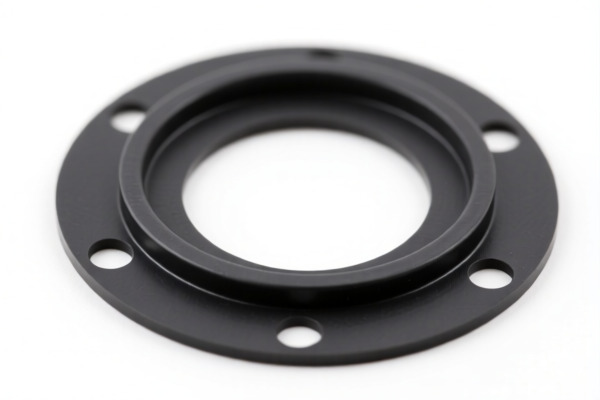
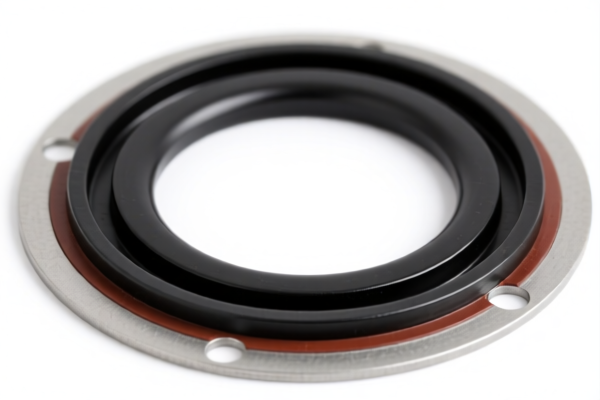
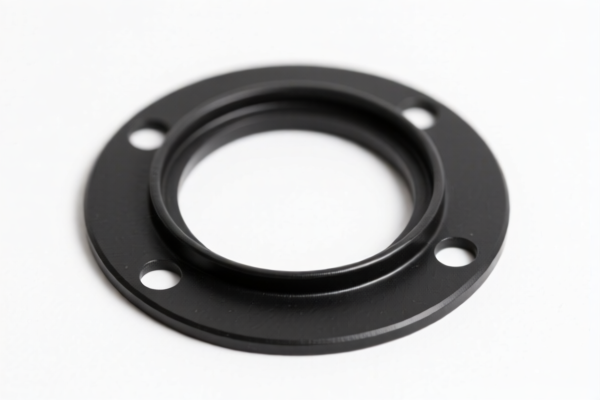
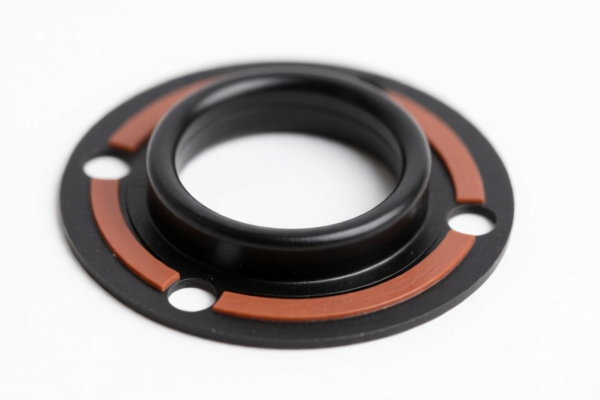
flame retardant rubber gasket
CN → US| HS Code | Tariff Rate | Origin | Destination | Doc |
|---|---|---|---|---|
| 3926904510 | 38.5% | CN | US | Official Doc |
| 8484900000 | 37.5% | CN | US | Official Doc |
| 4016935010 | 37.5% | CN | US | Official Doc |
| 4016931010 | 37.5% | CN | US | Official Doc |
Product Images
AI Analysis
🔥 Flame Retardant Rubber Gasket (Rubber Seat Ring Seal)
🌐 HS Code Reference & Customs Clearance Guide | 2026 Latest Tariff Analysis | Professional Clearance Strategy
📌 I. Product Definition & Classification: Understanding the "Flame Retardant Rubber Gasket"
A Flame Retardant Rubber Gasket is a sealing component made from vulcanized rubber or synthetic rubber materials designed to prevent the spread of fire while maintaining a seal between two surfaces. In international trade, these products are typically classified based on their material composition and specific function.
Key characteristics include: * Material: Rubber/Synthetic Rubber (often vulcanized). * Function: Sealing (Gasket/Washer/Seal). * Special Property: Flame Retardancy (often required for automotive, aerospace, or industrial applications).
⚠️ Key Distinction Point:
- If the product is primarily classified by its material (Rubber), it falls under Chapter 40.
- If the product is classified by its mechanical function as a part of a machine, it might fall under Chapter 84 or Chapter 39 (depending on material nuances), but Chapter 40 is the most direct fit for rubber gaskets.
📦 II. HS Code Classification Details (2026 Latest Tariff Authority Comparison)
Based on the provided data, here are the four potential HS Codes for "Flame Retardant Rubber Gasket":
| HS Code | Product Description | Application Scenario | Material Match |
|---|---|---|---|
3926.90.45.10 |
Other articles of plastic (Gaskets/Seals) | General industrial use; if interpreted as synthetic rubber/plastic composite | ✅ Plastic/Synthetic Rubber Category |
8484.90.00.00 |
Gaskets and similar joints of metal combining with other materials | Mechanical sealing parts; if viewed as a mechanical component rather than pure rubber | ✅ Mechanical Seal Category |
4016.93.50.10 |
Other articles of vulcanized rubber other than hard rubber (Gaskets/Washers) | Primary Recommendation; direct match for rubber gaskets | ✅ Vulcanized Rubber |
4016.93.10.10 |
Other articles of vulcanized rubber other than hard rubber (Gaskets/Washers) | Alternative sub-category for rubber gaskets; similar to above | ✅ Vulcanized Rubber |
🔍 Key Reminder:
-4016.93.xxxxis the most accurate classification for rubber gaskets because Chapter 40 specifically covers "Rubber and articles thereof."
-8484.90.00.00is less common for pure rubber gaskets unless they are part of a larger mechanical assembly and classified as "mechanical seals."
-3926.90.45.10applies if the "rubber" is technically classified as a plastic-like synthetic material under specific customs interpretations, but this is riskier.
💰 III. 2026 Latest Tariff Rate Details (Including Surtaxes & Policy Surcharges)
✅ Applicable Country: United States (US)
✅ Origin: China (CN)
✅ Effective Date: 2025-11-10 onwards (including subsequent imports)
🎯 1. 4016.93.50.10 & 4016.93.10.10 —— Rubber Gaskets (Vulcanized Rubber)
| Item | Content |
|---|---|
| Base Tariff | 2.5% (Ad Valorem) |
| USITC Surtax (Section 301) | +25.0% |
| IEEPA Surtax (Section 122/China Specific) | +10.0% |
| Total Tariff Rate | 37.5% |
| Tax Calculation | CIF Value × 37.5% |
| De Minimis Exemption | ❌ Not Eligible (deny_de_minimis) |
| Legal Basis Path | IEEPA:9903.01.24 → USITC:4016.93.xxxx → FOOTNOTE:9903.88.01 |
📌 Explanation:
- The 2.5% base rate applies to vulcanized rubber articles (gaskets).
- The 25% surcharge is the standard Section 301 tariff on Chinese rubber goods.
- The 10% IEEPA surcharge applies specifically to Chinese-origin goods under the International Emergency Economic Powers Act.
- Total: 37.5%. This is a high tariff, so accurate classification is critical to avoid overpayment.
🎯 2. 8484.90.00.00 —— Mechanical Seals (Gaskets)
| Item | Content |
|---|---|
| Base Tariff | 2.5% (Ad Valorem) |
| USITC Surtax (Section 301) | +25.0% |
| IEEPA Surtax (Section 122/China Specific) | +10.0% |
| Total Tariff Rate | 37.5% |
| Tax Calculation | CIF Value × 37.5% |
| De Minimis Exemption | ❌ Not Eligible |
| Legal Basis Path | IEEPA:9901.25 → USITC:8484.90.00.00 → FOOTNOTE:9903.88.01 |
📌 Note:
- Although the HS Code is different, the total tariff is identical (37.5%) due to the uniform surcharge structure on Chinese imports.
- Classification here depends on whether the gasket is considered a "mechanical seal" rather than a pure rubber article.
🎯 3. 3926.90.45.10 —— Other Plastic Articles (Gaskets)
| Item | Content |
|---|---|
| Base Tariff | 3.5% (Ad Valorem) |
| USITC Surtax (Section 301) | +25.0% |
| IEEPA Surtax (Section 122/China Specific) | +10.0% |
| Total Tariff Rate | 38.5% |
| Tax Calculation | CIF Value × 38.5% |
| De Minimis Exemption | ❌ Not Eligible |
| Legal Basis Path | IEEPA:9903.01.25 → USITC:3926.90.45.10 → FOOTNOTE:9903.88.01 |
📌 Warning:
- This is the highest tariff (38.5%).
- Use this only if the product is not primarily rubber but a plastic-like synthetic material. Misclassifying a rubber gasket here could lead to penalties.
🛠️ IV. Customs Clearance Practical Advice (Battle-Tested Pitfall Guide)
✅ 1. Required Documentation Checklist (Non-Negotiable)
| Document | Mandatory? | Description |
|---|---|---|
| ✅ Product Specification Sheet | ✔️ | Must include material composition (e.g., NBR, EPDM, Silicone), hardness, temperature resistance, and flame retardant rating (e.g., UL94 V-0). |
| ✅ Material Test Report | ✔️ | Proof of flame retardancy (e.g., UL, CSA, or third-party lab test). |
| ✅ Product Photos (Clear) | ✔️ | Show the gasket shape, cross-section, and any markings (e.g., "FR", "V-0"). |
| ✅ Commercial Invoice | ✔️ | Clearly state "Flame Retardant Rubber Gasket" and the HS Code. |
| ✅ Packing List | ✔️ | Detail weight, dimensions, and quantity. |
| ✅ Origin Certificate (CO) | ✔️ | If claiming preferential treatment under other FTAs (though unlikely for US/China). |
✅ 2. Declaration Tips (Key Mnemonics)
🔥 "Material First, Function Second, FR Proof, Tax Avoided!"
| Scenario | Correct Declaration | Incorrect Approach |
|---|---|---|
| Pure Rubber Gasket | 4016.93.50.10 or 4016.93.10.10 |
Misclassifying as plastic → 38.5% |
| Mechanical Seal Assembly | 8484.90.00.00 |
Misclassifying as raw rubber → Penalty |
| Mixed Material (Rubber + Metal) | 8484.90.00.00 |
Declaring as pure rubber → Discrepancy |
| De Minimis (Under $800) | Not Applicable | Trying to use de minimis → Seizure |
✅ 3. Special Circumstances Handling
| Scenario | Handling Advice |
|---|---|
| OEM Custom Gaskets | Provide customer orders + design drawings to prove specific purpose. |
| Flame Retardant Certification | Ensure UL/CSA labels are visible in photos. If missing, customs may reclassify as general rubber. |
| Mixed Shipment (Rubber + Plastic Parts) | Split declaration. Rubber parts go to 4016, plastic parts to 3926. Do not combine into one HS Code. |
| High-Value Industrial Gaskets | Consider Advance Ruling from CBP to lock in classification and avoid audits. |
🌍 V. Global Market Customs Comparison (2026 Latest)
| Country/Region | Recommended HS Code | Tariff (China Origin) | Certification Requirement | Notes |
|---|---|---|---|---|
| 🇺🇸 USA | 4016.93.50.10 |
37.5% | UL/CSA (for FR) | High tariffs due to Section 301 & IEEPA |
| 🇨🇳 China | 4016.93.50.10 |
~5-7% | CCC (if applicable) | No surcharges |
| 🇪🇺 EU | 4016.93 |
0-2% | REACH/RoHS | No additional tariffs |
| 🇦🇺 Australia | 4016.93 |
5% | SAA | No surcharges |
| 🇯🇵 Japan | 4016.93 |
0-2% | PSE (if electrical) | No surcharges |
📌 Conclusion:
- USA is the most expensive market for rubber gaskets due to 37.5% total tariffs.
- EU, Japan, and Australia offer much lower tariffs, making them more cost-effective for Chinese exporters.
- Flame Retardancy is a key selling point but also a trigger for stricter customs scrutiny in the US.
📌 VI. Common Mistakes & Pitfall Guide (Blood Lessons)
❌ Mistake 1: Declaring "Flame Retardant" as a separate product line without linking it to the material.
👉 Consequence: Customs may reject the FR claim, leading to audits or delays.
Fix: Include test reports and clear material descriptions.
❌ Mistake 2: Using 3926.90.45.10 for rubber gaskets.
👉 Consequence: Overpaying 38.5% instead of 37.5% (small but unnecessary cost).
Fix: Use 4016.93.xxxx for pure rubber articles.
❌ Mistake 3: Ignoring the "De Minimis" rule for shipments under $800.
👉 Consequence: Seizure and destruction of goods. Rubber gaskets from China are not eligible for de minimis under current rules.
Fix: Ensure all shipments declare the correct HS Code and pay duties.
❌ Mistake 4: Failing to label "Flame Retardant" on the product.
👉 Consequence: Customs may classify as generic rubber, leading to misdeclaration penalties.
Fix: Print "FR" or "UL94 V-0" on the gasket or packaging.
✅ Correct Approach:
"Flame Retardant Vulcanized Rubber Gasket, UL94 V-0 Rated, Part No. XYZ, Made in China, for Industrial Sealing"
🎯 VII. Conclusion: Precise Classification, Time-Saving, Cost-Effective!
🎯 Remember the Mnemonic:
🔹 "Rubber Goes to 40, Plastic to 39, Mech Seal to 84."
🔹 "FR Needs Proof, De Minimis is Dead, 37.5% is the Price."
📌 Pro Tip:
If your gaskets are made from specialty materials (e.g., PTFE, Silicone), ensure the HS Code reflects the exact polymer type.
For US imports, always request a CBP Advance Ruling for high-volume rubber gasket shipments to lock in the 37.5% rate and avoid unexpected penalties.
📣 Take Action Now:
📞 Contact a licensed customs broker + Provide FR Test Reports + Apply for HS Code Advance Ruling
🚀 Let your Flame Retardant Gaskets clear customs smoothly, efficiently, and profitably!
✨ Professional Clearance Starts with Accurate Classification!
💼 Every Cent of Your Cost Deserves Precision!
Customer Reviews
About HS Code Classification
The Harmonized System (HS) is an internationally standardized nomenclature developed by the World Customs Organization (WCO) to classify traded products. Over 200 countries use the HS system as the basis for customs tariffs, trade statistics, and import/export regulations.
Each HS code follows a hierarchical structure:
- Chapter (2 digits) — Broad category of goods (e.g., Chapter 84: Machinery and Mechanical Appliances)
- Heading (4 digits) — More specific grouping within the chapter
- Subheading (6 digits) — Internationally standardized breakdown, used by all WCO member countries
- National subdivisions (8-10 digits) — Country-specific extensions for further classification, such as US HTSUS 10-digit codes
Correct HS code classification is essential for smooth customs clearance, accurate duty payment, and compliance with trade regulations. Misclassification can lead to customs delays, overpayment of duties, or penalties.
When importing from CN to US, the applicable tariff rates may include:
- Most-Favored-Nation (MFN) rate — The standard duty rate applied to WTO members
- General rate — Applied to countries without trade agreements
- Trade remedy duties — Additional tariffs such as Section 301 (anti-dumping), Section 232 (national security), or countervailing duties
The information provided on this page is for reference purposes only. For official classification, please consult with your local customs authority or a licensed customs broker.