flame retardant woven sheet
CN → US| HS Code | Tariff Rate | Origin | Destination | Doc |
|---|---|---|---|---|
| 5911203000 | 35.0% | CN | US | Official Doc |
| 5911900080 | 38.8% | CN | US | Official Doc |
| 3921901100 | 39.2% | CN | US | Official Doc |
| 6307908940 | 17.0% | CN | US | Official Doc |
| 6307908500 | 23.3% | CN | US | Official Doc |
Product Images
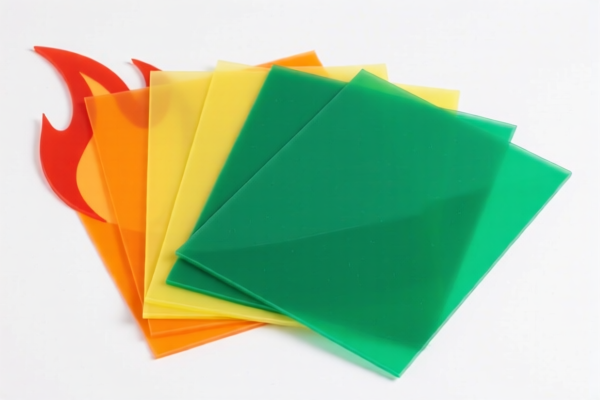
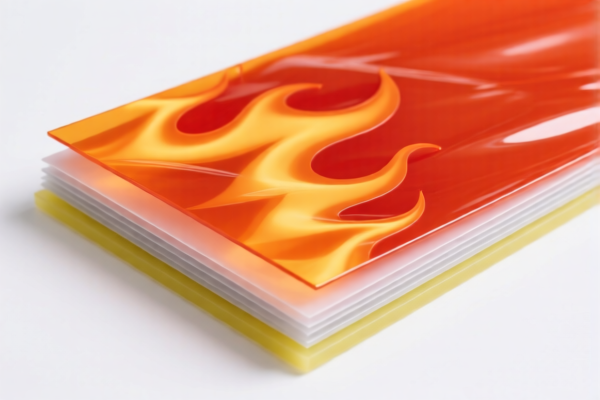
AI Analysis
🔥 Flame Retardant Woven Sheets: HS Code Classification & Customs Clearance Guide (2026)
🌐 HS Code Reference & Customs Clearance Guide | Latest Tariff Analysis | Professional-Level Strategy
📌 I. Product Definition & Classification: What Exactly is a "Flame Retardant Woven Sheet"?
A "Flame Retardant Woven Sheet" is a technical textile product designed to resist ignition, slow flame spread, or self-extinguish upon removal of the heat source. In international trade, it is not classified as a general household item (like bedding) but rather as a technical textile or an article made up, depending on its specific structure and end-use.
Key Distinctions:
- Technical Textiles (Chapter 59): If the product is a specialized fabric, sheeting, or bolting cloth used in industrial, fire-proofing, or protective applications, and meets the criteria of Note 8 to Chapter 59.
- Made-Up Articles (Chapter 63): If the product is a finished, sewn, or assembled item (e.g., a specific curtain, banner, or towel) with a specific identity beyond just the fabric itself.
- Plastic-Composite Sheets (Chapter 39): If the "sheet" is primarily plastic-coated/laminated with a textile backing, it may fall under Chapter 39.
⚠️ Critical Classification Point:
- If it is a bare woven fabric intended for technical use (e.g., fire blankets, industrial protective sheeting) → HS Code 5911.
- If it is a finished article (e.g., a decorative banner, a specific towel) → HS Code 6307.
- If it is a plastic-composite sheet with textile layers → HS Code 3921.
📦 II. HS Code Classification Details (Based on Provided Data)
| HS Code | Product Description | Applicability | Key Features |
|---|---|---|---|
5911.20.30.00 |
Textile products for technical uses: Bolting cloth, whether or not made up: Other: Other | Industrial filtration, sieving, or specialized technical sheeting | High durability, technical weaving, technical use |
5911.90.00.80 |
Textile products for technical uses: Other Other | General technical textiles not specified elsewhere (e.g., fire-resistant fabrics for industrial lining) | Broad category for technical textiles |
6307.90.89.40 |
Other made up articles: Surgical towels; cotton towels; pillow shells; shells for quilts... Cotton towels of pile or tufted construction | If the "sheet" is actually a cotton towel (pile/tufted) used in medical or household settings | Specific to towels/pillow shells, made-up |
6307.90.85.00 |
Other made up articles: Wall banners, of man-made fibers | If the "sheet" is a decorative or industrial banner made of synthetic fibers | Specific to wall banners |
3921.90.11.00 |
Other plates, sheets, film, foil and strip, of plastics: Combined with textile materials... Over 70% by weight of plastics | If the product is a laminated sheet (plastic + textile) where plastic dominates by weight | Composite material, plastic-heavy |
🔍 Key Insight:
- "Flame Retardant" alone does not determine the HS Code. The material composition (textile vs. plastic) and form (fabric vs. finished article) do.
- If it’s a simple woven fabric for industrial use, 5911 is the most likely candidate.
- If it’s a finished banner, 6307.90.85.00 applies.
- If it’s a plastic-laminated sheet, 3921.90.11.00 applies.
💰 III. 2026 Latest Tariff Rate Details (Including Surcharges)
✅ Applicable Country: United States (US)
✅ Origin: China (CN)
✅ Effective Time: 2025–2026 (Current Trade Policy)
🎯 1. HS Code: 5911.20.30.00 — Bolting Cloth / Technical Woven Sheets
| Item | Detail |
|---|---|
| Base Tariff | 0.0% |
| Additional Tariff (Section 301) | 25.0% |
| Total Tariff | 25.0% |
| Tax Calculation | CIF Value × 25% |
| De Minimis Exemption | ❌ Not Eligible (Section 301 goods are generally excluded from $800 de minimis) |
| Legal Basis | Section 301: HTSUS 5911.20.30.00 |
📌 Explanation:
- This code falls under Chapter 59 (Textile Products for Technical Uses).
- Although the base tariff is 0%, the 25% Section 301 surcharge applies to Chinese-origin technical textiles.
- High Risk: Misclassifying a technical sheet as a general garment or household item to avoid the 25% tax will lead to severe penalties.
🎯 2. HS Code: 5911.90.00.80 — Other Technical Textiles
| Item | Detail |
|---|---|
| Base Tariff | 0.0% |
| Additional Tariff (Section 301) | 0.0% |
| Total Tariff | 0.0% |
| Tax Calculation | CIF Value × 0% |
| De Minimis Exemption | ✅ Eligible (If under $800 and not explicitly excluded) |
| Legal Basis | Section 301: HTSUS 5911.90.00.80 |
📌 Explanation:
- This is a catch-all for technical textiles not specified in other 5911 subheadings.
- Low Tax Advantage: If your flame retardant sheet fits this broad category, the tariff is 0%.
- Caution: US Customs may reclassify this to5911.20.30.00if they determine the product is specifically "bolting cloth" or has a defined technical use. Prove it’s a general technical textile.
🎯 3. HS Code: 6307.90.89.40 — Cotton Towels (Pile/Tufted)
| Item | Detail |
|---|---|
| Base Tariff | 0.0% |
| Additional Tariff (Section 301) | 0.0% |
| Total Tariff | 0.0% |
| Tax Calculation | CIF Value × 0% |
| De Minimis Exemption | ✅ Eligible |
| Legal Basis | Section 301: HTSUS 6307.90.89.40 |
📌 Explanation:
- Only applies if the "sheet" is explicitly a cotton towel (pile or tufted).
- Misclassification Risk: Do not use this code for non-towel items. If it’s a flat sheet, it’s not a towel.
🎯 4. HS Code: 6307.90.85.00 — Wall Banners (Man-Made Fibers)
| Item | Detail |
|---|---|
| Base Tariff | 5.8% |
| Additional Tariff (Section 301) | 7.5% |
| Total Tariff | 13.3% |
| Tax Calculation | CIF Value × 13.3% |
| De Minimis Exemption | ❌ Not Eligible |
| Legal Basis | Section 301: HTSUS 6307.90.85.00 |
📌 Explanation:
- Applies only if the product is a wall banner made of man-made fibers.
- Moderate Tax: 13.3% is significant but lower than the 25% for technical textiles.
- Definition: Must be a banner (for display/advertising), not just a flame-retardant sheet.
🎯 5. HS Code: 3921.90.11.00 — Plastic-Textile Composite Sheets
| Item | Detail |
|---|---|
| Base Tariff | 0.0% |
| Additional Tariff (Section 301) | 0.0% |
| Total Tariff | 0.0% |
| Tax Calculation | CIF Value × 0% |
| De Minimis Exemption | ✅ Eligible (if under $800) |
| Legal Basis | Section 301: HTSUS 3921.90.11.00 |
📌 Explanation:
- Applies if the sheet is composite (plastic + textile) and plastic weight > 70%.
- Low Tax Advantage: 0% total tariff.
- Key Test: Does the product fail the "textile" test? If it’s more plastic than textile, use this code.
🛠️ IV. Customs Clearance Practical Advice (Pitfall Avoidance Guide)
✅ 1. Preparation Checklist (Non-Negotiable)
| Document | Required | Purpose |
|---|---|---|
| ✅ Product Specification Sheet | ✔️ | Detail material composition (e.g., "100% Cotton," "70% Plastic/30% Polyester"), weight per m², and flame retardant treatment method. |
| ✅ Flame Retardancy Certification | ✔️ | UL 94, NFPA 701, or ISO 15025 test reports. Proves technical use. |
| ✅ Commercial Invoice | ✔️ | Clearly state: "Flame Retardant Woven Sheet, Technical Use, HS Code XXXX." |
| ✅ Packaging List | ✔️ | Specify if items are folded, rolled, or mounted. |
| ✅ Photos of Product & Label | ✔️ | Show texture, thickness, and any "Made in China" tags. |
✅ 2. Declaration Strategy (Key Mantras)
🔥 "Technical Textile: Prove it, Don’t Assume. Banner? Declare it as Banner. Towel? Declare it as Towel."
| Scenario | Correct HS Code | Incorrect Code | Consequence |
|---|---|---|---|
| Industrial fire blanket (woven fabric) | 5911.20.30.00 |
6307.90.89.40 (Towel) |
25% Tax vs. 0%. Penalty for misclassification. |
| Synthetic fire-resistant banner | 6307.90.85.00 |
5911.90.00.80 |
13.3% Tax vs. 0%. Overpayment if misclassified as technical textile. |
| Plastic-laminated fire sheet | 3921.90.11.00 |
5911.20.30.00 |
0% Tax vs. 25%. Huge savings if correctly classified. |
✅ 3. Special Considerations
| Situation | Advice |
|---|---|
| OEM Custom Flame Retardant Sheets | Provide customer PO + Technical Specs. Avoid generic names like "Sheet." Use "Technical Textile for Fire Protection." |
| Mixed Materials (e.g., Cotton + Plastic Coating) | Calculate weight ratio. If Plastic > 70%, consider 3921.90.11.00. If Textile > 70%, consider 5911. |
| Samples Under $800 | If correctly classified under 5911.90.00.80 or 3921.90.11.00, no duty due to de minimis. If under 5911.20.30.00, 25% duty still applies. |
| Flame Retardant Chemicals Used | Provide Safety Data Sheet (SDS). Some chemicals may trigger additional environmental or safety inspections. |
🌍 V. Global Market Comparison (2026)
| Country/Region | Recommended HS Code | Tariff (China Origin) | Certification Required | Notes |
|---|---|---|---|---|
| 🇺🇸 USA | 5911.20.30.00 |
25% | UL, NFPA, ASTM | High tariff on technical textiles. |
| 🇪🇺 EU | 5911.90.00 |
0–4% | EN 13501-1, REACH | Lower tariffs, stricter chemical compliance. |
| 🇨🇳 China | 5911.90.00 |
0–5% | GB 8624 (Fire Rating) | No major surcharges. |
| 🇬🇧 UK | 5911.90.00 |
0–4% | UKCA, BS 5852 | Post-Brexit standards apply. |
📌 Conclusion:
- USA is the most expensive market for technical textile sheets due to the 25% Section 301 surcharge.
- EU/UK focus on chemical safety (REACH) rather than high tariffs.
- Optimization Strategy: If your product is a composite sheet (plastic-heavy), classify under 3921 to achieve 0% US tariff.
📌 VI. Common Errors & Pitfalls (Lessons Learned)
❌ Error 1: Declaring a "technical fire sheet" as a "bed sheet" (6301.90.00.00)
👉 Consequence: If Customs finds it’s for industrial use, they will reclassify to 5911.20.30.00 → 25% Tax + Penalties.
❌ Error 2: Using 5911.90.00.80 for a product that is clearly "bolting cloth" or "industrial filter"
👉 Consequence: Customs may upgrade to 5911.20.30.00 → 25% Tax instead of 0%.
❌ Error 3: Ignoring the plastic content in composite sheets
👉 Consequence: Declaring a plastic-laminated sheet as 5911 (25% tax) instead of 3921 (0% tax) → Unnecessary cost.
❌ Error 4: Missing flame retardant test reports
👉 Consequence: Customs may reject the "technical use" claim, reclassifying as a general textile → Higher duties.
✅ Correct Approach:
"Flame Retardant Woven Fabric, 100% Cotton, Weight: 200g/m², NFPA 701 Certified, For Industrial Fire Blanket Use, HS Code: 5911.20.30.00"
🎯 VII. Conclusion: Smart Classification Saves Money
🎯 Remember the Mantra:
🔹 "Technical Textile: 25% Tax. General Technical: 0% Tax. Plastic Composite: 0% Tax. Banner: 13.3% Tax."
🔹 "Prove your technical use, measure your plastic content, declare accurately!"
📌 Pro Tip:
- For US Imports, if the product is a plastic-textile composite (>70% plastic), aggressively pursue HS Code 3921.90.11.00 for 0% duty.
- For US Imports, if it’s a pure textile, consider if it fits 5911.90.00.80 (0% tax) vs. 5911.20.30.00 (25% tax). Provide strong evidence that it is NOT a bolting cloth or specific technical article.
- Always have flame retardancy test reports ready. They are your best defense against reclassification.
📣 Immediate Action:
📞 Contact your freight forwarder + Provide Test Reports + Request HS Code Pre-Ruling from US Customs.
🚀 Avoid Surprise Bills, Clear Customs Smoothly, Maximize Profit!
✨ Professional Clearance Starts with Precise Classification!
💼 Every Percent of Tariff Matters!
Customer Reviews
About HS Code Classification
The Harmonized System (HS) is an internationally standardized nomenclature developed by the World Customs Organization (WCO) to classify traded products. Over 200 countries use the HS system as the basis for customs tariffs, trade statistics, and import/export regulations.
Each HS code follows a hierarchical structure:
- Chapter (2 digits) — Broad category of goods (e.g., Chapter 84: Machinery and Mechanical Appliances)
- Heading (4 digits) — More specific grouping within the chapter
- Subheading (6 digits) — Internationally standardized breakdown, used by all WCO member countries
- National subdivisions (8-10 digits) — Country-specific extensions for further classification, such as US HTSUS 10-digit codes
Correct HS code classification is essential for smooth customs clearance, accurate duty payment, and compliance with trade regulations. Misclassification can lead to customs delays, overpayment of duties, or penalties.
When importing from CN to US, the applicable tariff rates may include:
- Most-Favored-Nation (MFN) rate — The standard duty rate applied to WTO members
- General rate — Applied to countries without trade agreements
- Trade remedy duties — Additional tariffs such as Section 301 (anti-dumping), Section 232 (national security), or countervailing duties
The information provided on this page is for reference purposes only. For official classification, please consult with your local customs authority or a licensed customs broker.