flash lamp
CN → US| HS Code | Tariff Rate | Origin | Destination | Doc |
|---|---|---|---|---|
| 8539520091 | 12.0% | CN | US | Official Doc |
| 8539510000 | 10.0% | CN | US | Official Doc |
| 9006610060 | 17.5% | CN | US | Official Doc |
| 9006610040 | 17.5% | CN | US | Official Doc |
| 9405616000 | 40.3% | CN | US | Official Doc |
Product Images
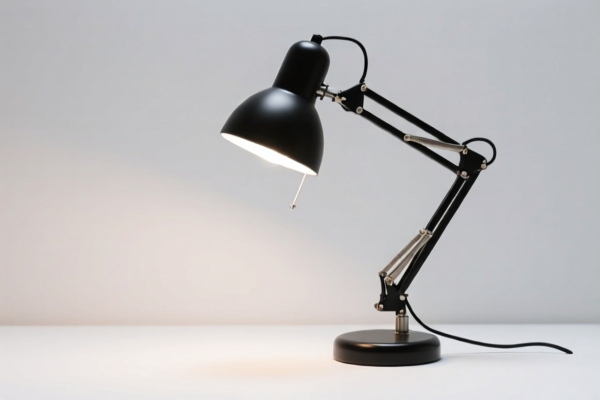
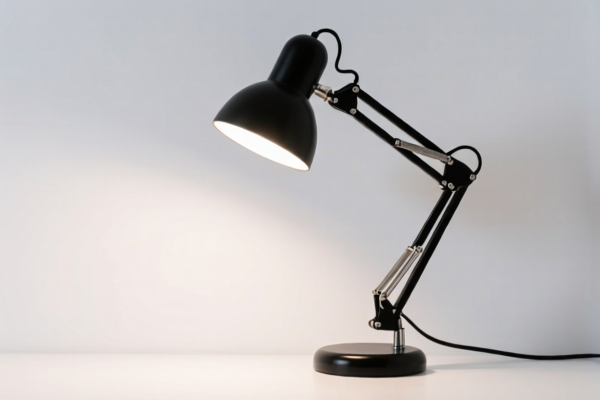
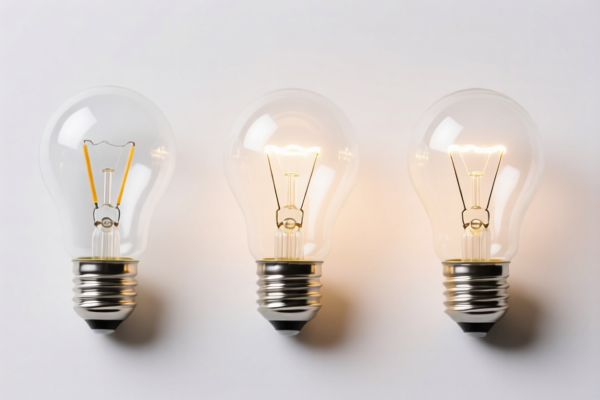
AI Analysis
📸 Macro Flash Lamp (微距闪光灯) – The Ultimate Guide to HS Code Classification & US Customs Clearance
🌐 HS Code Reference & Customs Clearance Guide | 2026 Latest Tariff Analysis | Professional Customs Strategy
📌 One Product, Multiple Classifications: Why Does the HS Code Change the Tax Rate?
A "Macro Flash Lamp" might seem simple, but in the eyes of US Customs and Border Protection (CBP), its classification depends entirely on technical structure, light source type, and intended function. Misclassification can lead to tax differences ranging from 10% to over 40%.
Below is a detailed breakdown of the 5 most common HS Codes found in the data, explaining why each applies and the exact tax implications.
📦 二、HS Code 分类明细与税率详解 (Classification Details & Tax Breakdown)
✅ Applicable Country: United States (US)
✅ Origin: China (CN)
✅ Effective Date: Current rates include Section 301 & Section 232/IEEPA surcharges.
🎯 1. 8539.52.00.91 – LED Light Sources (General Illumination)
📝 Why this code?
This classification applies if the flash lamp is technically defined as a general-purpose LED light source or an electric lamp substitute. The summary states: "Belongs to light sources for illumination purposes, meeting the characteristics of LED or electric lamp categories."
If the device is marketed primarily as an illumination tool (e.g., for microscopy or general lighting) rather than a photographic capture tool, it falls here.
| Item | Content |
|---|---|
| Base Tariff | 2.0% |
| Section 301 (Trade War) | 0.0% |
| Section 122 / IEEPA Surcharge | 10.0% |
| Total Tax Rate | 12.0% |
| Calculation Base | CIF Value × 12% |
| De Minimis Eligibility | ❌ No (Section 301 goods are generally ineligible for de minimis exemption under current enforcement trends, or strictly monitored) |
| Legal Basis | HTSUS 8539.52.00.91 + Footnotes for China-origin surcharges |
⚠️ Key Insight:
This is often considered a "safer" classification if the product can be argued as a generic lighting component, but CBP may scrutinize if it’s strictly a photographic accessory.
🎯 2. 8539.51.00.00 – Electric Filament or Discharge Lamps
📝 Why this code?
This code applies if the flash lamp is classified as an electrical filament or discharge lamp device. The summary notes: "Belongs to electrical filament or discharge lamp category... meets the definition of LED and various lamp light sources."
This is a broader category for discharge-type lighting. If the flash unit uses a xenon tube (common in older or professional flashes) or specific discharge technology, this may apply.
| Item | Content |
|---|---|
| Base Tariff | 0.0% |
| Section 301 (Trade War) | 0.0% |
| Section 122 / IEEPA Surcharge | 10.0% |
| Total Tax Rate | 10.0% |
| Calculation Base | CIF Value × 10% |
| De Minimis Eligibility | ❌ No |
| Legal Basis | HTSUS 8539.51.00.00 + IEEPA surcharges |
💡 Best Scenario for Cost:
This is the lowest tax rate (10%) among the options. If your product is technically a discharge lamp (e.g., Xenon flash), argue for this classification to save 2-30% compared to photographic equipment codes.
🎯 3. 9006.61.00.60 – Other Photographic Flash Apparatus
📝 Why this code?
This is the standard photographic classification. The summary states: "Matches use (flash apparatus) and function, reasonably inferred under the 'Other' category."
If the product is marketed specifically for photography (macro photography), has sync connectors, or is part of a camera system, CBP will likely classify it here as "Photographic Apparatus."
| Item | Content |
|---|---|
| Base Tariff | 0.0% |
| Section 301 (Trade War) | 7.5% |
| Section 122 / IEEPA Surcharge | 10.0% |
| Total Tax Rate | 17.5% |
| Calculation Base | CIF Value × 17.5% |
| De Minimis Eligibility | ❌ No |
| Legal Basis | HTSUS 9006.61.00.60 + Section 301 Footnote + IEEPA |
⚠️ Risk Factor:
This is a high-risk classification because CBP actively checks if photographic accessories are being undervalued or misclassified to avoid Section 301 duties. The 7.5% Section 301 duty is significant.
🎯 4. 9006.61.00.40 – Electric Flash Devices
📝 Why this code?
Similar to #3, but more specific. The summary says: "Use is 'Flash Lamp', form is photographic flash device, matches material/tech features of 'Electric Discharge (Electronic) Flash Devices'."
This is for electronic flash units (modern LED or Xenon strobes) used in photography. It distinguishes itself from older mechanical flashes.
| Item | Content |
|---|---|
| Base Tariff | 0.0% |
| Section 301 (Trade War) | 7.5% |
| Section 122 / IEEPA Surcharge | 10.0% |
| Total Tax Rate | 17.5% |
| Calculation Base | CIF Value × 17.5% |
| De Minimis Eligibility | ❌ No |
| Legal Basis | HTSUS 9006.61.00.40 + Section 301 Footnote + IEEPA |
🔍 Comparison with #3:
Both9006.61.00.40and.60have the same 17.5% total rate. Choose the one that best matches the technical specification (Electronic vs. Other) in your product description.
🎯 5. 9405.61.60.00 – Sign Lighting / Flashing Plates
📝 Why this code?
⚠️ HIGH RISK CLASSIFICATION.
The summary states: "Flash plate, belongs to the form category of illuminated signs/nameplates, functional attribute consistent with lighting devices."
This code is for decorative or informational lighting, not photography. If you declare a macro flash lamp as a "sign" or "nameplate light," CBP will likely reject it for misdeclaration unless it is genuinely a decorative flashing sign.
| Item | Content |
|---|---|
| Base Tariff | 5.3% |
| Section 301 (Trade War) | 25.0% |
| Section 122 / IEEPA Surcharge | 10.0% |
| Total Tax Rate | 40.3% |
| Calculation Base | CIF Value × 40.3% |
| De Minimis Eligibility | ❌ No |
| Legal Basis | HTSUS 9405.61.60.00 + Section 301 + IEEPA |
🚨 Critical Warning:
Do NOT use this code for photographic flashes. The 40.3% tax rate is punitive and will trigger severe audits for misdeclaration. Use only for actual sign lighting.
🛠️ 四、清关实操建议 (Customs Clearance Strategy)
✅ 1. Material Preparation Checklist
| Document | Required? | Notes |
|---|---|---|
| Product Spec Sheet | ✅ Yes | Must clearly state: Light Source (LED/Xenon), Power, Intended Use (Photography vs. General Illumination). |
| Circuit Diagram | ✅ Yes | Crucial for distinguishing between 8539 (Light Sources) and 9006 (Photographic Apparatus). |
| Product Photos | ✅ Yes | Show connectors (e.g., PC sync, HDMI) to prove photographic use. |
| Commercial Invoice | ✅ Yes | Describe accurately. E.g., "Macro Photography Flash Unit, LED, Model XYZ." |
| Origin Certificate | ✅ Yes | If not China-origin, may avoid surcharges (but unlikely for this product type). |
✅ 2. Classification Strategy: How to Lower Taxes?
Scenario A: You want the LOWEST tax (10%)
👉 Argument: The product is a discharge lamp or general LED light source for scientific/microscopic illumination, not primarily for "photographic capture."
👉 Target HS Code: 8539.51.00.00 or 8539.52.00.91.
👉 Evidence: Provide specs showing it’s used for illumination (e.g., in microscopes, inspecting machinery) rather than taking photos.
Scenario B: You want the MOST ACCURATE classification (17.5%)
👉 Argument: The product is a photographic flash unit with standard camera sync capabilities.
👉 Target HS Code: 9006.61.00.40 or 9006.61.00.60.
👉 Evidence: Show user manuals for cameras, sync ports, and marketing materials targeting photographers.
Scenario C: You want to AVOID penalties
👉 DO NOT use 9405.61.60.00 unless it is a flashing sign. Misclassification here is seen as fraudulent intent due to the high duty rate.
✅ 3. Key Customs Advice
🔥 "Purpose Defines Code"
- If it takes photos →9006(17.5%)
- If it lights up objects for viewing →8539(10-12%)
- If it is a sign →9405(40.3%)📌 Pre-Ruling Recommendation:
Given the significant tax difference between 10% and 17.5%, and the risk of 40.3%, it is highly recommended to file an Advance Ruling (Form CBP 5540) with US Customs. Provide the circuit diagram and a clear statement of intended use to get a binding classification decision.
🌍 五、Global Market Comparison (2026)
| Country | Recommended HS Code | Total Tax Rate (China Origin) | Notes |
|---|---|---|---|
| 🇺🇸 USA | 8539.51.00.00 |
10% | Lowest legal option if discharge lamp. |
| 🇺🇸 USA | 9006.61.00.40 |
17.5% | Standard for photographic flashes. |
| 🇪🇺 EU | 9006.61 |
~0-6% | No Section 301 or IEEPA surcharges. |
| 🇨🇳 China | 9006.61 |
~10-20% | Import duty + VAT. |
| 🇬🇧 UK | 9006.61 |
~0-6% | Post-Brexit tariffs may vary. |
📌 Conclusion for US Importers:
The US market is the most challenging due to Section 301 and IEEPA surcharges.
- Savings Potential: By arguing for8539(Light Source) instead of9006(Photographic), you save 7.5%. On a $10,000 shipment, that’s $750 saved.
- Risk: If CBP disagrees, you owe the 17.5% plus penalties.
📌 六、常见错误 & 避坑指南 (Common Mistakes & Pitfalls)
❌ Mistake 1: Declaring a photographic flash as a "Sign Light" to avoid Section 301.
👉 Consequence: CBP detects misdeclaration. 40.3% tax + penalties + potential seizure.
❌ Mistake 2: Using 8539.52.00.91 (12%) without proof that it’s a general light source.
👉 Consequence: If CBP finds sync cables, they will reclassify to 9006 (17.5%) and demand back taxes.
❌ Mistake 3: Ignoring the IEEPA 10% Surcharge.
👉 Consequence: All these codes apply a 10% surcharge on China-origin goods. Failing to budget for this is a fatal error.
✅ Correct Approach:
"Macro Flash Unit, LED, 120V, for Scientific Microscopy Illumination, Model XYZ"
→ Aim for8539.52.00.91(12%) with strong technical documentation.
🎯 七、结语:Professional Classification Saves Money
🎯 Remember the Tax Hierarchy:
🔹 Cheapest Legal:
8539.51.00.00(10%) – Discharge Lamp
🔹 Middle Ground:8539.52.00.91(12%) – LED Light Source
🔹 Standard Photo:9006.61.xxxx(17.5%) – Photographic Flash
🔹 Punitive/Wrong:9405.61.60.00(40.3%) – Sign Light
📌 Action Item:
📞 Consult a Customs Broker: Provide your circuit diagram and user manual.
📝 File for Advance Ruling: Secure the 10% or 12% rate before shipping.
🚀 Avoid the 40.3% Trap: Never misclassify as a sign light.
✨ Professional Customs Clearance Starts with Precise Classification!
💼 Your Profit Margin Depends on the HS Code!
Customer Reviews
About HS Code Classification
The Harmonized System (HS) is an internationally standardized nomenclature developed by the World Customs Organization (WCO) to classify traded products. Over 200 countries use the HS system as the basis for customs tariffs, trade statistics, and import/export regulations.
Each HS code follows a hierarchical structure:
- Chapter (2 digits) — Broad category of goods (e.g., Chapter 84: Machinery and Mechanical Appliances)
- Heading (4 digits) — More specific grouping within the chapter
- Subheading (6 digits) — Internationally standardized breakdown, used by all WCO member countries
- National subdivisions (8-10 digits) — Country-specific extensions for further classification, such as US HTSUS 10-digit codes
Correct HS code classification is essential for smooth customs clearance, accurate duty payment, and compliance with trade regulations. Misclassification can lead to customs delays, overpayment of duties, or penalties.
When importing from CN to US, the applicable tariff rates may include:
- Most-Favored-Nation (MFN) rate — The standard duty rate applied to WTO members
- General rate — Applied to countries without trade agreements
- Trade remedy duties — Additional tariffs such as Section 301 (anti-dumping), Section 232 (national security), or countervailing duties
The information provided on this page is for reference purposes only. For official classification, please consult with your local customs authority or a licensed customs broker.