flat paper roll
CN → US| HS Code | Tariff Rate | Origin | Destination | Doc |
|---|---|---|---|---|
| 4810291025 | 35.0% | CN | US | Official Doc |
| 4810297025 | 35.0% | CN | US | Official Doc |
| 3919102055 | 40.8% | CN | US | Official Doc |
| 4821902000 | 35.0% | CN | US | Official Doc |
| 4811492100 | 35.0% | CN | US | Official Doc |
Product Images

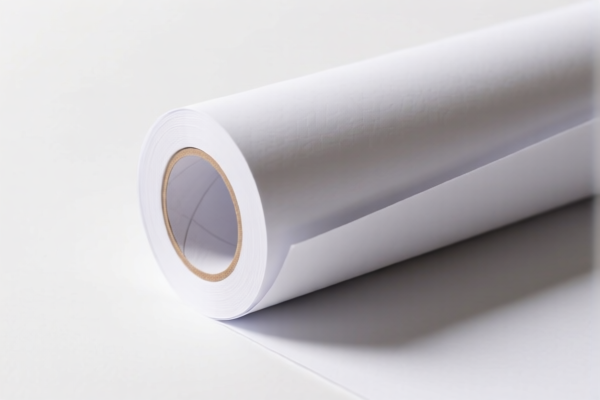
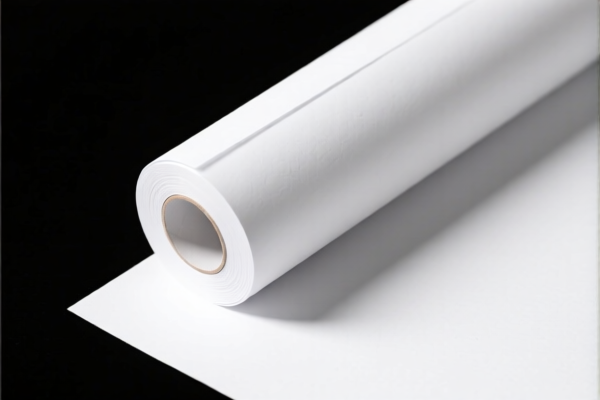
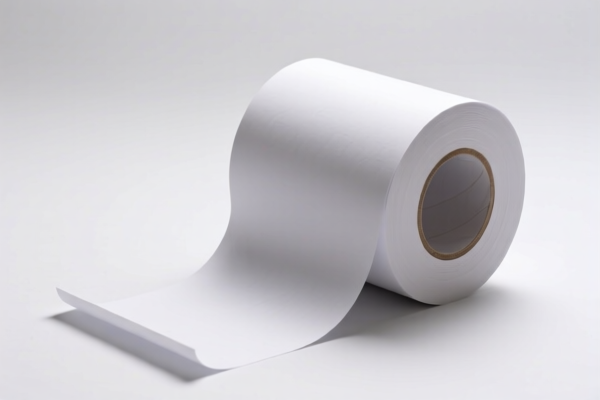
AI Analysis
📜 Flat Paper Roll (卷状纸张与标签制品)
🌐 HS Code Reference & Customs Clearance Guide | 2026 Latest Tariff Analysis | Professional Clearance Strategy
📌 I. Product Definition & Classification: What Exactly Is "Flat Paper Roll"?
In international trade, "Flat Paper Roll" is a broad term that covers various forms of paper products. To determine the correct HS Code and tariff rate, you must distinguish between the material composition (Paper vs. Plastic/Film) and the functional attribute (Writing/Printing vs. Self-adhesive Label).
Core Distinction Points: * Pure Paper (Non-adhesive): Used for writing, printing, or wrapping. Falls under Chapter 48 (Paper & Paperboard). * Self-Adhesive Labels (Paper-based): Paper or cardboard backing with adhesive. Falls under Chapter 48 (Specific Label Codes). * Self-Adhesive Labels (Plastic/Film-based): Plastic or synthetic film backing. Falls under Chapter 39 (Plastics).
⚠️ Critical Warning:
- Misclassifying plastic stickers as paper can lead to significant tariff discrepancies and customs delays. - "Roll" shape alone is not enough; the adhesive property and material dictate the code.
📦 II. HS Code Classification Matrix (Based on Provided Data)
| HS Code | Product Description | Material | Key Attribute | Total Tax Rate |
|---|---|---|---|---|
4810.29.10.25 |
Flat Paper Rolls, Writing/Printing Grade | Paper | Non-adhesive, for writing/printed paper | 35.0% |
4810.29.70.25 |
Flat Paper Rolls, Other/General Use | Paper | Non-adhesive, "Other" category fallback | 35.0% |
4821.90.20.00 |
Roll Adhesive Labels (Paper/Film Mix) | Paper/Film | Self-adhesive, "Other" label category | 35.0% |
4811.49.21.00 |
Roll Adhesive Labels (Paper/Cardboard) | Paper/Cardboard | Self-adhesive, coated paper backing | 35.0% |
3919.10.20.55 |
Roll Adhesive Stickers (Plastic) | Plastic | Self-adhesive, plastic/film material | 40.8% |
🔍 Key Insight:
- Paper-based items (Codes starting with48xx) generally have a 0% base duty but face high additional tariffs. - Plastic-based items (Code3919) have a 5.8% base duty and face the same additional tariffs, resulting in a higher total rate. - All listed HS Codes are subject to US Section 301 (25%) and Section 1221/IEEPA (10%) surcharges.
💰 III. 2026 Tariff Rate Breakdown (US Market, Chinese Origin)
✅ Applicable Country: United States (US)
✅ Country of Origin: China (CN)
✅ Effective Date: Current policies (Section 301 & IEEPA additions active)
🎯 1. Paper-Based Rolls & Labels (4810, 4811, 4821)
Examples: Writing paper rolls, printing paper rolls, paper-based adhesive labels.
| Item | Detail |
|---|---|
| Base Duty (MFN) | 0.0% |
| Section 301 Add-on | +25.0% (USITC Footnote 9903.88.01 / 301 List 4B) |
| IEEPA/Section 1221 Add-on | +10.0% (China-specific additional duty) |
| Total Effective Rate | 35.0% |
| De Minimis Exemption | ❌ Not Eligible (Value > $800 requires formal entry; small shipments still face scrutiny if misclassified) |
| Legal Basis Path | HTSUS:4810/4811/4821 → Section 301: 25% → IEEPA: 10% |
📌 Explanation:
- Although the base duty for many paper products is 0%, the 25% Section 301 tariff is strictly applied to Chinese-origin paper goods. - The additional 10% reflects recent trade measures (often referred to as "1221" or IEEPA-related surcharges in customs software). - Total: 35%. This is a hard cost that must be calculated into your CIF price.
🎯 2. Plastic-Based Roll Stickers (3919.10.20.55)
Examples: Vinyl stickers, plastic film labels, synthetic paper labels.
| Item | Detail |
|---|---|
| Base Duty (MFN) | 5.8% |
| Section 301 Add-on | +25.0% |
| IEEPA/Section 1221 Add-on | +10.0% |
| Total Effective Rate | 40.8% |
| De Minimis Exemption | ❌ Not Eligible |
| Legal Basis Path | HTSUS:3919.10.20.55 → Section 301: 25% → IEEPA: 10% |
📌 Explanation:
- Plastic-based adhesives are taxed differently because the base duty is not 0%. - Total: 40.8%. This is 5.8% higher than paper-based alternatives due to the base duty component. - Cost-Saving Tip: If the product can be manufactured with a paper backing instead of plastic, you can save 5.8% on the base duty layer (though the add-ons remain).
🛠️ IV. Customs Clearance Practical Advice (Pitfall Avoidance)
✅ 1. Documentation Checklist (Non-Negotiable)
| Document | Required? | Reason |
|---|---|---|
| Product Specification Sheet | ✔️ | Must clearly state Material (Paper vs. Plastic) and Adhesive Status (Self-adhesive vs. Non-adhesive). |
| Product Photos | ✔️ | Show the roll structure, core, and any labels on the outer packaging. |
| Commercial Invoice | ✔️ | Description must match HS Code definition (e.g., "Paper Roll for Printing" vs. "Plastic Adhesive Sticker"). |
| Customs Label Declaration | ✔️ | Explicitly declare: "Self-Adhesive" if applicable. Do not just write "Paper Roll." |
| Certificate of Origin (CO) | ✔️ | Required for determining Section 301 applicability. |
✅ 2. Classification Strategy & Tips
🔥 "Material Defines Tax, Adhesion Defines Chapter!"
| Scenario | Correct Classification | Why? |
|---|---|---|
| Roll of A4 Paper (Unprinted/Printed) | 4810.29.10.25 |
Pure paper, non-adhesive. |
| Roll of Stickers on Paper Backing | 4811.49.21.00 |
Paper backing + adhesive = Chapter 48. |
| Roll of Stickers on Plastic/Vinyl Backing | 3919.10.20.55 |
Plastic material = Chapter 39. |
| Mixed/Unknown Material | 4821.90.20.00 (Paper Fallback) |
If you can prove it's paper-based, use 4821. If plastic, use 3919. Do not guess; customs will assess based on sample. |
✅ 3. Common Mistakes & Consequences
❌ Mistake 1: Labeling plastic stickers as "Paper Rolls" to get 35% instead of 40.8%.
👉 Consequence: Customs audit will reveal plastic material. Penalties, back-tariffs, and potential seizure.
❌ Mistake 2: Declaring self-adhesive labels as non-adhesive paper (4810).
👉 Consequence: Misclassification. The item is technically a label (4811/4821). While the rate might be similar (35%), it triggers a red flag for incorrect product description.
❌ Mistake 3: Ignoring the "Roll" vs. "Cut" distinction.
👉 Consequence: Some paper products have different rates if cut into sheets. Ensure your declaration matches the physical state (Roll vs. Sheet).
🌍 V. Global Market Comparison (2026 Outlook)
| Market | Recommended HS Code | Total Est. Tax (China Origin) | Notes |
|---|---|---|---|
| 🇺🇸 USA | 4810.29.10.25 / 3919.10.20.55 |
35.0% / 40.8% | High Section 301 + IEEPA tariffs. |
| 🇨🇳 China (Import) | 4810.29.10 / 3919.10 |
0% - 5.8% | Base duty only, no add-ons. |
| 🇪🇺 EU | 4810.29 / 3919.10 |
0% - 6.5% | No Section 301. Base duty applies. |
| 🇬🇧 UK | 4810.29 / 3919.10 |
0% - 6.5% | Post-Brexit tariffs, no US add-ons. |
📌 Conclusion:
- The US market is significantly more expensive for paper/plastic rolls from China due to layered tariffs. - Strategy: If possible, source plastic rolls from non-China countries (e.g., Vietnam, Malaysia) to avoid Section 301, potentially reducing costs by ~25%.
📌 VI. Summary & Action Plan
- Identify Material: Is it Paper or Plastic?
- Paper → Go to
48xxseries. - Plastic → Go to
39xxseries.
- Paper → Go to
- Identify Adhesion: Is it Self-Adhesive?
- Yes →
4811(Paper backing) or3919(Plastic). - No →
4810(General paper).
- Yes →
- Calculate Cost:
- Paper Items: 35% Total Duty.
- Plastic Items: 40.8% Total Duty.
- Documentation: Ensure your invoice explicitly states "Material: [Paper/Plastic]" and "Adhesive: [Yes/No]".
💡 Pro Tip: For "Flat Paper Roll" inquiries, always provide photos to customs brokers. Visual confirmation prevents misclassification of adhesive vs. non-adhesive products, which is the most common error in Chapter 48/39.
✨ Precise Classification Saves Money!
💼 35% vs. 40.8% might seem small, but on large volumes, it’s significant savings!
Customer Reviews
About HS Code Classification
The Harmonized System (HS) is an internationally standardized nomenclature developed by the World Customs Organization (WCO) to classify traded products. Over 200 countries use the HS system as the basis for customs tariffs, trade statistics, and import/export regulations.
Each HS code follows a hierarchical structure:
- Chapter (2 digits) — Broad category of goods (e.g., Chapter 84: Machinery and Mechanical Appliances)
- Heading (4 digits) — More specific grouping within the chapter
- Subheading (6 digits) — Internationally standardized breakdown, used by all WCO member countries
- National subdivisions (8-10 digits) — Country-specific extensions for further classification, such as US HTSUS 10-digit codes
Correct HS code classification is essential for smooth customs clearance, accurate duty payment, and compliance with trade regulations. Misclassification can lead to customs delays, overpayment of duties, or penalties.
When importing from CN to US, the applicable tariff rates may include:
- Most-Favored-Nation (MFN) rate — The standard duty rate applied to WTO members
- General rate — Applied to countries without trade agreements
- Trade remedy duties — Additional tariffs such as Section 301 (anti-dumping), Section 232 (national security), or countervailing duties
The information provided on this page is for reference purposes only. For official classification, please consult with your local customs authority or a licensed customs broker.