flatware set
CN → US| HS Code | Tariff Rate | Origin | Destination | Doc |
|---|---|---|---|---|
| 8215200000 | 0.0% | CN | US | Official Doc |
| 6911103710 | 25.5% | CN | US | Official Doc |
| 4419901100 | 15.3% | CN | US | Official Doc |
| 4419909100 | 20.7% | CN | US | Official Doc |
| 8215100000 | 0.0% | CN | US | Official Doc |
Product Images
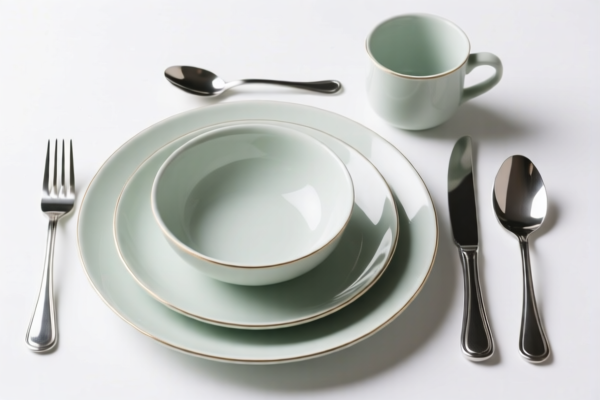
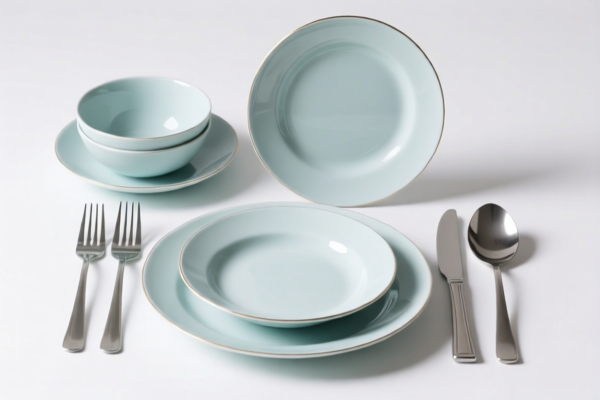
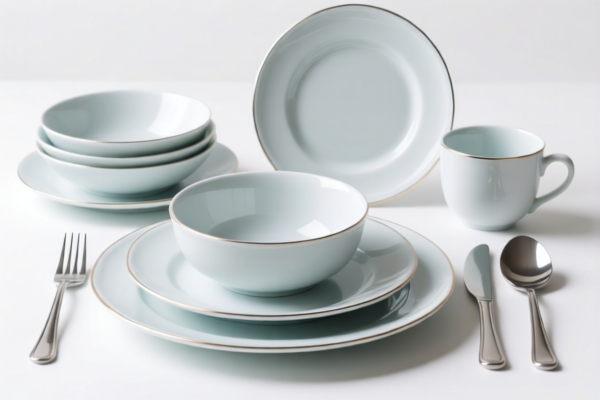
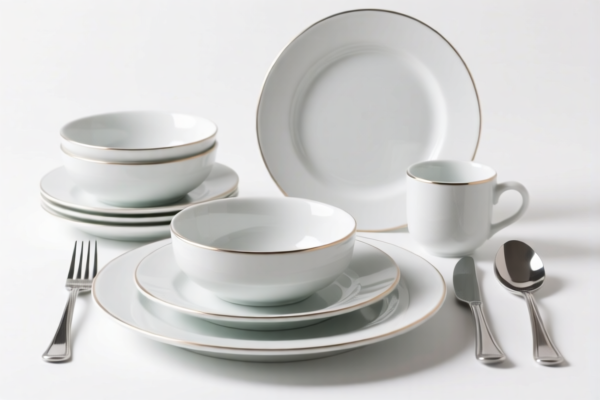
AI Analysis
🍴 Flatware Set (Cutlery Set)
🌐 HS Code Reference & Customs Clearance Guide | 2026 Latest Tariff Analysis | Professional Customs Strategy
📌 I. Product Definition & Classification: Do You Really Understand "Flatware Set"?
A Flatware Set, commonly known as cutlery or place settings, is an essential item in household and hospitality goods. It typically includes forks, knives, and spoons. In international trade, classification depends heavily on material and whether it constitutes a "set".
Key Classification Logic:
- Metal/Low-Metal (Non-Precious): Most common (Stainless Steel, Silver-Plated). Usually falls under Chapter 82 or 83.
- Ceramic/Chinaware: Often confused with flatware, but technically distinct. If the set includes ceramic plates/bowls alongside metal utensils, it may still be classified as flatware if metal is predominant, or as ceramic tableware if ceramic is dominant. However, pure ceramic flatware (rare) or ceramic sets fall under Chapter 69.
- Wooden: Falls under Chapter 44.
- Precious Metal (Silver/Gold): Falls under Chapter 71 (not listed in the provided data, but worth noting for completeness).
⚠️ Critical Distinction:
- If the set is a composite set (e.g., forks + knives + spoons packaged together), it is classified as a Set.
- The Material determines the Chapter:
- Metal/Low-Metal → Chapter 82 (Tools/Utensils of base metal)
- Ceramic → Chapter 69 (Ceramic Tableware)
- Wood → Chapter 44 (Wooden Tableware)
📦 II. HS Code Classification Details (Based on Provided Data)
| HS Code | Product Description | Material | Applicability |
|---|---|---|---|
8215.20.00.00 |
Flatware Sets, of Base Metal | Base Metal (e.g., Stainless Steel) | Most common stainless steel sets. |
6911.10.37.10 |
Tableware, Kitchenware, of Porcelain or Chinaware | Ceramic/Porcelain | Ceramic plates, bowls, or sets where ceramic is the main component. |
4419.90.11.00 |
Wooden Tableware, Kitchenware | Wood | Wooden cutlery sets (e.g., bamboo, maple). |
4419.90.91.00 |
Other Wooden Tableware | Wood (Other) | Wooden items not specifically listed as common wood types. |
8215.10.00.00 |
Flatware Sets, of Base Metal (General) | Base Metal | General base metal flatware sets (often used as a fallback if specific type not defined). |
🔍 Key Note:
-8215.20.00.00and8215.10.00.00are both for Base Metal.8215.20is more specific for sets, while8215.10may be a broader or fallback category depending on specific national interpretations.
-6911.10.37.10is for Ceramic. If your "flatware set" includes ceramic plates, this may apply.
-4419.90series is for Wood.
💰 III. 2026 Latest Tariff Rate Breakdown (Including Surtaxes & Policy Add-ons)
✅ Applicable Country: USA (US)
✅ Origin: China (CN)
✅ Effective Date: Post-2025 Tariffs (Section 301 & IEEPA)
🎯 1. 8215.20.00.00 —— Flatware Sets, of Base Metal (Stainless Steel)
| Item | Content |
|---|---|
| Base Tariff | Variable (T) – See Note Below |
| Section 301 Surcharge | +25.0% |
| Section 122 Tariff (IEEPA) | +10.0% |
| Total Tariff Rate | T + 35.0% |
| Tax Calculation | (CIF Value × Base Rate T) + (CIF Value × 35%) |
| De Minimis Exemption | ❌ Not Applicable (High tariff items are excluded) |
| Legal Basis | USITC HTSUS 8215.20.00.00 + Section 301 Footnote + IEEPA Proclamation 9983 |
📌 Explanation:
- Base Rate T: The base duty for flatware sets of base metal is often 0% or very low (ad valorem), but it varies. Assume T=0% for calculation unless specified otherwise by USITC.
- Total Impact: With 25% (Section 301) + 10% (IEEPA 122), the additional duty is 35% on top of the base rate.
- High Cost Alert: Even if the base rate is 0%, the 35% surcharge is significant.
🎯 2. 6911.10.37.10 —— Ceramic Tableware (Porcelain/Chinaware)
| Item | Content |
|---|---|
| Base Tariff | 8.0% |
| Section 301 Surcharge | +7.5% |
| Section 122 Tariff (IEEPA) | +10.0% |
| Total Tariff Rate | 25.5% |
| Tax Calculation | CIF Value × 25.5% |
| De Minimis Exemption | ❌ Not Applicable |
| Legal Basis | USITC HTSUS 6911.10.37.10 + Section 301 Footnote + IEEPA Proclamation 9983 |
📌 Explanation:
- Ceramic tableware has a higher base duty (8%) compared to metal flatware.
- The surcharges are lower for Section 301 (7.5% vs 25%), likely due to different product categories in the tariff war scope.
- Total 25.5% is still substantial but 10% lower than the base metal flatware surcharge total.
🎯 3. 4419.90.11.00 —— Wooden Tableware (Common Wood)
| Item | Content |
|---|---|
| Base Tariff | 5.3% |
| Section 301 Surcharge | +0.0% |
| Section 122 Tariff (IEEPA) | +10.0% |
| Total Tariff Rate | 15.3% |
| Tax Calculation | CIF Value × 15.3% |
| De Minimis Exemption | ❌ Not Applicable |
| Legal Basis | USITC HTSUS 4419.90.11.00 + IEEPA Proclamation 9983 |
📌 Explanation:
- Lowest Total Rate among the options.
- No Section 301 Surcharge (0%), which is a significant advantage.
- Only 10% IEEPA surcharge applies.
- Base Duty: 5.3%.
🎯 4. 4419.90.91.00 —— Other Wooden Tableware
| Item | Content |
|---|---|
| Base Tariff | 3.2% |
| Section 301 Surcharge | +7.5% |
| Section 122 Tariff (IEEPA) | +10.0% |
| Total Tariff Rate | 20.7% |
| Tax Calculation | CIF Value × 20.7% |
| De Minimis Exemption | ❌ Not Applicable |
| Legal Basis | USITC HTSUS 4419.90.91.00 + Section 301 Footnote + IEEPA Proclamation 9983 |
📌 Explanation:
- Higher base rate than4419.90.11.00but lower total rate than ceramic and metal flatware.
- Section 301 surcharge (7.5%) applies, unlike the other wooden category.
🎯 5. 8215.10.00.00 —— Flatware Sets, of Base Metal (General/Fallback)
| Item | Content |
|---|---|
| Base Tariff | Variable (T) |
| Section 301 Surcharge | +7.5% |
| Section 122 Tariff (IEEPA) | +10.0% |
| Total Tariff Rate | T + 17.5% |
| Tax Calculation | (CIF Value × Base Rate T) + (CIF Value × 17.5%) |
| De Minimis Exemption | ❌ Not Applicable |
| Legal Basis | USITC HTSUS 8215.10.00.00 + Section 301 Footnote + IEEPA Proclamation 9983 |
📌 Explanation:
- This code has a lower Section 301 surcharge (7.5%) compared to8215.20.00.00(25%).
- If the base rate T is similar, this code results in a much lower total tax (17.5% vs 35%).
- Caution: Ensure the product truly fits this general category. Misclassification can lead to penalties.
🛠️ IV. Customs Clearance Practical Advice (Avoiding Pitfalls)
✅ 1. Documentation Checklist (Essential)
| Document | Required? | Notes |
|---|---|---|
| ✅ Commercial Invoice | ✔️ | Must specify "Flatware Set" and material (e.g., "Stainless Steel Flatware Set, 20-Piece"). |
| ✅ Packing List | ✔️ | Detail contents: "10 Forks, 10 Knives, 10 Spoons". |
| ✅ Product Description | ✔️ | Clearly state material: "18/10 Stainless Steel" or "Porcelain". |
| ✅ Photos | ✔️ | Show the entire set and individual pieces. |
| ✅ HS Code Justification | ✔️ | Explain why the selected HS Code is correct (e.g., "Set of base metal utensils"). |
| ✅ Certificate of Origin | ✔️ | Required for tariff calculation. |
✅ 2. Declaration Strategy (Key Tips)
| Scenario | Correct Declaration | Wrong Declaration |
|---|---|---|
| Stainless Steel Set | 8215.20.00.00 (if specific) or 8215.10.00.00 (if general) |
Declaring as 6911 (Ceramic) → Penalty! |
| Ceramic Set with Plates | 6911.10.37.10 |
Declaring as 8215 (Metal) → Penalty! |
| Wooden Set | 4419.90.11.00 |
Declaring as 8215 → Penalty! |
| Mixed Material Set | Classify by Chief Value or Material per HTSUS General Rules of Interpretation (GRI) | Splitting into multiple HS Codes → Complexity & Risk |
🔥 Golden Rule:
"Material Defines Chapter, Set Defines Specific Code!"
- If it's metal → Chapter 82.
- If it's ceramic → Chapter 69.
- If it's wood → Chapter 44.
✅ 3. Special Cases
| Scenario | Advice |
|---|---|
| Silver-Plated Flatware | May fall under Chapter 71 (Precious Metal) or Chapter 82 (Base Metal with Plating). Check USITC notes. |
| Electronic Flatware? | Not applicable. Flatware is non-electronic. |
| OEM Custom Sets | Provide design specs to prove it's a "set" and not loose items. |
| Gift Sets | If packaged as a gift, ensure the invoice value reflects the set price, not individual item prices. |
🌍 V. Global Customs Comparison (2026)
| Country | Recommended HS Code | Base Duty | Surcharge (China) | Total Rate (Approx.) | Notes |
|---|---|---|---|---|---|
| 🇺🇸 USA | 8215.20.00.00 |
T (0-10%) | +35% (301+122) | T + 35% | High surcharges. |
| 🇨🇳 China | 8215.20.00.00 |
0-10% | 0% | 0-10% | No US surcharges. |
| 🇪🇺 EU | 8215.20.00.00 |
0-6.5% | 0% | 0-6.5% | No Section 301/122. |
| 🇬🇧 UK | 8215.20.00.00 |
0-6.5% | 0% | 0-6.5% | Post-Brexit, no US tariffs. |
| 🇯🇵 Japan | 8215.20.00.00 |
0-6% | 0% | 0-6% | Low base duty. |
📌 Conclusion:
- USA is the most expensive market due to 35% total surcharges on base metal flatware.
- Wooden Flatware (4419.90.11.00) is the most cost-effective for USA import (15.3% total).
- Ceramic (6911.10.37.10) has a moderate total rate (25.5%).
📌 VI. Common Mistakes & Pitfalls (Lessons Learned)
❌ Mistake 1: Classifying Stainless Steel flatware as Ceramic (6911)
👉 Consequence: Customs rejects, fines, and returns goods.
❌ Mistake 2: Ignoring Section 122 (IEEPA) 10% Surcharge
👉 Consequence: Underpayment of duties, leading to back taxes + interest.
❌ Mistake 3: Declaring Mixed Sets without proper justification
👉 Consequence: Customs may reclassify based on chief value, leading to higher duties.
❌ Mistake 4: Not specifying Material in the invoice
👉 Consequence: Customs cannot determine the correct HS Code → Delay + Inspection.
✅ Best Practice:
"Stainless Steel Flatware Set, 18-Piece, 18/10 Grade, HS 8215.20.00.00"
🎯 VII. Conclusion: Professional Classification Saves Money!
🎯 Remember the Rules:
🔹 Base Metal Flatware →
8215.20.00.00(Total: T+35%)
🔹 Ceramic Tableware →6911.10.37.10(Total: 25.5%)
🔹 Wooden Tableware →4419.90.11.00(Total: 15.3%)
🔹 General Base Metal →8215.10.00.00(Total: T+17.5%)📌 Tip:
- If possible, consider Wooden Flatware for USA import to save on tariffs (15.3% vs 35%).
- Always verify the Base Rate (T) with the latest USITC Tariff Schedule.
📣 Immediate Action:
📞 Consult a Customs Broker + Provide Product Photos + Pre-Ruling Application
🚀 Clear Customs Smoothly, Reduce Costs, Maximize Profits!
✨ Professional Classification Starts with Precision!
💼 Every Dollar Saved is a Dollar Earned!
Customer Reviews
About HS Code Classification
The Harmonized System (HS) is an internationally standardized nomenclature developed by the World Customs Organization (WCO) to classify traded products. Over 200 countries use the HS system as the basis for customs tariffs, trade statistics, and import/export regulations.
Each HS code follows a hierarchical structure:
- Chapter (2 digits) — Broad category of goods (e.g., Chapter 84: Machinery and Mechanical Appliances)
- Heading (4 digits) — More specific grouping within the chapter
- Subheading (6 digits) — Internationally standardized breakdown, used by all WCO member countries
- National subdivisions (8-10 digits) — Country-specific extensions for further classification, such as US HTSUS 10-digit codes
Correct HS code classification is essential for smooth customs clearance, accurate duty payment, and compliance with trade regulations. Misclassification can lead to customs delays, overpayment of duties, or penalties.
When importing from CN to US, the applicable tariff rates may include:
- Most-Favored-Nation (MFN) rate — The standard duty rate applied to WTO members
- General rate — Applied to countries without trade agreements
- Trade remedy duties — Additional tariffs such as Section 301 (anti-dumping), Section 232 (national security), or countervailing duties
The information provided on this page is for reference purposes only. For official classification, please consult with your local customs authority or a licensed customs broker.