flexible plastic foil
CN → US| HS Code | Tariff Rate | Origin | Destination | Doc |
|---|---|---|---|---|
| 3920992000 | 39.2% | CN | US | Official Doc |
| 3920591000 | 41.0% | CN | US | Official Doc |
| 3919905060 | 40.8% | CN | US | Official Doc |
| 3919905040 | 40.8% | CN | US | Official Doc |
| 4821904000 | 35.0% | CN | US | Official Doc |
Product Images
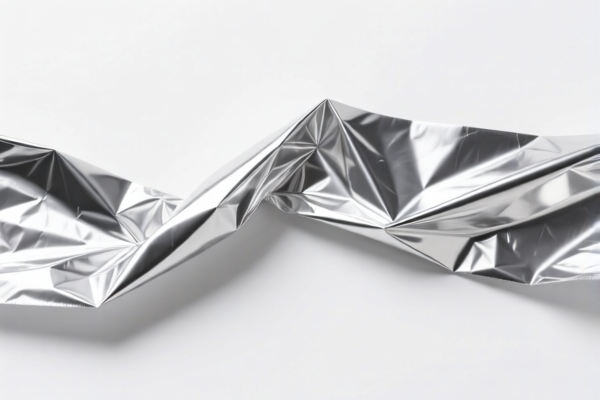
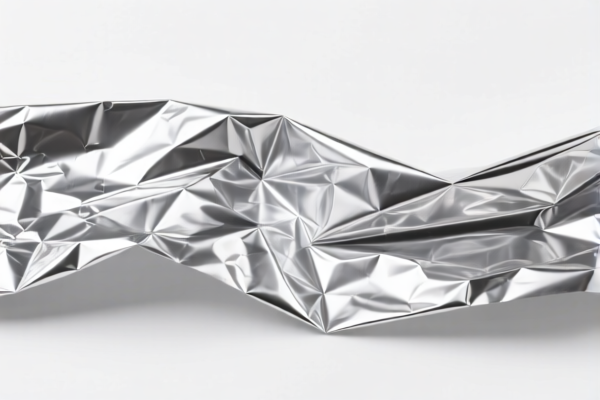


AI Analysis
🖌️ Flexible Plastic Foil with UV Protection (柔性塑料防紫外线膜)
🌐 HS Code Reference & Customs Clearance Guide | 2026 Latest Tariff Analysis | Professional Entry Strategy
📌 1. Product Definition & Classification: What Exactly is "Flexible Plastic Foil"?
Flexible Plastic Foil with UV Protection refers to thin, pliable sheets made primarily of polymer materials (such as PET, PE, or PP) designed to block ultraviolet rays. In international trade, the classification depends heavily on its form factor (roll vs. sheet), adhesive properties (self-adhesive vs. non-adhesive), and specific physical structure (foam, reinforced, etc.).
⚠️ Key Distinction Points:
- Self-Adhesive Films (sticky back): Typically classified under Chapter 3919.
- Non-Adhesive Rolls/Foils: Typically classified under Chapter 3920.
- Labels vs. Raw Material: If pre-printed or cut specifically for labeling purposes, it may fall under Chapter 4821.
- UV Function: The UV protection feature generally does not change the base HS code unless it transforms the product into a specific specialized article (which is rare for general foil). It is usually considered a functional characteristic of the plastic material.
📦 2. HS Code Classification Details (2026 Latest Tariff Authority Mapping)
The data provided highlights five potential HS codes, ranging from non-adhesive foils to adhesive films and labels. Below is the detailed breakdown based on the provided JSON data.
| HS Code | Product Description & Logic | Application Scenario | Key Classification Feature |
|---|---|---|---|
3920.99.20.00 |
Non-Adhesive Flexible Plastic Foil | General UV protective film, window tinting film base, industrial covering | Non-cellular plastic, flexible film shape, non-adhesive |
3920.59.10.00 |
Plastic Plates, Sheets, Film (Non-Foam/Unreinforced) | Specific UV film falling under "Other plastics" (e.g., specific polymer type like PVC/PE not listed elsewhere) | Non-foam, non-reinforced, flexible form |
3919.90.50.60 |
Self-Adhesive Plastic Foil (Other) | Sticky UV protection film, removable window tints, decorative films | Self-adhesive, flat shape, other plastic materials |
3919.90.50.40 |
Plastic Films of Flat Shape (Other) | Alternative self-adhesive classification for flat plastic shapes | Flat shape, self-adhesive, specific plastic type |
4821.90.40.00 |
Polyester Film Labels | Pre-cut or printed UV foil used specifically as labels or tags | Used as labels, polyester film material |
🔍 Critical Note:
- 3919 vs. 3920: The primary divide is adhesive. If the foil has an adhesive backing, it goes to 3919. If it is a raw, non-adhesive roll, it goes to 3920.
- 3920.99.20 vs. 3920.59.10: This depends on the specific polymer type (e.g., Polyethylene, Polypropylene, etc.). The provided data shows two options for non-adhesive films. You must verify the specific plastic resin composition to choose between these two.
- 4821.90.40.00: This is a trap. Only use this if the foil is manufactured and sold specifically as a "Label" (e.g., with barcodes, addresses, or specific branding for attachment). If it is a raw roll of UV film for construction or packaging, do not use this code. It carries a lower tariff but a higher risk of misclassification if the primary function is protection, not labeling.
💰 3. 2026 Latest Tariff Rate Breakdown (Detailed Tax Clauses)
✅ Applicable Country: United States (US)
✅ Origin: China (CN)
✅ Effective Date: November 10, 2025 (and subsequent imports)
All items below are subject to Section 301 (25%), Section 122 (10%), and base tariffs.
🎯 1. 3920.99.20.00 – Non-Adhesive Flexible Plastic Foil
| Item | Content |
|---|---|
| Base Duty Rate | 4.2% (Ad Valorem) |
| Section 301 Duty | +25.0% (China-origin specific) |
| Section 122 Duty | +10.0% (Specific to certain plastic articles) |
| Total Effective Rate | 39.2% |
| Tax Calculation | CIF Value × 39.2% |
| De Minimis Exemption | ❌ Not Eligible (Deny De Minimis) |
| Legal Path | USITC:3920.99.20.00 → FTUS:3920.99.20.00 → FOOTNOTE:3920.99.20.00 |
📌 Explanation:
- The 4.2% is the standard MFN (Most Favored Nation) base duty for this specific subheading.
- The +25% is the standard Section 301 tariff on Chinese plastic goods.
- The +10% is the Section 122 tariff, often applied to specific plastic materials or articles deemed sensitive.
- Total: 39.2%. This is a high-cost entry for non-adhesive films.
🎯 2. 3920.59.10.00 – Other Plastic Plates, Sheets, Film (Non-Foam)
| Item | Content |
|---|---|
| Base Duty Rate | 6.0% (Ad Valorem) |
| Section 301 Duty | +25.0% (China-origin specific) |
| Section 122 Duty | +10.0% (Specific to certain plastic articles) |
| Total Effective Rate | 41.0% |
| Tax Calculation | CIF Value × 41.0% |
| De Minimis Exemption | ❌ Not Eligible (Deny De Minimis) |
| Legal Path | USITC:3920.59.10.00 → FTUS:3920.59.10.00 → FOOTNOTE:3920.59.10.00 |
📌 Explanation:
- This code has a higher base rate (6.0%) than3920.99.20.00.
- Total: 41.0%.
- Strategy: If your product fits3920.99.20.00, prefer it over3920.59.10.00to save 1.8% in duty. Verify if your plastic resin matches the description of3920.59(usually "Other plastics").
🎯 3. 3919.90.50.60 & 🎯 4. 3919.90.50.40 – Self-Adhesive Plastic Foil
| Item | Content |
|---|---|
| Base Duty Rate | 5.8% (Ad Valorem) |
| Section 301 Duty | +25.0% (China-origin specific) |
| Section 122 Duty | +10.0% (Specific to certain plastic articles) |
| Total Effective Rate | 40.8% |
| Tax Calculation | CIF Value × 40.8% |
| De Minimis Exemption | ❌ Not Eligible (Deny De Minimis) |
| Legal Path | USITC:3919.90.50.XX → FTUS:3919.90.50.XX → FOOTNOTE:3919.90.50.XX |
📌 Explanation:
- Both3919.90.50.40and3919.90.50.60share the same base rate of 5.8%.
- Total: 40.8%.
- Comparison: This is slightly cheaper than3920.59.10.00(41.0%) but more expensive than3920.99.20.00(39.2%).
- Crucial: You can only use these if the foil is self-adhesive. If you misdeclare non-adhesive film as self-adhesive, you risk penalties.
🎯 5. 4821.90.40.00 – Polyester Film Labels
| Item | Content |
|---|---|
| Base Duty Rate | 0.0% (Ad Valorem) |
| Section 301 Duty | +25.0% (China-origin specific) |
| Section 122 Duty | +10.0% (Specific to certain plastic articles) |
| Total Effective Rate | 35.0% |
| Tax Calculation | CIF Value × 35.0% |
| De Minimis Exemption | ❌ Not Eligible (Deny De Minimis) |
| Legal Path | USITC:4821.90.40.00 → FTUS:4821.90.40.00 → FOOTNOTE:4821.90.40.00 |
📌 Explanation:
- This code has the lowest total tax rate at 35.0% due to a 0% base duty.
- Warning: This is only applicable if the product is explicitly a label.
- Risk: If you import a roll of UV film and declare it as "Labels" (4821.90.40.00), US Customs may reject it because a roll of film is not a "label" until cut and printed for specific attachment.
- Strategy: Use this ONLY if you are importing pre-cut, printed, self-adhesive labels made of polyester film. Do not use for raw UV film rolls.
🛠️ 4. Customs Clearance Practical Advice (Battle-Tested Pitfall Avoidance)
✅ 1. Preparation Checklist (All Documents Required)
| Document | Must Provide? | Description |
|---|---|---|
| ✅ Product Specification Sheet | ✔️ | Details material (PET/PE/PP), thickness, UV blocking percentage, adhesive type (if any). |
| ✅ Product Photos | ✔️ | Show the item in roll form or sheet form, clearly displaying no adhesive (if claiming 3920) or adhesive backing (if claiming 3919). |
| ✅ Commercial Invoice | ✔️ | Must clearly state "Flexible Plastic Foil with UV Protection" and not use vague terms like "Plastic Sheet" without further details. |
| ✅ Packing List | ✔️ | Specify gross/net weight and dimensions. |
| ✅ Certification of Origin (CO) | ✔️ | Essential for proving China origin to apply correct Section 301 rates. |
| ✅ HS Code Pre-Ruling Application | ⭐ Recommended | Given the close rates (39.2% vs 40.8% vs 35.0%), a pre-ruling can prevent future disputes. |
✅ 2. Declaration Strategy (Key Mantra)
🔥 "Adhesive Goes to 3919, Non-Adhesive to 3920, Labels Only to 4821!"
| Scenario | Correct HS Code | Incorrect Declaration | Consequence |
|---|---|---|---|
| Raw UV Film Roll (No Stick) | 3920.99.20.00 (Best Rate) |
3919.90.50.60 |
Misclassification risk; potential penalty. |
| UV Film Roll with Adhesive | 3919.90.50.60 |
3920.99.20.00 |
Denied entry or re-classification + fine. |
| Pre-Cut, Printed UV Labels | 4821.90.40.00 (Lowest Rate) |
3919.90.50.60 |
Risk: If not strictly "labels", Customs may force 3919 and back-charge duty difference. |
| Generic "Plastic Plate" | 3920.59.10.00 |
3920.99.20.00 |
Slightly higher tax (41% vs 39.2%). |
✅ 3. Special Cases & Handling
| Situation | Handling Advice |
|---|---|
| OEM Customized Film | Provide the design file or specification showing UV coating process. |
| Mixed Shipment (Adhesive + Non-Adhesive) | Split the declaration! Do not mix. Declare adhesive items under 3919 and non-adhesive under 3920. |
| "UV Protection" Claim | Do not rely on "UV" to change the HS code. It is a functional attribute. The base material (plastic) dictates the code. |
| Polyester vs. Polyethylene | If your film is PET (Polyester), check if 3920.59.10.00 applies to PET. If not, 3920.99.20.00 is the safer "Other" catch-all. |
🌍 5. Global Market Comparison (2026 Latest)
| Country/Region | Recommended HS Code | Tariff (China Origin) | Certification Requirements | Notes |
|---|---|---|---|---|
| 🇺🇸 USA | 3920.99.20.00 |
39.2% (Best Non-Adhesive) | None specific for foil | High total tax due to Sec 301 + 122 |
| 🇪🇺 EU | 3920.39.99 (approx) |
0% (Standard MFN) | REACH Compliance | No Section 301/122 equivalents |
| 🇨🇳 China | 3920.99.20.00 |
4.2% | None | Low import duty for domestic processing |
| 🇬🇧 UK | 3920.99.99 |
0% (Post-Brexit) | UKCA Mark (if applicable) | No US-style punitive tariffs |
📌 Conclusion:
- The USA is the most expensive market due to layered punitive tariffs (301 + 122).
- Optimization: If possible, consider transshipment or assembly in a third country (e.g., Vietnam, Mexico) to mitigate Section 301 tariffs, but ensure substantial transformation occurs.
- Direct Import: Only import from China if your margin can absorb ~40% duty.
📌 6. Common Errors & Pitfalls (Lessons Learned)
❌ Error 1: Declaring Non-Adhesive Film as Labels (4821.90.40.00) to save tax.
👉 Consequence: Customs sees a roll of film, rejects 4821, re-classifies to 3920, and charges 39.2% instead of 35.0%. Plus, potential fraud penalties.
❌ Error 2: Confusing Adhesive vs. Non-Adhesive.
👉 Consequence: If you declare 3920 (Non-Adhesive) for a sticky film, Customs will seize it or re-classify to 3919, potentially leading to delays and storage fees.
❌ Error 3: Ignoring Section 122.
👉 Consequence: Many importers only account for the 25% Sec 301 tariff, forgetting the additional 10% Sec 122 tariff on specific plastic articles. This leads to a 10% unexpected cost at clearance.
❌ Error 4: Using vague descriptions like "Plastic Sheet".
👉 Consequence: Customs may assign a higher default duty rate or request extensive additional documentation, delaying clearance by weeks.
✅ Correct Practice:
"Flexible Plastic UV Protection Film, PET Material, Non-Adhesive, Roll Form, 50 Microns, 100% UV Blockage"
🎯 7. Conclusion: Precision Classification, Cost Control!
🎯 Remember the Mantra:
🔹 "Adhesive is 3919, Non-Adhesive is 3920, Labels are 4821 (But Only If True Labels)!"
🔹 "Total Tax = Base + 25% (Sec 301) + 10% (Sec 122)"
🔹 "3920.99.20.00 is your cheapest legal bet for non-adhesive film at 39.2%!"
📌 Pro Tip:
If your volume is high, consider applying for a Binding Tariff Information (BTI) or Advance Ruling from US Customs (CBP) to lock in the HS code and avoid post-entry audits.
📣 Immediate Action:
📞 Verify your product's Adhesive Status and Plastic Resin Type.
📄 Prepare Detailed Specs including "UV Protection Percentage".
🚀 Optimize for3920.99.20.00(39.2%) if non-adhesive, or4821.90.40.00(35.0%) if truly labels. Avoid3920.59.10.00if possible due to higher base rate.
✨ Professional Clearance Starts with Accurate Classification!
💼 Your Profit Margin Depends on Correct Tax Calculation!
Customer Reviews
About HS Code Classification
The Harmonized System (HS) is an internationally standardized nomenclature developed by the World Customs Organization (WCO) to classify traded products. Over 200 countries use the HS system as the basis for customs tariffs, trade statistics, and import/export regulations.
Each HS code follows a hierarchical structure:
- Chapter (2 digits) — Broad category of goods (e.g., Chapter 84: Machinery and Mechanical Appliances)
- Heading (4 digits) — More specific grouping within the chapter
- Subheading (6 digits) — Internationally standardized breakdown, used by all WCO member countries
- National subdivisions (8-10 digits) — Country-specific extensions for further classification, such as US HTSUS 10-digit codes
Correct HS code classification is essential for smooth customs clearance, accurate duty payment, and compliance with trade regulations. Misclassification can lead to customs delays, overpayment of duties, or penalties.
When importing from CN to US, the applicable tariff rates may include:
- Most-Favored-Nation (MFN) rate — The standard duty rate applied to WTO members
- General rate — Applied to countries without trade agreements
- Trade remedy duties — Additional tariffs such as Section 301 (anti-dumping), Section 232 (national security), or countervailing duties
The information provided on this page is for reference purposes only. For official classification, please consult with your local customs authority or a licensed customs broker.