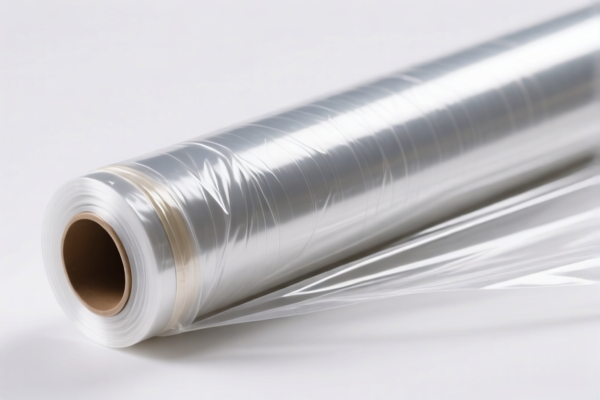
flexible plastic shrink film
CN → US| HS Code | Tariff Rate | Origin | Destination | Doc |
|---|---|---|---|---|
| 3921905050 | 39.8% | CN | US | Official Doc |
| 3920991000 | 41.0% | CN | US | Official Doc |
| 3921121950 | 40.3% | CN | US | Official Doc |
| 3920992000 | 39.2% | CN | US | Official Doc |
| 3921905050 | 39.8% | CN | US | Official Doc |
Product Images


AI Analysis
📦 Flexible Plastic Shrink Film (Plastic Films & Sheets)
🌐 HS Code Reference & Customs Clearance Guide | 2026 Latest Tariff Analysis | Professional Clearance Strategy
📌 1. Product Definition and Classification: Do You Really Understand “Shrink Film”?
Flexible plastic shrink film is a type of plastic packaging material that contracts when heated, used to wrap products for protection, tamper evidence, or bundling. In international trade, it is primarily classified under Chapter 39: Plastics and Articles Thereof.
The key distinction lies in the material composition and structure:
- Polyvinyl Chloride (PVC) Shrink Film: If the film is made of PVC, it typically falls under heading 3921 (Plastics in primary forms; other plates, sheets, film, foil and strip).
- Other Polymer Shrink Film (PE, PP, PET, etc.): If the film is made of other plastics (not PVC or cellulose derivatives), it falls under 3920 (Other plates, sheets, film, foil and strip, of plastics).
⚠️ Key Distinction:
- If the material is explicitly PVC, look to 3921.
- If the material is PE/PP/PET or unspecified "other plastic," look to 3920.
- Shrinkability itself does not determine the HS code; the material does.
📦 2. HS Code Classification Details (2026 Latest Tariff Authority Comparison)
Based on the provided data, here are the matched HS Codes for flexible plastic shrink film:
| HS Code | Product Description | Application Scenario | Total Tax Rate |
|---|---|---|---|
3921.90.50.50 |
Plastic films/foils (Other) | PVC-based shrink films, or other plastic films not specified elsewhere | 39.8% |
3920.99.10.00 |
Other plates, sheets, film (Other plastics) | Non-PVC shrink films (e.g., PE, PP, PET), non-cellular structure | 41.0% |
3921.12.19.50 |
Plates, sheets, film (PVC) | PVC-based shrink films, specifically classified under PVC subcategories | 40.3% |
3920.99.20.00 |
Other plates, sheets, film (Other plastics) | Flexible plastic films/foils (non-PVC), general category | 39.2% |
🔍 Important Note:
-3921codes are generally for PVC or specific plastic films.
-3920codes are for other plastics (like PE, PP, PET).
- The "Shrink" property is a functional description, but customs classifies based on material and structure (cellular vs. non-cellular).
💰 3. 2026 Latest Tariff Rate Breakdown (Including Surcharges)
✅ Applicable Country: United States (US)
✅ Origin: China (CN)
✅ Effective Date: Ongoing (as per current trade policies)
All listed HS Codes are subject to significant additional tariffs due to trade measures against Chinese goods.
🎯 1. 3920.99.10.00 & 3920.99.20.00 —— Other Plastic Films (Non-PVC)
| Item | Content |
|---|---|
| Base Tariff | 4.2% - 6.0% (depending on specific subcategory) |
| Section 301 Tariff (25%) | +25.0% (Additional tariff under US Trade Law Section 301) |
| Section 122 Tariff | +10.0% (Specific provision for certain plastic films/foils) |
| Total Effective Rate | 41.0% (for 3920.99.10.00) 39.2% (for 3920.99.20.00) |
| Calculation | CIF Value × Total Rate |
| De Minimis Exemption | ❌ Not Eligible (Deny De Minimis) |
| Legal Basis | Section 301 Tariff Act + Section 122 Provisions |
📌 Explanation:
- The 25% is the standard Section 301 tariff on Chinese plastics.
- The 10% is a specific "122 Clause" tariff applied to certain plastic film products.
- These are cumulative, meaning you pay base + 301 + 122.
🎯 2. 3921.90.50.50 —— Other Plastic Films (General PVC or Unspecified)
| Item | Content |
|---|---|
| Base Tariff | 4.8% |
| Section 301 Tariff (25%) | +25.0% |
| Section 122 Tariff | +10.0% |
| Total Effective Rate | 39.8% |
| Calculation | CIF Value × 39.8% |
| De Minimis Exemption | ❌ Not Eligible |
🎯 3. 3921.12.19.50 —— PVC Plastic Films
| Item | Content |
|---|---|
| Base Tariff | 5.3% |
| Section 301 Tariff (25%) | +25.0% |
| Section 122 Tariff | +10.0% |
| Total Effective Rate | 40.3% |
| Calculation | CIF Value × 40.3% |
| De Minimis Exemption | ❌ Not Eligible |
📌 Key Takeaway:
- All shrink films from China face high tariffs (39.2% - 41.0%).
- The Section 122 tariff is a critical component often overlooked.
- No de minimis exemption applies, so even small shipments are taxed.
🛠️ 4. Customs Clearance Practical Advice (Real-World Pitfall Guide)
✅ 1. Required Documentation Checklist
| Document | Required | Notes |
|---|---|---|
| ✅ Product Specification Sheet | ✔️ | Must state material (PVC, PE, PP, etc.), thickness, width, and shrink ratio. |
| ✅ Commercial Invoice | ✔️ | Clearly describe as "Flexible Plastic Shrink Film" + HS Code. |
| ✅ Packing List | ✔️ | Include net/gross weight and number of rolls. |
| ✅ Certificate of Origin (CO) | ✔️ | Required to prove Chinese origin (which triggers tariffs). |
| ✅ Material Declaration | ✔️ | Explicitly state polymer type (e.g., "100% PVC" or "LDPE"). |
✅ 2. Declaration Tips (Crucial Keywords)
🔥 “Specify Material, Declare Origin, Avoid Misclassification!”
| Scenario | Correct Declaration | Incorrect Declaration |
|---|---|---|
| PVC Shrink Film | 3921.12.19.50 or 3921.90.50.50 |
Vague: "Plastic Film" → Risk of reclassification |
| PE/PP Shrink Film | 3920.99.10.00 or 3920.99.20.00 |
Vague: "Packaging Film" → Risk of higher tax |
| Mixed Materials | Declare primary material | Do not hide material type |
| Non-Shrink Plastic Film | Same HS codes apply | Do not declare as "Shrink" if it’s not |
✅ 3. Special Cases
| Case | Handling Advice |
|---|---|
| Sample Shipments | Still subject to full tariffs (no de minimis). Declare accurately. |
| Third-Party Warehousing | If stored in US before sale, ensure correct HS code at entry. |
| Recycled Plastic Film | May have different classifications; verify if it falls under Chapter 39 or 3926. |
| Co-Extruded Films | Declare based on the primary layer or material with highest weight. |
🌍 5. Global Market Comparison (2026)
| Country/Region | Recommended HS Code | Tariff Rate | Notes |
|---|---|---|---|
| 🇺🇸 USA | 3920.99.10.00 / 3921.12.19.50 |
39.2% - 41.0% | High due to Section 301 + 122 |
| 🇨🇳 China | 3920.99.10.00 / 3921.12.19.50 |
6.0% - 10.0% | Base import duty, no Section 301 |
| 🇪🇺 EU | 3920.99.10 / 3921.12.10 |
6.5% | Standard WTO rate |
| 🇬🇧 UK | 3920.99.10 / 3921.12.10 |
6.5% | Post-Brexit rate |
📌 Conclusion:
- The US market is significantly more expensive due to Section 301 and 122 tariffs.
- Consider supply chain diversification (e.g., Vietnam, Mexico) if targeting the US market to avoid high tariffs.
📌 6. Common Errors & Pitfalls
❌ Error 1: Declaring as "Packaging Material" without specifying HS Code
👉 Consequence: Customs may assign a higher default rate or demand clarification, causing delays.
❌ Error 2: Misidentifying PVC as "Other Plastic"
👉 Consequence: Potential misclassification penalties if PVC is detected.
❌ Error 3: Ignoring Section 122 Tariff
👉 Consequence: Underpayment of duties, leading to audits and back taxes.
✅ Best Practice:
"Always declare the specific polymer type (PVC, PE, PP) and thickness. Use precise HS codes to avoid disputes."
🎯 7. Final Advice: Professional Clearance for Cost Efficiency
🎯 Remember:
🔹 Material Matters: PVC vs. Other Plastic determines the HS Code.
🔹 Tariffs are High: Expect ~40% total duty for US imports from China.
🔹 Documentation is Key: Clear material declaration prevents audits.
📌 Tip:
If your shrink film is not from China, you may avoid Section 301 tariffs.
Consider Advance Ruling for complex co-extruded films to ensure correct classification.
📣 Immediate Action:
📞 Consult a licensed customs broker.
📝 Provide material specifications (PVC, PE, PP, etc.).
🚀 Plan for high tariffs and ensure accurate documentation.
✨ Professional clearance starts with accurate classification!
💼 Every percentage point of duty impacts your profit margin!
Customer Reviews
About HS Code Classification
The Harmonized System (HS) is an internationally standardized nomenclature developed by the World Customs Organization (WCO) to classify traded products. Over 200 countries use the HS system as the basis for customs tariffs, trade statistics, and import/export regulations.
Each HS code follows a hierarchical structure:
- Chapter (2 digits) — Broad category of goods (e.g., Chapter 84: Machinery and Mechanical Appliances)
- Heading (4 digits) — More specific grouping within the chapter
- Subheading (6 digits) — Internationally standardized breakdown, used by all WCO member countries
- National subdivisions (8-10 digits) — Country-specific extensions for further classification, such as US HTSUS 10-digit codes
Correct HS code classification is essential for smooth customs clearance, accurate duty payment, and compliance with trade regulations. Misclassification can lead to customs delays, overpayment of duties, or penalties.
When importing from CN to US, the applicable tariff rates may include:
- Most-Favored-Nation (MFN) rate — The standard duty rate applied to WTO members
- General rate — Applied to countries without trade agreements
- Trade remedy duties — Additional tariffs such as Section 301 (anti-dumping), Section 232 (national security), or countervailing duties
The information provided on this page is for reference purposes only. For official classification, please consult with your local customs authority or a licensed customs broker.