floor brush
CN → US| HS Code | Tariff Rate | Origin | Destination | Doc |
|---|---|---|---|---|
| 8509801000 | 10.0% | CN | US | Official Doc |
| 8509805095 | 14.2% | CN | US | Official Doc |
| 4417006000 | 35.0% | CN | US | Official Doc |
| 4417008010 | 40.1% | CN | US | Official Doc |
| 9603298090 | 0.0% | CN | US | Official Doc |
Product Images


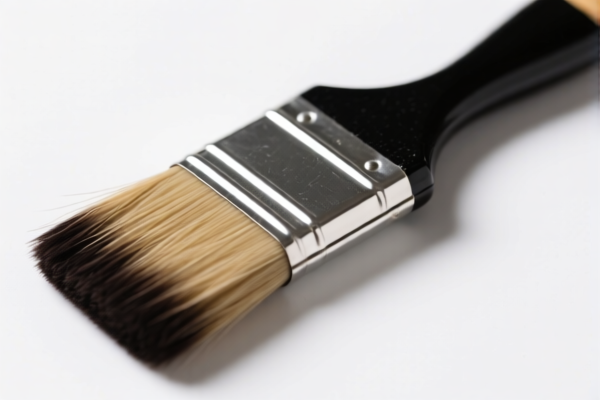
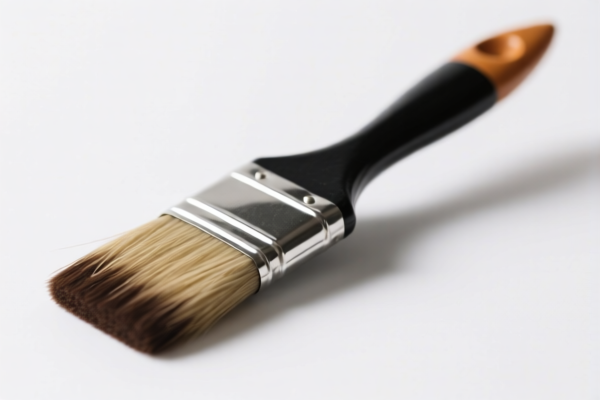
AI Analysis
🖌️ Floor Brush & Cleaning Tools (Classification Guide for US Import)
🌐 HS Code Reference & Customs Clearance Guide | 2026 Latest Tariff Analysis | Professional Clearance Strategy
📌 I. Product Definition & Classification: What Exactly is a "Floor Brush"?
In international trade, the term "Floor Brush" is ambiguous. It can refer to electro-mechanical appliances (like wet/dry vacuums or electric floor scrubbers) or manual cleaning tools (like push brooms, dustpans, or handheld scrubbing brushes). The HS Code determination depends entirely on the power source and material composition.
⚠️ Critical Distinction:
- If it has a built-in electric motor and is used for automatic/semi-automatic cleaning (e.g., Wet/Dry Vacuum, Electric Floor Scrubber) → Chapter 85
- If it is manual and made of wood (bristle handle + wooden stick) → Chapter 44
- If it is manual and made of plastic/synthetic materials → Chapter 96
📦 II. HS Code Classification Details (2026 Latest Tariff Alignment)
Based on the provided data, here are the precise classifications for Floor Brush related products:
| HS Code | Product Description | Application Scenario | Key Feature |
|---|---|---|---|
8509.80.10.00 |
Floor Cleaning Appliances (Electric) | Floor polishers, electric floor scrubbers, wet/dry vacuums | ✅ Built-in motor, matches "Floor Polishing Machine" attributes |
8509.80.50.95 |
Other Floor Cleaning Household Appliances | Floor washers (洗地机), electric cleaning brushes (电动清洁刷) | ✅ Self-contained electric motor, household use |
4417.00.60.00 |
Wooden Floor/Brush Tools | Wooden handled brushes, traditional push brooms | ✅ Wooden material, inferred as wooden brush tool |
4417.00.80.10 |
Other Wooden Brush Tools | Wooden handled shoe/floor brushes with bristles | ✅ Wooden handle + bristles, common manual tool |
9603.29.80.90 |
Other Brushes (Non-wooden) | Plastic/nylon floor brushes, synthetic scrubbing brushes | ✅ Synthetic material, general brush category |
🔍 Key Insight:
- Electric vs. Manual: The biggest risk is misclassifying an electric floor cleaner as a manual brush.
- Electric →8509.xx.xx
- Manual (Wood) →4417.xx.xx
- Manual (Synthetic) →9603.xx.xx
- Section 301 & IEEPA Impact: All categories listed above are subject to additional tariffs due to China origin.
💰 III. 2026 Latest Tariff Rate Breakdown (Including附加 Tariffs)
✅ Applicable Country: United States (US)
✅ Origin: China (CN)
✅ Effective Time: 2025/2026 (Current IEEPA & Section 301 Rules)
🎯 1. 8509.80.10.00 – Floor Cleaning Appliances (Electric, e.g., Floor Polisher)
| Item | Detail |
|---|---|
| Base Tariff | 0.0% |
| Section 301 Surcharge | 0.0% (Note: Some subheadings may vary, but data shows 0.0%) |
| IEEPA Surcharge | +10.0% (122 Clause Tariff) |
| Total Tariff Rate | 10.0% |
| Tax Calculation | CIF Value × 10% |
| De Minimis Exemption | ❌ Not Applicable (Deny De Minimis for Section 301/IEEPA goods) |
📌 Explanation:
- This classification applies to electric floor machines (e.g., buffer, polisher).
- Although base tariff is 0%, the 10% IEEPA tariff applies.
- Total cost impact: 10%.
🎯 2. 8509.80.50.95 – Other Household Electric Floor Cleaners (e.g., Wet/Dry Vac, Electric Scrubber)
| Item | Detail |
|---|---|
| Base Tariff | 4.2% |
| Section 301 Surcharge | 0.0% |
| IEEPA Surcharge | +10.0% |
| Total Tariff Rate | 14.2% |
| Tax Calculation | CIF Value × 14.2% |
| De Minimis Exemption | ❌ Not Applicable |
📌 Explanation:
- Covers electric floor washers (洗地机) and electric cleaning brushes (电动清洁刷).
- Higher base rate (4.2%) due to broader "other household appliances" category.
- Total cost impact: 14.2%.
🎯 3. 4417.00.60.00 – Wooden Brush Tools (e.g., Wooden Broom Handle)
| Item | Detail |
|---|---|
| Base Tariff | 0.0% |
| Section 301 Surcharge | +25.0% |
| IEEPA Surcharge | +10.0% |
| Total Tariff Rate | 35.0% |
| Tax Calculation | CIF Value × 35.0% |
| De Minimis Exemption | ❌ Not Applicable |
📌 Explanation:
- Applies to wooden-handled brushes or brooms.
- High tariff due to 25% Section 301 + 10% IEEPA.
- Total cost impact: 35%.
🎯 4. 4417.00.80.10 – Other Wooden Brush Tools (e.g., Shoe/Floor Brush with Wooden Handle)
| Item | Detail |
|---|---|
| Base Tariff | 5.1% |
| Section 301 Surcharge | +25.0% |
| IEEPA Surcharge | +10.0% |
| Total Tariff Rate | 40.1% |
| Tax Calculation | CIF Value × 40.1% |
| De Minimis Exemption | ❌ Not Applicable |
📌 Explanation:
- Similar to above, but for wooden brushes with bristles (e.g., shoe brush, handheld floor brush).
- Base rate is higher (5.1%) than4417.00.60.00.
- Total cost impact: 40.1%.
🎯 5. 9603.29.80.90 – Other Brushes (Plastic/Synthetic)
| Item | Detail |
|---|---|
| Base Tariff | $0.3¢ per item + 3.6% ad valorem |
| Section 301 Surcharge | 0.0% |
| IEEPA Surcharge | +10.0% |
| Total Tariff Rate | $0.3¢/unit + 13.6% |
| Tax Calculation | (Units × $0.003) + (CIF Value × 13.6%) |
| De Minimis Exemption | ❌ Not Applicable |
📌 Explanation:
- Applies to plastic, nylon, or synthetic floor brushes (e.g., push broom with plastic head, handheld scrub brush).
- Unique structure: Specific duty ($0.3¢/unit) + Ad valorem (3.6%) + IEEPA (10%).
- Total cost impact: $0.3¢ per item + 13.6% of value.
🛠️ IV. Customs Clearance Practical Advice
✅ 1. Required Documentation Checklist
| Document | Must Provide | Notes |
|---|---|---|
| Product Specification Sheet | ✔️ | Must specify: Electric vs. Manual, Material (Wood/Plastic/Bristle), Power Source |
| Product Photos | ✔️ | Clear images of labels, power cords (if electric), and bristle type |
| Commercial Invoice | ✔️ | Explicitly state: "Electric Floor Scrubber" or "Wooden Broom" – Do NOT just write "Brush" |
| Packing List | ✔️ | Itemize by HS Code if mixed shipment |
| FCC Certification | ✔️ | Mandatory for Electric Brushes (8509 codes) |
| Material Declaration | ✔️ | Confirm if wooden parts are heat-treated (ISPM 15 if applicable, though usually exempt for finished goods) |
✅ 2. Critical Classification Tips (Avoid Misclassification)
🔥 "Power Source is King! Material is Queen!"
| Scenario | Correct HS Code | Incorrect HS Code | Consequence |
|---|---|---|---|
| Electric Floor Washer (洗地机) | 8509.80.50.95 (14.2%) |
9603.29.80.90 (13.6%) |
Under-declaration risk, audit penalty |
| Electric Floor Polisher | 8509.80.10.00 (10.0%) |
8479.89.98.90 (Other machinery) |
Over-declaration, higher tax |
| Wooden Broom | 4417.00.60.00 (35.0%) |
9603.29.80.90 (13.6%) |
Massive Under-declaration, high risk |
| Plastic Push Broom | 9603.29.80.90 (13.6%) |
4417.00.80.10 (40.1%) |
Over-declaration, unnecessary cost |
✅ 3. Special Notes on Tariffs
- IEEPA 10% Tariff: Applies to ALL items in the data table (
8509,4417,9603) because they originate from China. - Section 301 Tariff:
8509codes: 0% (Note: Data shows 0%, but verify if new rules apply in 2026).4417codes: 25% (Wooden products are heavily taxed).9603codes: 0% (Synthetic brushes have no Section 301 surcharge, only IEEPA).
🚨 Warning:
- De Minimis (De Minimis Exemption): Items under $800 are NOT exempt from these tariffs if they are subject to Section 301 or IEEPA. All these HS Codes are denied de minimis.
🌍 V. Global Comparison (2026)
| Market | Recommended HS Code | Total Tariff (China Origin) | Key Requirement |
|---|---|---|---|
| 🇺🇸 USA | 8509.80.50.95 |
14.2% | FCC Certification |
| 🇺🇸 USA | 4417.00.80.10 |
40.1% | Wood Material Declaration |
| 🇺🇸 USA | 9603.29.80.90 |
$0.3¢/unit + 13.6% | Specific Duty Calculation |
| 🇨🇳 China | Same HS Codes | Lower (5-10%) | CCC (if electric) |
📌 VI. Common Mistakes & Pitfalls
❌ Mistake 1: Labeling an Electric Floor Scrubber as "Brush" → Risk of being classified under 8479 (Machinery) or 9603 (Manual), leading to audit.
👉 Fix: Always specify "Electric" and "Household Appliance" in description.
❌ Mistake 2: Ignoring Wooden Material → If the handle is wood, use 4417, not 9603.
👉 Fix: Check material composition. Wooden handle = 35-40.1% Tariff.
❌ Mistake 3: Underestimating Specific Duties for 9603.
👉 Fix: Calculate $0.3¢ per brush + 13.6% ad valorem. For low-value brushes, the specific duty may dominate.
✅ Best Practice:
Provide a clear product description:
"Electric Floor Scrubber, Household, 500W, Model XYZ, FCC Certified"
vs.
"Wooden Broom, Natural Bristles, 30-inch"
vs.
"Plastic Push Broom, Synthetic Bristles, Indoor/Outdoor"
🎯 VII. Conclusion: Precision Saves Money!
🎯 Key Takeaways:
1. Electric? → 8509 (10-14.2% Tariff)
2. Wooden? → 4417 (35-40.1% Tariff)
3. Synthetic/Plastic? → 9603 ($0.3¢/unit + 13.6% Tariff)
💡 Pro Tip:
- If you sell Electric Floor Washers, ensure FCC Certification is ready.
- If you sell Wooden Brooms, budget for 35%+ Tariff.
- If you sell Plastic Brushes, watch out for Specific Duty calculations.
📣 Action Required:
📞 Contact Your Customs Broker with:
1. Product Photos
2. Material Breakdown (Wood/Plastic/Electric)
3. FCC/CE Certificates (if electric)🚀 Avoid Delays & Penalties by Classifying Correctly!
✨ Professional Customs Clearance Starts with Accurate Classification!
💼 Your Cost Efficiency Depends on These Details!
Customer Reviews
About HS Code Classification
The Harmonized System (HS) is an internationally standardized nomenclature developed by the World Customs Organization (WCO) to classify traded products. Over 200 countries use the HS system as the basis for customs tariffs, trade statistics, and import/export regulations.
Each HS code follows a hierarchical structure:
- Chapter (2 digits) — Broad category of goods (e.g., Chapter 84: Machinery and Mechanical Appliances)
- Heading (4 digits) — More specific grouping within the chapter
- Subheading (6 digits) — Internationally standardized breakdown, used by all WCO member countries
- National subdivisions (8-10 digits) — Country-specific extensions for further classification, such as US HTSUS 10-digit codes
Correct HS code classification is essential for smooth customs clearance, accurate duty payment, and compliance with trade regulations. Misclassification can lead to customs delays, overpayment of duties, or penalties.
When importing from CN to US, the applicable tariff rates may include:
- Most-Favored-Nation (MFN) rate — The standard duty rate applied to WTO members
- General rate — Applied to countries without trade agreements
- Trade remedy duties — Additional tariffs such as Section 301 (anti-dumping), Section 232 (national security), or countervailing duties
The information provided on this page is for reference purposes only. For official classification, please consult with your local customs authority or a licensed customs broker.