floor socks
CN → US| HS Code | Tariff Rate | Origin | Destination | Doc |
|---|---|---|---|---|
| 6115959000 | 31.0% | CN | US | Official Doc |
| 6115969020 | 24.6% | CN | US | Official Doc |
| 6115940000 | 28.8% | CN | US | Official Doc |
| 6115966010 | 36.3% | CN | US | Official Doc |
| 6115959000 | 31.0% | CN | US | Official Doc |
Product Images
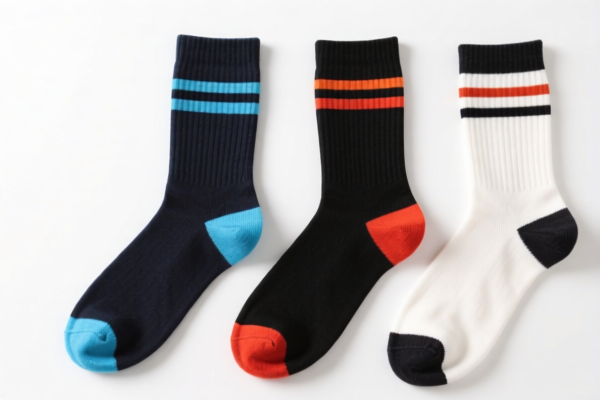
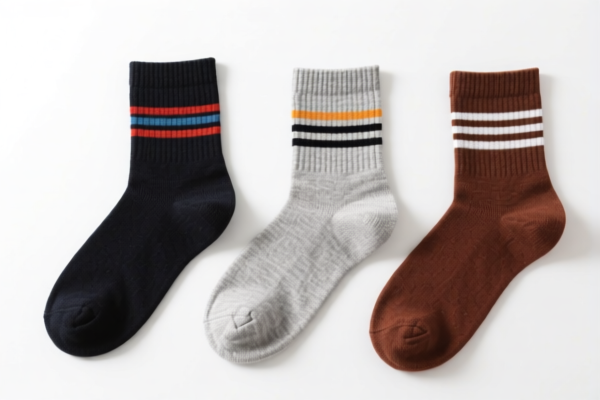
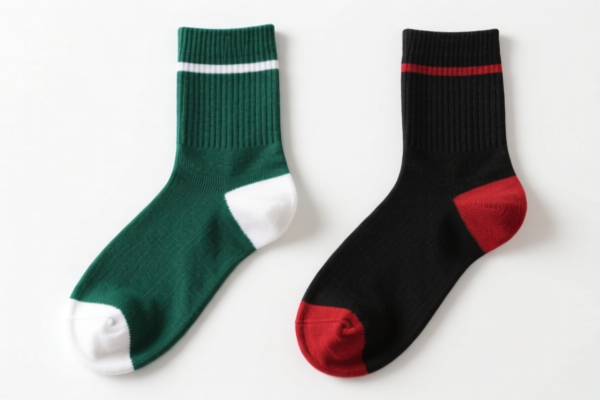
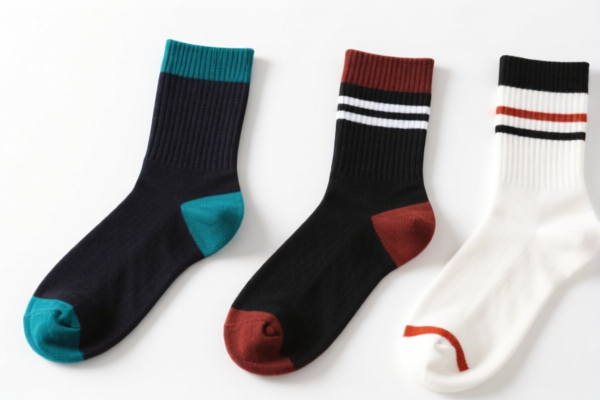
AI Analysis
🧦 Floor Socks (Plush/Fuzzy Footwear)
🌐 HS Code Reference & Customs Clearance Guide | 2026 Latest Tariff Analysis | Professional Entry Strategy
📌 I. Product Definition & Classification: Do You Really Understand "Floor Socks"?
Floor socks (often referred to as "plush socks," "fuzzy socks," or "indoor slippers") are soft, insulated footwear designed for indoor use. They prioritize warmth, comfort, and slip resistance over durability or outdoor performance.
In international trade, the classification depends heavily on material composition and structural characteristics:
Plush/Material-Based Classification (Knitted/Crocheted): * Synthetic Fibers (e.g., Polyester, Acrylic): Typically fall under 6115.96. * Cotton Blends or Natural Fibers: Often fall under 6115.95.
General Footwear Classification: * If the material is ambiguous or mixed in non-standard proportions, general "socks" codes (6115.94) may be used, though specific material codes are preferred.
⚠️ Key Distinction Point:
- If the product is clearly knitted/crocheted and made of synthetic fibers →归类 to 6115.96.xxxx
- If the product is knitted/crocheted and made of cotton/natural fibers →归类 to 6115.95.xxxx
- If the material is unclear but fits the general "sock" shape →归类 to 6115.94.xxxx
📦 II. HS Code Classification Details (2026 Latest Tariff Authority Comparison)
| HS Code | Product Description | Application Scenario | Material Basis |
|---|---|---|---|
6115.95.90.00 |
Plush socks, shape matches sock category, material inferred as cotton or化纤 (common sense) | Cotton-blend plush socks, winter indoor wear | ✅ Cotton/Natural Blend |
6115.96.90.20 |
Plush socks, shape matches sock category, material usually synthetic fiber or mix | Acrylic/Polyester plush socks, fuzzy indoor footwear | ✅ Synthetic Fibers |
6115.94.00.00 |
Socks, shape matches sock category, reasonable inference when material is unspecified | General plush socks, material not explicitly declared | ⚠️ Unspecified/Mixed |
6115.96.60.10 |
Socks, shape matches sock category, reasonable inference when no material conflict | Standard synthetic plush socks, no specific sub-heading conflict | ✅ Synthetic Fibers |
6115.95.90.00 |
Floor socks classified as plush socks, shape and material match | Direct mapping for "Floor Socks" in common usage | ✅ Cotton/Natural Blend |
🔍 Key Reminder:
- "Floor Socks" are universally recognized as a subset of knitted/crocheted socks in Chapter 61.
- Misclassification between 6115.95 (Cotton/Natural) and 6115.96 (Synthetic) is the most common error, leading to duty discrepancies.
- Always declare the primary fiber content (e.g., "80% Acrylic, 20% Polyester") to support the HS Code.
💰 III. 2026 Latest Tariff Rate Breakdown (Including Surtaxes & Policy Add-ons)
✅ Applicable Country: United States (US)
✅ Origin: China (CN)
✅ Effective Date: Current policies applied (Section 301 + IEEPA)
🎯 1. 6115.95.90.00 —— Plush Socks (Cotton/Natural Base)
| Item | Content |
|---|---|
| Base Tariff | 13.5% (ad valorem) |
| Section 301 Surtax | +7.5% (USITC Footnote 9903.88.01) |
| Section 122 Tariff | +10% (Specific trade remedy) |
| Total Tax Rate | 31.0% |
| Tax Calculation | CIF Value × 31.0% |
| De Minimis Eligibility | ❌ No (Subject to high tariffs) |
| Legal Path | USITC:6115.95.90.00 → SECTION:301 → SECTION:122 |
📌 Explanation:
- "Base 13.5%" is the standard Most Favored Nation (MFN) rate for knitted socks of cotton/natural fiber.
- "Section 301 +7.5%" and "Section 122 +10%" are additional levies on Chinese imports.
- Total 31.0% is significant for low-value textile goods, impacting margin heavily.
🎯 2. 6115.96.90.20 —— Plush Socks (Synthetic Fiber)
| Item | Content |
|---|---|
| Base Tariff | 14.6% (ad valorem) |
| Section 301 Surtax | 0.0% (Exempt under specific sub-heading rules) |
| Section 122 Tariff | +10% (Specific trade remedy) |
| Total Tax Rate | 24.6% |
| Tax Calculation | CIF Value × 24.6% |
| De Minimis Eligibility | ❌ No |
| Legal Path | USITC:6115.96.90.20 → SECTION:122 |
📌 Note:
- This code offers a 6.4% lower total tariff compared to6115.95.90.00.
- The 0% Section 301 surtax is a key advantage for synthetic fiber products under this specific sub-heading.
- Ideal for Polyester/Acrylic plush socks.
🎯 3. 6115.94.00.00 —— Socks (General/Unspecified Material)
| Item | Content |
|---|---|
| Base Tariff | 11.3% (ad valorem) |
| Section 301 Surtax | +7.5% |
| Section 122 Tariff | +10% |
| Total Tax Rate | 28.8% |
| Tax Calculation | CIF Value × 28.8% |
| De Minimis Eligibility | ❌ No |
| Legal Path | USITC:6115.94.00.00 → SECTION:301 → SECTION:122 |
📌 Caution:
- Lower base rate (11.3%) than6115.96, but Section 301 applies (+7.5%), bringing total to 28.8%.
- Use only if material cannot be clearly defined; otherwise, specific material codes (95/96) are preferred for accuracy.
🎯 4. 6115.96.60.10 —— Socks (Synthetic, No Conflict)
| Item | Content |
|---|---|
| Base Tariff | 18.8% (ad valorem) |
| Section 301 Surtax | +7.5% |
| Section 122 Tariff | +10% |
| Total Tax Rate | 36.3% |
| Tax Calculation | CIF Value × 36.3% |
| De Minimis Eligibility | ❌ No |
| Legal Path | USITC:6115.96.60.10 → SECTION:301 → SECTION:122 |
📌 Warning:
- Highest tariff rate (36.3%) among the options.
- High base rate (18.8%) combined with full surtaxes makes this the least favorable code if alternative classifications apply.
- Avoid unless the product strictly fits this specific sub-heading description.
🛠️ IV. Customs Clearance Practical Advice (Battle-Tested Pitfall Guide)
✅ 1. Required Documentation Checklist (Non-Negotiable)
| Document | Required | Description |
|---|---|---|
| ✅ Product Specification Sheet | ✔️ | Must include fiber content (e.g., 90% Acrylic, 10% Elastane), size, sole type (slippery/slip-resistant). |
| ✅ Material Test Report | ✔️ | ISO/ASTM test report confirming fiber composition to justify HS Code (95 vs. 96). |
| ✅ Product Photos | ✔️ | Clear images of label, inside lining (plush texture), and sole pattern. |
| ✅ Commercial Invoice | ✔️ | Must state "Floor Socks" or "Plush Socks," not just "Textiles." |
| ✅ Packing List | ✔️ | Detail items per carton, net/gross weight. |
| ✅ Certificate of Origin | ❌ | Not strictly required for tariff calculation, but useful for origin verification. |
✅ 2. Declaration Strategy (Key Mantras)
🔥 "Specify Material, Avoid 'General', Check Section 301!"
| Scenario | Correct Declaration | Incorrect Practice |
|---|---|---|
| Synthetic Plush Socks | 6115.96.90.20 (24.6% tax) |
6115.95.90.00 → 31.0% tax (Overpaid) |
| Cotton Blended Plush Socks | 6115.95.90.00 (31.0% tax) |
6115.96.60.10 → 36.3% tax (Underpaid/Non-compliant) |
| Unclear Material | 6115.94.00.00 (28.8% tax) |
Guessing 95 or 96 without test report → Risk of Penalty |
| General "Floor Socks" | Explicitly define as "Knitted Plush Socks" | Vague term "Footwear" → May trigger Chapter 64 (Higher Duty) |
✅ 3. Special Case Handling
| Situation | Handling Advice |
|---|---|
| OEM Custom Socks | Provide design files + material composition chart to prove fiber content. |
| Anti-Slip Soles | If soles are rubber/TPU, still classified under Chapter 61 (Knitted Socks) if fabric predominates. Do NOT classify as Chapter 64 unless sole is the defining feature (rare for plush socks). |
| Mixed Sets (Socks + Box) | Declare socks as main item; box as packaging. Do not split. |
| High-Value Luxury Socks | Verify if decorative elements (embroidery, gems) change classification. Usually remains 6115.9x if textile-based. |
🌍 V. Global Market Comparison (2026 Latest)
| Country/Region | Recommended HS Code | Tariff (China Origin) | Certification | Notes |
|---|---|---|---|---|
| 🇺🇸 USA | 6115.96.90.20 |
24.6% (Best for Synthetic) | No specific cert required for entry | High base tax + surtaxes apply |
| 🇨🇳 China | 6115.96.90.20 |
~10-14% (Import Duty) | None | Lower than US rates |
| 🇪🇺 EU | 6115.96.90.20 |
12% + VAT | CE (if marked as safety footwear, rare for socks) | No Section 301/122 equivalents |
| 🇬🇧 UK | 6115.96.90.20 |
12% + VAT | UKCA | Post-Brexit rules apply |
| 🇯🇵 Japan | 6115.96.90.20 |
15% + Consumption Tax | None | Consistent with HS standards |
📌 Conclusion:
- USA is the most complex market due to Section 301 and Section 122 tariffs.
- Synthetic plush socks (6115.96.90.20) offer the lowest duty rate (24.6%) for China-origin goods in the US.
- Cotton/Natural blends (6115.95.90.00) are more expensive (31.0%) due to full Section 301 application.
📌 VI. Common Mistakes & Pitfall Guide (Blood & Tears)
❌ Mistake 1: Declaring as "Textiles" or "Fabric" without HS Code
👉 Consequence: Customs reclassifies → Delay + Storage Fees
❌ Mistake 2: Using 6115.96.60.10 for standard synthetic plush socks
👉 Consequence: 36.3% tax instead of 24.6% → 11.7% extra cost per unit!
❌ Mistake 3: Not providing fiber content test report
👉 Consequence: Customs assumes highest possible duty or rejects classification → Audit Risk
❌ Mistake 4: Confusing "Floor Socks" with "Slippers" (Chapter 64)
👉 Consequence: If sole is textile/rubber but upper is knitted, it stays Chapter 61. Misdeclaring as Chapter 64 (Slippers) may lead to different duty rates and potential penalties if not compliant.
✅ Correct Practice:
"Knitted Plush Floor Socks, 95% Acrylic, 5% Spandex, with Non-Slip Rubber Dots on Sole, Model XYZ, Origin: China"
🎯 VII. Conclusion: Professional Declaration, Save Time, Reduce Cost!
🎯 Remember the Mantra:
🔹 "Synthetic Wins: 6115.96.90.20 at 24.6% is the Sweet Spot!"
🔹 "Cotton Costs: 6115.95.90.00 at 31.0% needs justification."
🔹 "Avoid 36.3%: Don't use 6115.96.60.10 unless necessary."
📌 Pro Tip:
If your floor socks are originally from Vietnam, Indonesia, or Bangladesh, check for GSP or FTAs to reduce or eliminate tariffs.
For US imports, pre-classify with a licensed customs broker using lab reports to secure the 24.6% rate.
📣 Immediate Action:
📞 Contact Customs Broker + Submit Material Test Report + Select
6115.96.90.20for Synthetic Socks
🚀 Clear Customs Smoothly, Maximize Profit, Export with Confidence!
✨ Professional Classification Starts with Precision!
💼 Your Every Cent of Cost Deserves Exact Calculation!
Customer Reviews
About HS Code Classification
The Harmonized System (HS) is an internationally standardized nomenclature developed by the World Customs Organization (WCO) to classify traded products. Over 200 countries use the HS system as the basis for customs tariffs, trade statistics, and import/export regulations.
Each HS code follows a hierarchical structure:
- Chapter (2 digits) — Broad category of goods (e.g., Chapter 84: Machinery and Mechanical Appliances)
- Heading (4 digits) — More specific grouping within the chapter
- Subheading (6 digits) — Internationally standardized breakdown, used by all WCO member countries
- National subdivisions (8-10 digits) — Country-specific extensions for further classification, such as US HTSUS 10-digit codes
Correct HS code classification is essential for smooth customs clearance, accurate duty payment, and compliance with trade regulations. Misclassification can lead to customs delays, overpayment of duties, or penalties.
When importing from CN to US, the applicable tariff rates may include:
- Most-Favored-Nation (MFN) rate — The standard duty rate applied to WTO members
- General rate — Applied to countries without trade agreements
- Trade remedy duties — Additional tariffs such as Section 301 (anti-dumping), Section 232 (national security), or countervailing duties
The information provided on this page is for reference purposes only. For official classification, please consult with your local customs authority or a licensed customs broker.