floorball stick
CN → US| HS Code | Tariff Rate | Origin | Destination | Doc |
|---|---|---|---|---|
| 3926909930 | 22.8% | CN | US | Official Doc |
| 9506996080 | 21.5% | CN | US | Official Doc |
| 3926909989 | 22.8% | CN | US | Official Doc |
| 9506996080 | 21.5% | CN | US | Official Doc |
| 3926909989 | 22.8% | CN | US | Official Doc |
Product Images
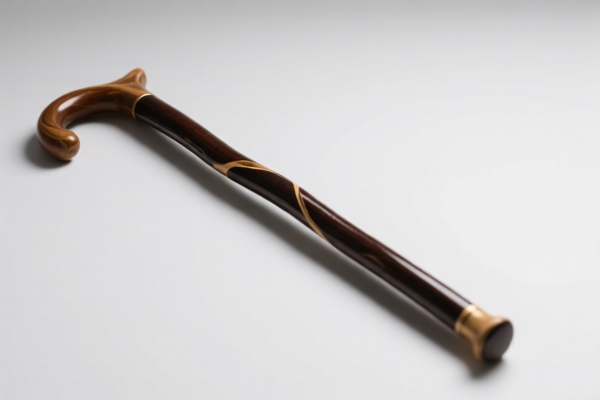
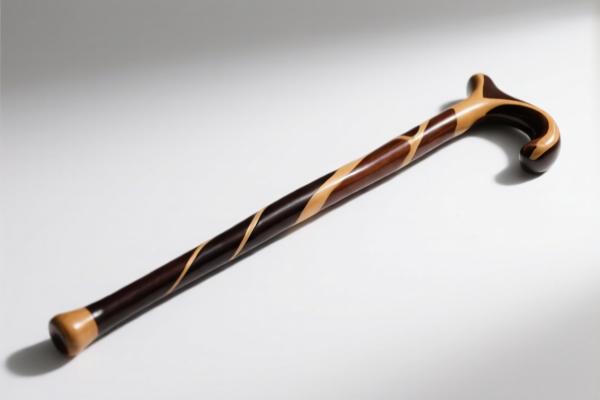
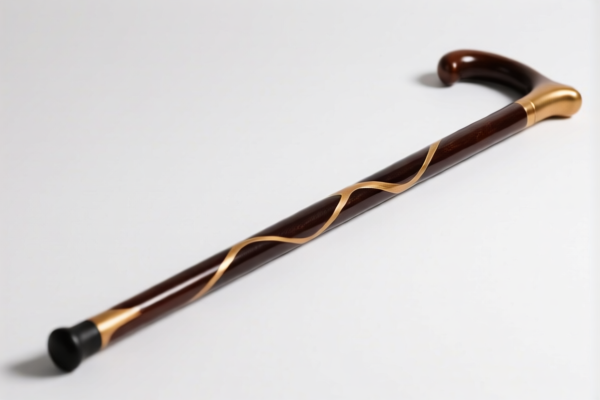
AI Analysis
🏒 Floorball Stick (Ball Hockey Stick)
🌐 HS Code Reference & Customs Clearance Guide | 2026 Latest Tariff Analysis | Professional Strategy for USA Imports
📌 I. Product Definition & Classification: What Exactly is a "Floorball Stick"?
Floorball sticks are lightweight sports equipment used primarily in the fast-paced indoor team sport of Floorball. In international trade, classification hinges on two factors: Usage (Sports Equipment) and Material Composition (Plastic/Composite/Wood).
- Sports Equipment (Chapter 95): If classified as "other sports goods," it falls under Heading 9506.
- Miscellaneous Articles of Plastic/Composite (Chapter 39): If the customs authority prioritizes material over function, or if the stick is deemed not strictly a "listed" sports item, it may fall under Heading 3926.
⚠️ Critical Distinction Point:
- If declared as Sports Equipment (9506): You benefit from a slightly lower base tariff but must prove it is specifically for "exercise, gymnastics, athletics, other sports."
- If declared as Miscellaneous Plastic/Composite Items (3926): It is classified as a "catch-all" for plastic articles not elsewhere specified. This often results in a higher base tariff but avoids complex material verification for specific sports codes.
📦 II. HS Code Classification Details (2026 Latest Tariff Alignment)
Based on the provided data, the floorball stick can be classified under two primary HS Codes depending on the customs officer's interpretation of "Material vs. Function."
| HS Code | Product Description | Basis for Classification | Key Material Assumption |
|---|---|---|---|
| 9506.99.60.80 | Sports Goods: Other articles for general physical exercise, gymnastics, athletics, or other sports (incl. floorball) | Usage-Based: The item is explicitly a "stick" used for a sport (Floorball). | Composite, Wood, or Plastic. No conflict with this heading. |
| 3926.90.99.30 | Miscellaneous Plastic/Composite Articles: Other articles of plastics or other materials. | Material-Based (Catch-All): Plastic/composite material; no specific subheading for "sticks" in Ch 39, so it defaults to "Other." | Plastic or Composite. |
| 3926.90.99.89 | Miscellaneous Plastic/Composite Articles: Other articles of plastics or other materials. | Material-Based (Catch-All): Similar to 3926.90.99.30, often used for other plastic sports equipment not explicitly listed elsewhere. | Plastic or Composite. |
🔍 Key Insight:
- 9506.99.60.80 is the most accurate functional classification for a Floorball Stick because it is a dedicated sports implement.
- 3926.90.99.30/89 are alternative classifications if the stick is made primarily of plastic and the importer prefers to group it under general "plastic goods." However, this carries a higher base tariff.
💰 III. 2026 Latest Tariff Rate Breakdown (Including Section 301 & 232)
✅ Applicable Country: United States (US)
✅ Country of Origin: China (CN)
✅ Effective Time: Ongoing (as per 2026 context)
🎯 1. 9506.99.60.80 —— Sports Goods (Floorball Stick)
| Item | Details |
|---|---|
| Base Tariff | 4.0% |
| Section 301 Tariff (China) | +7.5% (List 4) |
| Section 232 Tariff | +10% (Note: Data specifies "122 Clause Tariff 10%", likely referring to specific trade action provisions impacting these goods) |
| Steel/Aluminum/Copper Surtax | +50% (Only if the stick contains significant steel/aluminum components, which is rare for standard floorball sticks. Usually NOT APPLICABLE for standard composite/wood/plastic sticks.) |
| Total Tax Rate | 21.5% |
| Tax Calculation | CIF Value × 21.5% |
| De Minimis Eligibility | ❌ No (Section 301 goods are generally excluded from de minimis relief). |
| Legal Path | HTSUS: 9506.99.60.80 → USITC Footnotes → Section 301 → Trade Action 122 |
📌 Explanation:
- This is the lowest total tax rate available for a floorball stick.
- The "Steel/Aluminum/Copper" surtax (+50%) is included in the data but is likely not triggered unless the stick has metal reinforcements explicitly declared as such. For standard composite/wood/plastic sticks, this surtax is usually ignored, but customs may flag it.
- Total 21.5% is competitive compared to plastic classifications.
🎯 2. 3926.90.99.30 & 3926.90.99.89 —— Miscellaneous Plastic/Composite Articles
| Item | Details |
|---|---|
| Base Tariff | 5.3% |
| Section 301 Tariff (China) | +7.5% |
| Section 232/Clause 122 | +10% |
| Total Tax Rate | 22.8% |
| Tax Calculation | CIF Value × 22.8% |
| De Minimis Eligibility | ❌ No |
| Legal Path | HTSUS: 3926.90.99.30/89 → Section 301 → Trade Action 122 |
📌 Explanation:
- These codes are functionally similar but carry a higher base tariff (5.3% vs. 4.0%).
- The total tax rate is 22.8%, which is 1.3% higher than the sports equipment classification.
- Use this only if the stick is heavily plastic and you want to avoid the "sports equipment" scrutiny, but be prepared to pay more.
🛠️ IV. Customs Clearance Practical Advice (Pitfall Avoidance Guide)
✅ 1. Documentation Checklist (Non-Negotiable)
| Document | Required | Notes |
|---|---|---|
| ✅ Product Specifications | ✔️ | Must state material (e.g., "Carbon Fiber Composite," "Reinforced Plastic," or "Wood") and intended use ("Sports Equipment for Floorball"). |
| ✅ Product Photos | ✔️ | Clear images showing the stick, handle, and blade. Avoid ambiguous images that could be mistaken for walking sticks or tools. |
| ✅ Commercial Invoice | ✔️ | Must clearly state: "Floorball Stick, Sports Equipment, Composite Material." Do not use generic terms like "Stick." |
| ✅ Origin Certificate | ✔️ | If not China-origin, this can significantly reduce or eliminate Section 301 tariffs. |
| ✅ Material Declaration | ✔️ | Explicitly state if the item contains steel, aluminum, or copper. If not, include a note: "No steel/aluminum/copper components." |
✅ 2. Declaration Strategy (Key Mantra)
🔥 "Declare as Sports Gear, Not Plastic Waste!"
| Scenario | Correct Declaration | Wrong Declaration |
|---|---|---|
| Standard Floorball Stick | 9506.99.60.80 (Sports Goods) |
3926.90.99.89 (Misc Plastic) → Higher Tax! |
| Stick with Metal Shaft | 9506.99.60.80 + Declare Metal |
9506.99.60.80 + Ignore Metal → Risk of +50% surtax audit |
| Wooden Stick | 9506.99.60.80 |
4421.99 (Wooden Articles) → Wrong Function! |
✅ 3. Special Case Handling
| Situation | Advice |
|---|---|
| Composite Material Ambiguity | If the stick is a mix of plastic and carbon fiber, declare as 9506.99.60.80. The "sports" function usually overrides the "plastic" material classification. |
| Customs Audits on "Clause 122" | Be prepared to justify the +10% tariff. This is often a specific trade remedy action. Ensure your HTS code matches the current USITC list for China-origin goods. |
| De Minimis (Section 321) | Do NOT use De Minimis for shipments from China if the value exceeds $800. Section 301 tariffs apply, and using de minimis can lead to severe penalties. |
🌍 V. Global Market Comparison (2026 Context)
| Region | Recommended HS Code | Est. Tariff (China Origin) | Notes |
|---|---|---|---|
| 🇺🇸 USA | 9506.99.60.80 |
21.5% | Lowest rate among options. Avoid 3926 codes to save 1.3%. |
| 🇨🇳 China | 9506.99.60.80 |
~10-12% (Import to China) | Not applicable for US exports. |
| 🇪🇺 EU | 9506.99.60 |
~4-6% | No Section 301. Much lower duty than US. |
| 🇬🇧 UK | 9506.99.60 |
~4-6% | Post-Brexit, similar to EU but independent rules. |
📌 Conclusion:
- USA is the most expensive market due to Section 301 and "Clause 122" tariffs.
- Choose9506.99.60.80over3926.90.99.30/89to save money and align with the product's true function.
📌 VI. Common Errors & Pitfalls (Lessons Learned)
❌ Error 1: Declaring as 3926.90.99.89 (Plastic Article)
👉 Result: You pay 22.8% instead of 21.5%. Small difference, but why pay more? Also, customs may reject it if they deem it "sports equipment."
❌ Error 2: Ignoring the "Steel/Aluminum" surtax note in 9506.99.60.80
👉 Result: If your stick has a metal core, customs may apply the +50% surtax.
👉 Fix: Explicitly state "Non-Metallic Construction" on the invoice if it is purely plastic/composite/wood.
❌ Error 3: Using Generic Terms like "Stick" or "Pole"
👉 Result: High risk of audit, delay, and potential misclassification.
👉 Fix: Use "Floorball Stick" or "Sports Stick".
✅ Correct Declaration Example:
"Floorball Stick, Made of Composite Plastic, for Sports Exercise, Model FB-100, Origin: China"
🎯 VII. Conclusion: Precision Saves Money!
🎯 Remember the Mantra:
🔹 "Sports First, Plastic Second. 9506 saves you 1.3% and looks more professional."
🔹 "Check for Metal! If no metal, avoid the 50% surtax trap."
🔹 "No De Minimis for China! Pay the 21.5% upfront to avoid customs chaos."
📌 Pro Tip:
If you are importing large volumes, consider Advance Ruling (Pre-Ruling) with CBP to lock in the 9506.99.60.80 classification and confirm that the "Steel/Aluminum" surtax does not apply to your specific composite material. This provides legal certainty and protects against future audits.
📣 Take Action Now:
📞 Consult your freight forwarder about the 2026 Section 301 updates.
📄 Ensure your invoice clearly states "Sports Equipment" and "Non-Metallic" (if applicable).
🚀 Clear Customs Smoothly, Maximize Profits, and Dominate the Market!
✨ Professional Classification, Seamless Clearance!
💼 Every Percentage Point Matters in International Trade!
Customer Reviews
About HS Code Classification
The Harmonized System (HS) is an internationally standardized nomenclature developed by the World Customs Organization (WCO) to classify traded products. Over 200 countries use the HS system as the basis for customs tariffs, trade statistics, and import/export regulations.
Each HS code follows a hierarchical structure:
- Chapter (2 digits) — Broad category of goods (e.g., Chapter 84: Machinery and Mechanical Appliances)
- Heading (4 digits) — More specific grouping within the chapter
- Subheading (6 digits) — Internationally standardized breakdown, used by all WCO member countries
- National subdivisions (8-10 digits) — Country-specific extensions for further classification, such as US HTSUS 10-digit codes
Correct HS code classification is essential for smooth customs clearance, accurate duty payment, and compliance with trade regulations. Misclassification can lead to customs delays, overpayment of duties, or penalties.
When importing from CN to US, the applicable tariff rates may include:
- Most-Favored-Nation (MFN) rate — The standard duty rate applied to WTO members
- General rate — Applied to countries without trade agreements
- Trade remedy duties — Additional tariffs such as Section 301 (anti-dumping), Section 232 (national security), or countervailing duties
The information provided on this page is for reference purposes only. For official classification, please consult with your local customs authority or a licensed customs broker.