flour mill for flatbread
CN → US| HS Code | Tariff Rate | Origin | Destination | Doc |
|---|---|---|---|---|
| 8479820040 | 35.0% | CN | US | Official Doc |
| 8479820080 | 35.0% | CN | US | Official Doc |
| 8509400040 | 14.2% | CN | US | Official Doc |
| 8509400015 | 14.2% | CN | US | Official Doc |
| 8438100010 | 17.5% | CN | US | Official Doc |
| 8438100090 | 17.5% | CN | US | Official Doc |
Product Images
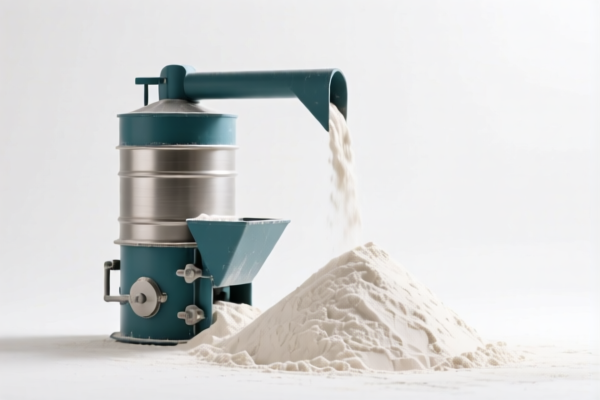
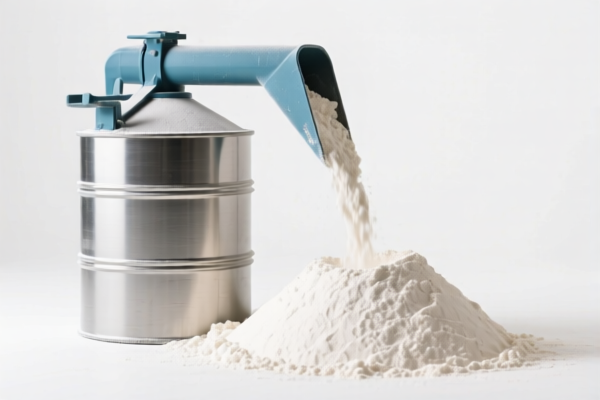
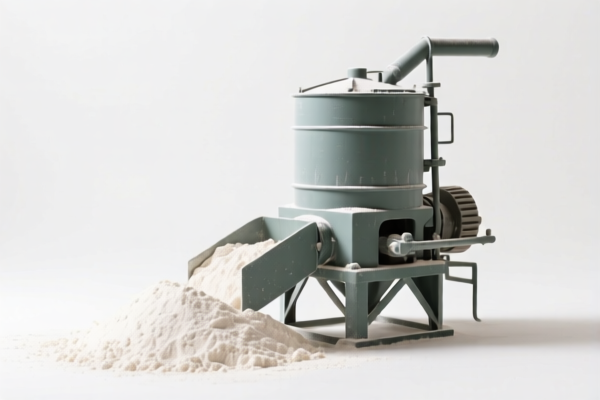
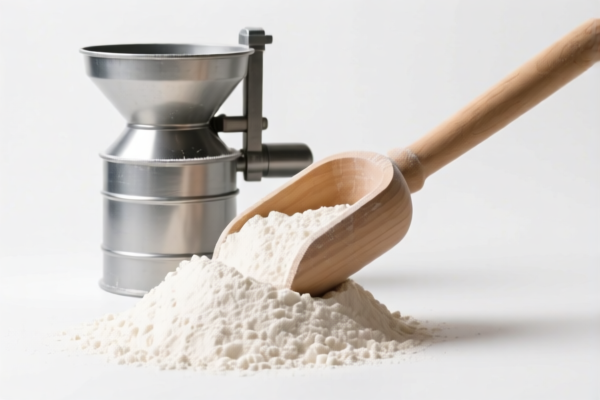
AI Analysis
🥯 Flatbread Flour Mill (Industrial Bakery Machinery)
🌐 HS Code Reference & Customs Clearance Guide | 2026 Latest Tariff Analysis | Professional Strategy
📌 I. Product Definition & Classification: Do You Understand "Flatbread Machinery"?
A "Flatbread Flour Mill" in the context of industrial trade typically refers to Bakery Machinery used for the industrial preparation or manufacture of bakery products (including flatbreads like tortillas, naan, lavash, etc.). It is not a simple household grinder but an industrial machine for processing flour into dough or baking the final product.
In international trade, this falls under Chapter 84: Nuclear reactors, boilers, machinery and mechanical appliances; parts thereof. Specifically, it is classified as "Machinery... for the industrial preparation or manufacture of food or drink" with a specific focus on Bakery Machinery.
⚠️ Key Distinction:
- If the machine is purely for grinding grain into flour (raw material processing) and is not part of a bakery line, it might fall under 8437 (Machinery for working flour, meal or starch).
- However, the provided data (<DATA>) explicitly lists 8438.10 for "Bakery machinery". In customs practice, if the "Flour Mill" is integrated into a flatbread production line or designed specifically for the manufacture of bakery goods (preparing dough/flour mix for baking), it is classified under 8438.10.
- Crucial Check: Does it mix, knead, or prepare dough? If yes → 8438.10. If it is a standalone hammer mill for raw wheat → Likely 8437 (but not in the provided<DATA>).
- Based strictly on the provided<DATA>, we assume this is categorized under Bakery Machinery (8438.10).
📦 II. HS Code Classification Details (Based on Provided <DATA>)
The provided data specifies two sub-headings under 8438.10 for Bakery Machinery:
| HS Code | Product Description | Application Scenario | Tax Rate (Total) |
|---|---|---|---|
8438.10.00.10 |
Bakery machinery (Specifically named) | Industrial mixers, kneaders, dividers, or integrated flatbread lines | 7.5% |
8438.10.00.90 |
Other (Bakery machinery) | Other bakery equipment not specifically listed, including certain automated flatbread prep units | 7.5% |
🔍 Critical Note:
- Both sub-codes under 8438.10 carry the same total tax rate of 7.5%.
- The distinction between.10and.90is administrative. If your machine is explicitly named "Bakery Machinery" in your invoice and specs,.10is often the default. If it's a specialized component or less common variant,.90may apply.
- Do NOT confuse with 8509.40 (Home use food grinders). An industrial flatbread flour mill is NOT a domestic appliance.
💰 III. 2026 Tariff Rate Breakdown (US Import from China)
✅ Applicable Country: United States (US)
✅ Origin: China (CN)
✅ Effective Date: Current (2025-2026)
🎯 1. For HS Code 8438.10.00.10 or 8438.10.00.90
| Item | Content |
|---|---|
| Base Duty Rate | 0.0% (Most Favored Nation rate for machinery under 8438.10) |
| Section 301 Additional Duty | +7.5% (List 4 tariff increase for specific machinery categories) |
| Total Effective Rate | 7.5% |
| Calculation Basis | CIF Value (Cost + Insurance + Freight) × 7.5% |
| De Minimis Exemption | ❌ Not Applicable (Value typically exceeds $800; Section 301 duties apply) |
| Legal Basis | USITC:8438.10.00.10 / USITC:8438.10.00.90 → Footnote: 9903.88.01 (Section 301) |
📌 Explanation:
- The base duty for bakery machinery is 0%. This is favorable for industrial equipment.
- The 7.5% comes entirely from Section 301 trade remedies against Chinese imports.
- No other hidden taxes (like IEEPA 10% or USITC 25% for other categories) apply here. The total is capped at 7.5%.
🛠️ IV. Customs Clearance Practical Advice
✅ 1. Required Documentation Checklist
| Document | Required? | Notes |
|---|---|---|
| ✅ Commercial Invoice | ✔️ | Must clearly state: "Industrial Bakery Machinery for Flatbread Production" |
| ✅ Packing List | ✔️ | Detail machine components, weight, and dimensions |
| ✅ Product Specification Sheet | ✔️ | Highlight: "Industrial Use", "Bakery Application", "Not for Home Use" |
| ✅ Certificate of Origin | ✔️ | To prove origin (China) for Section 301 assessment |
| ✅ Safety Certifications | ✔️ | UL, CE, or NSF (if for food contact) |
| ✅ Import License | ❌ | Usually not required for general machinery |
✅ 2. Classification Strategy (Key to Avoiding Penalties)
| Scenario | Correct HS Code | Reason |
|---|---|---|
| Industrial Flatbread Line (includes mixing, kneading, baking) | 8438.10.00.10 |
Explicitly "Bakery Machinery" |
| Standalone Industrial Flour Mixer for Bakery | 8438.10.00.10 |
Falls under "Bakery machinery" |
| Household Blender/Grinder (for home flatbread prep) | 8509.40.00.15 or .40 |
NOT this product. Domestic appliance. |
| Raw Grain Hammer Mill (not for bakery) | 8437 (Not in <DATA>) |
If imported, this may have different rates. Ensure classification is correct. |
⚠️ Warning:
- If you import a small, manual, or semi-industrial flour mill that could be argued as a "home appliance," customs may try to classify it under 8509 (Electromechanical domestic appliances).
- 8509.40.00.15 (Blenders) has a 4.2% duty (0% base + 4.2% Section 301?).
- 8509.40.00.40 (Food Grinders) has 0% duty.
- However, if the machine is clearly industrial (large size, commercial power, designed for factory use), it must be 8438. Misclassification as 8509 to get 0% can lead to seizure, fines, and back taxes.
✅ 3. Declaration Best Practices
- Description: Use precise language: "Industrial Bakery Machinery: Dough Mixer for Flatbread Production, Model XYZ, For Factory Use Only."
- Value: Ensure declared value is accurate. Section 301 duties are calculated on the full CIF value.
- Origin Marking: Clearly mark the machine with "Made in China" to comply with US marking laws.
🌍 V. Global Market Comparison (2026)
| Country/Region | Recommended HS Code | Duty Rate (China Origin) | Notes |
|---|---|---|---|
| 🇺🇸 USA | 8438.10.00.10/.90 |
7.5% | Section 301 applies. Base 0% + 7.5% |
| 🇨🇳 China | 8438.10 |
Varies (Export) | Export duties may apply if any |
| 🇪🇺 EU | 8438.10 |
~2.7% | No Section 301. Lower duty than US |
| 🇬🇧 UK | 8438.10 |
~2.7% | Post-Brexit, similar to EU |
| 🇯🇵 Japan | 8438.10 |
~1.5% | Low duty, FTAs may apply |
📌 Conclusion:
- The US tariff of 7.5% is moderate compared to other high-tech goods (like semiconductors or EVs).
- No duty-free options are available for Chinese bakery machinery under current US trade policy.
📌 VI. Common Mistakes & Pitfalls
❌ Mistake 1: Classifying industrial bakery machinery under 8479.82 (General mixing machines).
👉 Consequence: 8479.82 has a 25% duty (0% base + 25% Section 301). You would overpay 17.5%!
✅ Fix: Ensure the machine is described as Bakery Machinery (8438.10).
❌ Mistake 2: Classifying as 8509 (Home Appliance) to get 0% duty.
👉 Consequence: Customs may reject this if the machine is too large/industrial. Leads to reclassification, penalties, and delays.
✅ Fix: Be honest. If it's industrial, use 8438. If it's home use, use 8509.
❌ Mistake 3: Ignoring the Section 301 rate.
👉 Consequence: Budgeting errors. The base rate is 0%, but the total is 7.5%.
✅ Fix: Calculate landed cost using 7.5%, not 0%.
🎯 VII. Conclusion: Professional Clearance, Cost Optimization!
🎯 Key Takeaway:
🔹 HS Code:
8438.10.00.10or8438.10.00.90
🔹 Total Duty: 7.5% (0% Base + 7.5% Section 301)
🔹 Strategy: Clearly declare as Bakery Machinery to avoid the 25% rate for general mixing machines (8479.82).
📌 Pro Tip:
If you are importing a multi-functional machine that can also grind raw grain (not just for bakery), consider splitting the declaration:
- Part 1: Bakery mixer → 8438.10 (7.5%)
- Part 2: Grain grinder → 8437 (if separate)
- Consult a customs broker to ensure each component is classified correctly to minimize total duty.
📣 Immediate Action:
📞 Contact a licensed US customs broker.
📄 Provide detailed machine specs (photos, power, capacity).
🚀 Ensure correct HS Code8438.10is used to avoid 25% penalty rates and leverage the 0% base duty.
✨ Precision in Classification = Savings in Cost!
💼 Don't let a 0.1 difference in HS code cost you 17.5% in duties!
Customer Reviews
About HS Code Classification
The Harmonized System (HS) is an internationally standardized nomenclature developed by the World Customs Organization (WCO) to classify traded products. Over 200 countries use the HS system as the basis for customs tariffs, trade statistics, and import/export regulations.
Each HS code follows a hierarchical structure:
- Chapter (2 digits) — Broad category of goods (e.g., Chapter 84: Machinery and Mechanical Appliances)
- Heading (4 digits) — More specific grouping within the chapter
- Subheading (6 digits) — Internationally standardized breakdown, used by all WCO member countries
- National subdivisions (8-10 digits) — Country-specific extensions for further classification, such as US HTSUS 10-digit codes
Correct HS code classification is essential for smooth customs clearance, accurate duty payment, and compliance with trade regulations. Misclassification can lead to customs delays, overpayment of duties, or penalties.
When importing from CN to US, the applicable tariff rates may include:
- Most-Favored-Nation (MFN) rate — The standard duty rate applied to WTO members
- General rate — Applied to countries without trade agreements
- Trade remedy duties — Additional tariffs such as Section 301 (anti-dumping), Section 232 (national security), or countervailing duties
The information provided on this page is for reference purposes only. For official classification, please consult with your local customs authority or a licensed customs broker.