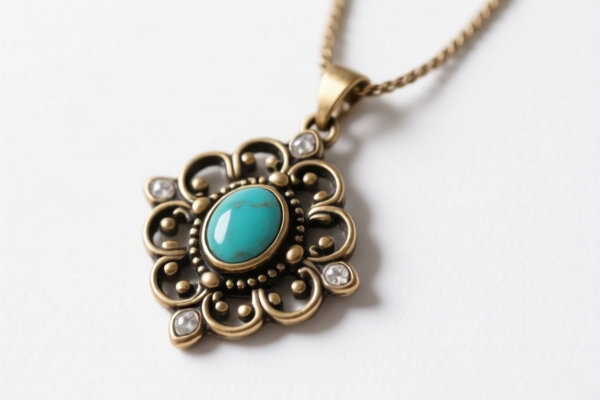
flower pendant
CN → US| HS Code | Tariff Rate | Origin | Destination | Doc |
|---|---|---|---|---|
| 7113195095 | 23.0% | CN | US | Official Doc |
| 7113195091 | 15.5% | CN | US | Official Doc |
| 7116200500 | 13.3% | CN | US | Official Doc |
| 7116201500 | 24.0% | CN | US | Official Doc |
| 7117909000 | 28.5% | CN | US | Official Doc |
Product Images


AI Analysis
🌸 Flower Pendant: Global HS Code Guide & 2026 Customs Strategy
🚀 Professional Clearance Guide for Jewelry Importers | Precision Classification & Tax Optimization
🌍 I. Product Definition: What is a "Flower Pendant"?
A Flower Pendant is a decorative jewelry item worn around the neck. In the global trade landscape, it is NOT classified as a necklace or chain. It is an orphan piece that requires a clasp or chain (sold separately) to function.
The classification depends entirely on Material Composition: 1. Precious Metals (Gold, Silver, Platinum) → Chapter 7113 2. Semi-Precious Stones / Gemstones → Chapter 7116 3. Base Metals / Imitation / Fashion Jewelry → Chapter 7117
⚠️ Critical Warning:
Misclassifying a "Flower Pendant" as a generic "Necklace" (Chapter 7117) when it contains precious materials can lead to customs seizures, massive fines, and retroactive tax liabilities.
📦 II. HS Code Classification Matrix (2026 Tax Regime)
Based on the provided data, here is the authoritative mapping for Flower Pendants under the current 2026 tariff framework (China Origin → US Market).
| HS Code | Product Description | Material Basis | Key Logic |
|---|---|---|---|
| 7113.19.50.95 | Precious Metal Pendant (Other) | Gold, Silver, Platinum (or Plated) | High-value metals; "Other" category for non-specified forms. |
| 7113.19.50.91 | Precious Metal Pendant (Specific) | Precious Metal | Fits general jewelry definition; distinct from chains/necklaces. |
| 7116.20.05.00 | Stone/Gem Pendant | Semi-Precious Stones | Material is gem/stone, not metal-dominated. |
| 7116.20.15.00 | Stone/Mineral Pendant | Gems/Minerals (Catch-all) | Fits the "兜底" (catch-all) category for mineral-based pendants. |
| 7117.90.90.00 | Imitation Jewelry | Base Metal / Plastic / Alloy | No precious content; "Other" category for costume jewelry. |
🔍 Classification Logic Summary:
Is it Gold/Silver? → Go to 7113.
Is it made of Stones? → Go to 7116.
Is it Cheap/Plastic/Alloy? → Go to 7117.
Note: All listed items are Pendants and explicitly exclude "Chains" or "Necklaces" as a primary function.
💰 III. 2026 Tariff Rate Deep Dive (Total Tax Breakdown)
🌐 Scope: Import from China (CN) to the USA (US)
📅 Effective: 2026 Regime (Includes Section 301, Base, and Section 232/Add-on tariffs)
🎯 1. 7113.19.50.95 — Precious Metal Pendant (High Duty)
- Base Tariff: 5.5%
- Add-on Tariff (301): 7.5%
- Section 232 / 122 Clause: 10.0%
- 🔴 TOTAL RATE: 23.0%
- Calculation:
CIF × 23% - Implication: High Cost. Suitable for high-margin luxury goods only.
- Calculation:
🎯 2. 7113.19.50.91 — Precious Metal Pendant (Medium Duty)
- Base Tariff: 5.5%
- Add-on Tariff (301): 0.0%
- Section 232 / 122 Clause: 10.0%
- 🟠 TOTAL RATE: 15.5%
- Calculation:
CIF × 15.5% - Implication: Moderate Cost. The most competitive option for genuine precious metal jewelry if the specific subheading applies.
- Calculation:
🎯 3. 7116.20.05.00 — Stone/Gem Pendant (Low-Mid Duty)
- Base Tariff: 3.3%
- Add-on Tariff (301): 0.0%
- Section 232 / 122 Clause: 10.0%
- 🟢 TOTAL RATE: 13.3%
- Calculation:
CIF × 13.3% - Implication: Best Rate for Gemstones. Ideal for natural stone flower pendants.
- Calculation:
🎯 4. 7116.20.15.00 — Stone/Mineral Pendant (High Duty)
- Base Tariff: 6.5%
- Add-on Tariff (301): 7.5%
- Section 232 / 122 Clause: 10.0%
- 🔴 TOTAL RATE: 24.0%
- Calculation:
CIF × 24.0% - Implication: Highest Rate. Likely applies to specific composite mineral products.
- Calculation:
🎯 5. 7117.90.90.00 — Imitation Jewelry (Highest Duty)
- Base Tariff: 11.0%
- Add-on Tariff (301): 7.5%
- Section 232 / 122 Clause: 10.0%
- 🔴 TOTAL RATE: 28.5%
- Calculation:
CIF × 28.5% - Implication: Very High. Counter-intuitive, but imitation jewelry often faces higher base rates due to "Other" catch-all classification.
- Calculation:
🛠️ IV. Customs Clearance Strategy & Actionable Advice
✅ 1. Material Declaration (The Golden Rule)
海关 (Customs) will not believe your declaration without proof. * For 7113 (Precious): Must provide Hallmark Certificates, Assay Reports, or a Stamped Material Certificate (e.g., "14K Gold", "Sterling Silver"). * For 7116 (Stones): Provide Gemological Reports (GIA, AGS) or detailed material analysis showing the stone type. * For 7117 (Imitation): Declare clearly as "Base Metal" or "Alloy". If there is any doubt, it risks being classified as 7117.90.90.00 with the highest tax.
✅ 2. The "Pendant vs. Necklace" Trap
- ❌ ERROR: Declaring "Flower Necklace" when the chain is missing.
- ✅ FIX: Always declare as "Pendant (No Chain Included)".
- If sold separately, the HS Code for the chain (often 7113 or 7117) must be calculated separately.
- If sold as a set, the value of the pendant and chain must be split on the commercial invoice to avoid classification errors.
✅ 3. Tax Optimization Opportunities
- Target 7113.19.50.91: If your product is Gold/Silver, verify if it fits the 0% Add-on tariff subheading (7113.19.50.91) rather than 7113.19.50.95. This saves 8% of the CIF value.
- Target 7116.20.05.00: If using semi-precious stones, this code offers the lowest total tax (13.3%). Ensure the "flower" design does not trigger the "15" catch-all category.
🚨 V. Common Pitfalls & "Red Flags"
| ❌ Mistake | 🚫 Consequence | 💡 Solution |
|---|---|---|
| Generic Description | "Flower Jewelry" on Invoice | Use specific terms: "Gold Pendant, Flower Design". |
| No Hallmark | Seizure or Re-classification to 7117 | Attach photos of stamps (e.g., "925", "18K"). |
| Undervaluation | 28.5% Tax + Fine | Declare Actual Commercial Value (not a sample price). |
| Mixing Materials | Unclear material % | Provide a Bill of Materials (BOM) with % composition. |
🌟 VI. Pro Tips for Smooth Clearance
📝 Customs Declaration Phraseology: "Flower-shaped pendant, [Material, e.g., 925 Sterling Silver], containing [Gemstone, e.g., Cubic Zirconia], for use in fashion jewelry, sold separately from chain."
🏷️ Labeling Requirement: Ensure the product tag includes: 1. Material Content (e.g., "925 Silver") 2. Country of Origin (e.g., "Made in China") 3. Importer of Record details
📌 Conclusion: Your Path to Lower Taxes
- Identify Material: Is it Gold, Stone, or Base Metal?
- Select Code:
- Gold/Silver → 7113.19.50.91 (Target: 15.5%)
- Stone → 7116.20.05.00 (Target: 13.3%)
- Avoid "Other" unless necessary → 7117.90.90.00 (Risk: 28.5%)
- Document Everything: Certificates, Photos, BOMs.
🚀 Final Advice:
"Material defines the Tax." A flower pendant made of Semi-Precious Stone is your lowest tax friend. A Base Metal version is your most expensive nightmare.
Verify your material composition BEFORE shipping!
🔥 Need a Pre-Arrival Ruling?
Contact your customs broker today to get a Binding Tariff Classification (BTC) for your specific flower pendant design. Don't let a 28.5% surprise eat your margins!
Customer Reviews
About HS Code Classification
The Harmonized System (HS) is an internationally standardized nomenclature developed by the World Customs Organization (WCO) to classify traded products. Over 200 countries use the HS system as the basis for customs tariffs, trade statistics, and import/export regulations.
Each HS code follows a hierarchical structure:
- Chapter (2 digits) — Broad category of goods (e.g., Chapter 84: Machinery and Mechanical Appliances)
- Heading (4 digits) — More specific grouping within the chapter
- Subheading (6 digits) — Internationally standardized breakdown, used by all WCO member countries
- National subdivisions (8-10 digits) — Country-specific extensions for further classification, such as US HTSUS 10-digit codes
Correct HS code classification is essential for smooth customs clearance, accurate duty payment, and compliance with trade regulations. Misclassification can lead to customs delays, overpayment of duties, or penalties.
When importing from CN to US, the applicable tariff rates may include:
- Most-Favored-Nation (MFN) rate — The standard duty rate applied to WTO members
- General rate — Applied to countries without trade agreements
- Trade remedy duties — Additional tariffs such as Section 301 (anti-dumping), Section 232 (national security), or countervailing duties
The information provided on this page is for reference purposes only. For official classification, please consult with your local customs authority or a licensed customs broker.