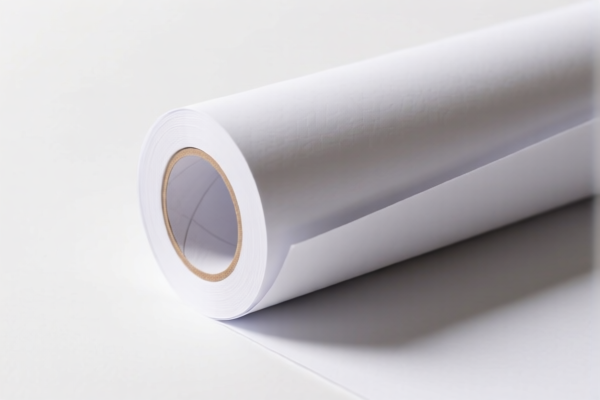
flypaper roll
CN → US| HS Code | Tariff Rate | Origin | Destination | Doc |
|---|---|---|---|---|
| 3808911000 | 37.8% | CN | US | Official Doc |
| 3808999501 | 15.0% | CN | US | Official Doc |
| 3919102055 | 40.8% | CN | US | Official Doc |
| 3919905060 | 40.8% | CN | US | Official Doc |
Product Images



AI Analysis
🪰 Flypaper Roll (Insect Traps)
🌐 HS Code Reference & Customs Clearance Guide | 2026 Latest Tariff Analysis | Professional Clearance Strategy
📌 I. Product Definition & Classification: What Exactly is "Flypaper Roll"?
Flypaper rolls, also known as ribbon fly catchers, are adhesive strips used for catching flying insects. In international trade, they fall under Chapter 38: Miscellaneous Chemical Products, specifically classified as insecticides or similar products.
The critical distinction in classification lies in the form of packaging and the specific type of insecticidal action:
- Fly Ribbons/Rolls (Sticky Traps): These are strips coated with adhesive (often containing attractants or mild pesticides) designed to catch flies mechanically or chemically. They are typically sold in rolls or strips for retail sale. → HS Code 3808.91.10.00
- General Insecticides/Pesticides: If the product is a liquid, powder, or gas in a pressurized can, or a general preparation not specifically described as "fly ribbons," it may fall under other subheadings. → HS Code 3808.99.95.01
⚠️ Key Distinction Point:
- If the product is a strip/roll coated with adhesive for catching flies → 3808.91.10.00
- If the product is a general insecticide preparation (not a sticky strip/roll) → 3808.99.95.01
📦 II. HS Code Classification Details (2026 Latest Tariff Authoritative Comparison)
| HS Code | Product Description | Applicable Scenario | Tax Rate (Total) |
|---|---|---|---|
3808.91.10.00 |
Insecticides: Fly ribbons (ribbon fly catchers) | Sticky fly traps, adhesive strips, roll-form insect traps | 0.0% |
3808.99.95.01 |
Other: Insecticides: Other: Other: Other: Other | General insecticide preparations, sprays, powders, non-roll forms | 30.0% |
3919.10.20.55 |
Self-adhesive plates... of plastics: In rolls... not exceeding 20 cm: Other | Note: If NO insecticide is present, just plain adhesive tape | 0.0% |
3919.90.50.60 |
Self-adhesive plates... of plastics: Other: Other | Note: Non-adhesive or plain plastic sheets/films | 0.0% |
🔍 Important Reminder:
- Flypaper is specifically categorized under Insecticides (3808) because it functions as an insect-catching agent, often treated with attractants.
- If the product is plain adhesive tape with NO insecticidal properties, it should be classified under Plastics (3919).
- Do not confuse sticky fly traps (3808) with plain adhesive rolls (3919). The presence of insecticidal function changes the chapter entirely.
💰 III. 2026 Latest Tariff Rate Details (Including Surcharges)
✅ Applicable Country: USA
✅ Origin: China (CN)
✅ Effective Date: 2025-11-10 onwards (for subsequent imports)
🎯 1. 3808.91.10.00 —— Insecticides: Fly ribbons (ribbon fly catchers)
| Item | Content |
|---|---|
| Base Tariff | 0% (ad valorem) |
| Section 301 Additional Tariff | 0% |
| Total Tax Rate | 0.0% |
| Tax Calculation | CIF Value × 0.0% = $0 |
| De Minimis Exemption Eligible? | ❌ No (Deny de minimis for this category under certain conditions, though generally 0% tax means no duty, but compliance is key) |
| Legal Basis | USITC Harmonized Tariff Schedule (HTS) Chapter 38 |
📌 Explanation:
- This is a highly favorable tariff rate.
- Fly ribbons/rolls are specifically listed under "Fly ribbons" within the insecticides section, benefiting from zero duty.
- This contrasts sharply with general insecticides, which face high tariffs.
🎯 2. 3808.99.95.01 —— Other Insecticides (Non-Fly Ribbon Forms)
| Item | Content |
|---|---|
| Base Tariff | 5.0% |
| Section 301 Additional Tariff | 25.0% |
| Total Tax Rate | 30.0% |
| Tax Calculation | CIF Value × 30.0% |
| De Minimis Exemption Eligible? | ❌ No |
| Legal Basis | USITC HTS + Section 301 Footnotes |
📌 Warning:
- If your "flypaper" is misclassified as a "general insecticide preparation" (e.g., if it's a gel, spray, or non-roll form), you will pay 30% duty instead of 0%.
- This is a major risk area for customs audits.
🎯 3. 3919.10.20.55 / 3919.90.50.60 —— If NO Insecticidal Function
| Item | Content |
|---|---|
| Base Tariff | 0% |
| Section 301 Additional Tariff | 0% |
| Total Tax Rate | 0.0% |
| Applicability | Only if the product is plain adhesive tape/sheet with NO pest-control function |
🛠️ IV. Customs Clearance Practical Advice (Real-World Pitfall Guide)
✅ 1. Required Documentation Checklist (Must-Have)
| Document | Required | Notes |
|---|---|---|
| ✅ Product Specification Sheet | ✔️ | Must clearly state: "Fly Paper/Roll," "Adhesive," "Insect Trap," and list any active ingredients (if any). |
| ✅ Product Photos | ✔️ | Clear images showing the roll, packaging, and adhesive surface. |
| ✅ Commercial Invoice | ✔️ | Must explicitly state: "Fly Ribbons (Ribbon Fly Catchers)" or "Sticky Fly Traps." Avoid vague terms like "Adhesive Tape." |
| ✅ Ingredients List | ✔️ | If the flypaper contains attractants or mild pesticides, list them. This confirms it falls under 3808, not 3919. |
| ✅ Packaging Details | ✔️ | Confirm if it’s sold in rolls or sheets. Rolls ≤20cm width may fall under specific subheadings. |
✅ 2. Classification Tips (Critical Mnemonic)
🔥 "Stick it to Flies? Go 3808. Plain Tape? Go 3919. Wrong Code = 30% Penalty!"
| Scenario | Correct HS Code | Wrong Code | Consequence |
|---|---|---|---|
| Sticky roll for catching flies | 3808.91.10.00 | 3919.10.20.55 (Plastic Tape) | 0% Duty vs. 0% Duty → But wrong description can lead to inspection delays. |
| General insecticide spray/gel | 3808.99.95.01 | 3808.91.10.00 | 30% Duty vs. 0% Duty → HUGE COST DIFFERENCE! |
| Plain adhesive tape (no pest control) | 3919.10.20.55 | 3808.91.10.00 | 0% Duty → If you claim it's flypaper but it's not, it's fraud. |
📌 Key Insight:
- The function determines the HS Code.
- If it’s designed to catch insects → Chapter 38.
- If it’s just sticky tape → Chapter 39.
✅ 3. Special Cases & Handling
| Situation | Handling Advice |
|---|---|
| Flypaper with Attractants | Still classified under 3808.91.10.00 if it’s a ribbon/roll. The presence of attractants confirms it’s an insecticidal product. |
| Flypaper Rolls >20cm Width | If the roll is wider than 20cm, it may fall under 3919.10.20.55 or 3919.90.50.60 if no insecticidal function. But if it’s still for flies, ensure it’s properly described under 3808. |
| OEM/Custom Designs | Provide client’s design specs. Ensure the invoice description matches the physical product. |
| Bundled Sales | If flypaper is sold with a holder, still classify the flypaper itself. Do not split the item. |
🌍 V. Global Market Comparison (2026 Latest)
| Country/Region | Recommended HS Code | Tariff | Certification | Notes |
|---|---|---|---|---|
| 🇺🇸 USA | 3808.91.10.00 |
0% | EPA Registration (if pesticidal) | Critical to distinguish from 3808.99.95.01 (30%) |
| 🇨🇳 China | 3808.91.10.00 |
5% | N/A | Exporter should focus on US/EU markets |
| 🇪🇺 EU | 3808.91.10.00 |
0% | BPR Registration | Strict on active ingredients |
| 🇦🇺 Australia | 3808.91.10.00 |
5% | APVMA Approval | Check for active substance registration |
📌 Conclusion:
- USA offers 0% duty for fly ribbons/rolls (3808.91.10.00), which is a major advantage.
- Misclassification as general insecticides (3808.99.95.01) results in 30% duty, which is a critical cost risk.
📌 VI. Common Errors & Pitfalls (Blood & Tears Lessons)
❌ Error 1: Classifying flypaper as "Adhesive Tape" (3919)
👉 Consequence: While the tariff is 0% either way, customs may reject the description if it doesn’t match the product’s function. May lead to inspections or penalties for misdeclaration.
❌ Error 2: Classifying flypaper as "General Insecticide" (3808.99.95.01)
👉 Consequence: 30% Duty instead of 0%. HUGE COST IMPACT!
❌ Error 3: Using vague terms like "Sticky Strip" or "Adhesive Roll"
👉 Consequence: Customs cannot determine if it’s 3808 or 3919. Delays in clearance.
✅ Correct Approach:
“Flypaper Roll, Sticky Fly Trap, Adhesive Strip, For Catching Flies, Model XYZ, EPA Registered (if applicable)”
🎯 VII. Conclusion: Professional Classification Saves Money!
🎯 Remember the Mnemonic:
🔹 "Fly Roll? 3808. Plain Tape? 3919. Wrong Code = 30% Penalty!"
🔹 "0% Duty is Sweet, 30% is Bitter. Classify Correctly, Avoid the Hit."
📌 Pro Tip:
If your flypaper contains active pesticide ingredients, ensure you have EPA Registration in the US. This is a regulatory requirement, not just a tariff one. Failure to comply can lead to seizure of goods.
📣 Immediate Action:
📞 Consult a Customs Broker + Provide Product Photos + Verify Active Ingredients
🚀 Ensure Your Flypaper Rolls Are Classified Under 3808.91.10.00 for 0% Duty!
✨ Professional Clearance Starts with Accurate Classification!
💼 Every Percent of Duty Counts!
Customer Reviews
About HS Code Classification
The Harmonized System (HS) is an internationally standardized nomenclature developed by the World Customs Organization (WCO) to classify traded products. Over 200 countries use the HS system as the basis for customs tariffs, trade statistics, and import/export regulations.
Each HS code follows a hierarchical structure:
- Chapter (2 digits) — Broad category of goods (e.g., Chapter 84: Machinery and Mechanical Appliances)
- Heading (4 digits) — More specific grouping within the chapter
- Subheading (6 digits) — Internationally standardized breakdown, used by all WCO member countries
- National subdivisions (8-10 digits) — Country-specific extensions for further classification, such as US HTSUS 10-digit codes
Correct HS code classification is essential for smooth customs clearance, accurate duty payment, and compliance with trade regulations. Misclassification can lead to customs delays, overpayment of duties, or penalties.
When importing from CN to US, the applicable tariff rates may include:
- Most-Favored-Nation (MFN) rate — The standard duty rate applied to WTO members
- General rate — Applied to countries without trade agreements
- Trade remedy duties — Additional tariffs such as Section 301 (anti-dumping), Section 232 (national security), or countervailing duties
The information provided on this page is for reference purposes only. For official classification, please consult with your local customs authority or a licensed customs broker.