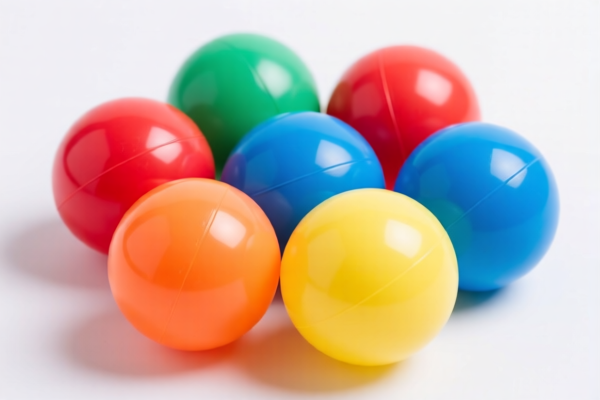
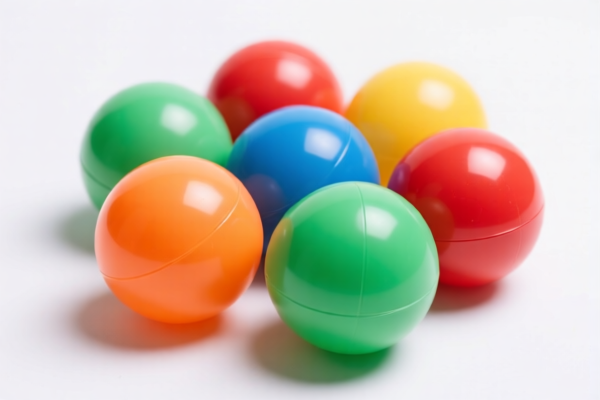
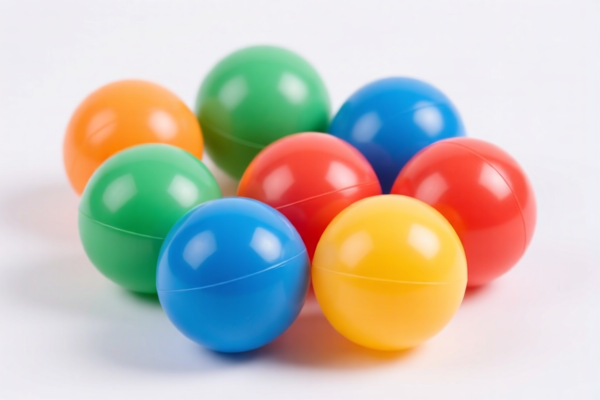
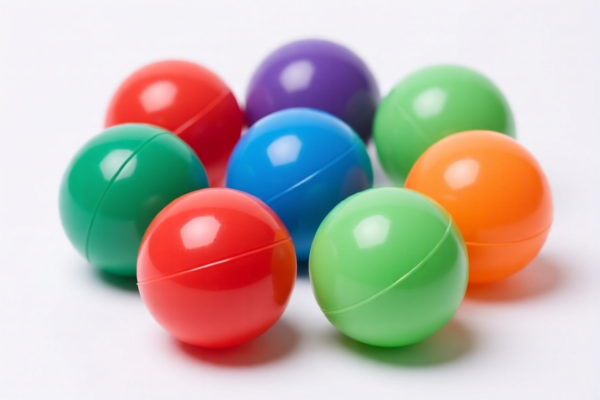
foam balls set
CN → US| HS Code | Tariff Rate | Origin | Destination | Doc |
|---|---|---|---|---|
| 6702906500 | 34.5% | CN | US | Official Doc |
| 9503000071 | 10.0% | CN | US | Official Doc |
| 9503000073 | 10.0% | CN | US | Official Doc |
| 6702104000 | 13.4% | CN | US | Official Doc |
| 9505906000 | 10.0% | CN | US | Official Doc |
Product Images
AI Analysis
🎾 Foam Balls Set (Toys, Decorations & Party Supplies)
🌐 HS Code Reference & Customs Clearance Guide | 2026 Latest Tariff Analysis | Professional Clearance Strategy
📌 I. Product Definition & Classification: What Exactly is a "Foam Ball Set"?
A "Foam Balls Set" is a versatile product category that can fall into multiple HS Code classifications depending on its primary function, material composition, and packaging format. In international trade, this item is often ambiguous, leading to misclassification risks. It generally falls into one of three main buckets:
1. Toys (Play Purpose): If the balls are marketed for play, sports, or entertainment (e.g., soft play balls, foam dodgeballs), they are classified under Chapter 95. 2. Artificial Flowers/Plants (Decorative Purpose): If the "balls" are stylized as fruits, berries, or decorative elements made of foam/fiber, they may fall under Chapter 67. 3. Festival/Party Articles (Event Purpose): If sold as part of a party kit (e.g., balloon alternatives, confetti substitutes) for festivals or entertainment, they may be classified under Chapter 95 or Chapter 95 subcategories for other articles.
⚠️ Key Distinction Point:
- If the primary purpose is play/sports → 9503 (Toys)
- If the primary purpose is decoration (e.g., floral arrangement filler) → 6702 (Artificial Flora)
- If the primary purpose is festive/party entertainment → 9505 or 9503 (Other Toys/Articles)
📦 II. HS Code Classification Details (2026 Latest Tariff Authority Comparison)
| HS Code | Product Description | Application Scenario | Material Inference |
|---|---|---|---|
6702.90.65.00 |
Artificial flowers, foliage, and fruits, made of materials other than plastic (e.g., paper pulp, fiber, or other organic materials) | Decorative arrangements, floral fillers, DIY craft projects | ❌ Non-Plastic (Paper/Fiber) |
9503.00.00.71 |
Toys: Other toys, representing animals or non-human creatures, or modeled on human figures (e.g., sets, models) | Soft play sets, foam action figures, toy ball kits | ✅ Polyurethane (PU) Foam |
9503.00.00.73 |
Toys: Balls, specifically foam balls | Sports training, soft play, gym equipment | ✅ Foam Material |
6702.10.40.00 |
Artificial flowers, foliage, and fruits, made of plastics (including foam plastics) | Decorative foam berries, plastic floral stems | ✅ Plastic/Synthetic Resin (Foam) |
9505.90.60.00 |
Festival, carnival, or other entertainment articles (e.g., party poppers, joke toys) | Party favor kits, festive decorations | ✅ Rubber or Plastic |
🔍 Key Reminder:
- The material inference is critical. If the foam is identified as Polyurethane (PU), it is a plastic product. If it is identified as paper pulp-based foam, it falls under "other materials." - Packaging matters: A "set" implies multiple items or a complete kit, which can trigger different subcategories under Chapter 95.
💰 III. 2026 Latest Tariff Rate Breakdown (Including Surcharges & Policy Add-ons)
✅ Applicable Country: United States (US)
✅ Country of Origin: China (CN)
✅ Effective Date: From November 10, 2025 (and subsequent imports)
🎯 1. 6702.90.65.00 — Artificial Flora (Non-Plastic Materials)
| Item | Content |
|---|---|
| Basic Duty Rate | 17.0% (ad valorem) |
| Section 301 Surcharges | +7.5% (Standard 301 Tariff) |
| Section 122 Tariff | +10.0% (Specific import surcharge) |
| Total Tax Rate | 34.5% |
| Tax Calculation | CIF Value × 34.5% |
| De Minimis Exemption | ❌ Not Eligible (deny_de_minimis) |
| Legal Basis Path | Basic: 17.0% + 301: 7.5% + 122: 10.0% |
📌 Explanation:
- This high tax rate is due to the Section 301 and Section 122 additional tariffs applied to Chinese imports. - Even though it is a "decorative" item, the non-plastic material classification does not exempt it from the base 17% duty.
🎯 2. 9503.00.00.71 — Toys: Other Sets/Models (Foam Material)
| Item | Content |
|---|---|
| Basic Duty Rate | 0.0% |
| Section 301 Surcharges | 0.0% |
| Section 122 Tariff | +10.0% |
| Total Tax Rate | 10.0% |
| Tax Calculation | CIF Value × 10.0% |
| De Minimis Exemption | ❌ Not Eligible (deny_de_minimis) |
| Legal Basis Path | Basic: 0.0% + 301: 0.0% + 122: 10.0% |
📌 Explanation:
- Toys generally enjoy 0% basic duty and are often exempt from Section 301 surcharges (depending on specific exclusion lists, but here the data shows 0%). - However, the Section 122 Tariff of 10% still applies, making the total effective rate 10%.
🎯 3. 9503.00.00.73 — Toys: Balls (Foam Material)
| Item | Content |
|---|---|
| Basic Duty Rate | 0.0% |
| Section 301 Surcharges | 0.0% |
| Section 122 Tariff | +10.0% |
| Total Tax Rate | 10.0% |
| Tax Calculation | CIF Value × 10.0% |
| De Minimis Exemption | ❌ Not Eligible (deny_de_minimis) |
| Legal Basis Path | Basic: 0.0% + 301: 0.0% + 122: 10.0% |
📌 Note:
- Similar to the previous toy category, foam balls as toys have 0% base duty. - The 10% Section 122 tariff is the only significant cost driver here.
🎯 4. 6702.10.40.00 — Artificial Flora (Plastic/Foam Material)
| Item | Content |
|---|---|
| Basic Duty Rate | 3.4% |
| Section 301 Surcharges | 0.0% |
| Section 122 Tariff | +10.0% |
| Total Tax Rate | 13.4% |
| Tax Calculation | CIF Value × 13.4% |
| De Minimis Exemption | ❌ Not Eligible (deny_de_minimis) |
| Legal Basis Path | Basic: 3.4% + 301: 0.0% + 122: 10.0% |
📌 Explanation:
- If the foam is classified as plastic/polyurethane, it falls under "Plastics" in Chapter 67. - The basic duty is lower (3.4%) compared to non-plastic (17%), but the 10% Section 122 still applies. - Key Inference: "Foam" is commonly inferred as a plastic/synthetic resin material unless specified otherwise (e.g., paper foam).
🎯 5. 9505.90.60.00 — Festival/Entertainment Articles (Rubber/Plastic)
| Item | Content |
|---|---|
| Basic Duty Rate | 0.0% |
| Section 301 Surcharges | 0.0% |
| Section 122 Tariff | +10.0% |
| Total Tax Rate | 10.0% |
| Tax Calculation | CIF Value × 10.0% |
| De Minimis Exemption | ❌ Not Eligible (deny_de_minimis) |
| Legal Basis Path | Basic: 0.0% + 301: 0.0% + 122: 10.0% |
📌 Note:
- Items used for festivals, carnivals, or entertainment (e.g., party kits) are classified here. - Like toys, the base duty is 0%, but the 10% Section 122 applies.
🛠️ IV. Customs Clearance Practical Advice (Battle-Tested Pitfall Guide)
✅ 1. Preparation Checklist (All Items Required)
| Document | Required | Description |
|---|---|---|
| ✅ Product Specification Sheet | ✔️ | Must specify material (e.g., "Polyurethane Foam," "Paper Pulp"), dimensions, and weight. |
| ✅ Product Photos (Including Packaging) | ✔️ | Show the "set" clearly. Are they toys, decorations, or party favors? |
| ✅ Commercial Invoice | ✔️ | Must clearly state the exact nature of the goods (e.g., "Foam Toy Balls Set" vs. "Artificial Flower Fillers"). |
| ✅ Material Test Report | ✔️ | Crucial for distinguishing between Plastic (Foam) and Non-Plastic (Paper/Fiber) to determine Chapter 67 sub-category. |
| ✅ Packing List | ✔️ | Detail the contents of the "set" to avoid "unlisted items" flags. |
✅ 2. Declaration Tips (Key Mantras)
🔥 "Function First, Material Second, Set Whole, Don't Split!"
| Scenario | Correct Declaration | Wrong Action |
|---|---|---|
| Toys for Play | 9503.00.00.71 or .73 (Foam Balls) |
Declaring as "Decorations" → Higher Tax (34.5%) |
| Decorative Filler | 6702.90.65.00 (Non-Plastic) |
Declaring as "Plastic" → Wrong Code (if material is paper) |
| Decorative Filler (Plastic) | 6702.10.40.00 (Plastic Foam) |
Declaring as "Toys" → Risk of Misclassification |
| Party Kit | 9505.90.60.00 |
Declaring as individual items |
| Set + Accessories | Declare as Single Set | Splitting into "Balls" + "Box" → Each item taxed separately, potentially higher total |
✅ 3. Special Situation Handling
| Situation | Handling Advice |
|---|---|
| OEM Custom Foam Balls | Provide design files. If marketed as "Toys," use 9503. If marketed as "Props," use 9505. |
| Material Ambiguity | If unsure if foam is "Plastic" or "Paper," provide a material composition report. "Plastic Foam" = 6702.10.40.00. "Paper Foam" = 6702.90.65.00. |
| "Set" Definition | Ensure the "set" is a complete unit for a single purpose. If it contains both toys and decorations, consult a customs broker for composite goods ruling. |
| Section 122 Tariff Impact | All listed HS codes above incur a 10% Section 122 tariff. Ensure your landed cost calculation includes this. |
🌍 V. Global Market Clearance Comparison (2026 Latest)
| Country/Region | Recommended HS Code | Tariff (China Origin) | Certification Requirements | Notes |
|---|---|---|---|---|
| 🇺🇸 USA | 9503.00.00.71 (Toys) |
10% (Base 0% + 122 10%) | ASTM F963, CPC | Decorative items (6702) face 34.5% |
| 🇨🇳 China | 9503.00.00.73 |
5% (General) | GB Standard | No Section 301/122 |
| 🇪🇺 EU | 9503.00.00.71 |
0% (if <€150) | CE, EN71 | No additional surcharges |
| 🇬🇧 UK | 9503.00.00.71 |
0% (if <£135) | UKCA | Post-Brexit rules apply |
📌 Conclusion:
- USA has the highest complexity due to Section 122 (10%) and Section 301 (where applicable). - Toys (9503) are the most tax-efficient option if the product is genuinely for play (0% base + 10% 122 = 10%). - Decorative Items (6702) can be much more expensive if classified as "Other Materials" (34.5%) or "Plastic" (13.4%).
📌 VI. Common Errors & Pitfall Guide (Lessons from Blood & Tears)
❌ Error 1: Declaring "Foam Balls" as "Toys" when they are actually "Decorative Fillers"
👉 Consequence: Customs may reclassify to 6702.90.65.00 → Tax jumps from 10% to 34.5%.
❌ Error 2: Declaring "Paper Foam" as "Plastic Foam"
👉 Consequence: Wrong HS Code 6702.10.40.00 (13.4%) vs. 6702.90.65.00 (34.5%). While 13.4% is lower, misdeclaration can lead to penalties for false declaration. Note: Always match material.
❌ Error 3: Ignoring the "Section 122" Tariff
👉 Consequence: Underestimating landed cost by 10% on all items.
❌ Error 4: Splitting a "Set" into individual components for lower tax
👉 Consequence: Customs may aggregate the value and apply the highest duty rate to the entire shipment.
✅ Correct Practice:
"Foam Toy Balls Set (Polyurethane), 10 Pieces, for Indoor/Outdoor Play, ASTM F963 Certified, Model XYZ"
🎯 VII. Conclusion: Professional Declaration, Save Time & Money!
🎯 Remember the Mantra:
🔹 "Toys are 10% (0+10), Decorations are 13-34%, Function Rules All!"
🔹 "Foam is Plastic (usually) unless it's Paper, Choose the Right Chapter!"
📌 Pro Tip:
If your product is 100% Paper Pulp Foam, use 6702.90.65.00 (34.5%) but declare explicitly as "Non-Plastic" to avoid penalties.
If it is PU Foam, use 9503 (if toys) or 6702.10.40.00 (if decorations) to minimize tax.
Always apply for an Advance Ruling (ACE) if the product is a hybrid (e.g., decorative toy).
📣 Immediate Action:
📞 Contact a licensed customs broker + Provide Material Test Report + Declare Exact Purpose
🚀 Ensure your Foam Balls Set clears customs smoothly, avoiding 34.5% tax shocks!
✨ Professional Clearance Starts with Accurate Classification!
💼 Every Percent of Tax Saved is Profit Added!
Customer Reviews
About HS Code Classification
The Harmonized System (HS) is an internationally standardized nomenclature developed by the World Customs Organization (WCO) to classify traded products. Over 200 countries use the HS system as the basis for customs tariffs, trade statistics, and import/export regulations.
Each HS code follows a hierarchical structure:
- Chapter (2 digits) — Broad category of goods (e.g., Chapter 84: Machinery and Mechanical Appliances)
- Heading (4 digits) — More specific grouping within the chapter
- Subheading (6 digits) — Internationally standardized breakdown, used by all WCO member countries
- National subdivisions (8-10 digits) — Country-specific extensions for further classification, such as US HTSUS 10-digit codes
Correct HS code classification is essential for smooth customs clearance, accurate duty payment, and compliance with trade regulations. Misclassification can lead to customs delays, overpayment of duties, or penalties.
When importing from CN to US, the applicable tariff rates may include:
- Most-Favored-Nation (MFN) rate — The standard duty rate applied to WTO members
- General rate — Applied to countries without trade agreements
- Trade remedy duties — Additional tariffs such as Section 301 (anti-dumping), Section 232 (national security), or countervailing duties
The information provided on this page is for reference purposes only. For official classification, please consult with your local customs authority or a licensed customs broker.