foam fire extinguisher nozzle
CN → US| HS Code | Tariff Rate | Origin | Destination | Doc |
|---|---|---|---|---|
| 8424100000 | 17.5% | CN | US | Official Doc |
| 8424900500 | 17.5% | CN | US | Official Doc |
| 8424100000 | 17.5% | CN | US | Official Doc |
| 8424900500 | 17.5% | CN | US | Official Doc |
| 3923300090 | 38.0% | CN | US | Official Doc |
Product Images
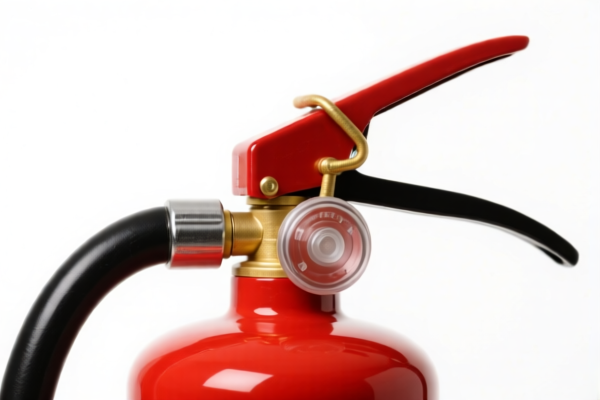
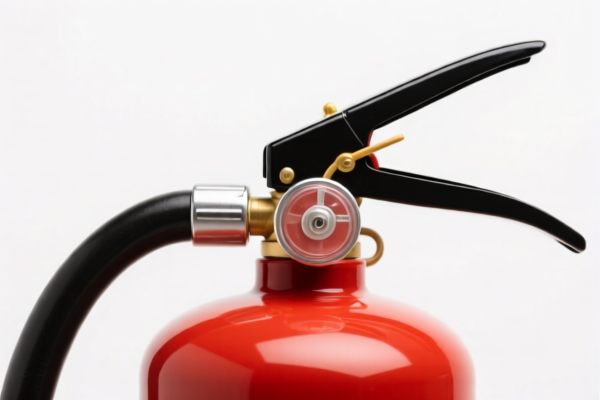

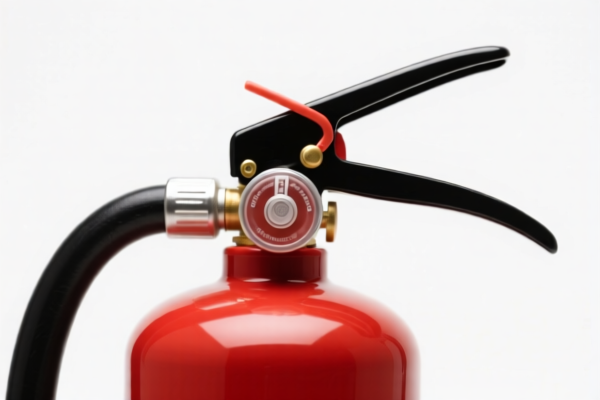
AI Analysis
🔥 Foam Fire Extinguisher Nozzle (Spray Gun/Spray Device)
🌐 HS Code Reference & Customs Clearance Guide | 2026 Latest Tariff Analysis | Professional Clearance Strategy
📌 1. Product Definition & Classification: What Exactly is a "Foam Fire Extinguisher Nozzle"?
A Foam Fire Extinguisher Nozzle (also referred to as a spray gun, spray device, or foam applicator) is a mechanical apparatus designed to project, scatter, or spray liquids (specifically fire-extinguishing agents like foam) or powders.
In international trade, this product is not classified merely as a "container" or "packaging," but as a mechanical appliance for the discharge of substances. Its classification depends heavily on whether it is viewed as a functional part of the extinguishing mechanism or simply as the vessel itself.
⚠️ Key Distinction:
- If the item is a functional nozzle, gun, or spray head designed to control the flow and dispersion of the extinguishing agent, it falls under Chapter 84 (Machinery).
- If the item is solely a container/bottle made of plastic holding the agent (without complex mechanical spraying mechanisms), it may fall under Chapter 39 (Plastics).
- Note: The provided data strictly analyzes the nozzle/sprayer aspect, which is primarily categorized as a mechanical spraying device.
📦 2. HS Code Classification Details (Latest Tariff Alignment)
Based on the provided data, there are two primary HS Code pathways for the mechanical nozzle/sprayer component, and one pathway if it is misidentified as a plastic container.
| HS Code | Product Description | Application Scenario | Tax Rate (Total) | Key Tax Components |
|---|---|---|---|---|
8424.10.00.00 |
Mechanical appliances for projecting, dispersing, or spraying liquids or powders; fire extinguishers | Functional foam spray guns; nozzles with mechanical valves; fire extinguisher guns | 17.5% | Base: 0% Add: 7.5% (Section 301) IEEPA: 10% (122 Clause) |
8424.90.05.00 |
Parts of machinery falling in heading 8424 | Parts of fire extinguishers; spray devices; nozzles specifically designed as components | 17.5% | Base: 0% Add: 7.5% (Section 301) IEEPA: 10% (122 Clause) |
3923.30.00.90 |
Bottles, cans, and similar containers, of plastics | Misclassification Risk: If declared as a plastic bottle/container rather than a mechanical nozzle | 38.0% | Base: 3.0% Add: 25.0% (Section 301) IEEPA: 10% (122 Clause) |
🔍 Critical Analysis:
-8424.10.00.00is the most direct fit for complete spray guns or nozzles that function as independent projecting appliances.
-8424.90.05.00is used for parts of these appliances (e.g., replacement nozzles, internal spray heads).
-3923.30.00.90applies only if the item is a plastic container (bottle). ⚠️ Warning: Declaring a mechanical nozzle as a plastic bottle to avoid higher taxes is risky and can lead to customs penalties if the mechanical nature is proven.
💰 3. 2026 Tariff Rate Breakdown (Including Surcharges)
✅ Applicable Country: USA (US)
✅ Origin: China (CN)
✅ Effective Date: Current rates applicable as per data provided
🎯 1. 8424.10.00.00 & 8424.90.05.00 —— Mechanical Spraying Devices / Parts
(Foam Nozzles, Spray Guns, Extinguisher Components)
| Item | Content |
|---|---|
| Base Tariff | 0.0% (Ad Valorem) |
| Section 301 Additional Duty | +7.5% (Standard Additional Duty) |
| 122 Clause / IEEPA Duty | +10% (Specific provision for Chinese origin goods in this category) |
| Total Effective Rate | 17.5% |
| Tax Calculation | CIF Value × 17.5% |
| De Minimis Eligibility | ❌ Not Applicable (Standard rules apply; no specific waiver mentioned) |
| Legal Basis Path | HTSUS:8424.10 / 8424.90 → USITC Footnotes → IEEPA 122 Clause |
📌 Explanation:
- Although the base tariff is 0%, the additional duties (17.5% total) significantly impact cost.
- The 10% IEEPA duty is a critical component that must be accounted for in landed cost calculations.
- Both8424.10and8424.90share the same total rate (17.5%), so the distinction lies in accurate product description rather than tariff savings.
🎯 2. 3923.30.00.90 —— Plastic Bottles / Containers
(Only if incorrectly classified as a container)
| Item | Content |
|---|---|
| Base Tariff | 3.0% |
| Section 301 Additional Duty | +25.0% (Higher than mechanical parts) |
| 122 Clause / IEEPA Duty | +10% |
| Total Effective Rate | 38.0% |
| Tax Calculation | CIF Value × 38.0% |
| Risk Level | ⚠️ HIGH (Misclassification Risk) |
📌 Warning:
- If the customs officer determines that the item is a mechanical nozzle (even if made of plastic), classifying it under3923.30is incorrect.
- Consequence: Duty difference (38% vs 17.5%) + potential fines + seizure risk.
- Advice: Never declare a functional spray nozzle as a "plastic bottle" unless it is indeed a sealed container with no mechanical discharge mechanism.
🛠️ 4. Customs Clearance Practical Advice (Avoid Pitfalls)
✅ 1. Required Documentation Checklist
| Document | Required? | Notes |
|---|---|---|
| Product Specifications | ✅ Yes | Clearly state: "Foam Fire Extinguisher Nozzle / Spray Gun," including material, flow rate, pressure rating. |
| Technical Diagrams | ✅ Yes | Show internal mechanism (valves, sprayer head) to prove it is mechanical, not just a container. |
| Product Photos | ✅ Yes | High-res images showing the nozzle tip, trigger mechanism (if any), and connection interface. |
| Commercial Invoice | ✅ Yes | Use precise HS Code description: "Mechanical appliance for spraying liquids, fire extinguisher part, Model XYZ." |
| Certificate of Origin | ✅ Yes | To confirm CN origin and apply correct IEEPA duties. |
| Safety Certifications | ✅ Optional but Recommended | UL, FM, or NFPA compliance certificates if applicable for fire safety equipment. |
✅ 2. Declaration Strategy (Key Rules)
🔥 "Function Over Material: Mechanical First, Plastic Second!"
| Scenario | Correct Declaration | Incorrect Declaration | Risk |
|---|---|---|---|
| Foam Spray Gun / Nozzle | 8424.10.00.00 or 8424.90.05.00 |
3923.30.00.90 (Plastic Bottle) |
High: Misclassification, 20.5% duty difference, audits |
| Replacement Nozzle Part | 8424.90.05.00 |
8424.10.00.00 (Minor issue) |
Low: Both 17.5%, but 8424.90 is more accurate for parts |
| Complete Fire Extinguisher Unit | 8424.10.00.00 |
3923.30.00.90 |
Critical: Complete units must not be declared as plastic containers |
| Plastic Container Only (No Nozzle) | 3923.30.00.90 |
8424.10.00.00 |
Low: But higher tax (38%) |
📌 Tip:
- Always emphasize "Spraying Device," "Nozzle," "Gun," or "Appliance" in the product name.
- Avoid generic terms like "Plastic Part" or "Container" unless it is truly a sealed bottle.
✅ 3. Special Cases & Handling
| Scenario | Handling Advice |
|---|---|
| OEM Nozzles for Fire Extinguishers | Provide OEM contract or purchase order to prove industrial use; classify as 8424.90.05.00 (Parts). |
| Nozzles Made of Metal/Plastic Mix | Still classified under 8424 (Chapter 84) because function (spraying) dictates classification over material. |
| Combined Shipments (Nozzles + Cylinders) | Do not mix in one line item. Declare nozzles as 8424 and cylinders separately (if applicable). |
| Small Samples | If value is very low, verify if de minimis rules apply (usually $800 for US), but ensure correct HS Code is used to avoid future audits. |
🌍 5. Global Market Comparison (2026 Latest)
| Country/Region | Recommended HS Code | Tariff Rate | Notes |
|---|---|---|---|
| 🇺🇸 USA | 8424.10.00.00 / 8424.90.05.00 |
17.5% | Includes 7.5% Section 301 + 10% IEEPA |
| 🇨🇳 China (Import) | 8424.10.00.00 |
~10-15% | Standard MFN rate; verify with local customs |
| 🇪🇺 EU | 8424.10 / 8424.90 |
~0-4% | No Section 301 or IEEPA duties; VAT applies |
| 🇬🇧 UK | 8424.10 / 8424.90 |
~0-4% | Post-Brexit tariffs; similar to EU |
| 🇯🇵 Japan | 8424.10 / 8424.90 |
~0-5% | Generally low; check CECC agreements |
📌 Conclusion:
- USA is the highest-tariff market due to additional duties (17.5%).
- EU and Asia offer significantly lower duties for the same product, making them more cost-effective for manufacturing or distribution hubs.
📌 6. Common Errors & Pitfalls (Lessons Learned)
❌ Error 1: Declaring a mechanical nozzle as a "Plastic Container"
👉 Result: Duty jump from 17.5% to 38% + potential fraud allegations.
❌ Error 2: Using "Fire Extinguisher" as the product name for just the nozzle
👉 Result: Customs may require full fire extinguisher regulations (NFPA/UL), leading to delays. Use "Foam Nozzle" or "Spray Gun".
❌ Error 3: Ignoring IEEPA 10% Duty in cost calculation
👉 Result: Underestimated landed cost; profit margin erosion.
❌ Error 4: Mixing Nozzles with Empty Cylinders in one HS Code
👉 Result: Complex clearance; potential misclassification of cylinders.
✅ Correct Declaration Example:
"Foam Fire Extinguisher Spray Nozzle, Mechanical Appliance, Model XYZ, Material: Plastic/Metal, Not a Container, HS Code 8424.10.00.00"
🎯 7. Conclusion: Professional Declaration, Cost Control, Smooth Clearance!
🎯 Remember the Rule:
🔹 "Function is King: Mechanical Nozzle = 8424 (17.5%), Not Plastic Bottle (38%)."
🔹 "10% IEEPA + 7.5% Section 301 = 17.5% Total for Mechanical Parts."
🔹 "Declare Accurately, Avoid 20.5% Penalty Risk."
📌 Pro Tip:
If your foam nozzles are sourced from Vietnam, Malaysia, or Thailand, you may avoid the 10% IEEPA and 7.5% Section 301 duties, potentially lowering the total rate to 0-3.5% (depending on FTAs).
Recommendation: Apply for a Pre-Ruling from US Customs and Border Protection (CBP) if shipping large volumes to ensure HS Code accuracy and duty savings.
📣 Immediate Action:
📞 Consult with a licensed customs broker + Provide product specs + Request HS Code Pre-Ruling
🚀 Ensure smooth clearance, accurate taxation, and maximized profit margins!
✨ Professional Customs Clearance Starts with Accurate Classification!
💼 Every penny of duty matters!
Customer Reviews
About HS Code Classification
The Harmonized System (HS) is an internationally standardized nomenclature developed by the World Customs Organization (WCO) to classify traded products. Over 200 countries use the HS system as the basis for customs tariffs, trade statistics, and import/export regulations.
Each HS code follows a hierarchical structure:
- Chapter (2 digits) — Broad category of goods (e.g., Chapter 84: Machinery and Mechanical Appliances)
- Heading (4 digits) — More specific grouping within the chapter
- Subheading (6 digits) — Internationally standardized breakdown, used by all WCO member countries
- National subdivisions (8-10 digits) — Country-specific extensions for further classification, such as US HTSUS 10-digit codes
Correct HS code classification is essential for smooth customs clearance, accurate duty payment, and compliance with trade regulations. Misclassification can lead to customs delays, overpayment of duties, or penalties.
When importing from CN to US, the applicable tariff rates may include:
- Most-Favored-Nation (MFN) rate — The standard duty rate applied to WTO members
- General rate — Applied to countries without trade agreements
- Trade remedy duties — Additional tariffs such as Section 301 (anti-dumping), Section 232 (national security), or countervailing duties
The information provided on this page is for reference purposes only. For official classification, please consult with your local customs authority or a licensed customs broker.