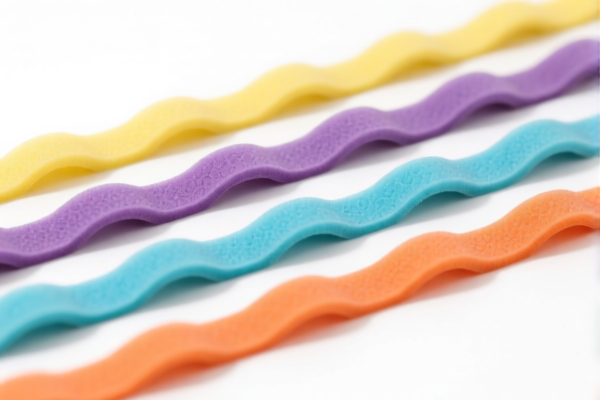
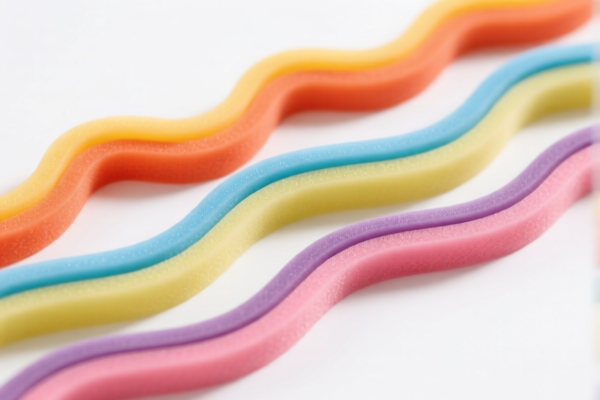
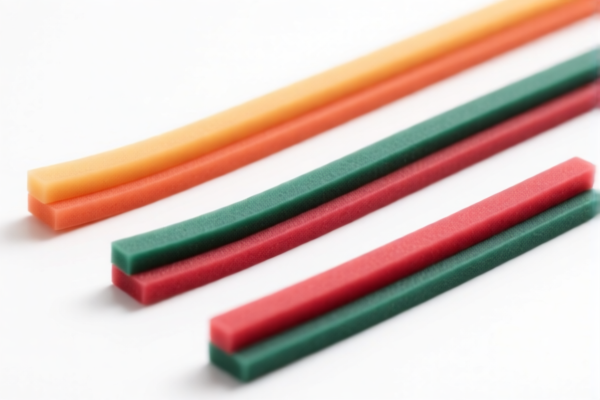
foam rubber decorative strips
CN → US| HS Code | Tariff Rate | Origin | Destination | Doc |
|---|---|---|---|---|
| 4008115000 | 38.3% | CN | US | Official Doc |
| 4016100000 | 35.0% | CN | US | Official Doc |
| 4016996050 | 37.5% | CN | US | Official Doc |
| 4008111000 | 35.0% | CN | US | Official Doc |
| 4006901000 | 35.0% | CN | US | Official Doc |
Product Images

AI Analysis
🛠️ Foam Rubber Decorative Strips (Rubber Foam Bars/Strips)
🌐 HS Code Reference & Customs Clearance Guide | 2026 Latest Tariff Analysis | Professional Clearance Strategy
📌 I. Product Definition & Classification: What Exactly Are "Foam Rubber Decorative Strips"?
In international trade, "Foam Rubber Decorative Strips" are not a single, unified product. They are categorized based on physical morphology (shape), material state (vulcanized vs. non-vulcanized), and specific structural characteristics (e.g., honeycomb pattern). Misclassification here leads to significant tariff discrepancies, especially under current US-China trade policies.
These products generally fall under Chapter 40 (Rubber and Articles Thereof), specifically heading 4008 (Plates, Sheets, Strip) or 4016 (Other Articles of Rubber).
⚠️ Key Distinction Points:
- Non-Vulcanized (Raw) vs. Vulcanized (Finished): Non-vulcanized rubber strips (often processed into sheets/strips for further manufacturing) may fall under 4006 or 4008.
- Special Shapes: If the strip has a specific engineered structure like honeycomb, it moves to 4016.
- Form Factor: "Strip" (narrow, linear) vs. "Sheet/Plate" (broad, flat).
📦 II. HS Code Classification Details (2026 Latest Tariff Authority Mapping)
Based on the provided data, here are the four specific HS Codes applicable to "Foam Rubber Decorative Strips," along with their specific characteristics and tax implications.
| HS Code | Product Description | Key Characteristics | Material State |
|---|---|---|---|
4008.11.50.00 |
Foam Rubber Strip (Bar/Strip) | Morphology: Strip/Bar. Material: Foam Rubber. |
Likely Non-Vulcanized or Processed Foam |
4016.10.00.00 |
Honeycomb Rubber Products | Morphology: Honeycomb structure. Material: Vulcanized Rubber. |
Vulcanized (Finished Good) |
4016.99.60.50 |
Foam Rubber Strip (General) | Morphology: Strip. Material: Vulcanized Rubber. Use: Unclear/General. |
Vulcanized (Finished Good) |
4008.11.10.00 |
Rubber Strip (Foam Characteristic) | Morphology: Strip. Material: Rubber. Feature: Meets foam rubber characteristics. |
Likely Non-Vulcanized/Pre-vulcanized |
4006.90.10.00 |
Foam Rubber Sheet/Board | Morphology: Sheet/Board (Not strip). Material: Rubber. Status: Non-Vulcanized. |
Non-Vulcanized |
🔍 Critical Note on
4006.90.10.00:
Although included in the data, this code refers to "Rubber Foam Board/Sheet" and is described as "Non-Vulcanized." If your product is a strip (linear, narrow) and vulcanized (finished, elastic, ready for decoration), this code is likely incorrect. Use4008or4016codes for strips.
💰 III. 2026 Latest Tariff Rate Breakdown (Including Surcharges & Policy Add-ons)
✅ Applicable Country: United States (US)
✅ Origin: China (CN)
✅ Effective Date: Current Trade Policy (Section 301 & 122)
🎯 1. 4008.11.50.00 & 4008.11.10.00 — Rubber Foam Strips
| Item | Content |
|---|---|
| Base Tariff | 3.3% (4008.11.50) or 0.0% (4008.11.10) |
| Section 301 Surcharge | +25.0% (Standard China-specific tariff) |
| Section 122 Surcharge | +10.0% (Specific to certain rubber articles) |
| Total Tax Rate | 35.0% - 38.3% |
| Tax Calculation | CIF Value × Total Rate |
| De Minimis Eligibility | ❌ No (Deny de minimis for China-origin goods under current enforcement) |
| Legal Basis | USITC:4008.11.x0.00 → Section 301: Footnote 9903.88.01 → Section 122 |
📌 Interpretation:
-4008.11.10.00offers a slightly lower base (0%), resulting in a 35.0% total rate.
-4008.11.50.00has a higher base (3.3%), resulting in a 38.3% total rate.
- Both are subject to the 25% Section 301 and 10% Section 122 add-ons.
🎯 2. 4016.10.00.00 — Honeycomb Rubber Products
| Item | Content |
|---|---|
| Base Tariff | 0.0% |
| Section 301 Surcharge | +25.0% |
| Section 122 Surcharge | +10.0% |
| Total Tax Rate | 35.0% |
| Tax Calculation | CIF Value × 35.0% |
| De Minimis Eligibility | ❌ No |
| Legal Basis | USITC:4016.10.00.00 → Section 301 → Section 122 |
📌 Interpretation:
- If your decorative strip has a honeycomb structure (common in high-end acoustic or vibration-dampening foam), it must be classified here.
- Despite being a "finished article" (4016), it benefits from a 0% base rate, keeping the total at 35.0%.
🎯 3. 4016.99.60.50 — Vulcanized Rubber Strips (General)
| Item | Content |
|---|---|
| Base Tariff | 2.5% |
| Section 301 Surcharge | +25.0% |
| Section 122 Surcharge | +10.0% |
| Total Tax Rate | 37.5% |
| Tax Calculation | CIF Value × 37.5% |
| De Minimis Eligibility | ❌ No |
| Legal Basis | USITC:4016.99.60.50 → Section 301 → Section 122 |
📌 Interpretation:
- This is the "catch-all" for vulcanized rubber strips that don't fit the specific foam or honeycomb definitions.
- Higher Base Rate (2.5%) makes this the second-most expensive option at 37.5%.
🎯 4. 4006.90.10.00 — Non-Vulcanized Rubber Foam Board
| Item | Content |
|---|---|
| Base Tariff | 0.0% |
| Section 301 Surcharge | +25.0% |
| Section 122 Surcharge | +10.0% |
| Total Tax Rate | 35.0% |
| Tax Calculation | CIF Value × 35.0% |
| De Minimis Eligibility | ❌ No |
| Legal Basis | USITC:4006.90.10.00 → Section 301 → Section 122 |
📌 Warning:
- Only use if your product is NOT vulcanized (i.e., raw rubber sheets/boards that will be further processed).
- If sold as a finished decorative item, this classification is risky and may lead to customs rejection.
🛠️ IV. Customs Clearance Practical Advice (Real-World Pitfall Guide)
✅ 1. Preparation Checklist (Mandatory)
| Document | Required? | Description |
|---|---|---|
| ✅ Product Specifications | ✔️ | Must specify: Vulcanized vs. Non-Vulcanized, Density, Shape (Strip/Bar/Honeycomb). |
| ✅ Material Composition | ✔️ | Confirm 100% rubber content. If mixed with plastic/adhesive, classification may change to Chapter 39 or 35. |
| ✅ Photos (Labeled) | ✔️ | Show cross-section. Is it solid foam? Honeycomb? Extruded strip? |
| ✅ Commercial Invoice | ✔️ | Clearly state "Foam Rubber Decorative Strips" and HS Code. |
| ✅ Certificate of Origin | ✔️ | Mandatory for China-origin goods to apply Section 301/122 accurately. |
| ✅ Packaging List | ✔️ | Detail weight and dimensions. |
✅ 2. Declaration Tips (Key Mnemonics)
🔥 "Vulcanized? Go 4016. Raw? Go 4006. Foam Strip? 4008. Honeycomb? 4016.10."
| Scenario | Correct HS Code | Error Consequence |
|---|---|---|
| Finished Decorative Strip (Elastic, ready-to-use) | 4016.99.60.50 or 4008.11.x0.00 |
Misclassifying as raw material (4006) → Audits & Penalties |
| Honeycomb Structure | 4016.10.00.00 |
Misclassifying as generic strip (4016.99) → Overpayment (37.5% vs 35%) |
| Non-Vulcanized Rubber Board | 4006.90.10.00 |
Using for finished strips → Customs Seizure |
| Rubber + Plastic Composite | Might shift to Chapter 39 | Misclassifying as pure rubber → Complex Classification Review |
✅ 3. Special Situations
| Situation | Handling Advice |
|---|---|
| OEM Custom Shapes | Provide CAD drawings or molds to prove specific "strip" or "honeycomb" morphology. |
| Mixed Packaging | If packed with glue/adhesive, declare separately. Adhesive has different HS/Tax. |
| Value Assessment | Ensure CIF value includes freight and insurance. Base rates apply to CIF. |
| Pre-Ruling Application | Highly Recommended. Given the 2.5%–3.3% base difference, an Advance Ruling from CBP can save thousands on large shipments. |
🌍 V. Global Market Comparison (2026 Update)
| Country/Region | Recommended HS Code | Base Tariff | Surcharges (China) | Total Est. Rate | Notes |
|---|---|---|---|---|---|
| 🇺🇸 USA | 4016.10.00.00 or 4008.11.x0.00 |
0% – 3.3% | +35% (301+122) | 35% – 38.3% | Highest Cost. Must declare accurately. |
| 🇨🇳 China | Same HS | 5% – 10% | None | 5% – 10% | No Section 301/122. |
| 🇪🇺 EU | 4008 or 4016 |
0% – 4.5% | None (if not circumvention) | 0% – 4.5% | Check Anti-Circumvention duties. |
| 🇬🇧 UK | Same HS | 0% – 4.5% | None | 0% – 4.5% | Post-Brexit tariffs apply. |
📌 Conclusion:
- USA is the most challenging market due to the 35%–38.3% combined tariff burden.
- Differences between HS codes are small (2.5%–3.3%), so the material state (Vulcanized vs. Non-Vulcanized) is the biggest classifier.
📌 VI. Common Errors & Pitfall Guide (Lessons Learned)
❌ Error 1: Classifying finished foam strips as raw material (4006)
👉 Consequence: Customs will reject for misdeclaration of "finished good." Potential seizure.
❌ Error 2: Ignoring Honeycomb Structure
👉 Consequence: If the strip has a honeycomb cross-section, it must be 4016.10.00.00. Using 4016.99.60.50 leads to overpayment of 2.5% on the base, though total tax difference is small, it’s a compliance error.
❌ Error 3: Assuming De Minimis (Section 321) applies
👉 Consequence: NO. China-origin rubber goods are excluded from de minimis treatment. All shipments, regardless of value, are subject to full tariffs.
❌ Error 4: Vague Description "Rubber Strip"
👉 Consequence: CBP will request additional info, causing 3-7 day delays. Always specify "Foam," "Vulcanized," or "Honeycomb."
✅ Correct Declaration Example:
"Decorative Foam Rubber Strips, Vulcanized, Extruded, Cross-Sectional Shape: D-Profile, Material: 100% Natural Rubber Foam, HS Code: 4016.99.60.50, Origin: China."
🎯 VII. Conclusion: Precision Classification Saves Money!
🎯 Key Takeaway:
🔹 "Vulcanized = 4016/4008. Raw = 4006. Honeycomb = 4016.10."
🔹 "Base Rate Difference is <4%, but Compliance Error = Shipment Delay."
🔹 "Total Tax is ~35-38% for US Imports. Factor this into your pricing!"
📌 Pro Tip:
If your foam rubber strips are originating from Vietnam, Malaysia, or Thailand, you may qualify for lower or zero Section 301/122 tariffs (subject to FTAs or specific rulings).
Action: Always verify the Country of Origin and apply for an Advance Ruling if shipment volume is high.
📣 Immediate Action:
📞 Contact Your Customs Broker + Provide Product Photos + Apply for HS Code Pre-Ruling
🚀 Ensure Smooth Clearance, Avoid Penalties, Optimize Costs!
✨ Professional Customs Clearance Starts with Accurate Classification!
💼 Every Percent of Tariff Counts!
Customer Reviews
About HS Code Classification
The Harmonized System (HS) is an internationally standardized nomenclature developed by the World Customs Organization (WCO) to classify traded products. Over 200 countries use the HS system as the basis for customs tariffs, trade statistics, and import/export regulations.
Each HS code follows a hierarchical structure:
- Chapter (2 digits) — Broad category of goods (e.g., Chapter 84: Machinery and Mechanical Appliances)
- Heading (4 digits) — More specific grouping within the chapter
- Subheading (6 digits) — Internationally standardized breakdown, used by all WCO member countries
- National subdivisions (8-10 digits) — Country-specific extensions for further classification, such as US HTSUS 10-digit codes
Correct HS code classification is essential for smooth customs clearance, accurate duty payment, and compliance with trade regulations. Misclassification can lead to customs delays, overpayment of duties, or penalties.
When importing from CN to US, the applicable tariff rates may include:
- Most-Favored-Nation (MFN) rate — The standard duty rate applied to WTO members
- General rate — Applied to countries without trade agreements
- Trade remedy duties — Additional tariffs such as Section 301 (anti-dumping), Section 232 (national security), or countervailing duties
The information provided on this page is for reference purposes only. For official classification, please consult with your local customs authority or a licensed customs broker.