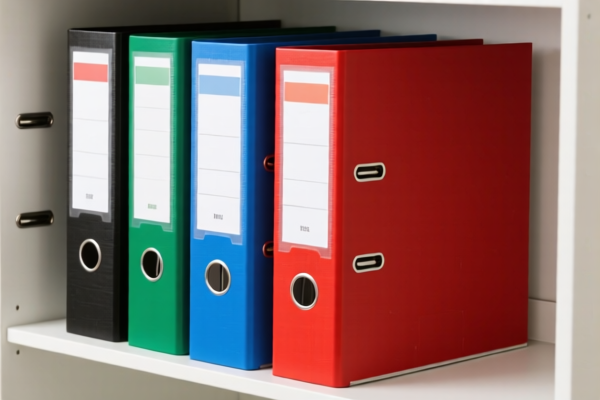
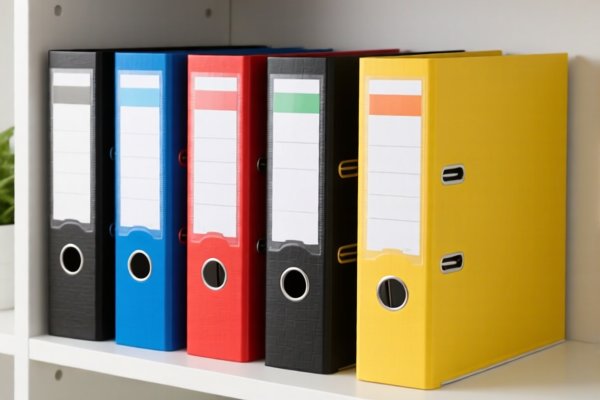
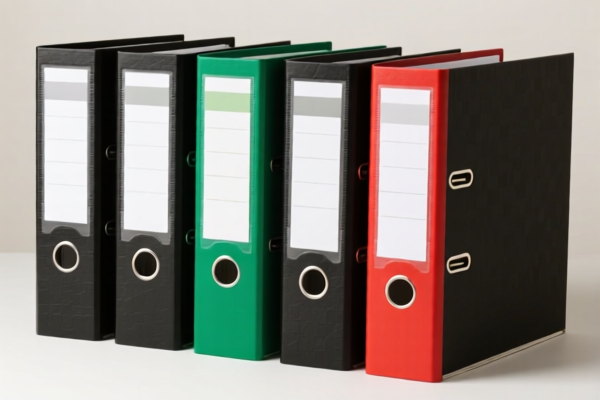
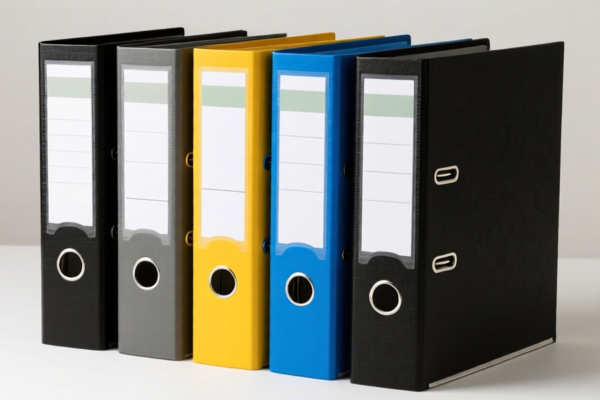
folder with elastic band
CN → USProduct Images
AI Analysis
📁 Folder with Elastic Band (Elastic Closure Folders)
🌐 HS Code Reference & Customs Clearance Guide | 2026 Latest Tariff Analysis | Professional通关 Strategy 📌 Part I: Product Definition & Classification: Do You Really Understand "Folders with Elastic Bands"?
Folders with elastic bands are office supplies designed to hold documents securely. In international trade, the classification depends heavily on the primary material of the folder (paper vs. plastic) and whether it is considered a "part" of a larger system or a standalone item.
Key Distinctions: * Paper-based Folders: Made primarily of paper/cardboard with an elastic band (usually rubber or synthetic) attached for closure. These are classified as paper stationery. * Plastic-based Folders: Made of PVC, PP, or other plastics. These are classified as plastic articles. * The "Elastic Band" Factor: The elastic band is generally considered an accessory/attachment that does not change the essential character of the folder. It is not classified separately.
⚠️ Critical Classification Point: - If the folder is paper-based: It typically falls under Chapter 48 (Paper and Paperboard). - If the folder is plastic-based: It typically falls under Chapter 39 (Plastics and Articles Thereof). - Misclassification Risk: Declaring a plastic folder as paper (or vice versa) leads to incorrect duty rates and potential customs penalties.
📦 Part II: HS Code Classification Details (2026 Latest Tariff Authority Comparison)
| HS Code | Product Description | Applicable Scenario | Primary Material |
|---|---|---|---|
4820.10.40.00 |
Notebooks, letter pads, memorandum pads, diarizes... and other articles of paper stationery | Paper folders with elastic bands, typical office supply | ✅ Paper |
4820.10.60.00 |
Other paper stationery (not elsewhere specified) | Specialty paper folders, heavy-duty paper portfolios | ✅ Paper |
3926.90.99.90 |
Other articles of plastics and articles of other materials of headings 3901 to 3914 | Plastic (PVC/PP) folders with elastic bands | ✅ Plastic |
4202.92.90.00 |
Articles of apparel and clothing accessories, of plastic sheet | Rare Case: If the folder is considered a "bag-like" article of plastic sheet (less common for simple folders) | ✅ Plastic (Alternative) |
🔍 Key Reminder: - Paper Folders: Most common.归入 4820.10.40.00 is the standard for standard office paper folders. - Plastic Folders: Must be declared under 3926.90.99.90 (Other plastic articles). - Do Not Split: The elastic band is part of the folder. Do not declare the band separately unless it is shipped without the folder.
💰 Part III: 2026 Latest Tariff Rate Details (Including Additional Duties & Policy Add-ons)
✅ Applicable Country: United States (US) ✅ Origin: China (CN) ✅ Effective Date: November 10, 2025 onwards (including subsequent imports)
🎯 1. 4820.10.40.00 —— Paper Stationery (Folders)
| Item | Content |
|---|---|
| Base Tariff Rate | 0% (ad valorem) |
| USITC Additional Duty | +25% (Under USITC Footnote 9903.88.01) |
| IEEPA Additional Duty | +10% (For products of China/HK, effective Nov 10, 2025) |
| Total Tariff Rate | 35% |
| Tax Calculation | CIF Value × 35% |
| De Minimis Exemption | ❌ Not Applicable (deny_de_minimis) |
| Legal Basis Path | IEEPA:9903.01.25 → IEEPA:9903.01.24 → USITC:4820.10.40.00 → FOOTNOTE:9903.88.01 |
📌 Explanation: - "USITC Additional Duty 25%" is from the Section 301 tariffs under the US Trade Act. - "IEEPA 10%" is the additional tariff under the International Emergency Economic Powers Act. - Combined 35% is a high tariff rate. Must be anticipated in cost planning!
🎯 2. 3926.90.99.90 —— Other Articles of Plastic (Plastic Folders)
| Item | Content |
|---|---|
| Base Tariff Rate | 5.3% (Standard MFN rate) |
| USITC Additional Duty | +25% (Under USITC Footnote 9903.88.01) |
| IEEPA Additional Duty | +10% (For products of China/HK, effective Nov 10, 2025) |
| Total Tariff Rate | 40.3% |
| Tax Calculation | CIF Value × 40.3% |
| De Minimis Exemption | ❌ Not Applicable (deny_de_minimis) |
| Legal Basis Path | IEEPA:9903.01.25 → IEEPA:9903.01.24 → USITC:3926.90.99.90 → FOOTNOTE:9903.88.01 |
📌 Note: - Plastic folders are subject to a higher base rate than paper folders. - The combined rate of 40.3% is significantly higher than paper folders. - Material accuracy is crucial. Misdeclaring plastic as paper can lead to severe penalties.
🛠️ Part IV: Customs Clearance Practical Advice (Battle-Tested Pitfall Avoidance Guide)
✅ 1. Required Documentation Checklist (All Mandatory)
| Document | Required | Description |
|---|---|---|
| ✅ Product Specification Sheet | ✔️ | Material composition (% paper vs. % plastic), dimensions, elastic band material (rubber/synthetic) |
| ✅ Product Photos (Clear) | ✔️ | Show the folder, elastic band, and any branding/packaging |
| ✅ Commercial Invoice | ✔️ | Clearly state "Paper/Plastic Folder with Elastic Band" |
| ✅ Packing List | ✔️ | Quantity, weight, dimensions |
| ✅ Certificate of Origin (CO) | ✔️ | If non-China origin, may qualify for preferential rates |
| ✅ Material Declaration | ✔️ | Explicitly state "Made of Paper" or "Made of Plastic" to avoid classification disputes |
✅ 2. Declaration Tips (Key Mnemonics)
🔥 "Material Defines Code, Don't Split the Band, Name It Right, Save Tax and Time!"
| Scenario | Correct Declaration | Wrong Practice |
|---|---|---|
| Paper Folder with Elastic | 4820.10.40.00 |
Misdeclare as "Plastic" → 40.3% |
| Plastic Folder with Elastic | 3926.90.99.90 |
Misdeclare as "Paper" → 35% (Underpayment risk) |
| Elastic Band Only (No Folder) | 4016.93.00.00 (Rubber) |
Declare as "Folder" → Wrong Classification |
| Mixed Pack (Paper & Plastic) | Split HS Codes | Single HS Code for mixed materials → Customs Hold |
✅ 3. Special Cases Handling
| Scenario | Handling Advice |
|---|---|
| Biodegradable Plastic Folders | Still classified under 3926.90.99.90 unless specifically exempted. Declare material accurately. |
| Wooden Folders with Elastic | Classified under Chapter 44 (Wood). HS Code 4421.99.99.00. Different tariff profile. |
| Fabric Folders with Elastic | Classified under Chapter 63 (Other Made-up Textile Articles). HS Code 6307.90.98.98. |
| OEM Custom Printing | Provide print design approval if requested. Does not change HS code. |
🌍 Part V: Global Market Clearance Comparison (2026 Latest)
| Country/Region | Recommended HS Code | Tariff (China Origin) | Certification Requirements | Remarks |
|---|---|---|---|---|
| 🇺🇸 USA | 4820.10.40.00 (Paper) |
35% | None for simple paper | High tariff due to Section 301 + IEEPA |
| 🇺🇸 USA | 3926.90.99.90 (Plastic) |
40.3% | None | Higher base rate + same additional tariffs |
| 🇨🇳 China | 4820.10.40.00 |
0% | None | Zero duty for paper stationery |
| 🇪🇺 EU | 4820.10.40 |
0% | REACH (for elastic band chemicals) | Low duty, but strict chemical compliance |
| 🇦🇺 Australia | 4820.10.40 |
5% | None | Moderate duty |
📌 Conclusion: - USA: High tariffs for both paper and plastic folders from China. Cost planning is essential. - EU/China: Low or zero duties, but chemical compliance (REACH) is critical for plastic folders. - Material Choice: Consider using paper instead of plastic to reduce tariff base (35% vs 40.3% in US), but weigh against environmental preferences.
📌 Part VI: Common Errors & Pitfall Avoidance (Lessons Learned)
❌ Error 1: Declaring plastic folders as "Paper Stationery" 👉 Consequence: Underpayment of duties. Customs will reassess at 40.3% + penalties.
❌ Error 2: Splitting the declaration (Folder + Elastic Band separately) 👉 Consequence: Incorrect classification for the band. Bands are accessories and should be included in the folder's HS code.
❌ Error 3: Vague Description "Folder" 👉 Consequence: Customs may classify under a generic "Other" category with higher duties or hold the shipment for clarification.
❌ Error 4: Ignoring Material Composition 👉 Consequence: If the folder is 51% plastic and 49% paper, it is classified as Plastic under GRI 3(b). Misdeclaration leads to errors.
✅ Correct Practice:
"Paper Folder with Elastic Band Closure, 9.5x11.5 inches, for Office Use, HS 4820.10.40.00" OR "Plastic (PVC) File Folder with Elastic Closure, Clear, HS 3926.90.99.90"
🎯 Part VII: Conclusion: Precise Classification, Cost Optimization!
🎯 Remember:
🔹 "Paper is 35%, Plastic is 40.3% in the US. Check your material!" 🔹 "Elastic Band is part of the folder. Don't declare it separately!" 🔹 "Accurate description prevents customs delays and penalties."
📌 Tips:
- For US imports, consider Exclusion Applications if eligible (check USITC exclusion lists).
- If sourcing from Vietnam or Thailand, tariffs may be lower (0-5% for paper, 5-10% for plastic).
- Pre-classification Ruling: Highly recommended for large shipments to ensure HS code accuracy.
📣 Immediate Action:
📞 Contact your customs broker + Provide material specs + Apply for Advance Ruling if unsure. 🚀 Let your folders clear customs smoothly, maximize profit margins!
✨ Professional Customs Clearance Starts with Accurate Classification! 💼 Every percent of duty counts!
Customer Reviews
About HS Code Classification
The Harmonized System (HS) is an internationally standardized nomenclature developed by the World Customs Organization (WCO) to classify traded products. Over 200 countries use the HS system as the basis for customs tariffs, trade statistics, and import/export regulations.
Each HS code follows a hierarchical structure:
- Chapter (2 digits) — Broad category of goods (e.g., Chapter 84: Machinery and Mechanical Appliances)
- Heading (4 digits) — More specific grouping within the chapter
- Subheading (6 digits) — Internationally standardized breakdown, used by all WCO member countries
- National subdivisions (8-10 digits) — Country-specific extensions for further classification, such as US HTSUS 10-digit codes
Correct HS code classification is essential for smooth customs clearance, accurate duty payment, and compliance with trade regulations. Misclassification can lead to customs delays, overpayment of duties, or penalties.
When importing from CN to US, the applicable tariff rates may include:
- Most-Favored-Nation (MFN) rate — The standard duty rate applied to WTO members
- General rate — Applied to countries without trade agreements
- Trade remedy duties — Additional tariffs such as Section 301 (anti-dumping), Section 232 (national security), or countervailing duties
The information provided on this page is for reference purposes only. For official classification, please consult with your local customs authority or a licensed customs broker.