folders
CN → US| HS Code | Tariff Rate | Origin | Destination | Doc |
|---|---|---|---|---|
| 4820300040 | 35.0% | CN | US | Official Doc |
| 4820300020 | 35.0% | CN | US | Official Doc |
| 3926908700 | 40.3% | CN | US | Official Doc |
| 4202322000 | 55.0% | CN | US | Official Doc |
| 3926909989 | 22.8% | CN | US | Official Doc |
Product Images
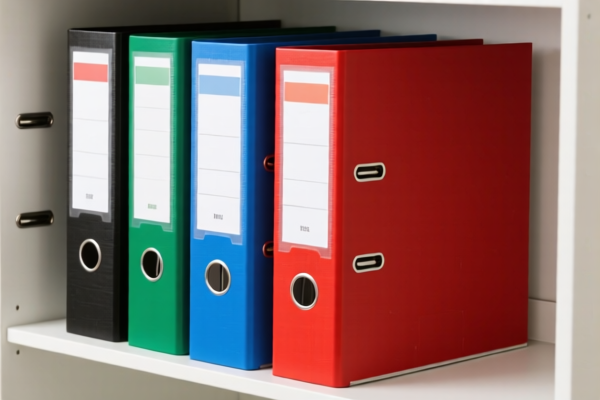
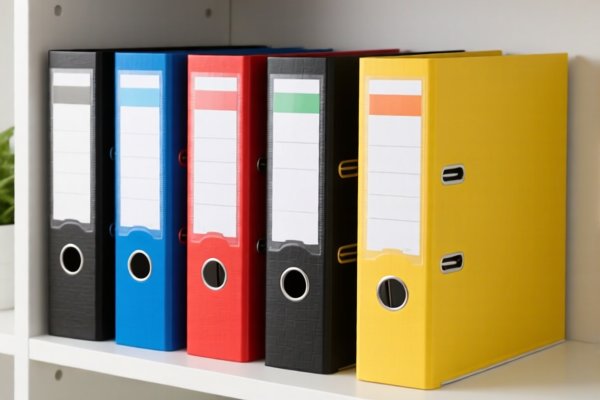
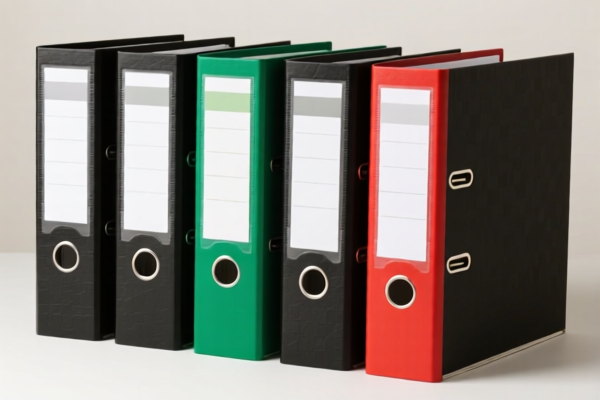
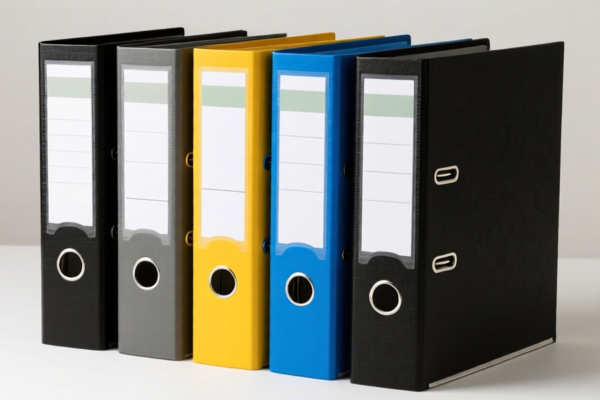
AI Analysis
📂 Folders (纸质/塑料/复合材质文件夹)
🌐 HS Code Reference & Customs Clearance Guide | 2026 Latest Tariff Analysis | Professional Compliance Strategy
📌 I. Product Definition & Classification: Are You Clear on "Folders"?
Folders, essential for document organization in office, legal, and industrial settings, are categorized in international trade based primarily on material composition and functional design. They are not a monolithic category; the tax liability varies drastically between paper, plastic, and composite materials.
Key Material Distinctions: 1. Paper/Cardboard Folders: Traditional, biodegradable, low-cost. 2. Plastic Folders: Durable, water-resistant, often made from PVC, PP, or PE. 3. Composite/Container-Style Folders: Plastic sheets or materials that classify as "containers" rather than simple stationery.
⚠️ Critical Classification Point:
- If made of paper/cardboard → Generally classified under Chapter 48.
- If made of plastic → Generally classified under Chapter 39 (articles of plastics) or Chapter 42 (if structured as a container).
- Misclassification Risk: Declaring a plastic folder as "paper" to avoid higher duties is a common red flag for customs audits.
📦 II. HS Code Classification Details (2026 Authoritative Reference)
Based on the provided data, here are the precise classifications for different folder types:
| HS Code | Product Description | Material/Attribute | Classification Rationale |
|--------|--------------------------|--------------------|
| 4820.30.00.40 | Paper/Cardboard Folders | Paper Stationery | Falls under the category of paper stationery supplies. Standard filing folders made of cardboard. |
| 4820.30.00.20 | Paper/Cardboard Folders | Paper Stationery | Specific classification for folders, binders, and file covers made of paper or paperboard. |
| 3926.90.87.00 | Plastic Flat Folders | Plastic Products | Classified as plastic articles. Specifically for flat-shaped plastic folders, distinct from containers. |
| 4202.32.20.00 | Plastic-Clad Folders | Container/Capacity | Classified as articles of plastic sheets. These are often structured files or binders with an exterior surface of plastic sheets, treated as "container-like" items. |
| 3926.90.99.89 | Unspecified Material Folders | Other Plastic Articles | A residual category for folders where the material is not clearly defined as simple plastic sheets or paper stationery. Treated as other plastic articles. |
🔍 Key Insight:
- Chapter 48 (4820) applies to paper-based files.
- Chapter 39 (3926) applies to plastic-based files (non-container types).
- Chapter 42 (4202) applies to structured plastic files that function more like containers or specialized covers.
- Note: The term "122 Clause Tariff" appears in all entries, indicating specific trade restrictions or additional duties applicable to goods from certain regions (likely China to US, based on typical 122/301 clause contexts).
💰 III. 2026 Latest Tariff Rate Breakdown (Including Surcharge Policies)
✅ Applicable Country: United States (US)
✅ Origin: China (CN) (Inferred from "122 Clause" and specific tariff structures)
✅ Effective Time: Current active tariffs
🎯 1. 4820.30.00.40 & 4820.30.00.20 —— Paper/Cardboard Folders
| Item | Detail |
|---|---|
| Base Tariff | 0.0% |
| Section 301 Surcharge | +25.0% |
| "122 Clause" Surcharge | +10.0% |
| Total Effective Rate | 35.0% |
| Tax Calculation | CIF Value × 35% |
| De Minimis Eligibility | ❌ No (Subject to high duties) |
| Legal Basis | USMCA/Section 301 lists + specific administrative clauses |
📌 Explanation:
- Base 0%: Paper products often have low base MFN rates.
- +25%: Standard Section 301 tariff on Chinese goods in this category.
- +10%: Additional "122 Clause" duty, likely targeting specific trade practices or additional administrative tariffs.
- Total 35%: A significant cost burden. High-volume paper file imports must calculate this carefully.
🎯 2. 3926.90.87.00 —— Plastic Flat Folders
| Item | Detail |
|---|---|
| Base Tariff | 5.3% |
| Section 301 Surcharge | +25.0% |
| "122 Clause" Surcharge | +10.0% |
| Total Effective Rate | 40.3% |
| Tax Calculation | CIF Value × 40.3% |
| De Minimis Eligibility | ❌ No |
| Legal Basis | USITC Tariff Schedule + Section 301/122 Clauses |
📌 Explanation:
- Base 5.3%: Plastic articles have a non-zero base duty.
- Higher Total: Due to the base duty, the total rate is higher than paper folders.
- Material Distinction: This code specifically targets "flat-shaped" plastic folders, not complex containers.
🎯 3. 4202.32.20.00 —— Plastic-Clad Folders (Container-Type)
| Item | Detail |
|---|---|
| Base Tariff | 20.0% |
| Section 301 Surcharge | +25.0% |
| "122 Clause" Surcharge | +10.0% |
| Total Effective Rate | 55.0% |
| Tax Calculation | CIF Value × 55.0% |
| De Minimis Eligibility | ❌ No |
| Legal Basis | Chapter 42 (Articles of Plastics/Sheets) + Section 301 |
📌 Explanation:
- Highest Duty: This classification carries the highest tax burden at 55%.
- Reason: Classified under Chapter 42 as items with an exterior surface of plastic sheets, often viewed as more premium or structured than simple stationery.
- Avoidance Strategy: Ensure the product is not described or structured in a way that forces this classification if cheaper alternatives exist.
🎯 4. 3926.90.99.89 —— Unspecified/Residual Plastic Folders
| Item | Detail |
|---|---|
| Base Tariff | 5.3% |
| Section 301 Surcharge | +7.5% (Note: Lower than standard 301) |
| "122 Clause" Surcharge | +10.0% |
| Total Effective Rate | 22.8% |
| Tax Calculation | CIF Value × 22.8% |
| De Minimis Eligibility | ❌ No |
| Legal Basis | Other plastic articles + Specific Section 301 sub-category |
📌 Explanation:
- Lowest Duty: At 22.8%, this is the most cost-effective classification for plastic folders, provided the product qualifies.
- Risk: This is a "residual" or "other" category. Misuse can lead to audits. It implies the folder does not fit the specific "flat" (3926.90.87.00) or "container" (4202.32.20.00) definitions strictly.
- Strategy: Only use this if the product’s design/material doesn’t fit the stricter definitions of the other plastic codes.
🛠️ IV. Customs Clearance Practical Advice (Pitfall Avoidance Guide)
✅ 1. Preparation Checklist (Essential Documents)
| Document | Required? | Purpose |
|---|---|---|
| ✅ Product Photos | ✔️ | To prove material (paper vs. plastic) and structure (flat vs. container). |
| ✅ Material Declaration | ✔️ | Explicitly state: "100% Paper," "PVC Plastic," etc. |
| ✅ Commercial Invoice | ✔️ | Must match HS Code description exactly (e.g., do not call a plastic folder "paper file"). |
| ✅ Packing List | ✔️ | Weight and dimensions must align with declared material density. |
| ✅ Function Statement | ✔️ | Clarify if it’s a simple sheet folder or a structured binder. |
✅ 2. Declaration Strategy (Key Formulas)
🔥 "Material First, Structure Second, Name Precise, Tariff Minimized!"
| Scenario | Recommended HS Code | Why? |
|---|---|---|
| Standard Paper Folder | 4820.30.00.40 or .20 |
35% rate. Standard, low-risk. |
| Simple Plastic Sheet Folder | 3926.90.87.00 |
40.3% rate. Clearly plastic, non-container. |
| Structured Plastic File/Binder | 4202.32.20.00 |
55% rate. High duty. Avoid if possible. |
| Complex/Non-Standard Plastic | 3926.90.99.89 |
22.8% rate. Lowest cost, but high audit risk if not justified. |
✅ 3. Critical Warnings & Risk Mitigation
| Risk | Consequence | Mitigation |
|---|---|---|
| Misdeclaring Plastic as Paper | Heavy penalties, detention, retroactive duty payment (35% vs 40.3%/55%) | Provide material samples and MSDS if requested. |
| Over-classifying Simple Folder as Container | Paying 55% instead of 35% or 40.3% | Ensure the product lacks structural rigidity or compartments typical of "containers." |
| Ignoring "122 Clause" | Unexpected 10% additional duty at border | Budget for 10% surcharge in all cost models. |
| Using Residual Code (3926.90.99.89) Inappropriately | Customs rejection or re-classification | Only use if the product truly doesn’t fit other plastic subheadings. |
🌍 V. Global Market Comparison (2026 Snapshot)
| Country/Region | Typical HS Code (Paper) | Typical HS Code (Plastic) | Tariff Note |
|---|---|---|---|
| 🇺🇸 USA | 4820.30.xx (35%) |
3926.90.xx or 4202.32 (40.3%-55%) |
High Section 301 + 122 Clause duties apply. |
| 🇨🇳 China (Import) | 6.5% | 5%-12% | No 301/122 surcharges. |
| 🇪🇺 EU | 0% (often) | 0%-2% (often) | No equivalent "122 Clause"; lower overall burden. |
| 🇬🇧 UK | 0% | 0%-2% | Post-Brexit tariffs generally lower than US for these items. |
📌 Conclusion:
- The USA is the highest-cost market for folder imports from China due to the cumulative effect of Base + Section 301 + 122 Clause duties.
- Paper folders (35%) are cheaper than Plastic Container-Type folders (55%).
- Simple plastic folders (40.3%) are moderately priced, while Residual plastic folders (22.8%) offer savings but carry classification risk.
📌 VI. Common Errors & Blood-Lesson Guide
❌ Error 1: Calling a PVC binder a "Paper Folder"
👉 Result: Customs inspection reveals plastic → Re-classified to 4202.32.20.00 (55%) or 3926.90.87.00 (40.3%) → Back taxes + Penalties.
❌ Error 2: Ignoring the "122 Clause" in cost calculation
👉 Result: Profit margin erased. The 10% surcharge is not optional.
❌ Error 3: Misusing 3926.90.99.89 for standard plastic folders
👉 Result: Customs argues it fits 3926.90.87.00 → Demand for higher duty + audit history flag.
✅ Best Practice:
"Polypropylene Zipper Folder, 9x11 inch, Clear Plastic, Standard Office Use" → Correctly guides to
3926.90.87.00.
"Cardboard Tabbed Folder, Manilla, 5 Tab" → Correctly guides to4820.30.00.40.
🎯 VII. Conclusion: Precision in Classification, Profit in Clearance
🎯 Key Takeaways:
🔹 Paper Folders: 35% Total Duty. Safe, standard, predictable.
🔹 Plastic Folders: 22.8% - 55% Total Duty. Highly dependent on structural design.
🔹 122 Clause: Always budget for +10% regardless of HS Code.
🔹 Avoid4202.32.20.00if possible due to the 55% rate; optimize product design to fit3926categories if plastic is required.
📌 Pro Tip:
If you are importing large volumes, consider Advance Rulings from CBP to lock in the HS Code and duty rate, especially for borderline cases between
3926and4202.
📣 Immediate Action:
📞 Review your product’s material and structure.
📝 Match it precisely to one of the 5 HS Codes above.
📊 Calculate the Total Tax (Base + 301 + 122) before shipping.
🚀 Clear Customs Smoothly, Maximize Profit, Minimize Risk!
✨ Professional Customs Clearance Starts with Accurate Classification!
💼 Your Bottom Line Depends on the First 8 Digits of the HS Code!
Customer Reviews
About HS Code Classification
The Harmonized System (HS) is an internationally standardized nomenclature developed by the World Customs Organization (WCO) to classify traded products. Over 200 countries use the HS system as the basis for customs tariffs, trade statistics, and import/export regulations.
Each HS code follows a hierarchical structure:
- Chapter (2 digits) — Broad category of goods (e.g., Chapter 84: Machinery and Mechanical Appliances)
- Heading (4 digits) — More specific grouping within the chapter
- Subheading (6 digits) — Internationally standardized breakdown, used by all WCO member countries
- National subdivisions (8-10 digits) — Country-specific extensions for further classification, such as US HTSUS 10-digit codes
Correct HS code classification is essential for smooth customs clearance, accurate duty payment, and compliance with trade regulations. Misclassification can lead to customs delays, overpayment of duties, or penalties.
When importing from CN to US, the applicable tariff rates may include:
- Most-Favored-Nation (MFN) rate — The standard duty rate applied to WTO members
- General rate — Applied to countries without trade agreements
- Trade remedy duties — Additional tariffs such as Section 301 (anti-dumping), Section 232 (national security), or countervailing duties
The information provided on this page is for reference purposes only. For official classification, please consult with your local customs authority or a licensed customs broker.