food mixer
CN → US| HS Code | Tariff Rate | Origin | Destination | Doc |
|---|---|---|---|---|
| 8509400025 | 14.2% | CN | US | Official Doc |
| 8509400015 | 14.2% | CN | US | Official Doc |
| 8438800000 | 35.0% | CN | US | Official Doc |
| 8438909090 | 37.8% | CN | US | Official Doc |
| 8479820040 | 35.0% | CN | US | Official Doc |
| 8479820080 | 35.0% | CN | US | Official Doc |
Product Images
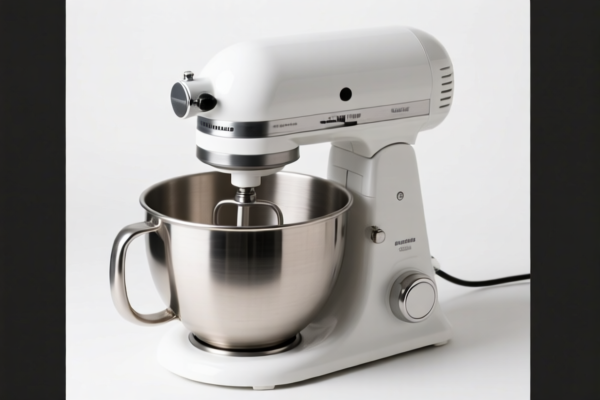
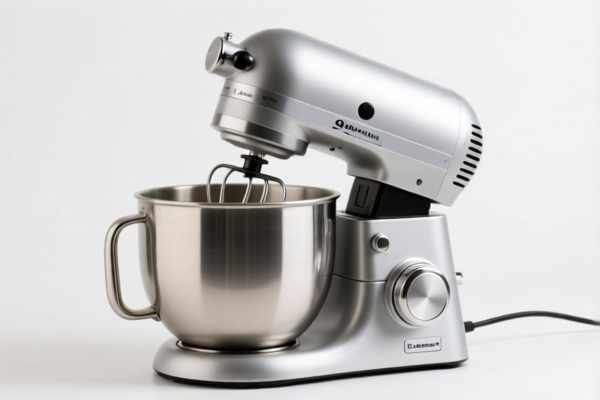
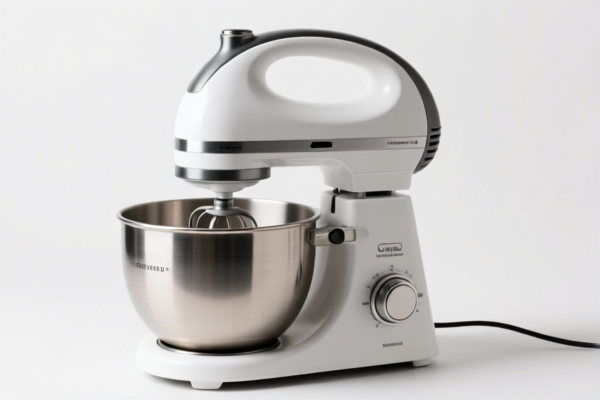
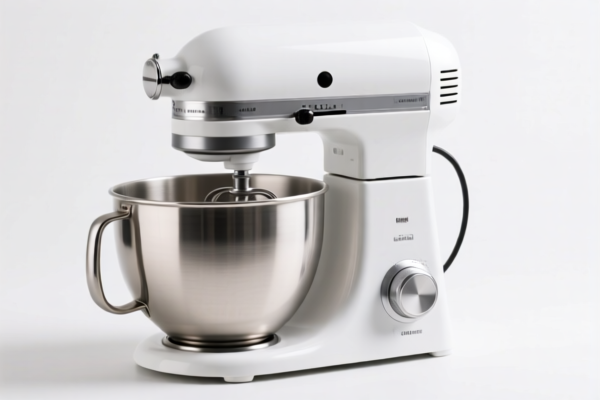
AI Analysis
🥣 Food Mixers: The Ultimate HS Code Classification & US Customs Clearance Guide (2026)
🌐 HS Code Reference & Customs Strategy | 2026 Latest Tariff Analysis | Professional Clearance Tactics
📌 I. Product Definition: Do You Really Understand "Food Mixers"?
A "Food Mixer" is a broad term in international trade that covers everything from your kitchen countertop appliance to heavy-duty industrial processing units. In US customs classification, the key differentiator is Usage (Household vs. Industrial) and Power Source (Electric Motor vs. Mechanical).
Misclassifying a household blender as industrial machinery can lead to severe tariff penalties (35%-37.8% vs. 14.2%). Misclassifying industrial equipment as household goods triggers anti-dumping investigations.
⚠️ Critical Distinction Point:
- Household Appliances: Designed for domestic use, typically compact, often sold in retail packs. → Chapter 85 (Electrical Machinery)
- Industrial Machinery: Designed for large-scale food/beverage preparation in factories or commercial kitchens. → Chapter 84 (Machinery & Mechanical Appliances)
📦 II. HS Code Classification Details (2026 Latest Tariff Authoritative Mapping)
Based on your input data, here is the precise breakdown of eligible HS Codes for Food Mixers, their summaries, and tax implications.
| HS Code | Summary / Description | Total Tax Rate | Tax Breakdown (Base + Surtax + Section 122) |
|---|---|---|---|
| 8509.40.00.25 | Food Mixer; Exact Purpose Match, No Material Conflict | 14.2% | Base: 4.2% Surtax: 0.0% Sec 122: 10% |
| 8509.40.00.15 | Household Mixer with Electric Motor; Exact Purpose Match | 14.2% | Base: 4.2% Surtax: 0.0% Sec 122: 10% |
| 8438.80.00.00 | Industrial Machinery for Food/Beverage Preparation | 35.0% | Base: 0.0% Surtax: 25.0% Sec 122: 10% |
| 8438.90.90.90 | Parts/Components for Food/Beverage Manufacturing Machinery | 37.8% | Base: 2.8% Surtax: 25.0% Sec 122: 10% |
| 8479.82.00.40 | Mixing, Kneading, or Stirring Machines; Purpose Consistent | 35.0% | Base: 0.0% Surtax: 25.0% Sec 122: 10% |
| 8479.82.00.80 | Machines with Stirring Function (Mixing, Kneading, Crushing, etc.) | 35.0% | Base: 0.0% Surtax: 25.0% Sec 122: 10% |
🔍 Key Insight:
- Chapter 85 (8509): Applies to household electric mixers/blenders. Lower tax burden (14.2%).
- Chapter 84 (8438, 8479): Applies to industrial/commercial machinery. High tax burden (35%-37.8%) due to 25% Section 301 Surtax.
💰 III. 2026 Latest Tariff Rate Detailed Explanation (Including Add-ons)
✅ Applicable Country: United States (US)
✅ Origin: China (CN) (Implied by Section 122 & 301 Surtax structure)
✅ Effective Time: Current 2026 Tariff Schedule
🎯 1. 8509.40.00.25 & 8509.40.00.15 —— Household Food Mixers (Electric)
These two codes are the most favorable for standard consumer-grade food mixers.
| Item | Content |
|---|---|
| Base Tariff | 4.2% (Ad Valorem) |
| Section 301 Surtax | 0.0% (Exempted for this specific subheading) |
| Section 122 Tariff | 10% (Targeted China tariff) |
| Total Tax Rate | 14.2% |
| Tax Calculation | CIF Value × 14.2% |
| De Minimis Exemption | ❌ No (Not eligible for $800 de minimis if declared improperly, but generally Section 321 does not apply to China under current rules for Section 122 goods) |
| Legal Basis Path | HTSUS:8509.40.00 → USITC:8509.40.00.25/15 → Sec122:10% |
📌 Explanation:
- "Exact Purpose Match": This classification requires the mixer to be clearly identified as a household appliance.
- Why 0% Surtax?: Unlike industrial machinery, many small household electrical appliances in this specific subheading are not subject to the full 25% Section 301 tariff, only the Section 122 10% surcharge.
- Result: 14.2% total is significantly lower than industrial rates.
🎯 2. 8438.80.00.00 —— Industrial Food/Beverage Machinery
| Item | Content |
|---|---|
| Base Tariff | 0.0% |
| Section 301 Surtax | 25.0% (High punitive tariff for industrial machinery) |
| Section 122 Tariff | 10% |
| Total Tax Rate | 35.0% |
| Tax Calculation | CIF Value × 35.0% |
| De Minimis Exemption | ❌ No |
| Legal Basis Path | HTSUS:8438.80.00.00 → Sec301:25% → Sec122:10% |
📌 Explanation:
- Industrial Use: If the machine is large, commercial-grade, or used for bulk food preparation, it falls here.
- High Cost: The 25% surtax makes this category expensive. Avoid if the product is semi-household.
🎯 3. 8479.82.00.40 & 8479.82.00.80 —— Other Mixing/Kneading Machines
| Item | Content |
|---|---|
| Base Tariff | 0.0% |
| Section 301 Surtax | 25.0% |
| Section 122 Tariff | 10% |
| Total Tax Rate | 35.0% |
| Tax Calculation | CIF Value × 35.0% |
| Legal Basis Path | HTSUS:8479.82.00 → Sec301:25% → Sec122:10% |
📌 Explanation:
- Versatile Machinery: These codes cover machines with stirring, kneading, or crushing functions that don't fit neatly into "Food Processing Machinery" (8438).
- Warning: If your mixer is primarily for food, 8509 (Household) or 8438 (Industrial Food) are preferred. 8479 is a catch-all and may attract stricter scrutiny.
🎯 4. 8438.90.90.90 —— Parts for Food Machinery
| Item | Content |
|---|---|
| Base Tariff | 2.8% |
| Section 301 Surtax | 25.0% |
| Section 122 Tariff | 10% |
| Total Tax Rate | 37.8% |
| Tax Calculation | CIF Value × 37.8% |
| Legal Basis Path | HTSUS:8438.90.90.90 → Sec301:25% → Sec122:10% |
📌 Explanation:
- Spare Parts: If you are importing blades, motors, or bowls separately (not as a whole unit), this code applies.
- Highest Risk: This has the highest total tax rate (37.8%). Do not ship mixers as "parts" to avoid this; declare as a complete unit if possible.
🛠️ IV. Customs Clearance Practical Advice (Real-World Pitfall Guide)
✅ 1. Preparation Checklist (Mandatory Documents)
| Document | Required? | Explanation |
|---|---|---|
| ✅ Product Specs Sheet | ✔️ | Must clearly state: "Household" vs. "Industrial", Voltage, Wattage. |
| ✅ Product Photos | ✔️ | Clear images of the entire unit, including any control panels and branding. |
| ✅ Commercial Invoice | ✔️ | Description must match HS Code summary exactly (e.g., "Household Electric Food Mixer"). |
| ✅ Declaration of Non-Industrial Use | ✔️ | If using 8509, explicitly state: "For household residential use only, not for commercial food production." |
✅ 2. Declaration Tips (Key Mnemonic)
🔥 "Household = 8509 (14.2%), Industrial = 8438/8479 (35%), Parts = 8438.90 (37.8%)!"
| Scenario | Correct Declaration | Wrong Action | Consequence |
|---|---|---|---|
| Standard Kitchen Blender | 8509.40.00.15 |
Declare as Industrial Mixer | Overpayment: 14.2% vs 35% |
| Commercial Dough Mixer | 8479.82.00.80 |
Declare as Household | Underpayment Penalty: Risk of seizure + fines |
| Spare Blade/Beater | 8438.90.90.90 |
Declare as Whole Machine | Complexity: May require reclassification |
| Gift Sample (De Minimis?) | Check Eligibility | Assume $800 exemption applies | Section 122 blocks de minimis for many China goods |
✅ 3. Special Situations
| Situation | Handling Advice |
|---|---|
| OEM Private Label Mixers | Ensure the invoice says "Household Food Mixer," not "Kitchen Appliance Component." |
| Multi-Function Machines | If it blends AND grinds, still use 8509.40.00.15 if intended for household use. |
| Shipment of Parts + Assembly | Importing parts separately incurs 37.8%. Assembling and importing as a unit saves ~23%. |
🌍 V. Global Market Comparison (2026 Update)
| Region | Recommended HS Code | Est. Total Tax (China Origin) | Notes |
|---|---|---|---|
| 🇺🇸 USA | 8509.40.00.15 |
14.2% | Lowest Rate. Must prove household use. |
| 🇪🇺 EU | 8509.40.00 |
~1.7% + VAT | No Section 301/122 surcharges. |
| 🇨🇳 China | 8509.40.00 |
~9% (Import Duty) | Lower import duty, no Section 122. |
📌 Conclusion:
The USA is the most complex market due to Section 122 and Section 301 tariffs.
- Home Use: Stick to 8509 to save ~20% compared to industrial codes.
- Commercial Use: Prepare for 35% duty.
📌 VI. Common Mistakes & Pitfalls (Blood-Tear Lessons)
❌ Mistake 1: Declaring a commercial mixer as "Household Appliance" to avoid 25% surtax.
👉 Result: Customs audit → 100% fine on value + retroactive taxes.
❌ Mistake 2: Using HS Code 8479 for a dedicated food mixer.
👉 Result: While 35% is correct, 8438 is more specific. Using wrong specific code delays clearance.
❌ Mistake 3: Assuming "Food Processor" and "Food Mixer" are different codes.
👉 Result: Both often fall under 8509.40 if household. Check the specific summary in your data: 8509.40.00.25 explicitly mentions "Food Mixer."
✅ Correct Approach:
"Household Electric Food Mixer, Model XYZ, for residential kitchen use only."
🎯 VII. Conclusion: Professional Declaration Saves Money!
🎯 Remember the Golden Rule:
🔹 "Household = 8509 (14.2%) | Industrial = 84xx (35%) | Parts = 8438.90 (37.8%)"
🔹 "Declare 'Household' only if true. False declaration = High Risk."
📌 Pro Tip:
If you are shipping mixed containers (some household, some industrial), strictly segregate them in the commercial invoice. Do not mix HS Codes in one line item.
📣 Immediate Action:
📞 Verify Product Usage: Is it for home or factory?
📄 Choose the Correct HS Code:
- Home:8509.40.00.15or.25
- Factory:8438.80.00.00or8479.82.00.80
🚀 Optimize Cost: Choose8509where legally applicable to save 20.8% in tariffs.
✨ Professional Customs Clearance Starts with Precise Classification!
💼 Your Profit Margin Depends on the 21% Difference Between 14.2% and 35%!
Customer Reviews
About HS Code Classification
The Harmonized System (HS) is an internationally standardized nomenclature developed by the World Customs Organization (WCO) to classify traded products. Over 200 countries use the HS system as the basis for customs tariffs, trade statistics, and import/export regulations.
Each HS code follows a hierarchical structure:
- Chapter (2 digits) — Broad category of goods (e.g., Chapter 84: Machinery and Mechanical Appliances)
- Heading (4 digits) — More specific grouping within the chapter
- Subheading (6 digits) — Internationally standardized breakdown, used by all WCO member countries
- National subdivisions (8-10 digits) — Country-specific extensions for further classification, such as US HTSUS 10-digit codes
Correct HS code classification is essential for smooth customs clearance, accurate duty payment, and compliance with trade regulations. Misclassification can lead to customs delays, overpayment of duties, or penalties.
When importing from CN to US, the applicable tariff rates may include:
- Most-Favored-Nation (MFN) rate — The standard duty rate applied to WTO members
- General rate — Applied to countries without trade agreements
- Trade remedy duties — Additional tariffs such as Section 301 (anti-dumping), Section 232 (national security), or countervailing duties
The information provided on this page is for reference purposes only. For official classification, please consult with your local customs authority or a licensed customs broker.