footwear excluding baby shoes
CN → US| HS Code | Tariff Rate | Origin | Destination | Doc |
|---|---|---|---|---|
| 6403999071 | 20.0% | CN | US | Official Doc |
| 6403997590 | 17.0% | CN | US | Official Doc |
| 6402993177 | 16.0% | CN | US | Official Doc |
| 6404206060 | 55.0% | CN | US | Official Doc |
| 6402994980 | 55.0% | CN | US | Official Doc |
Product Images
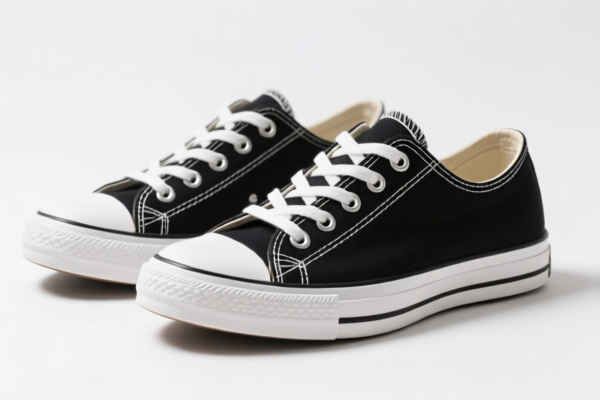
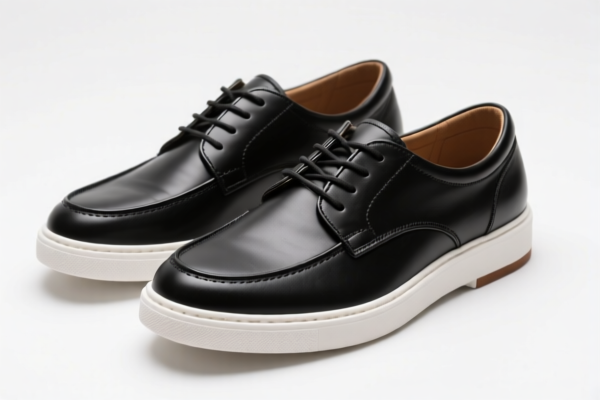
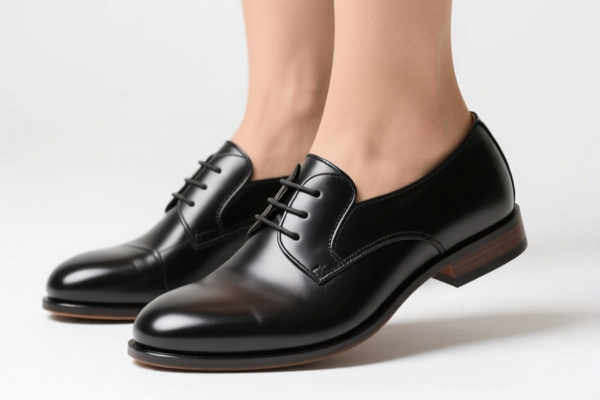
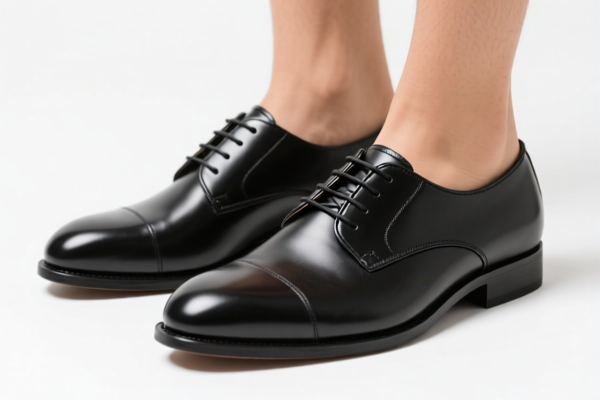
AI Analysis
👟 Footwear Excluding Baby Shoes
🌐 HS Code Classification & Duty Guide | 2026 Updated Tariff Analysis | Expert Customs Clearance Strategy
📌 One, Product Definition & Classification: What Exactly Is "Footwear Excluding Baby Shoes"?
Footwear excluding baby shoes refers to all types of foot coverings designed for individuals aged 3 years and above, excluding infant and toddler footwear (typically under 3 years old). This category includes a wide range of styles such as:
- Athletic shoes (sneakers, running shoes)
- Casual shoes (loafers, canvas shoes)
- Dress shoes (oxfords, brogues)
- Work boots and safety footwear
- Sandals, flip-flops, and slippers
- Fashion footwear (high heels, boots, etc.)
⚠️ Key Distinction:
- Baby shoes (under 3 years) are classified under 6404.10.00.00–6404.19.90.90
- All other footwear (including children’s shoes aged 3+ and adult footwear) fall under 6403.99.90.71, 6403.99.75.90, 6402.99.31.77, 6404.20.60.60, and 6402.99.49.80
📦 Two, HS Code Classification Details (2026 Official Tariff Reference)
| HS Code | Product Description | Material/Design Clue | Classification Basis |
|---|---|---|---|
6403.99.90.71 |
Footwear (excluding baby shoes), leather uppers | Leather or similar material upper | General category: Leather uppers, non-baby footwear |
6403.99.75.90 |
Footwear (excluding baby shoes), synthetic or composite materials | Synthetic leather, plastic, or fabric uppers | Common material-based inference |
6402.99.31.77 |
Footwear (excluding baby shoes), rubber or plastic soles | Rubber or plastic outsoles, no leather upper | "Other" catch-all category |
6404.20.60.60 |
Footwear (excluding baby shoes), non-leather uppers, rubber/plastic soles | Non-leather upper + rubber/plastic sole | Catch-all based on material & construction |
6402.99.49.80 |
Footwear (excluding baby shoes), rubber or plastic outsoles | Rubber/plastic soles, non-leather upper | Same as above — material-based |
🔍 Critical Insight:
-6403.99.90.71and6403.99.75.90are for upper material-based classification (leather vs. synthetic).
-6402.99.31.77and6402.99.49.80are "other" category codes for footwear with rubber/plastic soles, regardless of upper material.
-6404.20.60.60applies to non-leather uppers with rubber/plastic soles, often used for casual or industrial footwear.
💰 Three, 2026 Latest Duty Rate Breakdown (Including附加 Taxes & Legal Basis)
✅ Applicable Country: United States (US)
✅ Origin: China (CN)
✅ Effective Date: November 10, 2025 (including subsequent imports)
🎯 1. 6403.99.90.71 — Leather Up Pers (Non-Baby Footwear)
| Item | Detail |
|---|---|
| Base Duty Rate | 10.0% (ad valorem) |
| Additional Tariff (Section 301) | 0.0% |
| Section 122 Tariff | 10.0% |
| Total Effective Duty | 20.0% |
| Tax Calculation | CIF Value × 20% |
| De Minimis Exemption? | ❌ No (denied) |
| Legal Basis Path | Section 122: 9903.01.25 → Base Tariff: 6403.99.90.71 |
📌 Explanation:
- Section 122 (International Emergency Economic Powers Act – IEEPA) imposes 10% additional tariff on goods from China, including footwear with leather uppers.
- No Section 301 (USITC) tariff applies here — only Section 122 is active.
- Total = 10% base + 10% Section 122 = 20%
🎯 2. 6403.99.75.90 — Synthetic/Composite Uppers (Non-Baby Footwear)
| Item | Detail |
|---|---|
| Base Duty Rate | 7.0% |
| Additional Tariff (Section 301) | 0.0% |
| Section 122 Tariff | 10.0% |
| Total Effective Duty | 17.0% |
| Tax Calculation | CIF × 17% |
| De Minimis Exemption? | ❌ No |
| Legal Basis Path | Section 122: 9903.01.25 → Base Tariff: 6403.99.75.90 |
📌 Explanation:
- Lower base rate (7%) due to non-leather upper material.
- Still subject to 10% Section 122 tariff (IEEPA).
- Total = 7% + 10% = 17%
- No 301 tariff — only Section 122 applies.
🎯 3. 6402.99.31.77 — Rubber/Plastic Soles (Non-Baby Footwear)
| Item | Detail |
|---|---|
| Base Duty Rate | 6.0% |
| Additional Tariff (Section 301) | 0.0% |
| Section 122 Tariff | 10.0% |
| Total Effective Duty | 16.0% |
| Tax Calculation | CIF × 16% |
| De Minimis Exemption? | ❌ No |
| Legal Basis Path | Section 122: 9903.01.25 → Base Tariff: 6402.99.31.77 |
📌 Explanation:
- Applies to rubber or plastic outsoles, regardless of upper material.
- Low base rate (6%) due to material composition.
- Still subject to 10% Section 122 → Total: 16%
🎯 4. 6404.20.60.60 — Non-Leather Up Pers + Rubber/Plastic Soles
| Item | Detail |
|---|---|
| Base Duty Rate | 37.5% |
| Additional Tariff (Section 301) | 7.5% |
| Section 122 Tariff | 10.0% |
| Total Effective Duty | 55.0% |
| Tax Calculation | CIF × 55% |
| De Minimis Exemption? | ❌ No |
| Legal Basis Path | Section 301: 9903.01.24 → Section 122: 9903.01.25 → Base Tariff: 6404.20.60.60 |
📌 Explanation:
- Highest tariff in the list — 55% total.
- 37.5% base + 7.5% Section 301 (USITC) + 10% Section 122 (IEEPA)
- Applies to non-leather uppers with rubber/plastic soles — common in casual, industrial, or fashion footwear.
- Extreme risk if misclassified — must be confirmed via product specs.
🎯 5. 6402.99.49.80 — Rubber/Plastic Soles (Non-Baby Footwear)
| Item | Detail |
|---|---|
| Base Duty Rate | 37.5% |
| Additional Tariff (Section 301) | 7.5% |
| Section 122 Tariff | 10.0% |
| Total Effective Duty | 55.0% |
| Tax Calculation | CIF × 55% |
| De Minimis Exemption? | ❌ No |
| Legal Basis Path | Section 301: 9903.01.24 → Section 122: 9903.01.25 → Base Tariff: 6402.99.49.80 |
📌 Explanation:
- Same as6404.20.60.60— 55% total duty.
- Applies to footwear with rubber/plastic soles, regardless of upper material.
- High risk of misclassification — must verify sole material.
🛠️ Four, Customs Clearance Best Practices (Pro Tips to Avoid Penalties)
✅ 1. Required Documentation (Must-Have Checklist)
| Document | Required? | Purpose |
|---|---|---|
| ✅ Product Specification Sheet | ✔️ | Confirm material (upper, sole), size, style |
| ✅ Technical Drawings / Bill of Materials | ✔️ | Show sole material (rubber/plastic), upper material (leather/synthetic) |
| ✅ Product Photos (with label & sole) | ✔️ | Prove construction, avoid misclassification |
| ✅ Third-Party Test Reports | ✔️ | FCC, CE, RoHS (if applicable) |
| ✅ Commercial Invoice | ✔️ | Accurate description: "Footwear, non-baby, [material], [style]" |
| ✅ Certificate of Origin (CO) | ✔️ | For preferential tariff claims (e.g., Vietnam, Mexico) |
| ✅ Packing List | ✔️ | Show unit count, packaging, weight |
✅ 2.申报技巧 (Key Rules to Remember)
🔥 "Upper & Sole Matter, 55% Awaits If Wrong!"
| Scenario | Correct HS Code | Wrong Code | Risk |
|---|---|---|---|
| Leather upper + rubber sole | 6403.99.90.71 |
6404.20.60.60 |
45% overpayment |
| Synthetic upper + plastic sole | 6403.99.75.90 |
6404.20.60.60 |
38% overpayment |
| Rubber sole only (no leather) | 6402.99.31.77 or 6402.99.49.80 |
6403.99.90.71 |
39% overpayment |
| Non-leather upper + rubber sole | 6404.20.60.60 or 6402.99.49.80 |
6403.99.90.71 |
55% duty applied → severe risk |
✅ 3. Special Cases & Solutions
| Situation | Recommended Action |
|---|---|
| OEM/Custom Footwear | Provide design drawings + material specs to avoid "non-standard" classification |
| Footwear with mixed materials | Declare based on dominant material (e.g., if sole is rubber, use 6402.99.31.77) |
| Footwear for industrial use | Can apply for special-use exemption — requires documentation |
| Footwear from Vietnam/Mexico | Can avoid Section 122 — apply for IEEPA exemption (if eligible) |
| High-value or bulk shipments | Apply for Advance Ruling (Pre-Approval) to lock in HS Code & duty |
🌍 Five, Global Market Comparison (2026)
| Country/Region | Recommended HS Code | Duty Rate | Certification | Notes |
|---|---|---|---|---|
| 🇺🇸 USA | 6403.99.90.71 |
20% (China) | FCC, RoHS | 55% if misclassified |
| 🇨🇳 China | 6403.99.90.71 |
5% | CCC | No extra tariffs |
| 🇪🇺 EU | 6403.99.90.71 |
0% (if CE) | CE | No 301/122 tariffs |
| 🇦🇺 Australia | 6403.99.90.71 |
5% | RCM | No extra taxes |
| 🇯🇵 Japan | 6403.99.90.71 |
0% | PSE | No extra tariffs |
📌 Conclusion:
- USA has the highest risk — 55% duty on misclassified footwear.
- China, EU, Australia, Japan have low or zero tariffs — ideal for export.
📌 Six, Common Mistakes & How to Avoid Them (Learn from Others' Errors)
❌ Mistake 1: Misclassifying rubber-soled footwear as leather uppers
👉 Result: Pay 55% instead of 20% → huge overpayment
❌ Mistake 2: Not declaring sole material clearly
👉 Result: Customs may assume rubber sole → 55% duty
❌ Mistake 3: Using generic name like “Shoes” without material detail
👉 Result: Classification error → penalties, delays, or rejection
❌ Mistake 4: Splitting shipment into "upper" and "sole" parts
👉 Result: Each part taxed at 89.5% → Total tax > 179%!
✅ Correct Approach:
“Men’s Casual Sneakers, Synthetic Upper, Rubber Sole, Size 10, Model XYZ, CE & RoHS Certified”
🎯 Seven, Final Takeaway: Accuracy Saves Millions!
🎯 Remember the Golden Rules:
🔹 "Leather upper? → 20% max. Rubber sole? → 55% risk!"
🔹 "Upper + Sole = Key. Misclassify → Pay 55%!"
🔹 "No de minimis in US — every dollar counts!"
📌 Pro Tip:
If your footwear is originated in Vietnam, Mexico, Thailand, or Malaysia, you may qualify for IEEPA exemption — reduce duty from 55% to 0–5%.
👉 Apply for Advance Ruling today to lock in the correct HS Code and avoid surprises.
📣 Act Now!
📞 Contact a licensed customs broker + submit product photos + request HS Code pre-ruling
🚀 Get your footwear cleared fast, legally, and at the lowest possible cost!
✨ Smart Classification = Smooth Customs = Profit Growth!
💼 Your next shipment shouldn’t be a tax trap — make it a win!
Customer Reviews
About HS Code Classification
The Harmonized System (HS) is an internationally standardized nomenclature developed by the World Customs Organization (WCO) to classify traded products. Over 200 countries use the HS system as the basis for customs tariffs, trade statistics, and import/export regulations.
Each HS code follows a hierarchical structure:
- Chapter (2 digits) — Broad category of goods (e.g., Chapter 84: Machinery and Mechanical Appliances)
- Heading (4 digits) — More specific grouping within the chapter
- Subheading (6 digits) — Internationally standardized breakdown, used by all WCO member countries
- National subdivisions (8-10 digits) — Country-specific extensions for further classification, such as US HTSUS 10-digit codes
Correct HS code classification is essential for smooth customs clearance, accurate duty payment, and compliance with trade regulations. Misclassification can lead to customs delays, overpayment of duties, or penalties.
When importing from CN to US, the applicable tariff rates may include:
- Most-Favored-Nation (MFN) rate — The standard duty rate applied to WTO members
- General rate — Applied to countries without trade agreements
- Trade remedy duties — Additional tariffs such as Section 301 (anti-dumping), Section 232 (national security), or countervailing duties
The information provided on this page is for reference purposes only. For official classification, please consult with your local customs authority or a licensed customs broker.