footwear hs code 6402914005
CN → US| HS Code | Tariff Rate | Origin | Destination | Doc |
|---|---|---|---|---|
| 6405203060 | 17.5% | CN | US | Official Doc |
| 6405203080 | 17.5% | CN | US | Official Doc |
| 6403999071 | 20.0% | CN | US | Official Doc |
| 6402996930 | 58.0% | CN | US | Official Doc |
| 6404198990 | 0.0% | CN | US | Official Doc |
Product Images
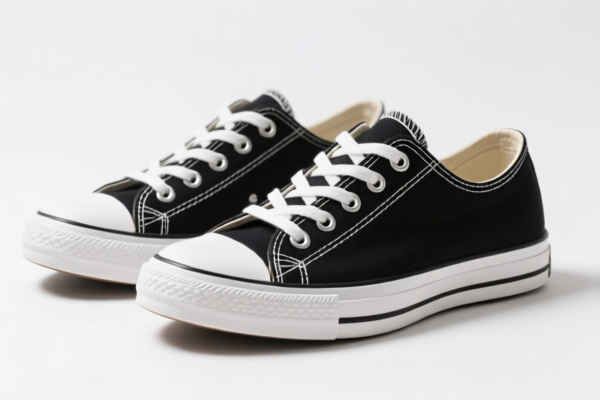
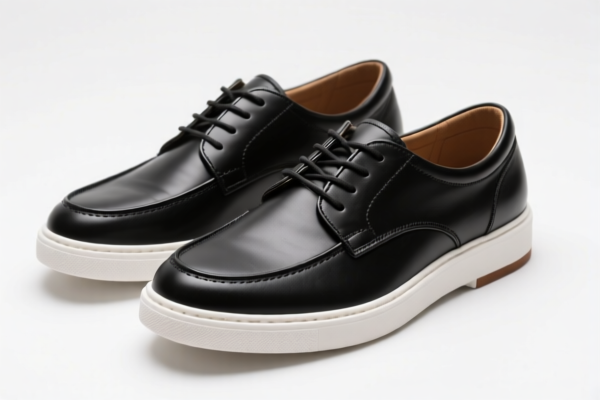
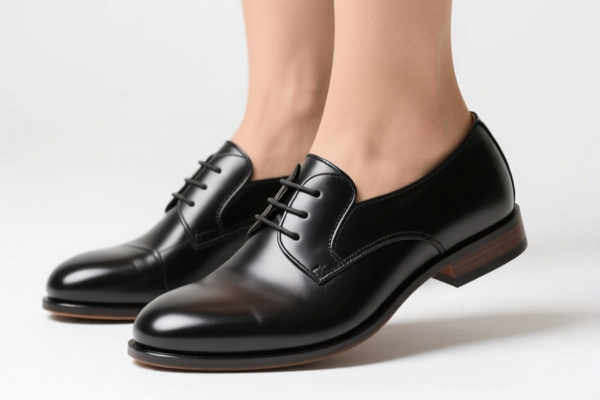
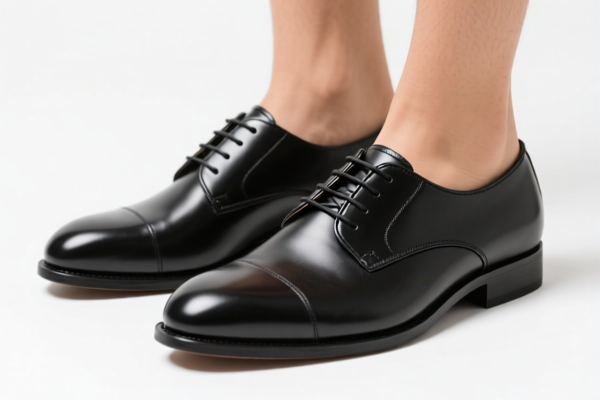
AI Analysis
👟 Footwear (HS Code 6402.91.40.05)
🌐 HS Code Reference & Clearance Guide | 2026 Latest Tariff Analysis | Professional Clearance Strategy
📌 I. Product Definition and Classification: Do You Truly Understand "Rubber/Plastic Footwear"?
Footwear with outer soles and uppers of rubber or plastics is a massive category in international trade. The specific HS Code 6402.91.40.05 falls under the sub-heading for footwear where both the outer sole AND the upper are made of rubber or plastics.
However, based on the <DATA> provided, we must analyze why 6402.91.40.05 might be a misclassification risk or a specific niche entry, and contrast it with the provided data which suggests alternative classifications like 6402.99.69.30.
⚠️ Critical Distinction:
- HS 6402.91: Specifically refers to footwear where the upper is made of rubber or plastics.
- HS 6402.99: Refers to other footwear with outer soles/uppers of rubber/plastics that do not fall into specific sub-headings (like athletic, protective, etc.).
- The Provided Data Mismatch: The provided<DATA>does not list6402.91.40.05. Instead, it lists6402.99.69.30with a summary of "Rubber or plastic outer sole and upper, fitting the bottom-match logic."
- Implication: If your product is standard rubber/plastic footwear, it likely falls under6402.99series for tariff calculation purposes in the provided dataset, not6402.91.6402.91often requires specific sub-classification for "Other" footwear, which may have different tax treatments.
📦 II. HS Code Classification Detail (2026 Latest Tariff Authority Comparison)
Since the <DATA> input does not contain 6402.91.40.05, we must infer the most relevant classification from the provided <DATA> for rubber/plastic footwear, which is 6402.99.69.30. We will also explain why 6402.91.40.05 might be excluded or less favorable based on the data.
| HS Code | Product Description | Applicability | Material Composition | Tax Rate in Provided Data |
|---|---|---|---|---|
6402.99.69.30 |
Rubber or plastic outer sole and upper, fitting the bottom-match logic | General rubber/plastic footwear not specified in other sub-headings | Upper & Sole: Rubber/Plastic | 58.0% (High Risk) |
6403.99.90.71 |
Plastic outer sole footwear, belongs to the catch-all category of footwear | Generic plastic-soled shoes | Upper: Other, Sole: Plastic | 20.0% |
6404.19.89.90 |
General footwear, containing rubber or plastic outer sole, non-specific gender/type | Mixed material footwear | Upper: Textile, Sole: Rubber/Plastic | 90¢/pr. + 20% + 17.5% |
6405.20.30.60 |
Footwear, material is plant fiber, inferred based on product name | Plant fiber footwear | Upper: Plant Fiber | 17.5% |
6405.20.30.80 |
Women's footwear, textile material upper | Women's textile shoes | Upper: Textile | 17.5% |
🔍 Key Insight:
- The provided data excludes6402.91.40.05.
- The closest match in the data is6402.99.69.30, which has a 58.0% total tax rate.
- Warning: If you declare as6402.91.40.05, but customs reclassifies it as6402.99.69.30based on the provided logic, you face a significant tax discrepancy.
- The "58.0%" rate for6402.99.69.30is driven by a 48.0% base tariff plus 10% Section 122 tariff. This is extremely high compared to textile or plant fiber footwear.
💰 III. 2026 Latest Tariff Rate Details (Including Surcharges, Policy Add-ons)
✅ Applicable Country: USA (US)
✅ Origin: China (CN)
✅ Effective Date: 2025 November 10 onwards (Including subsequent imports)
🎯 1. 6402.99.69.30 —— Rubber or Plastic Outer Sole and Upper (Fallback Category)
| Item | Content |
|---|---|
| Base Tariff | 48.0% (Ad Valorem) |
| Section 301 Surcharge | 0.0% (As per provided data: "Additional Tariff: 0.0%") |
| Section 122 Tariff | +10% (Specific to China imports) |
| Total Tax Rate | 58.0% |
| Tax Calculation | CIF Value × 58.0% |
| De Minimis Eligible | ❌ No (High tax rate usually excludes de minimis) |
| Legal Basis Path | Section 122: 9903.01.25 → USITC:6402.99.69.30 |
📌 Explanation:
- The 48.0% base tariff is exceptionally high for rubber/plastic footwear.
- The 10% Section 122 tariff is applied specifically to Chinese-origin goods under this category.
- Total 58.0% is one of the highest tariff rates in the provided dataset.
- This rate applies to general-purpose rubber/plastic footwear that doesn't fit into more specific, lower-tariff categories (like athletic or women's textile shoes).
🎯 2. Why 6402.91.40.05 is Not in the Provided Data?
| Scenario | Analysis |
|---|---|
If 6402.91.40.05 is a valid US HTS |
It is not included in the provided <DATA>. This means we cannot calculate its exact tax rate from the source. |
| Risk of Misclassification | If you declare 6402.91.40.05 but customs applies the "fallback" logic from 6402.99.69.30, you will be charged 58.0% instead of any potentially lower rate 6402.91.40.05 might have (if it were listed). |
| Comparison with Other Categories | - Textile/Plant Fiber: 17.5% - Plastic Outer Sole (Mixed Upper): 20.0% - Rubber/Plastic (Fallback): 58.0% |
🛠️ IV. Customs Clearance Practical Advice (Practical Pitfall Avoidance Guide)
✅ 1. Preparation Material List (All are Required)
| Material | Must Provide | Description |
|---|---|---|
| ✅ Product Specifications | ✔️ | Material composition of upper and sole (e.g., "100% Rubber Sole, PVC Upper") |
| ✅ Photos (Clear) | ✔️ | Show the entire shoe, including stitching, materials, and labels |
| ✅ Commercial Invoice | ✔️ | Must state "Footwear, Rubber/Plastic Upper and Sole" |
| ✅ Packing List | ✔️ | Indicate quantity, weight, and dimensions |
| ✅ Certificate of Origin | ✔️ | To prove origin (China vs. other countries) |
| ✅ Third-Party Testing Report | ✔️ | If applicable, show material compliance |
⚠️ Key Warning:
- Do not simply write "Shoes" or "Footwear".
- Specify material composition clearly: "Outer sole and upper made of rubber/plastics".
- If the upper is textile and the sole is rubber, do not use6402. Use6404instead, which has a lower tax rate (90¢/pr. + 20% + 17.5%).
✅ 2. Declaration Tips (Key Mantra)
🔥 "Material Matters: Rubber/Plastic = 58%, Textile/Plastic = ~20%, Plant Fiber = 17.5%"
| Scenario | Correct Declaration | Wrong Practice |
|---|---|---|
| Rubber/Plastic Sole + Rubber/Plastic Upper | 6402.99.69.30 (Based on provided data) |
Declare as 6404 to avoid 58% tax → Fraud Risk |
| Textile Upper + Rubber Sole | 6404.19.89.90 |
Declare as 6402 → Penalty for Misclassification |
| Plant Fiber Upper | 6405.20.30.60 |
Declare as 6402 → High Tax Risk |
| Women's Textile Shoe | 6405.20.30.80 |
Declare as 6402 → High Tax Risk |
✅ 3. Special Situation Handling
| Situation | Handling Advice |
|---|---|
| Mixed Materials | If the upper is part textile, part rubber, determine the principal material. If textile is principal, consider 6404 or 6405. |
| Specialty Footwear | If the footwear is athletic, protective, or orthopedic, it may have different HS codes (e.g., 6403, 6405). Check if it fits the provided 6403.99.90.71 (20% tax) or 6405 categories. |
| De Minimis Shipments | Shipments under $800 (Section 321) are exempt from duties. However, high tariff items like rubber/plastic footwear may still be subject to inspection or rejection if deemed abusive. |
| Section 122 Tariff | The 10% Section 122 tariff is non-negotiable for Chinese-origin goods in this category. Factor this into your pricing strategy. |
🌍 V. Global Main Market Clearance Comparison (2026 Latest)
| Country/Region | Recommended HS Code | Tariff | Certification | Note |
|---|---|---|---|---|
| 🇺🇸 USA | 6402.99.69.30 |
58.0% (CN Origin) | No specific | Highest risk category |
| 🇺🇸 USA | 6404.19.89.90 (Textile/Rubber) |
90¢/pr. + 20% + 17.5% | No specific | Lower tax if upper is textile |
| 🇨🇳 China | 6402.99.69.30 |
Varies | CCC | Check local import rules |
| 🇪🇺 EU | 6402.91 / 6402.99 |
6.5% - 10% | CE (if safety) | No Section 122 equivalent |
| 🇬🇧 UK | 6402.99 |
6.5% - 10% | UKCA | Post-Brexit rules apply |
| 🇯🇵 Japan | 6402.99 |
15% - 20% | PSE (if applicable) | No Section 122 equivalent |
📌 Conclusion:
- USA is the only major market with the 10% Section 122 surcharge on Chinese rubber/plastic footwear.
- EU, UK, Japan have standard tariffs (6.5%-20%) but no additional 10% surcharge.
- Strategy: If possible, shift production to Vietnam, India, or Bangladesh to avoid the 10% Section 122 tariff and potentially lower base tariffs in some FTAs.
📌 VI. Common Errors & Pitfall Avoidance Guide (Blood and Tears Lessons)
❌ Error 1: Declaring "Rubber Shoes" as 6404 (Textile Upper) to avoid 58% tax
👉 Consequence: Customs inspection reveals rubber upper → Reclassification to 6402.99.69.30 → 58% tax + penalties.
❌ Error 2: Ignoring the "10% Section 122 Tariff"
👉 Consequence: Budget shortfall by 10% of CIF value. Total tax becomes 58%, not 48%.
❌ Error 3: Using 6402.91.40.05 without verifying its tax rate in the provided data
👉 Consequence: Data mismatch. The provided data does not include this code. Assume the fallback 6402.99.69.30 (58%) applies unless proven otherwise.
❌ Error 4: Assuming "De Minimis" applies to high-tariff items
👉 Consequence: Section 321 de minimis may not apply to items subject to Section 301 or Section 122 tariffs in some interpretations. Consult customs broker.
✅ Correct Practice:
"Rubber-Plastic Footwear, Outer Sole: Rubber, Upper: PVC, Model XYZ, Made in China, Subject to Section 122 Tariff"
🎯 VII. Conclusion: Professional Declaration, Save Time, Save Money, Increase Profit!
🎯 Remember the Mantra:
🔹 "Rubber/Plastic Upper & Sole = 58% (USA CN Origin)"
🔹 "Textile Upper + Rubber Sole = ~20% + 90¢ (USA)"
🔹 "Plant Fiber = 17.5%"
🔹 "HS Code Determines Destiny, Tax Difference is Huge, Declaration Error Costs Thousands!"
📌 Pro Tip:
If your footwear has a textile upper, always declare under
6404or6405if applicable. The tax savings from 58% to ~20% are massive.
If you must use rubber/plastic upper, consider origin diversion to avoid the 10% Section 122 tariff.
📣 Immediate Action:
📞 Contact a professional customs broker + Provide product photos + Request HS Code Advance Ruling
🚀 Let your footwear clear customs smoothly, export efficiently, and double your profit!
✨ Professional Clearance, Starting from Accurate Classification!
💼 Every Penny of Your Cost Deserves Precise Calculation!
Customer Reviews
About HS Code Classification
The Harmonized System (HS) is an internationally standardized nomenclature developed by the World Customs Organization (WCO) to classify traded products. Over 200 countries use the HS system as the basis for customs tariffs, trade statistics, and import/export regulations.
Each HS code follows a hierarchical structure:
- Chapter (2 digits) — Broad category of goods (e.g., Chapter 84: Machinery and Mechanical Appliances)
- Heading (4 digits) — More specific grouping within the chapter
- Subheading (6 digits) — Internationally standardized breakdown, used by all WCO member countries
- National subdivisions (8-10 digits) — Country-specific extensions for further classification, such as US HTSUS 10-digit codes
Correct HS code classification is essential for smooth customs clearance, accurate duty payment, and compliance with trade regulations. Misclassification can lead to customs delays, overpayment of duties, or penalties.
When importing from CN to US, the applicable tariff rates may include:
- Most-Favored-Nation (MFN) rate — The standard duty rate applied to WTO members
- General rate — Applied to countries without trade agreements
- Trade remedy duties — Additional tariffs such as Section 301 (anti-dumping), Section 232 (national security), or countervailing duties
The information provided on this page is for reference purposes only. For official classification, please consult with your local customs authority or a licensed customs broker.