footwear hs code 6402919005
CN → US| HS Code | Tariff Rate | Origin | Destination | Doc |
|---|---|---|---|---|
| 6405203080 | 17.5% | CN | US | Official Doc |
| 6405203060 | 17.5% | CN | US | Official Doc |
| 6403999071 | 20.0% | CN | US | Official Doc |
| 6402996930 | 58.0% | CN | US | Official Doc |
| 6404198990 | 0.0% | CN | US | Official Doc |
Product Images
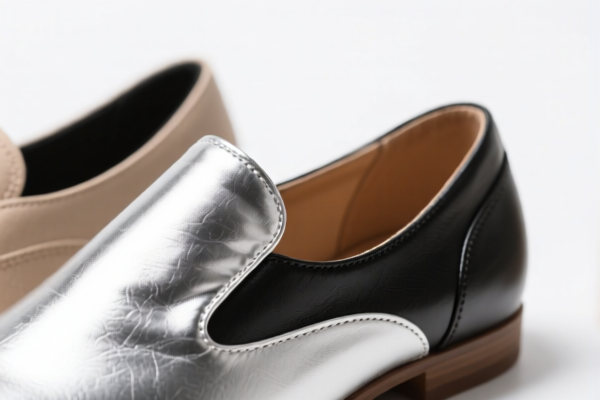
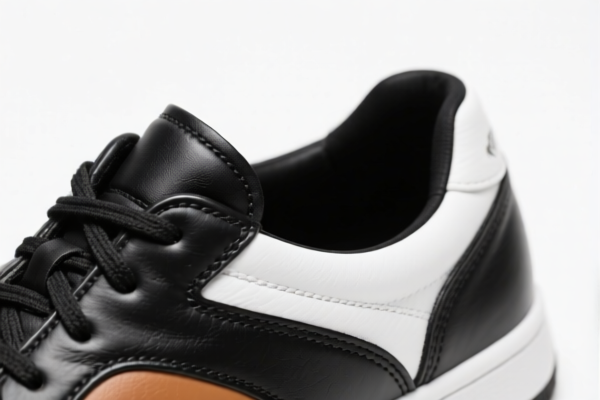
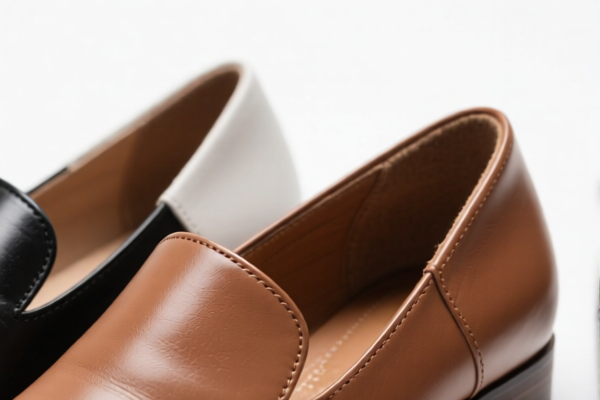
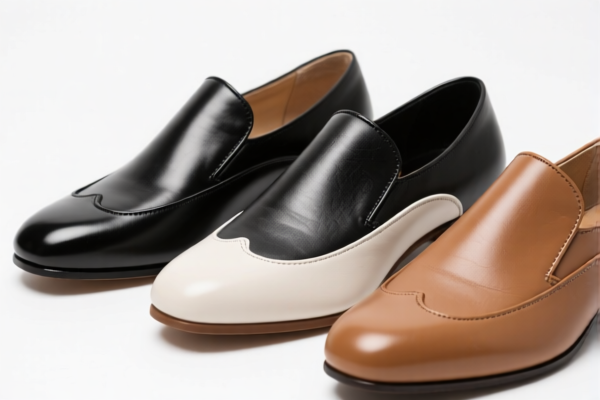
AI Analysis
👟 Footwear (Footwear with Outer Soles of Rubber/Plastics)
🌐 HS Code 6402.91.90.05 Reference & Customs Clearance Guide | 2026 Tax Analysis & Professional Entry Strategy
📌 I. Product Definition & Classification: What is "Footwear"?
Footwear is a broad category covering shoes, sandals, slippers, and other items worn on the feet. In international trade (specifically under the U.S. Harmonized Tariff Schedule), Chapter 64 governs these goods. The key distinction lies in the outer sole material and upper material.
- Rubber or Plastic Outer Soles: Footwear where the bottom part touching the ground is made entirely or principally of rubber or plastics.
- Other Outer Soles: Includes leather, textile materials, wood, cork, etc.
⚠️ Key Distinction for 6402.91.90.05:
- This specific code falls under 6402.91, which refers to "Other footwear with outer soles of rubber or plastics."
- It typically excludes:
- Sports footwear (e.g., tennis, basketball, golf) → Often6404.19or specific6402subcategories.
- Protective/safety footwear → Often6403or6404depending on material.
- Textile uppers only (no rubber/plastic sole) →6404or6405.
📦 II. HS Code Classification Detail (2026 Latest Tariff Schedule)
| HS Code | Product Description | Applicable Scenario | Outer Sole Material | Upper Material |
|---|---|---|---|---|
6402.91.90.05 |
Other footwear, with outer soles of rubber or plastics, not being sports footwear | Casual shoes, dress shoes, clogs, slip-ons with rubber/plastic soles | Rubber/Plastic | Leather, Textile, Other (Not specified) |
6402.20.00.00 |
Footwear with outer soles of rubber/plastics and uppers of leather | High-end leather shoes with rubber soles | Rubber/Plastic | Leather |
6404.11.00.00 |
Footwear with outer soles of rubber/plastics; sports footwear | Tennis, basketball, running shoes | Rubber/Plastic | Textile (usually) |
6405.20.30.80 |
Women's footwear, textile upper | Casual women's shoes with textile uppers | Varies | Textile |
🔍 Critical Reminder:
- 6402.91.90.05 is a catch-all for non-sports footwear with rubber/plastic soles.
- If the footwear is sports-specific (designed for tennis, golf, track, etc.), it likely falls under 6404 or a different 6402 subheading, which has different tax rates.
- Misclassification as6402.91.90.05when the item is actually sports footwear can lead to underpayment of duties and penalties.
💰 III. 2026 Latest Tariff Rate Breakdown (Including Surcharges & Policy Add-ons)
✅ Applicable Country: United States (US)
✅ Country of Origin: China (CN)
✅ Effective Date: 2025/2026 (Subject to current trade policy)
🎯 1. 6402.91.90.05 – Other Footwear (Rubber/Plastic Sole)
| Item | Content |
|---|---|
| Base Tariff Rate | 10.0% (Standard MFN rate for many footwear items) |
| Section 301 Surcharge | +7.5% (General tariff for China-origin goods under Section 301) |
| Section 122 Tariff | +10.0% (Specific surcharge for certain footwear/textiles under IEEPA Section 122) |
| Total Tax Rate | 27.5% |
| Tax Calculation | CIF Value × 27.5% |
| De Minimis Exemption | ❌ Not Eligible (Footwear is generally excluded from de minimis benefits under current US rules for Chinese goods) |
| Legal Basis Path | USITC:6402.91.90.05 → Section 301: Footwear → IEEPA:122 (Section 122) |
📌 Explanation:
- Base Rate (10%): Standard import duty for non-sports footwear with rubber/plastic soles.
- Section 301 (7.5%): Applied to almost all consumer goods from China, including footwear.
- Section 122 (10%): A specific provision that allows the President to impose tariffs on imports that threaten to impair national security. This has been applied to certain footwear categories.
- Total Effective Rate: 27.5%. This is a high-cost category for importers.⚠️ Note on
6402.99.69.30(from your data):
If the footwear has textile uppers AND rubber/plastic soles, it might be classified under6402.99.69.30with a 58.0% total tax rate (48% base + 10% Section 122). Always verify the upper material. If the upper is textile, the duty skyrockets.
🛠️ IV. Customs Clearance Practical Advice (Real-World Pitfall Avoidance Guide)
✅ 1. Required Documentation Checklist (Non-Negotiable)
| Document | Must Provide | Explanation |
|---|---|---|
| ✅ Product Specifications | ✔️ | Detailed description: sole material (rubber/plastic), upper material (leather/textile), use (casual/sports). |
| ✅ Photos of the Shoe | ✔️ | Clear images of the sole, upper, and interior labels. |
| ✅ Commercial Invoice | ✔️ | Must explicitly state "Footwear, Outer Sole: Rubber/Plastic, Upper: [Material]." |
| ✅ Packing List | ✔️ | Include quantity per box, total boxes, gross/net weight. |
| ✅ Origin Certificate | ✔️ | Proves country of origin (China) to apply correct surcharges. |
| ✅ Materials Declaration | ✔️ | Specific declaration of sole and upper materials to avoid misclassification. |
✅ 2. Classification Strategy (Key Mantra)
🔥 "Sole Defines Chapter 64, Upper Defines Subheading, Use Defines Specific Code!"
| Scenario | Correct HS Code | Error Consequence |
|---|---|---|
| Casual Shoe, Rubber Sole, Leather Upper | 6402.20.00.00 or 6402.91.90.05 |
Misclassifying as textile → Higher tax |
| Running Shoe, Rubber Sole, Textile Upper | 6404.19.89.90 (Example) |
Misclassifying as casual → 90¢/pr + 20% + 7.5% + 10% |
| Women's Shoe, Textile Upper, Rubber Sole | 6405.20.30.80 |
Misclassifying as leather → 17.5% vs 58% |
| Sports Cleat | 6404.11.00.00 |
Misclassifying as casual → Wrong tax structure |
✅ 3. Special Cases & Risk Management
| Situation | Handling Advice |
|---|---|
| Mixed Materials | If the sole is rubber but the upper is 50% leather/50% textile, consult a customs broker. The principal material determines the classification. |
| Protective/Safety Shoes | These often fall under 6403 (leather) or 6404 (textile/plastic) with specific safety certifications. Do not use 6402.91.90.05. |
| Footwear with Metal Parts | If the sole has metal spikes (golf cleats), it may be classified differently. |
| De Minimis (800 USD) Loophole | ❌ Do Not Rely On: Footwear from China is excluded from the $800 de minimis exemption under current U.S. trade policies. Shipments will be subject to full duties. |
🌍 V. Global Market Customs Comparison (2026 Latest)
| Country/Region | Recommended HS Code | Tariff | Certification | Remarks |
|---|---|---|---|---|
| 🇺🇸 USA | 6402.91.90.05 |
27.5% (China) | No specific tech cert | High duty due to Section 301 + 122 |
| 🇨🇳 China | 6402.91.90.05 |
10% | No export tax | Import duty into China is lower |
| 🇪🇺 EU | 6402.99 |
~10% | CE Marking (if safety) | No Section 301 equivalent |
| 🇨🇦 Canada | 6402.91 |
~12.5% | No special surcharge | Lower than US due to trade agreements |
📌 Conclusion:
- The US market is the most expensive for importing footwear from China due to Section 301 and Section 122 tariffs.
- Total cost of goods can increase by 27.5% just in duties.
- Consider supply chain diversification (e.g., sourcing from Vietnam, India, or Bangladesh) to avoid these surcharges if possible.
📌 VI. Common Errors & Pitfall Guide (Blood Lessons)
❌ Error 1: Classifying sports shoes as 6402.91.90.05.
👉 Consequence: Underpayment of duties. Sports shoes may have different base rates or be excluded from certain surcharges, but more importantly, misdeclaration can lead to audits and fines.
❌ Error 2: Ignoring the upper material.
👉 Consequence: If the upper is textile, the code might shift to 6405 or 6404, with completely different tax structures (e.g., $0.90/pair + %).
❌ Error 3: Assuming de minimis applies.
👉 Consequence: Shipments under $800 from China for footwear are still taxed. Do not try to split shipments to avoid duties; CBP is actively monitoring this.
❌ Error 4: Using vague descriptions like "Shoes."
👉 Consequence: Customs will query the shipment, causing delays. Be specific: "Men's Casual Leather Shoe with Rubber Sole."
✅ Correct Practice:
"Footwear, Men's Casual, Outer Sole: Rubber, Upper: Leather, Model: ABC123, Origin: China"
🎯 VII. Conclusion: Professional Classification, Cost Savings, and Efficiency!
🎯 Remember the Mantra:
🔹 "Sole is Rubber? Check 6402. Upper is Textile? Check 6405. Sports? Check 6404. All in? 27.5% Tax!"
🔹 "HS Code determines your profit margin. A wrong code can cost you thousands!"
📌 Pro Tip:
If your footwear is not from China (e.g., Vietnam, India, Indonesia), you may avoid the 7.5% Section 301 surcharge. Always check the Country of Origin carefully. For Chinese goods, the 27.5% rate is significant and must be factored into pricing.
📣 Immediate Action:
📞 Consult a licensed customs broker for pre-classification ruling.
📸 Provide clear photos of soles and uppers.
🚀 Ensure accurate documentation to avoid CBP holds, fines, or shipment delays!
✨ Professional Customs Clearance Starts with Accurate Classification!
💼 Every cent of duty saved is profit earned!
Customer Reviews
About HS Code Classification
The Harmonized System (HS) is an internationally standardized nomenclature developed by the World Customs Organization (WCO) to classify traded products. Over 200 countries use the HS system as the basis for customs tariffs, trade statistics, and import/export regulations.
Each HS code follows a hierarchical structure:
- Chapter (2 digits) — Broad category of goods (e.g., Chapter 84: Machinery and Mechanical Appliances)
- Heading (4 digits) — More specific grouping within the chapter
- Subheading (6 digits) — Internationally standardized breakdown, used by all WCO member countries
- National subdivisions (8-10 digits) — Country-specific extensions for further classification, such as US HTSUS 10-digit codes
Correct HS code classification is essential for smooth customs clearance, accurate duty payment, and compliance with trade regulations. Misclassification can lead to customs delays, overpayment of duties, or penalties.
When importing from CN to US, the applicable tariff rates may include:
- Most-Favored-Nation (MFN) rate — The standard duty rate applied to WTO members
- General rate — Applied to countries without trade agreements
- Trade remedy duties — Additional tariffs such as Section 301 (anti-dumping), Section 232 (national security), or countervailing duties
The information provided on this page is for reference purposes only. For official classification, please consult with your local customs authority or a licensed customs broker.