footwear parts uppers and parts thereof
CN → US| HS Code | Tariff Rate | Origin | Destination | Doc |
|---|---|---|---|---|
| 4203406000 | 35.0% | CN | US | Official Doc |
| 6406109040 | 22.0% | CN | US | Official Doc |
| 6406106000 | 17.5% | CN | US | Official Doc |
Product Images
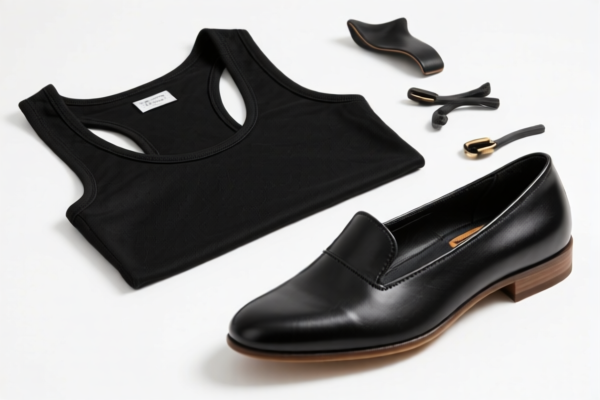
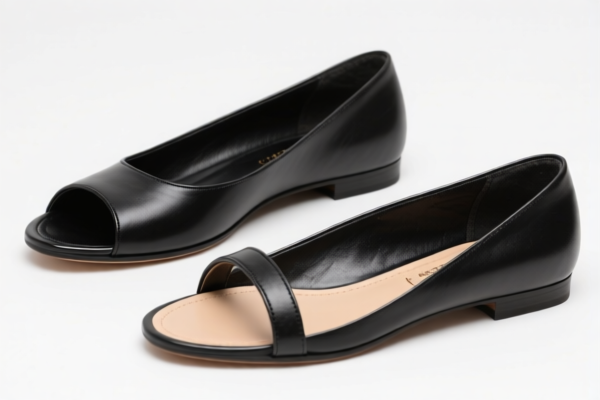


AI Analysis
👞 Footwear Parts (Uppers and Their Components)
🌐 HS Code Reference & Customs Clearance Guide | 2026 Latest Tariff Breakdown | Pro-Level Import Strategy
📌 One, Product Definition & Classification: Do You Really Know What "Footwear Uppers" Are?
Footwear uppers — the outer covering of a shoe — are critical components in the manufacturing of shoes, especially for leather and synthetic leather footwear. These parts include:
- Main upper panels (front, back, sides)
- Eyelets, laces, and lace tabs
- Collars, tongue, heel counters, and reinforcements
- Decorative inserts, trim, and stitching elements
⚠️ Key Distinction:
- If made from leather or synthetic leather, and used in footwear, they fall under applicable footwear accessory rules.
- If not part of a complete shoe, and not intended for footwear use, they may be classified elsewhere (e.g., as textile parts or accessories).
📦 Two, HS Code Classification Details (2026 Latest Tariff Authority Match)
| HS Code | Product Description | Applicable Scenario | Material & Use Match? |
|---|---|---|---|
4203.40.60.00 |
Parts of footwear (uppers and their components), made of leather or synthetic leather, classified as accessories for clothing or other. | Leather or synthetic leather uppers used in shoes, with no conflict in material or function | ✅ Yes – full alignment |
6406.10.90.40 |
Other footwear parts (uppers and components), classified under the "catch-all" rule when no specific match exists and no material conflict applies | Generic uppers, mixed materials, or non-standard designs where no specific subheading fits | ✅ Yes – fallback classification |
6406.10.60.00 |
Footwear parts (uppers and components), fully consistent with purpose and classification, no material conflict → potentially eligible | Standard uppers with clear footwear use, matching material and function | ✅ Yes – strong fit |
🔍 Critical Note:
- Material matters: If the upper is made of leather or synthetic leather,4203.40.60.00is the preferred code.
- If the material is not leather/synthetic leather, or the design is ambiguous,6406.10.90.40or6406.10.60.00may apply.
- No "mixed" classification: You cannot split a single upper into multiple parts unless physically separable and functionally distinct.
💰 Three, 2026 Latest Tariff Breakdown (With Detailed Duty Clauses)
✅ Applicable Country: United States (US)
✅ Origin: China (CN)
✅ Effective Date: November 10, 2025 (and onward)
🎯 1. 4203.40.60.00 — Leather/Synthetic Leather Uppers (Accessories for Clothing/Other)
| Item | Detail |
|---|---|
| Base Duty Rate | 0% (ad valorem) |
| Section 301 (USITC) Additional Duty | +25% (under Section 301 of the Trade Act of 1974) |
| Section 122 (IEEPA) Additional Duty | +10% (under the International Emergency Economic Powers Act, targeting China/HK) |
| Total Effective Duty | 35.0% |
| Tax Calculation | CIF Value × 35.0% |
| De Minimis Threshold | ❌ Not applicable (denied de minimis treatment) |
| Legal Basis Path | IEEPA:9903.01.25 → IEEPA:9903.01.24 → USITC:4203.40.60.00 → FOOTNOTE:9903.88.01 |
📌 Explanation:
- 25% USITC Duty: Imposed under Section 301 for goods from China deemed to have unfair trade practices.
- 10% IEEPA Duty: Enforced under International Emergency Economic Powers Act, targeting national security concerns related to Chinese exports.
- Total 35% – one of the highest tariff burdens for footwear components.
- No relief unless product is reclassified or origin changed.
🎯 2. 6406.10.90.40 — Other Footwear Parts (Catch-All Rule, No Material Conflict)
| Item | Detail |
|---|---|
| Base Duty Rate | 4.5% |
| Section 301 (USITC) Additional Duty | +7.5% |
| Section 122 (IEEPA) Additional Duty | +10% |
| Total Effective Duty | 22.0% |
| Tax Calculation | CIF Value × 22.0% |
| De Minimis Threshold | ❌ Not applicable |
| Legal Basis Path | IEEPA:9903.01.25 → IEEPA:9903.01.24 → USITC:6406.10.90.40 → FOOTNOTE:9903.88.01 |
📌 Explanation:
- 4.5% base duty – standard rate for non-leather footwear parts.
- 7.5% USITC + 10% IEEPA = 17.5% additional – due to China origin.
- Total 22% – significantly lower than4203.40.60.00, but still high.
- Applies when no specific subheading fits, and no material conflict (e.g., mixed fabrics, non-leather uppers).
🎯 3. 6406.10.60.00 — Footwear Parts (Uppers), Fully Aligned with Purpose, No Material Conflict
| Item | Detail |
|---|---|
| Base Duty Rate | 0% |
| Section 301 (USITC) Additional Duty | +7.5% |
| Section 122 (IEEPA) Additional Duty | +10% |
| Total Effective Duty | 17.5% |
| Tax Calculation | CIF Value × 17.5% |
| De Minimis Threshold | ❌ Not applicable |
| Legal Basis Path | IEEPA:9903.01.25 → IEEPA:9903.01.24 → USITC:6406.10.60.00 → FOOTNOTE:9903.88.01 |
📌 Explanation:
- 0% base duty – favorable for non-leather or standard uppers.
- 7.5% USITC + 10% IEEPA = 17.5% total – lowest among the three.
- Applies when the part is clearly intended for footwear, no material conflict, and fully consistent with classification.
🛠️ Four, Customs Clearance Best Practices (Real-World Pro Tips)
✅ 1. Documentation Checklist (Must-Have Files)
| Document | Required? | Notes |
|---|---|---|
| ✅ Product Specification Sheet | ✔️ | Include material type, thickness, stitching method, intended shoe model |
| ✅ Technical Drawings / CAD Files | ✔️ | Show how the upper integrates into the shoe |
| ✅ High-Resolution Product Photos | ✔️ | Show front, back, side, stitching, material texture |
| ✅ Third-Party Test Reports | ✔️ | ASTM, REACH, RoHS, or OEKO-TEX (if applicable) |
| ✅ Commercial Invoice | ✔️ | Clearly state: “Footwear Uppers, Leather/Synthetic Leather, for Shoes” |
| ✅ Certificate of Origin (CO) | ✔️ | Critical for tariff eligibility – especially if from Vietnam, Mexico, or Thailand |
| ✅ Packing List | ✔️ | Specify quantity, weight, and whether parts are pre-assembled |
✅ 2.申报技巧 (Key Rules of Thumb)
🔥 "Material First, Use Second, Code Last – One Mistake, 35% Tax!"
| Scenario | Correct HS Code | Wrong Code | Risk |
|---|---|---|---|
| Leather upper, fully for shoes | 4203.40.60.00 |
6406.10.90.40 |
Tax jumps from 17.5% → 35% |
| Mixed-material upper, no clear fit | 6406.10.90.40 |
4203.40.60.00 |
Risk of denial due to material mismatch |
| Standard synthetic upper, no conflict | 6406.10.60.00 |
6406.10.90.40 |
Missed 17.5% vs 22% saving |
| Uppers sold separately (not in shoes) | 6406.10.60.00 or 6406.10.90.40 |
4203.40.60.00 |
Material mismatch → audit risk |
✅ 3. Special Cases Handling
| Situation | Recommended Action |
|---|---|
| OEM uppers for Nike, Adidas, etc. | Provide brand contract + design specs; avoid "generic" labeling |
| Uppers with embedded electronics (e.g., smart shoes) | May require 8517.62.00.00 (electronic modules) – consult customs expert |
| Recycled or bio-based materials | Still subject to same duties unless certified as "non-Chinese" origin |
| Samples or prototypes | Declare as “non-commercial” but still pay full duty – no exemption |
🌍 Five, Global Market Comparison (2026 Update)
| Country/Region | Recommended HS Code | Duty Rate | Certification Required | Notes |
|---|---|---|---|---|
| 🇺🇸 United States | 4203.40.60.00 |
35% (China) | FCC, REACH, RoHS | Highest tariff burden |
| 🇨🇳 China | 6406.10.60.00 |
5% | CCC | No extra tariffs |
| 🇪🇺 European Union | 6406.10.60.00 |
0% (if CE) | CE, REACH | No IEEPA/301 duties |
| 🇦🇺 Australia | 6406.10.60.00 |
5% | RCM | No extra duties |
| 🇯🇵 Japan | 6406.10.60.00 |
0% | PSE | No additional tariffs |
📌 Takeaway:
- US is the only market with 35% tariff on leather uppers from China.
- Switching origin to Vietnam/Mexico can reduce duty to 0–5% (if eligible under trade agreements).
- Always verify origin before shipping.
📌 Six, Common Mistakes & Risk Warnings (Avoid These!)
❌ Mistake 1: Using 4203.40.60.00 for non-leather uppers
👉 Result: Material mismatch → duty reassessment + penalties
❌ Mistake 2: Declaring uppers as "textile parts" or "accessories" without proper HS Code
👉 Result: Misclassification → delayed release, fines, or seizure
❌ Mistake 3: Not providing technical drawings or photos
👉 Result: Customs cannot verify function → request for additional info → 3–7 day delay
❌ Mistake 4: Assuming "no duty" because it's a "part"
👉 Result: Ignores 301/IEEPA duties → tax bill + interest
✅ Correct Declaration Phrase:
“Footwear Uppers, Synthetic Leather, for Athletic Shoes, Model XYZ, CE & REACH Certified, Origin: Vietnam”
🎯 Seven, Final Verdict: Precision Wins, Mistakes Cost
🎯 Remember the Mantra:
🔹 "Leather → 4203 → 35% | Mixed → 6406.10.90 → 22% | Standard → 6406.10.60 → 17.5% | Wrong Code → 35% or worse!"
🔹 "One wrong HS Code = $10k+ in extra tax!"
📌 Pro Tip:
✅ Apply for an Advance Ruling (Pre-Clearance) from U.S. Customs before shipment.
✅ Use a licensed broker with footwear expertise – they can spot red flags early.
✅ Consider shifting production to Vietnam, Mexico, or Thailand to avoid 35% tariffs.
📣 Act Now!
📞 Contact a customs broker + Submit product photos + Request HS Code Pre-Ruling
🚀 Avoid surprise duties, speed up clearance, protect your margins!
✨ Smart Importing Starts with Smart Classification!
💼 Your profit margin depends on one tiny number: the HS Code.
Customer Reviews
About HS Code Classification
The Harmonized System (HS) is an internationally standardized nomenclature developed by the World Customs Organization (WCO) to classify traded products. Over 200 countries use the HS system as the basis for customs tariffs, trade statistics, and import/export regulations.
Each HS code follows a hierarchical structure:
- Chapter (2 digits) — Broad category of goods (e.g., Chapter 84: Machinery and Mechanical Appliances)
- Heading (4 digits) — More specific grouping within the chapter
- Subheading (6 digits) — Internationally standardized breakdown, used by all WCO member countries
- National subdivisions (8-10 digits) — Country-specific extensions for further classification, such as US HTSUS 10-digit codes
Correct HS code classification is essential for smooth customs clearance, accurate duty payment, and compliance with trade regulations. Misclassification can lead to customs delays, overpayment of duties, or penalties.
When importing from CN to US, the applicable tariff rates may include:
- Most-Favored-Nation (MFN) rate — The standard duty rate applied to WTO members
- General rate — Applied to countries without trade agreements
- Trade remedy duties — Additional tariffs such as Section 301 (anti-dumping), Section 232 (national security), or countervailing duties
The information provided on this page is for reference purposes only. For official classification, please consult with your local customs authority or a licensed customs broker.