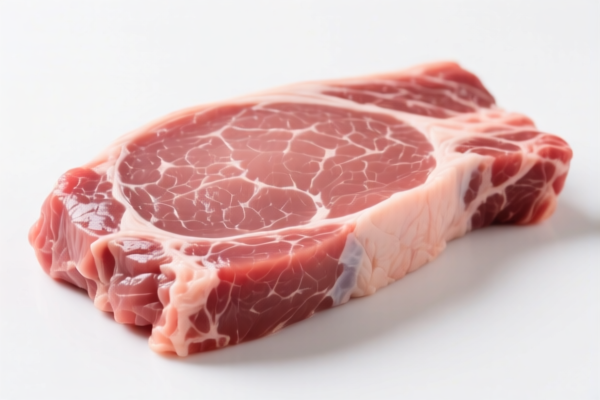
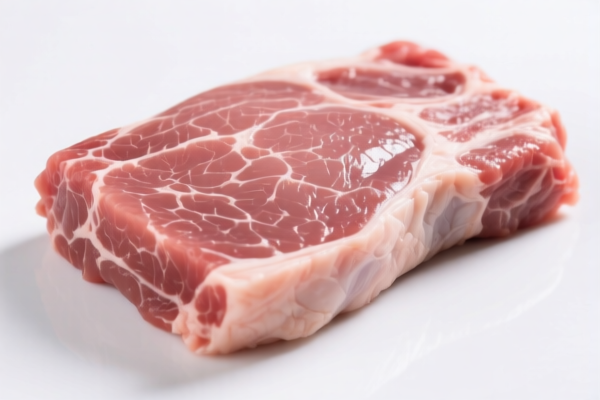
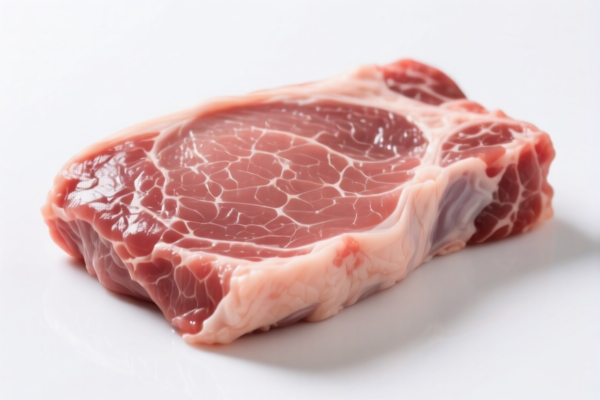
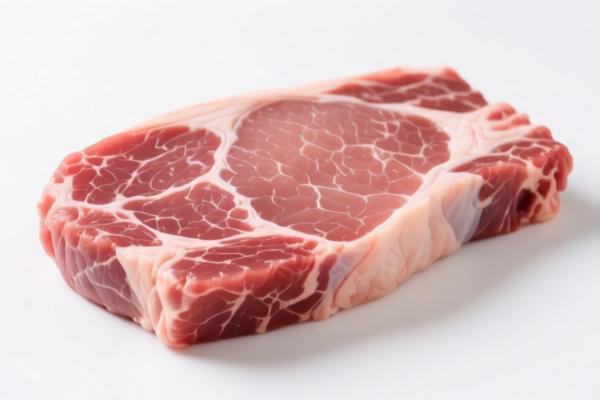
fresh wet bovine raw material
CN → US| HS Code | Tariff Rate | Origin | Destination | Doc |
|---|---|---|---|---|
| 02011000 | 0.0% | CN | US | Official Doc |
| 02012000 | 0.0% | CN | US | Official Doc |
Product Images
AI Analysis
🥩 Fresh & Chilled Bovine Meat (Raw Material for Processing)
🌐 HS Code Reference & Customs Clearance Guide | 2026 Latest Tariff Analysis | Professional Compliance Strategy
📌 I. Product Definition & Classification: What Exactly Is "Fresh Wet Bovine Raw Material"?
In international trade, "Fresh Wet Bovine Raw Material" is not a standard legal description. It typically refers to Fresh or Chilled Bovine Meat, Not Further Prepared, Excluding Offal. This category includes whole carcasses, sides, quarters, and primal cuts (like ribs, loins, or briskets) that have been chilled (but not frozen) and are intended for further processing (e.g., slaughter, cutting, or manufacturing) or direct retail sale.
⚠️ Key Distinction:
- Fresh/Chilled: Must be stored at temperatures above -18°C (typically 0–4°C). If frozen, it falls under HS Code 0202.
- Not Further Prepared: Raw meat. If cured, salted, smoked, or cooked, it falls under Chapter 16.
- Excluding Offal: Organ meats (liver, heart, tongue) are classified separately under 0206.
📦 II. HS Code Classification Details (2026 Latest Tariff Authority Comparison)
Based on the provided , here are the specific HS Codes for fresh/chilled bovine meat:
| HS Code | Product Description | Applicable Scenario | Key Characteristics |
|---|---|---|---|
0201.10.00 |
Fresh or chilled bovine meat, not further prepared, excluding offal | Whole carcasses, sides, quarters, bulk cuts | Non-frozen, raw, no bones removed (if whole), no processing |
0201.20.00 |
Fresh or chilled beef, not further prepared, excluding offal | Specific cuts of beef (e.g., steaks, roasts, ground beef if fresh) | Raw, chilled, specific beef cuts, no curing/smoking |
🔍 Critical Clarification:
-0201.10.00is a broader category for "bovine meat."
-0201.20.00specifically refers to "beef" (meat from adult cattle).
- In many customs jurisdictions, these codes are used interchangeably depending on the exporter’s definition and the importing country’s specific tariff line structure. However, both refer to raw, chilled, non-offal bovine meat.
- Do NOT confuse with:
- Frozen beef →0202.10.00/0202.20.00/0202.30.00
- Beef offal →0206.10.00–0206.29.00
- Cured/Smoked beef →Chapter 16(e.g.,1602.50)
💰 III. 2026 Latest Tariff Rate Details (Including Surcharge & Policy Additions)
✅ Applicable Country: United States (US)
✅ Origin: China (CN)
✅ Effective Date: 2025年11月10日起 (From November 10, 2025)
⚠️ Critical Alert: Tax Retrieval Failure
According to the provided , the tax information for these HS codes is currently unavailable:
- 0201.10.00: Tax Detail: Failed to retrieve tax information, Total Tax: Error
- 0201.20.00: Tax Detail: Failed to retrieve tax information, Total Tax: Error
📌 Interpretation:
- This does NOT mean the goods are duty-free.
- It indicates that the specific tariff schedule for these items under the current trade policy (e.g., Section 301, IEEPA) has not been successfully mapped in the system, or the rates are subject to frequent updates, exemptions, or litigation.
- General Baseline: The standard Most Favored Nation (MFN) tariff for fresh beef is typically 12%–26% ad valorem. However, for Chinese-origin goods, Section 301 tariffs (25%) and IEEPA surcharges (10%) may apply, potentially bringing the total effective duty to 35%–50%+.
- Recommendation: Always verify with the USITC (United States International Trade Commission) or a licensed customs broker for the most current rate before shipment.
🛠️ IV. Customs Clearance Practical Advice (Real-World Pitfall Avoidance Guide)
✅ 1. Required Documentation Checklist (All Mandatory)
| Document | Must Provide | Description |
|---|---|---|
| ✅ Commercial Invoice | ✔️ | Must specify "Fresh/Chilled Bovine Meat, HS Code 0201.xx.xx," origin, weight, and value. |
| ✅ Packing List | ✔️ | Detail weights, quantities, and packaging types (e.g., vacuum-sealed, cardboard boxes). |
| ✅ Certificate of Origin | ✔️ | Proof of origin (e.g., China) to determine applicable surtaxes. |
| ✅ Health Certificate | ✔️ | Issued by the competent authority in the exporting country, certifying the meat is fit for human consumption and free from diseases (e.g., BSE, Foot-and-Mouth Disease). |
| ✅ Cold Chain Documentation | ✔️ | Records showing temperature control during transit (must remain chilled, not frozen). |
| ✅ USDA/FSIS Import Permit | ✔️ | Prior approval from the USDA for bovine meat imports. |
✅ 2. Declaration Tips (Key Mantra)
🔥 "Specify 'Chilled', Not 'Frozen'; Exclude Offal Clearly; Label Correctly!"
| Scenario | Correct Declaration | Error to Avoid |
|---|---|---|
| Fresh/Chilled Beef Cuts | 0201.20.00 – "Fresh chilled beef, not further prepared" |
Misdeclare as "Frozen" → Wrong HS, delays, penalties |
| Whole Carcass | 0201.10.00 – "Fresh bovine meat, whole carcass" |
Misdeclare as "Beef Cuts" → Potential classification dispute |
| Mixed with Offal | Split declaration: 0201.20.00 (meat) + 0206.xx.xx (offal) |
Combine into one HS code → Customs rejection |
| Vacuum-Packed Chilled Meat | Still 0201.xx.xx (if not frozen/processed) |
Misdeclare as "Processed Meat" (Chapter 16) → Higher duty |
✅ 3. Special Considerations
| Situation | Handling Advice |
|---|---|
| OEM Private Label | Ensure labels comply with USDA/FDA requirements. Country of origin must be clearly marked. |
| Temperature Deviation | If meat freezes during transit, it may be reclassified to 0202 (Frozen Beef), which has different tariffs and regulations. |
| BSE-Related Restrictions | Beef from certain regions may be restricted. Verify the exporting country’s status with USDA. |
| Quota Issues | Some countries have tariff-rate quotas (TRQs) for beef. Check if your shipment falls under a quota (lower duty) or over-quota (higher duty). |
🌍 V. Global Market Comparison for Bovine Meat (2026 Latest)
| Country/Region | Recommended HS Code | Tariff (China Origin) | Certification Requirements | Notes |
|---|---|---|---|---|
| 🇺🇸 USA | 0201.10.00 / 0201.20.00 |
High (Likely 25%–50%+ due to surtaxes) | USDA FSIS Permit, Health Cert | Check current IEEPA/301 rates! |
| 🇨🇳 China | 0201.20.00 |
~12% | GACC Registration, Health Cert | Strict quarantine rules |
| 🇪🇺 EU | 0201.20.00 |
~15%–30% | EU Health Certificate, HACCP | BSE-compliant origin required |
| 🇯🇵 Japan | 0201.20.00 |
~30%–40% | Japan MAFIC Certificate | Strict temperature control |
| 🇦🇺 Australia | 0201.20.00 |
0% (if under quota) | MPI Health Certificate | Quota-based tariff system |
📌 Conclusion:
- USA: High tariffs due to trade policies. Verify current rates.
- China/EU/Japan: High baseline tariffs, but stable if compliant.
- Australia: Potential for zero duty if within quota.
📌 VI. Common Errors & Pitfall Guide (Lessons Learned)
❌ Error 1: Declaring "Fresh Chilled Meat" as "Frozen Meat" (0202.xx.xx)
👉 Consequence: Wrong HS Code, potential 0% duty avoidance detection → Penalties & Seizure!
❌ Error 2: Mixing Offal with Meat in One HS Code
👉 Consequence: Customs rejects the declaration. Offal has different health and tariff rules. → Delays & Re-inspection.
❌ Error 3: Failing to Provide Cold Chain Data
👉 Consequence: If temperature logs show freezing, the goods may be reclassified or rejected. → Product Destruction or Re-export.
❌ Error 4: Using Vague Descriptions Like "Beef Raw Material"
👉 Consequence: Customs cannot classify accurately. → Hold for Inspection, Potential Misclassification Fine.
✅ Correct Practice:
"Fresh Chilled Beef, Boneless, Vacuum-Sealed, HS Code 0201.20.00, Origin: China, Stored at 0–4°C, USDA Approved Facility"
🎯 VII. Conclusion: Precise Classification Saves Costs!
🎯 Remember the Mantra:
🔹 "Chilled ≠ Frozen; Raw ≠ Processed; Offal ≠ Meat!"
🔹 "Verify Tariffs! Data Missing ≠ Duty-Free! Check USDA & IEEPA!"
📌 Pro Tip:
Since tax information for 0201.10.00 and 0201.20.00 is currently Error/Failed, it is critical to:
1. Contact a licensed customs broker in the destination country.
2. Request a Pre-Ruling from US Customs (CBP) if unsure.
3. Monitor USITC updates for any changes to Section 301 or IEEPA tariffs on bovine products.
📣 Immediate Action:
📞 Consult a Customs Broker + Verify USDA Permits + Monitor Tariff Updates
🚀 Ensure Smooth Clearance, Avoid Seizure, Protect Margins!
✨ Professional Customs Clearance Starts with Accurate Classification!
💼 Your Cost Efficiency Depends on Precise HS Code Selection!
Customer Reviews
About HS Code Classification
The Harmonized System (HS) is an internationally standardized nomenclature developed by the World Customs Organization (WCO) to classify traded products. Over 200 countries use the HS system as the basis for customs tariffs, trade statistics, and import/export regulations.
Each HS code follows a hierarchical structure:
- Chapter (2 digits) — Broad category of goods (e.g., Chapter 84: Machinery and Mechanical Appliances)
- Heading (4 digits) — More specific grouping within the chapter
- Subheading (6 digits) — Internationally standardized breakdown, used by all WCO member countries
- National subdivisions (8-10 digits) — Country-specific extensions for further classification, such as US HTSUS 10-digit codes
Correct HS code classification is essential for smooth customs clearance, accurate duty payment, and compliance with trade regulations. Misclassification can lead to customs delays, overpayment of duties, or penalties.
When importing from CN to US, the applicable tariff rates may include:
- Most-Favored-Nation (MFN) rate — The standard duty rate applied to WTO members
- General rate — Applied to countries without trade agreements
- Trade remedy duties — Additional tariffs such as Section 301 (anti-dumping), Section 232 (national security), or countervailing duties
The information provided on this page is for reference purposes only. For official classification, please consult with your local customs authority or a licensed customs broker.