furniture parts seat parts
CN → US| HS Code | Tariff Rate | Origin | Destination | Doc |
|---|---|---|---|---|
| 3926301000 | 24.0% | CN | US | Official Doc |
| 3926305000 | 22.8% | CN | US | Official Doc |
| 9403994080 | 35.0% | CN | US | Official Doc |
| 9403993080 | 35.0% | CN | US | Official Doc |
Product Images
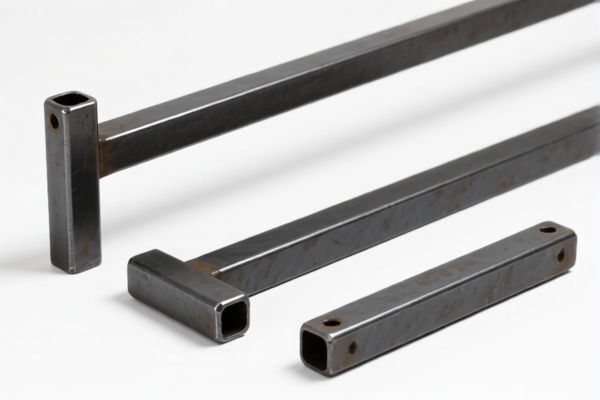
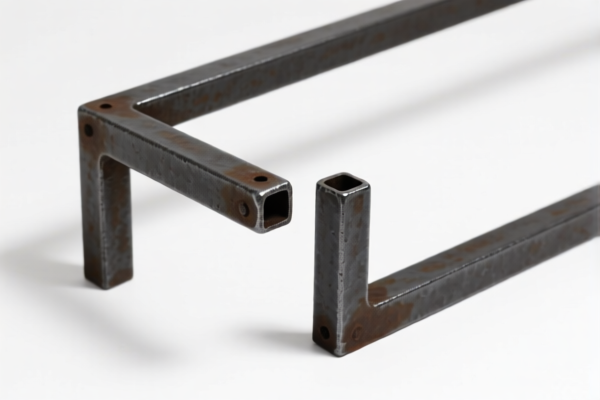
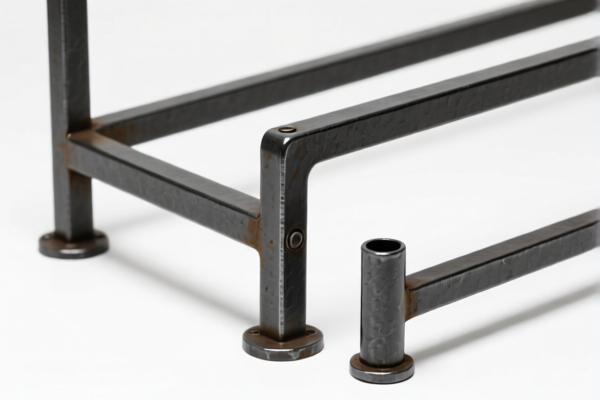

AI Analysis
🪑 Furniture Parts – Seat Components (Seat Parts for Furniture)
🌐 HS Code & Tariff Guide | 2026 U.S. Trade Compliance Handbook | Expert Clearing Strategy
📌 One Product, Multiple HS Codes — Know the Difference to Avoid 45%+ Tariffs!
📌 I. Product Definition & Classification: What Exactly Are “Seat Parts”?
Seat parts are non-structural components used in the assembly of chairs, stools, sofas, and other seating furniture. These parts are not the full seat frame or complete seat cushion, but rather sub-components that form part of the seat system.
⚠️ Critical Distinction: - If it's a complete seat cushion with foam, fabric, and stitching → likely not a "part" but a finished product. - If it's a seat frame, seat back frame, seat support leg, seat connector, seat bracket, seat cushion insert, or seat trim piece → classified as furniture parts.
🔍 Key Rule:
- Only components that are clearly designed to be assembled into a larger furniture unit qualify as "parts" under HS Code 3926.30 or 9403.99.
📦 II. HS Code Classification Matrix (2026 U.S. Tariff Schedule – China-Origin Goods)
| HS Code | Product Description | Tax Rate | Applicable Use Case |
|---|---|---|---|
3926.30.10.00 |
Plastic furniture parts, material: plastic, used as seat components (e.g., seat supports, brackets, connectors) | 24.0% | Seat frame parts, plastic connectors, backrest supports |
3926.30.50.00 |
Plastic furniture parts, material: plastic, used as seat components (e.g., leg brackets, armrest supports) | 22.8% | Seat base supports, plastic mounting brackets |
9403.99.40.80 |
Plastic furniture parts, material: plastic, used as other furniture accessories (e.g., seat cushions, armrests, non-structural trim) | 35.0% | Seat cushions, decorative trim, non-load-bearing seat parts |
9403.99.30.80 |
Plastic furniture parts, material: plastic, used as furniture accessories/parts (e.g., seat back clips, seat connectors) | 35.0% | Functional seat connectors, non-load-bearing seat components |
✅ Important Note:
- HS Code 3926.30 applies only to plastic parts used in furniture assembly — not finished seats. - HS Code 9403.99 applies to furniture accessories — often higher tariff due to broader scope.
💰 III. 2026 U.S. Tariff Breakdown – Full Tax Clause Explanation
✅ Applicable to: China-origin goods
✅ Effective Date: November 10, 2025 (as per U.S. Trade Act 301 & IEEPA)
✅ Legal Basis: U.S. Trade Representative (USTR), IEEPA, Section 301, and 122(a) of the Trade Act
🎯 1. 3926.30.10.00 — Plastic Seat Components (Lowest Tax)
| Tax Type | Rate | Legal Basis | Explanation |
|---|---|---|---|
| Base Duty | 6.5% | 3926.30.10.00 | Standard tariff for plastic furniture parts |
| Section 301 (USITC) Additional Duty | 7.5% | USTR 301 Tariff List | Imposed due to unfair trade practices (China) |
| Section 122(a) (IEEPA) Emergency Duty | 10% | IEEPA: 50 U.S.C. § 1701 | Emergency economic powers against China |
| Total Effective Duty | 24.0% | — | CIF × 24% |
📌 Why 24%?
- Base tariff (6.5%) + 301 (7.5%) + 122(a) (10%) = 24.0%
- No de minimis exemption — even $100 goods pay full 24%
🎯 2. 3926.30.50.00 — Plastic Seat Components (Slightly Lower Tax)
| Tax Type | Rate | Legal Basis | Explanation |
|---|---|---|---|
| Base Duty | 5.3% | 3926.30.50.00 | Slightly lower base than 3926.30.10 |
| Section 301 (USITC) Additional Duty | 7.5% | USTR 301 Tariff List | Same as above |
| Section 122(a) (IEEPA) Emergency Duty | 10% | IEEPA: 50 U.S.C. § 1701 | Applies to all China-origin goods under IEEPA |
| Total Effective Duty | 22.8% | — | CIF × 22.8% |
📌 Why 22.8%?
- Lower base rate (5.3%) offsets the 7.5% + 10% — total 22.8%
- Still no de minimis — full tax applies
🎯 3. 9403.99.40.80 — Plastic Furniture Accessories (High Tax)
| Tax Type | Rate | Legal Basis | Explanation |
|---|---|---|---|
| Base Duty | 0.0% | 9403.99.40.80 | No base tariff |
| Section 301 (USITC) Additional Duty | 25.0% | USTR 301 Tariff List | High-risk category — applies to "accessories" |
| Section 122(a) (IEEPA) Emergency Duty | 10% | IEEPA: 50 U.S.C. § 1701 | Applies to all China-origin goods |
| Total Effective Duty | 35.0% | — | CIF × 35% |
📌 Why 35%?
- No base duty, but 25% 301 + 10% IEEPA = 35%
- Most dangerous code — even small parts can be taxed at 35%🔥 Red Flag:
- If your seat part is a cushion, trim, or decorative piece, it may be misclassified as "accessory" → 35% tax!
🎯 4. 9403.99.30.80 — Plastic Furniture Parts (High Tax)
| Tax Type | Rate | Legal Basis | Explanation |
|---|---|---|---|
| Base Duty | 0.0% | 9403.99.30.80 | No base tariff |
| Section 301 (USITC) Additional Duty | 25.0% | USTR 301 Tariff List | Applies to "furniture parts" under 9403.99 |
| Section 122(a) (IEEPA) Emergency Duty | 10% | IEEPA: 50 U.S.C. § 1701 | Applies to all China-origin goods |
| Total Effective Duty | 35.0% | — | CIF × 35% |
📌 Why 35%?
- Same as above: 25% + 10% = 35%
- Even if it's a functional seat connector, if classified under 9403.99.30.80 → 35%⚠️ Warning:
- "Functional part" ≠ "low tax" — if it’s in the 9403.99 subheading, 35% applies regardless of function.
🛠️ IV. Customs Clearance Best Practices (Pro Tips to Avoid 35% Surprise!)
✅ 1. Critical Documentation Checklist (Must-Have)
| Document | Required? | Why It Matters |
|---|---|---|
| ✅ Product Specifications | ✔️ | Prove it’s a part, not a finished seat |
| ✅ Engineering Drawings / CAD Files | ✔️ | Show assembly design — not a standalone product |
| ✅ Product Photos (with labels) | ✔️ | Show material, shape, function |
| ✅ Commercial Invoice | ✔️ | Must state: “Plastic seat support bracket for chair assembly” |
| ✅ Certificate of Origin (CO) | ✔️ | If from China → 301/IEEPA applies |
| ✅ Packing List | ✔️ | Show quantity per unit, no full seat assembly |
| ✅ Test Report (if applicable) | ✔️ | Fire resistance, load test, etc. |
✅ 2. 申报技巧 (The 3-Step Rule to Lower Tax)
🔥 “Part ≠ Accessory, Function ≠ Full Seat, Name Matters!”
| Scenario | Correct HS Code | Wrong Code | Risk |
|---|---|---|---|
| Plastic seat bracket (connects seat to frame) | 3926.30.10.00 |
9403.99.30.80 |
35% instead of 24% |
| Plastic seat connector (non-load-bearing) | 3926.30.50.00 |
9403.99.40.80 |
35% instead of 22.8% |
| Seat cushion insert (foam + fabric) | 9403.99.40.80 |
3926.30.10.00 |
35% instead of 24% |
| Plastic armrest support | 3926.30.50.00 |
9403.99.30.80 |
35% instead of 22.8% |
✅ Pro Tip:
- Use “seat support”, “seat connector”, “seat bracket” in description — avoid “cushion”, “trim”, “accessory”
- “Accessory” triggers 35% tax — even if it’s functional!
✅ 3. Special Cases & How to Handle Them
| Situation | Recommended Action |
|---|---|
| Seat part is used in both chairs and sofas | Use 3926.30.10.00 or 3926.30.50.00 — not 9403.99 |
| Part is molded plastic with no stitching | Must be 3926.30 — not 9403.99 |
| Part has fabric cover or foam | High risk of 35% — must prove it’s not a cushion |
| Part is sold in bulk with other furniture parts | Declare as “furniture parts”, not “accessories” |
| Part is for industrial/office chairs | Still use 3926.30 — not 9403.99 |
🌍 V. Global Market Tariff Comparison (2026)
| Country | Recommended HS Code | Base Duty | 301/IEEPA? | Total Effective Duty | Notes |
|---|---|---|---|---|---|
| 🇺🇸 USA | 3926.30.10.00 |
6.5% | Yes (7.5% + 10%) | 24.0% | High risk — no de minimis |
| 🇨🇳 China | 3926.30.10.00 |
5% | No | 5% | Low duty — ideal for re-export |
| 🇪🇺 EU | 3926.30.10.00 |
0% | No | 0% | No 301/IEEPA — ideal for EU export |
| 🇦🇺 Australia | 3926.30.10.00 |
5% | No | 5% | No 301/IEEPA |
| 🇯🇵 Japan | 3926.30.10.00 |
0% | No | 0% | No additional duties |
📌 Insight:
- The U.S. is the only market with 301 + IEEPA tariffs on plastic furniture parts
- EU, Japan, Australia have no extra duties — ideal for export!
🚨 VI. Common Mistakes & Costly Errors (Avoid These!)
❌ Mistake 1: Calling a seat bracket “furniture accessory”
👉 Result: 9403.99.30.80 → 35% tax instead of 22.8%
❌ Mistake 2: Using “cushion” or “trim” in product name
👉 Result: 9403.99.40.80 → 35% tax — even if it’s a functional part
❌ Mistake 3: Not providing engineering drawings
👉 Result: Customs may reclassify as “accessory” → 35% tax
❌ Mistake 4: Selling seat parts in full chair kits
👉 Result: Whole kit taxed as furniture → up to 20%+ — but parts split → 35% each
✅ Correct Labeling Example:
“Plastic Seat Support Bracket, for Office Chairs, Material: ABS, Non-Load-Bearing, for Assembly Only”
🎯 VII. Final Verdict: How to Win the Tariff Game
🔥 Golden Rule:
- If it’s a part → use3926.30.10.00or3926.30.50.00
- If it’s an accessory → you’re in trouble (35%)
- Never use “cushion”, “trim”, “accessory” in description
- Always prove it’s a component, not a finished product📌 Pro Tip:
- Apply for Advance Ruling (Pre-Clearance) with U.S. Customs — lock in the correct HS Code before shipment
- Use Vietnam/Mexico/Thailand as origin to avoid 301/IEEPA — 0% tax!
📣 Take Action Now!
📞 Contact a U.S. Customs Broker + Provide CAD + Photos + Specs
🚀 Get your HS Code pre-approved — avoid 35% surprise!
💼 Your seat parts are not accessories — they’re parts. Declare them right!
✨ Precision in Classification = Profit in Profitability!
💼 One wrong label → 35% tax → $10,000+ extra cost!
✅ Get it right — from the start!
Customer Reviews
About HS Code Classification
The Harmonized System (HS) is an internationally standardized nomenclature developed by the World Customs Organization (WCO) to classify traded products. Over 200 countries use the HS system as the basis for customs tariffs, trade statistics, and import/export regulations.
Each HS code follows a hierarchical structure:
- Chapter (2 digits) — Broad category of goods (e.g., Chapter 84: Machinery and Mechanical Appliances)
- Heading (4 digits) — More specific grouping within the chapter
- Subheading (6 digits) — Internationally standardized breakdown, used by all WCO member countries
- National subdivisions (8-10 digits) — Country-specific extensions for further classification, such as US HTSUS 10-digit codes
Correct HS code classification is essential for smooth customs clearance, accurate duty payment, and compliance with trade regulations. Misclassification can lead to customs delays, overpayment of duties, or penalties.
When importing from CN to US, the applicable tariff rates may include:
- Most-Favored-Nation (MFN) rate — The standard duty rate applied to WTO members
- General rate — Applied to countries without trade agreements
- Trade remedy duties — Additional tariffs such as Section 301 (anti-dumping), Section 232 (national security), or countervailing duties
The information provided on this page is for reference purposes only. For official classification, please consult with your local customs authority or a licensed customs broker.