fused magnesia refractory lining
CN → US| HS Code | Tariff Rate | Origin | Destination | Doc |
|---|---|---|---|---|
| 3816002010 | 38.0% | CN | US | Official Doc |
| 3816002050 | 38.0% | CN | US | Official Doc |
Product Images
AI Analysis
🔥 Fused Magnesia Refractory Lining
🌐 HS Code Reference & Customs Clearance Guide | 2026 Latest Tariff Analysis | Professional Clearance Strategy
📌 I. Product Definition & Classification: Do You Really Understand "Fused Magnesia Refractory Lining"?
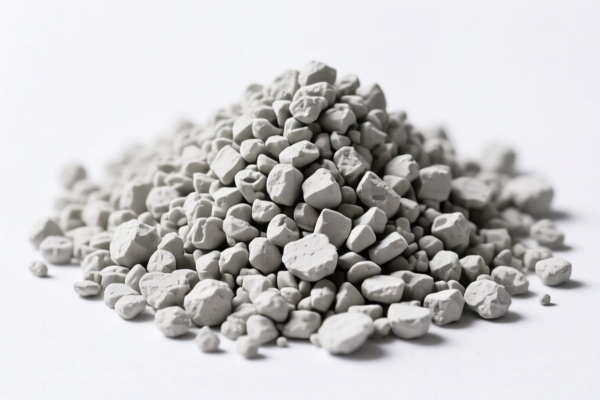
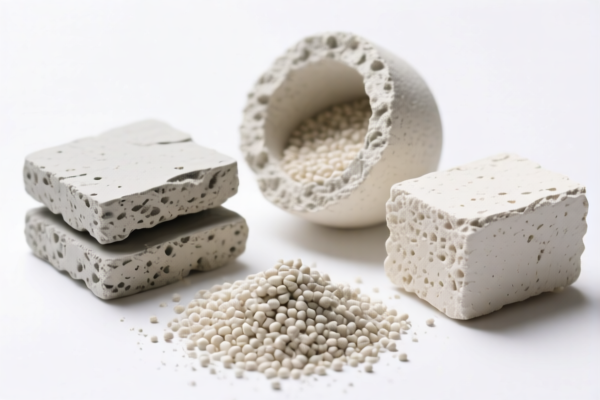
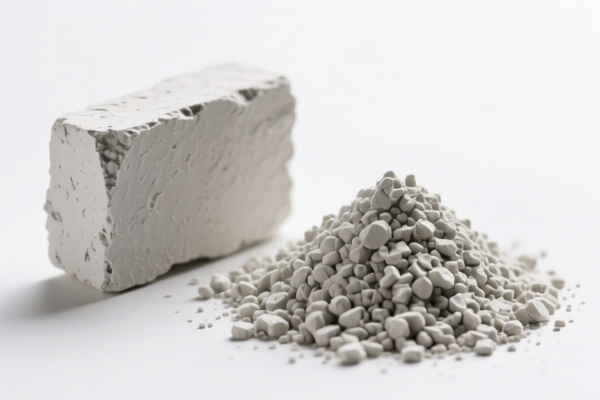
Fused magnesia refractory lining refers to high-temperature resistant materials used to line industrial furnaces, kilns, and vessels. These materials are primarily composed of magnesium oxide (MgO) derived from fused magnesia crystals. In international trade, they are often classified based on their form and binding agents.
1. Refractory Cements/Mortars/Concretes: These are pre-mixed compositions containing refractory aggregates (like fused magnesia) bound with cementitious materials. They are poured, rammed, or troweled into place. 2. Dolomite Ramming Mixes: A specific subset of refractory mixtures, often used in steelmaking ladles.
⚠️ Key Distinction Point:
- If the product is a dry mix, cement, mortar, or concrete containing refractory materials (like fused magnesia) → It falls under Heading 3816.
- If the product is a solid refractory brick, block, or tile (pre-formed) → It typically falls under Chapter 69 (Ceramic Products).
- Crucial Note for Heading 3816: The HS codes below exclude products of heading 3801 (natural graphite, etc.).
📦 II. HS Code Classification Details (2026 Latest Tariff Authority Reference)
Based on the provided data, the product "Fused Magnesia Refractory Lining" (interpreted as refractory cement, mortar, or concrete composition) is classified under 3816.00. The specific sub-headings depend on the "other" criteria.
| HS Code | Product Description | Applicable Scenario | Classification Logic |
|---|---|---|---|
3816.00.20.10 |
Refractory cements, mortars, concretes and similar compositions, including dolomite ramming mix, other than products of heading 3801: Other Clay | Refractory mixes that do not fall under specific clay-based exclusions or are general-purpose refractory cements/mortars. | ✅ Matches general refractory cement/mortar compositions. |
3816.00.20.50 |
Refractory cements, mortars, concretes and similar compositions, including dolomite ramming mix, other than products of heading 3801: Other Other | Refractory mixes that are not classified under the "Other Clay" sub-category. This is a residual category for refractory compositions not explicitly defined elsewhere. | ✅ Matches specific fused magnesia compositions not fitting the "Clay" sub-category. |
🔍 Key Reminder:
- These HS codes apply to compositions, cements, mortars, and concretes.
- If you are importing solid fused magnesia bricks, these codes are incorrect. You would need to look at Chapter 69 (e.g., 6902).
- The description "Fused Magnesia Refractory Lining" is ambiguous. If it refers to a mixed material ready for application (e.g., a bag of castable refractory), use 3816. If it refers to raw fused magnesia particles not mixed into a cement/mortar, it might fall under 2519 (Magnesite/Fused Magnesia). However, based strictly on the provided<DATA>, we are addressing the 3816 classification.
💰 III. 2026 Latest Tariff Rate Details (Including Surtaxes)
✅ Applicable Country: United States (US)
✅ Origin: China (CN) (Assumed based on the context of US-China trade tariffs typically included in such queries)
✅ Effective Time: Current as of 2026
🎯 1. 3816.00.20.10 — Refractory Cements/Mortars (Other Clay)
| Item | Content |
|---|---|
| Base Tariff Rate | 0.0% (ad valorem) |
| Surtax (Section 301) | 0.0% |
| Total Tax Rate | 0.0% |
| Tax Calculation | CIF Value × 0.0% = $0 |
| De Minimis Eligibility | N/A (For commercial shipments) |
| Legal Basis | HTSUS 3816.00.20.10 |
📌 Explanation:
- This specific sub-category enjoys zero tariff entry under the current US customs schedule.
- No additional Section 301 tariffs are applied to this specific 10-digit code.
- Cost Advantage: This is a highly competitive code for importers, as there are no base or surtax duties.
🎯 2. 3816.00.20.50 — Refractory Cements/Mortars (Other Other)
| Item | Content |
|---|---|
| Base Tariff Rate | 3.0% (ad valorem) |
| Surtax (Section 301) | +25.0% |
| Total Tax Rate | 28.0% |
| Tax Calculation | CIF Value × 28.0% |
| De Minimis Eligibility | ❌ Not Eligible (Deny de minimis for Section 301 items) |
| Legal Basis | HTSUS 3816.00.20.50 → USITC Footnote 9903.88.01 |
📌 Explanation:
- Base Rate: The standard Most Favored Nation (MFN) rate for this category is 3%.
- Section 301 Surcharge: An additional 25% tariff is applied due to US trade measures against Chinese goods.
- Total Burden: Importers face a 28% total duty. This significantly impacts cost margins.
- Note: This code is often used for refractory products that do not qualify for the "Other Clay" exemption or specific lower-tariff categories.
🛠️ IV. Customs Clearance Practical Advice (Real-World Pitfall Avoidance Guide)
✅ 1. Preparation Checklist (Essential Documents)
| Document | Required | Description |
|---|---|---|
| ✅ Product Specification Sheet | ✔️ | Must detail chemical composition (MgO content), particle size, and binding agents. |
| ✅ Safety Data Sheet (SDS) | ✔️ | Refractory materials may require SDS for safe handling and transport classification. |
| ✅ Commercial Invoice | ✔️ | Clearly state: "Fused Magnesia Refractory Cement/Mortar" and HS Code 3816.00.20.xx. |
| ✅ Packing List | ✔️ | Specify net/gross weight, number of bags/drums. |
| ✅ Certificate of Origin (CO) | ✔️ | To verify country of origin for surtax application. |
✅ 2. Classification Strategy (Critical Tips)
🔥 “Check Composition, Not Just Name!”
| Scenario | Correct HS Code | Wrong Code | Consequence |
|---|---|---|---|
| Pre-mixed Refractory Cement (Bagged) | 3816.00.20.10 or 3816.00.20.50 |
6902 (Bricks) |
Misclassification Penalty |
| Raw Fused Magnesia Powder (Not mixed) | 2519.90 (Magnesite) |
3816 |
Wrong Duty Rate |
| Solid Refractory Bricks/Tiles | 6902.xxxx |
3816 |
Wrong Duty Rate |
| Dolomite Ramming Mix | 3816.00.20.xx |
2519 |
Potential Audit Risk |
📌 Key Advice:
- Ensure the product is indeed a composition/mortar/cement. If it’s just raw fused magnesia powder without binders, it may not fit 3816.
- The difference between10(0%) and50(28%) is huge. Work with your supplier to clarify the exact composition. If the product can be classified as "Other Clay" (which might have lower tariffs in some contexts, though here it's 0% vs 28%), ensure the documentation supports it.
✅ 3. Special Case Handling
| Scenario | Handling Advice |
|---|---|
| Product is a "Ramming Mix" | Ensure it is declared as a refractory composition. Some ramming mixes may have specific duty treatments if they fall under different sub-headings. |
| Origin is Non-China | If the fused magnesia is sourced from Turkey, Brazil, or Madagascar, the 25% Section 301 surcharge does NOT apply. Only the base rate (3%) may apply to 3816.00.20.50. This is a major cost-saving opportunity! |
| Mixed Shipment | Do not mix bricks (Chapter 69) and mortars (Chapter 38) in the same line item. Declare separately. |
🌍 V. Global Market Comparison (2026)
| Country/Region | Recommended HS Code | Tariff Rate (China Origin) | Certification | Notes |
|---|---|---|---|---|
| 🇺🇸 USA | 3816.00.20.10 |
0.0% | N/A | Best option if eligible |
| 🇺🇸 USA | 3816.00.20.50 |
28.0% (3% + 25%) | N/A | High cost for "Other Other" |
| 🇨🇳 China | 3816.00.20 |
Varies (Import Duty) | N/A | For reference only |
| 🇪🇺 EU | 3824.70 |
0-5% | REACH | Different classification system |
| 🇮🇳 India | 3824.99 |
7.5-15% | BIS | Check local regulations |
📌 Conclusion:
- USA is the most complex market due to Section 301 tariffs.
- Source Diversification: If possible, source fused magnesia refractory materials from non-China origins (e.g., Turkey, Russia, Brazil) to avoid the 25% surcharge on code3816.00.20.50.
- Classification Accuracy: Always confirm if the product is a "mortar/cement" (3816) vs. "raw material" (2519) vs. "brick" (6902).
📌 VI. Common Mistakes & Pitfalls (Lessons Learned)
❌ Mistake 1: Declaring raw fused magnesia powder as 3816.
👉 Consequence: Customs may reclassify to 2519, leading to duty disputes or penalties. Raw materials have different tariffs.
❌ Mistake 2: Assuming all refractory products are 3816.
👉 Consequence: Solid bricks are 6902. Misdeclaration leads to incorrect duty payment (0-28% vs. 0-5%).
❌ Mistake 3: Ignoring Origin.
👉 Consequence: If you import from China and declare 3816.00.20.50, you pay 28%. If you import from Turkey, you pay only 3%. Always specify the country of origin!
❌ Mistake 4: Vague Description.
👉 Consequence: "Refractory Material" is too vague. Customs may ask for additional information, causing delays. Use specific terms like "Fused Magnesia Refractory Castable Cement."
✅ Correct Approach:
"Fused Magnesia Refractory Castable Cement, 50kg bags, MgO > 85%, Country of Origin: [China/Turkey], HS Code: [3816.00.20.10/50]"
🎯 VII. Conclusion: Precision Classification for Cost Efficiency
🎯 Remember the Mantra:
🔹 "Check Origin! Check Form! Cement/Mortar is 3816, Brick is 6902."
🔹 "China Origin + Code 50 = 28% Tax. Non-China Origin = 3% Tax."
🔹 "Code 10 is 0% Tax. Aim for Code 10 if composition allows!"
📌 Pro Tip:
If your product is a general-purpose refractory mortar, try to ensure it falls under 3816.00.20.10 (if eligible) to enjoy 0% duty. If not, verify if sourcing from non-China countries can reduce the burden from 28% to 3%.
📣 Immediate Action:
📞 Consult a licensed customs broker to verify the exact composition of your "Fused Magnesia Refractory Lining."
🚀 Get a Binding Ruling from US Customs (CBP) before shipping to ensure the correct HS Code is used.
✨ Professional Customs Clearance Starts with Accurate Classification!
💼 Your Cost Savings Depend on Precision!
Customer Reviews
About HS Code Classification
The Harmonized System (HS) is an internationally standardized nomenclature developed by the World Customs Organization (WCO) to classify traded products. Over 200 countries use the HS system as the basis for customs tariffs, trade statistics, and import/export regulations.
Each HS code follows a hierarchical structure:
- Chapter (2 digits) — Broad category of goods (e.g., Chapter 84: Machinery and Mechanical Appliances)
- Heading (4 digits) — More specific grouping within the chapter
- Subheading (6 digits) — Internationally standardized breakdown, used by all WCO member countries
- National subdivisions (8-10 digits) — Country-specific extensions for further classification, such as US HTSUS 10-digit codes
Correct HS code classification is essential for smooth customs clearance, accurate duty payment, and compliance with trade regulations. Misclassification can lead to customs delays, overpayment of duties, or penalties.
When importing from CN to US, the applicable tariff rates may include:
- Most-Favored-Nation (MFN) rate — The standard duty rate applied to WTO members
- General rate — Applied to countries without trade agreements
- Trade remedy duties — Additional tariffs such as Section 301 (anti-dumping), Section 232 (national security), or countervailing duties
The information provided on this page is for reference purposes only. For official classification, please consult with your local customs authority or a licensed customs broker.